Artwork
尾形乾山筆 定家詠十二ヶ月和歌 花鳥図 『拾遺愚草』 より四月|“Fourth Month” from Fujiwara no Teika’s “Birds and Flowers of the Twelve Months”
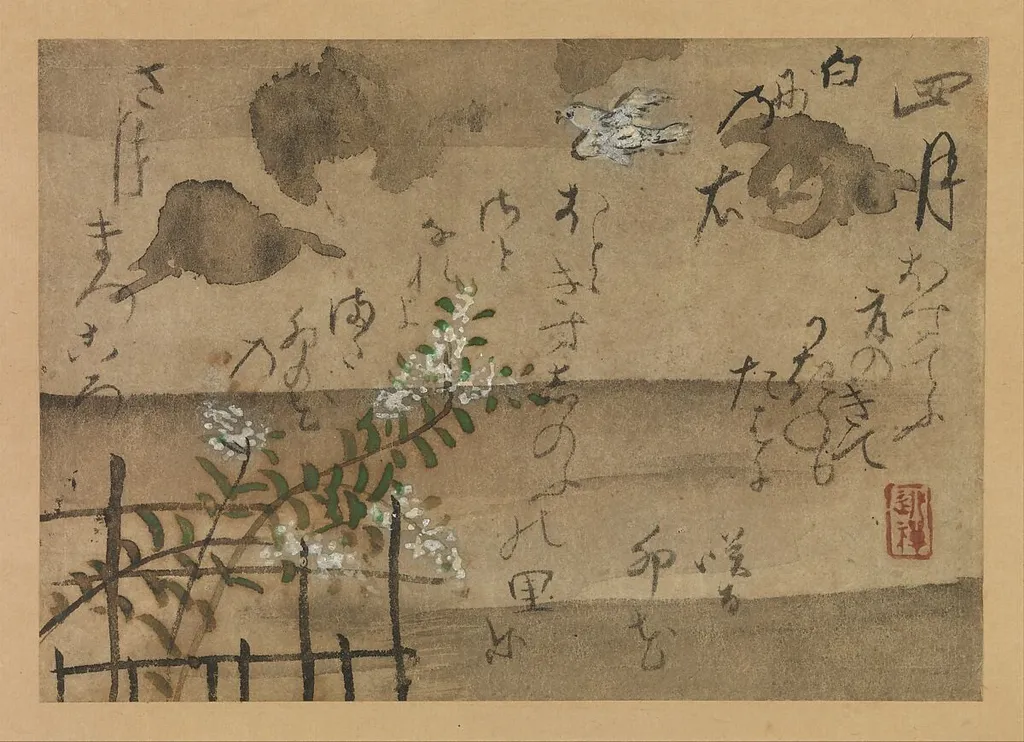
尾形乾山筆 定家詠十二ヶ月和歌 花鳥図 『拾遺愚草』 より四月|“Fourth Month” from Fujiwara no Teika’s “Birds and Flowers of the Twelve Months” is an ink painting by the Baroque artist Ogata Kenzan. It dates from 1743 and is held in the collection of the Metropolitan Museum of Art.
About this work
Ogata Kenzan painted it in 1743, but he was also a potter, his ceramics often show the same delicate balance of nature and quiet detail.
A small bird perches on a branch above pink and white peonies. The flowers spill across the paper in soft washes of color, while the bird’s feathers are drawn with quick, dark strokes.
This scroll is one page from a set of twelve, each illustrating a month through seasonal flowers and birds. Ogata Kenzan painted it in 1743, but he was also a potter, his ceramics often show the same delicate balance of nature and quiet detail.
To see how other Japanese artists painted birds and flowers, look up birds, flowers, japan.
Subject & Meaning
Created in 1743, this hanging scroll by Ogata Kenzan functions as an allegorical representation of the fourth month within the tradition of "Birds and Flowers of the Twelve Months." The work draws its subject matter from a poem by Fujiwara no Teika found in the anthology Shūi Gusa, translating the literary text into a visual scene. The composition depicts specific birds and flowers that serve as seasonal markers for late spring.
By pairing these natural elements with the poetic allusion, the piece embodies the Japanese aesthetic of capturing the transient beauty of a specific time of year. The imagery acts as a symbolic bridge between the written word of the classical era and the painted medium of the 18th century.
History & Provenance
The hanging scroll titled "Fourth Month" from Fujiwara no Teika's "Birds and Flowers of the Twelve Months" was created by Ogata Kenzan in 1743. Executed in ink and color on paper, the work depicts birds and flowers as allegorical subjects. The piece originates from Japan and is currently held in the collection of the Metropolitan Museum of Art.
While the specific commission details and the full chain of ownership prior to its museum acquisition are not detailed in the available records, the work's creation is firmly dated to the mid-eighteenth century.
The hanging scroll titled "Fourth Month" from Fujiwara no Teika's "Birds and Flowers of the Twelve Months," created by Ogata Kenzan in 1743, is held in the collection of the Metropolitan Museum of Art in New York. The work, executed in ink and color on paper, depicts birds and flowers and is classified as an allegorical painting. It is currently located within the museum's holdings, though specific accession or inventory numbers are not provided in the available records. The piece originates from Japan and remains part of the institution's permanent collection of Asian art.
Overview
Created in 1743, the year of Ogata Kenzan's death, this hanging scroll depicts the fourth month through the lens of Fujiwara no Teika's poetic tradition. The work illustrates a specific entry from Teika's 'Shūi Gusa,' pairing the seasonal motif of peonies with a small bird. Composed as ink and color on paper, the painting features pink and white peonies rendered in soft, fluid washes that spill across the surface, contrasting with the bird's feathers, which are defined by quick, dark, calligraphic strokes.
This piece belongs to a set of twelve scrolls, each dedicated to a month of the year, adhering to the 'Birds and Flowers of the Twelve Months' genre. As a late work by Kenzan, a master potter and painter who often collaborated with his brother Ogata Kōrin, the piece reflects his mature style that blends decorative elegance with the spontaneity of literati painting. The composition balances the weight of the floral elements against the delicate presence of the bird, creating a harmonious allegory of the season.
The work serves as a visual interpretation of classical Japanese poetry, translating Teika's verses into a tangible seasonal observation characteristic of the Edo period's artistic synthesis of literature and visual art.
Technique & Style
Kenzan's artistic approach is evident in the rendering of the natural forms. The peonies are depicted with soft washes of color, creating a sense of delicate translucency. In contrast, the bird's feathers are articulated through quick, dark brushstrokes, providing definition and texture.
This method reflects the artist's characteristic style, often seen in his ceramic works, which emphasizes a subtle harmony between natural elements and meticulous detail.
Context
Ogata Kenzan was not exclusively a painter but also a renowned potter, and his aesthetic sensibilities transcended both media. His ceramic creations frequently exhibit the same refined appreciation for nature and understated detail found in his paintings. This work also participates in a long-standing tradition within Japanese art, where birds and flowers served as a rich subject for artistic expression, often imbued with seasonal or symbolic significance.
Artist & collection


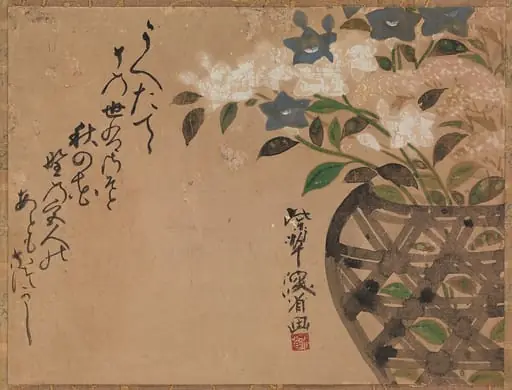
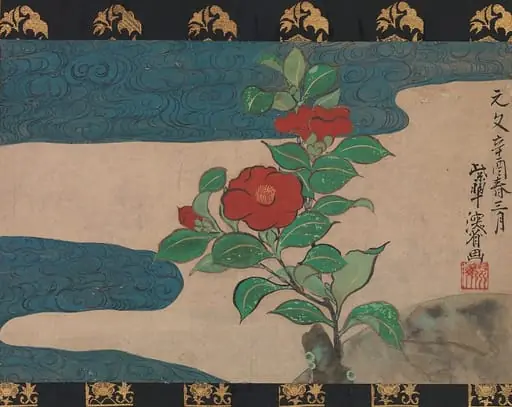
- 清 汪士慎 山水花卉圖 冊|Landscapes and Flowers
 Untitled
 Untitled
 Untitled
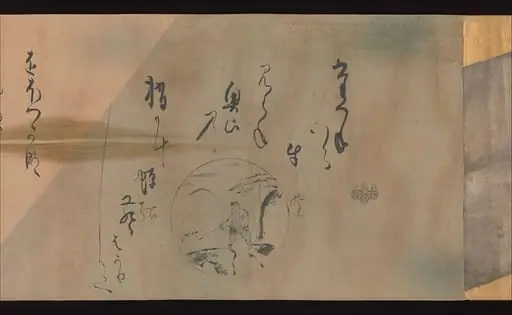 烏丸光広筆 十牛図歌賛図巻|Ten Oxherding Songs
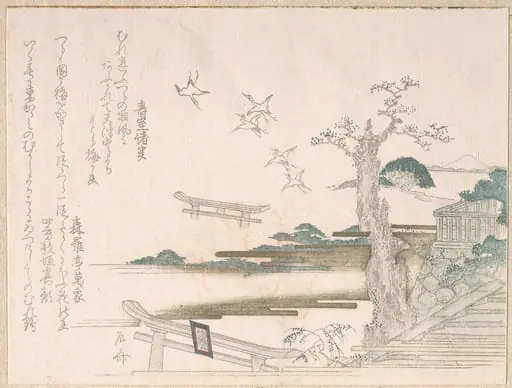 『春雨集』 摺物帖柳々居辰斎画 鎌倉の鶴岡八幡宮に鶴|Spring Rain Collection (Harusame shū), vol. 2: Cranes at Tsurugaoka Hachimangō Shrine in Kamakura
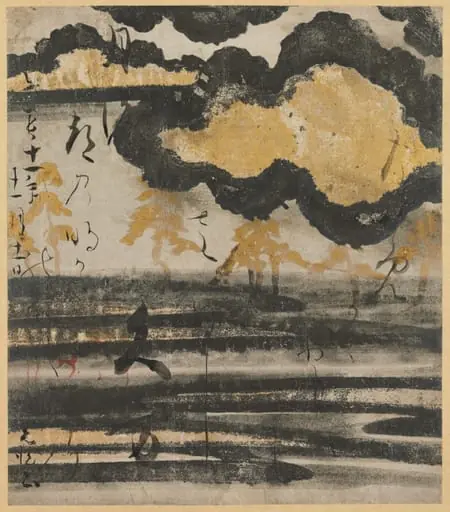 Poem-card from the Shinkokin wakashu (New Collection of Japanese Poems from Ancient and Modern Times) with Design of Pine on a Beach
 Flowering Lily
 Poem-card from the Shinkokin wakashu (New Collection of Japanese Poems from Ancient and Modern Times) with Design of Pine on a Beach
 Untitled
 岡田半江筆 花卉図巻|Letter Enclosing Flowers