Artwork
Crapul
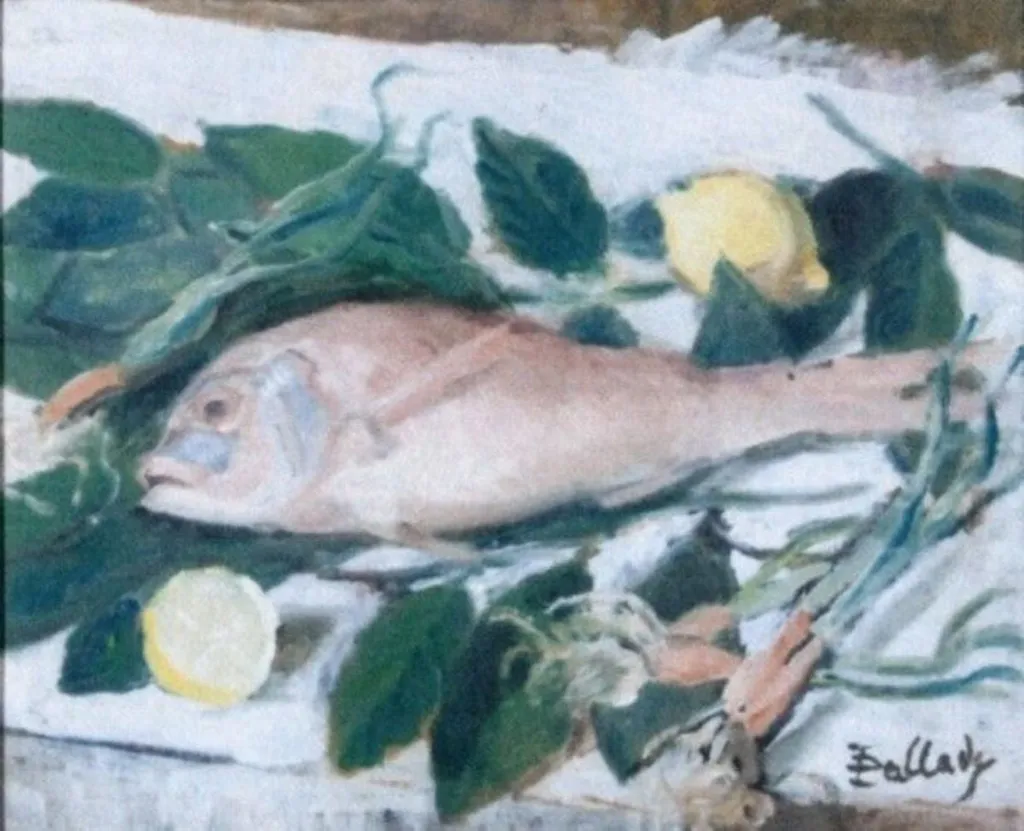
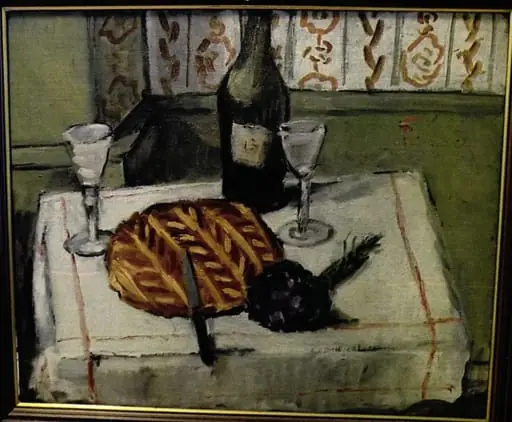
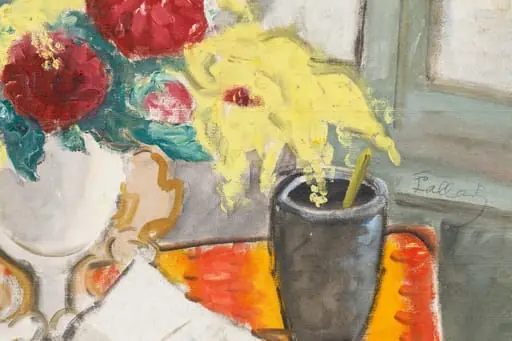
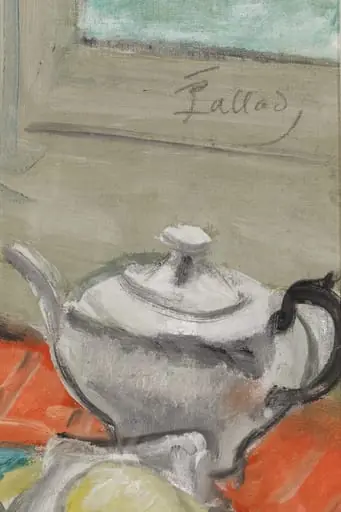
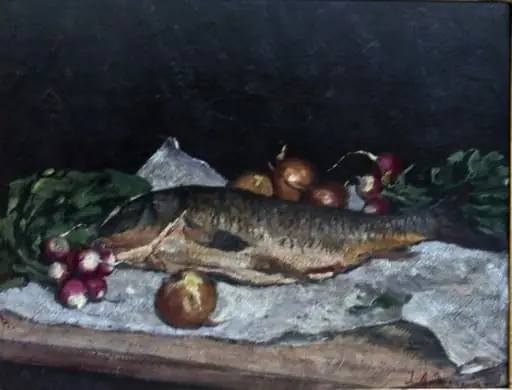
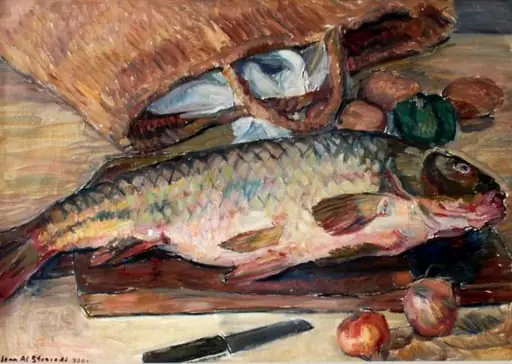
Crapul is an unspecified painting by Theodor Pallady. It dates from 1933 and is held in the collection of the National Museum of Art of Romania.
About this work
Overview
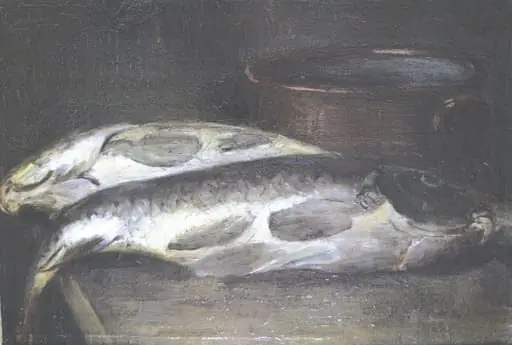
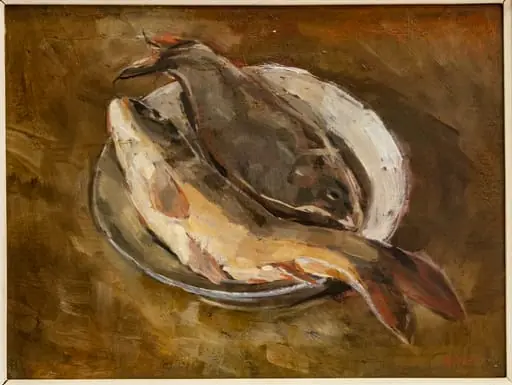
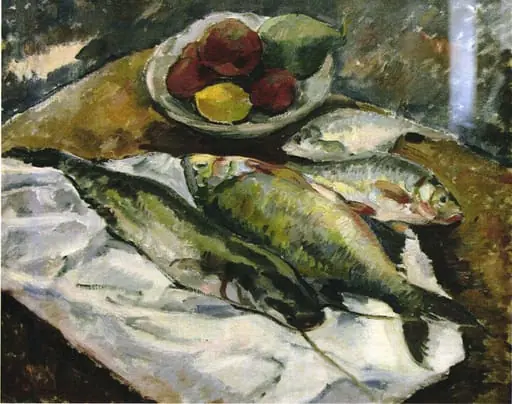
Crapul, painted around 1933 by Romanian artist Theodor Pallady, presents a still‑life composition centered on a whole fish laid upon a stark white surface. The work is rendered in oil on canvas and measures roughly a modest size, emphasizing the intimate arrangement of the subject matter.
Subject & Meaning
The focal point is a freshly caught fish, its flesh rendered in a pale pink hue marked by subtle dark spots. Flanking the fish are a handful of green leaves and two vivid lemons, their bright tones contrasting with the subdued palette of the fish and background.
Technique & Style
Pallady employs loose, gestural brushwork that gives the foliage a slightly textured, almost tactile quality, while the fish’s skin is depicted with smoother, more controlled strokes. The composition relies on simple geometric shapes and bold, saturated colors, allowing the forms to stand out against the unadorned white ground.
History & Provenance
Created in the early 1930s, Crapul reflects Pallady’s mature period, during which he explored still‑life subjects with a restrained yet expressive approach. The painting has remained in private collections, with limited exhibition history, and is documented in catalogues of Pallady’s oeuvre.
Artist & collection