Artwork
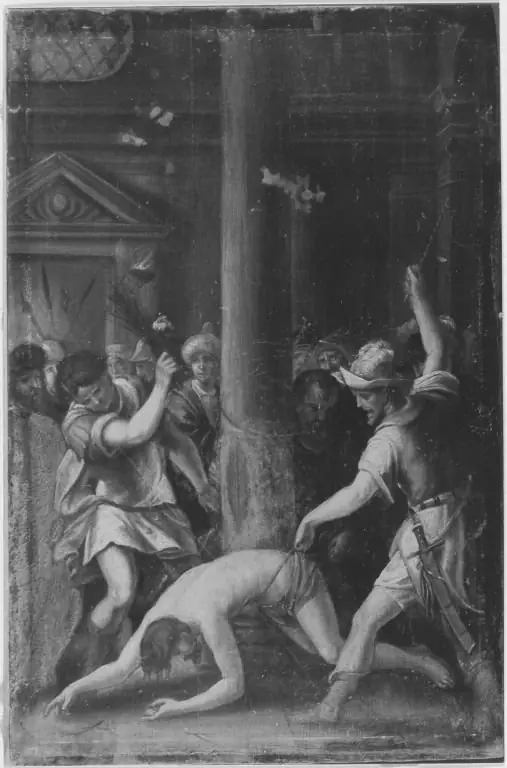
Geißelung Christi
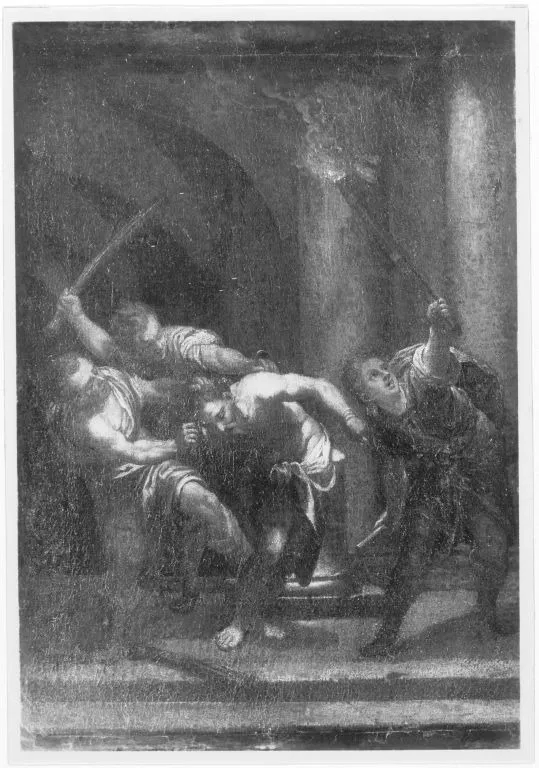
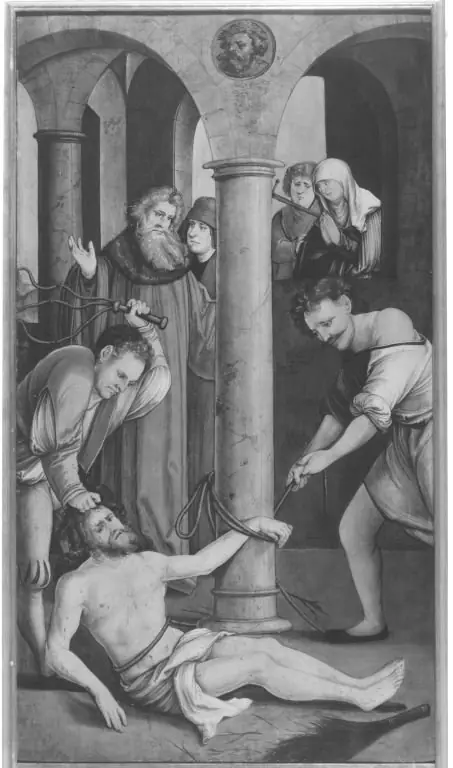
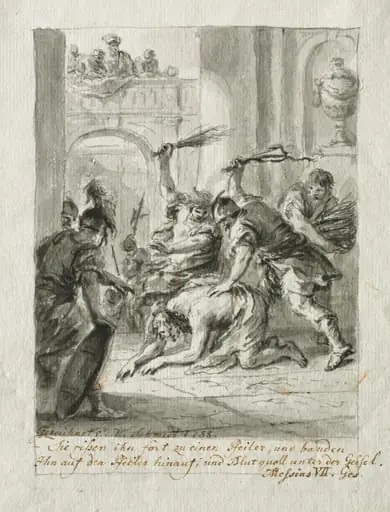
Geißelung Christi is an unspecified painting by the Mannerist artist Paolo Farinati. It dates from 1565 and is held in the collection of the Bavarian State Painting Collections.
About this work
Subject & Meaning
The painting is housed in the Alte Pinakothek in Munich, part of the Bavarian State Painting Collections, where it remains accessible to the public.
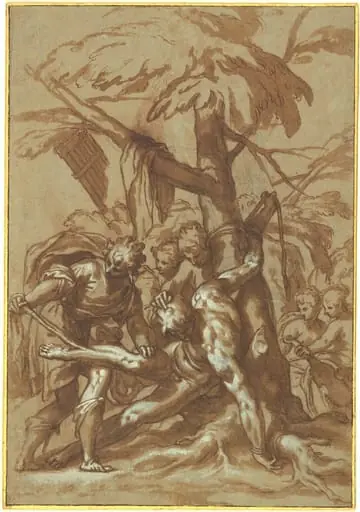
The painting portrays the Flagellation of Christ, a moment of intense physical suffering that underscores themes of sacrifice and redemption. In Christian iconography, the scourging scene emphasizes both the humanity and divinity of Jesus, inviting contemplation of his endurance and the salvific meaning of his Passion.
The work belongs to the religious genre, reflecting Counter-Reformation emphasis on vivid, emotionally charged narratives that engage viewers in spiritual reflection.
Paolo Farinati's composition integrates classical elements with devotional focus, using dramatic lighting and detailed gestures to heighten the narrative impact.
The painting is housed in the Alte Pinakothek in Munich, part of the Bavarian State Painting Collections, where it remains accessible to the public.
History & Provenance
The painting Geißelung Christi by Paolo Farinati has been part of the Bavarian State Painting Collections since its acquisition. It is housed in the Alte Pinakothek in Munich, where it remains in the museum's permanent collection.
The work has been cataloged under the inventory of the Bavarian State Painting Collections, though specific accession details are not publicly documented in available sources. Its exhibition history primarily centers on its display within the Alte Pinakothek, reflecting its status as a key work within the institution's holdings of religious art from the Renaissance period.
Overview
Paolo Farinati’s Geißelung Christi (1565) is a late‑Renaissance work that portrays the biblical Flagellation of Christ. Executed in the Mannerist style, the painting is part of the collection of the Alte Pinakothek in Munich and reflects the artist’s northern Italian background.
Technique & Style
Farinati employs pronounced chiaroscuro, juxtaposing deep shadows with bright highlights that delineate faces and objects. The figures are elongated and posed with exaggerated gestures, hallmarks of Mannerist aesthetics that heighten drama and tension within the confined interior space.
Context
The work belongs to a period when northern Italian artists were exploring complex compositions and emotional expressiveness beyond the balanced ideals of the High Renaissance. Farinati’s treatment of a sacred narrative through stark lighting and stylized forms reflects broader Mannerist concerns with artificiality and theatricality.
Artist & collection
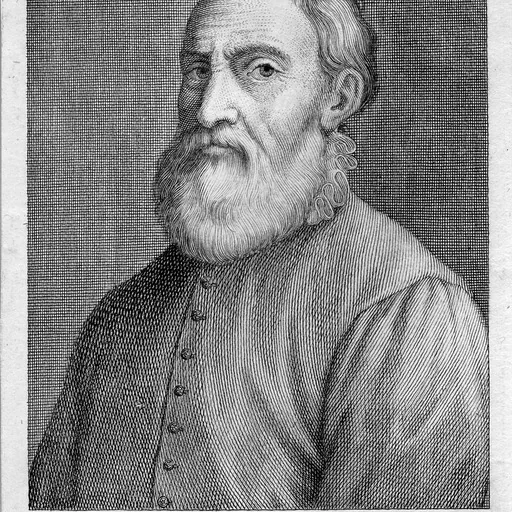
Artist
Paolo Farinati (also known as Farinato or Farinato degli Uberti; c. 1524 – c. 1606) was an Italian painter of the Mannerist style, active mainly in his native Verona, but also in Mantua and Venice. He may have ancestors…