Artwork
Σπίτι στην εξοχή
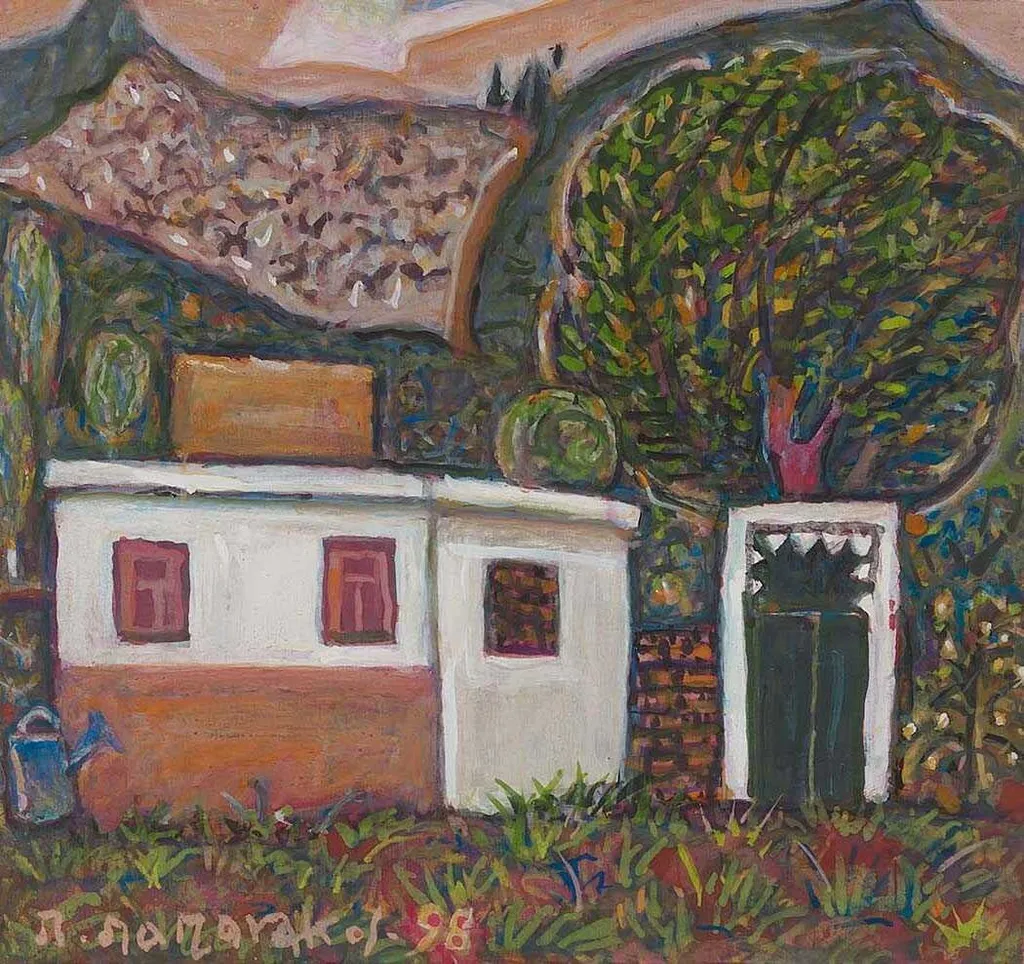
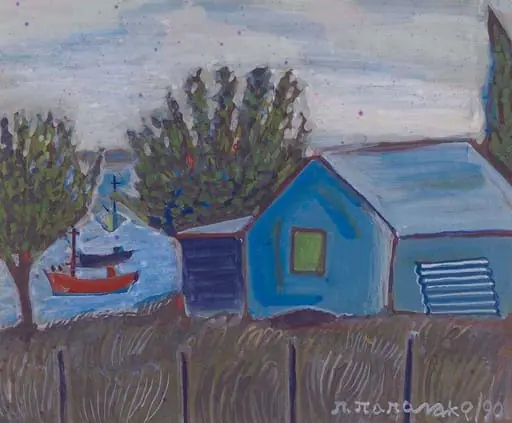
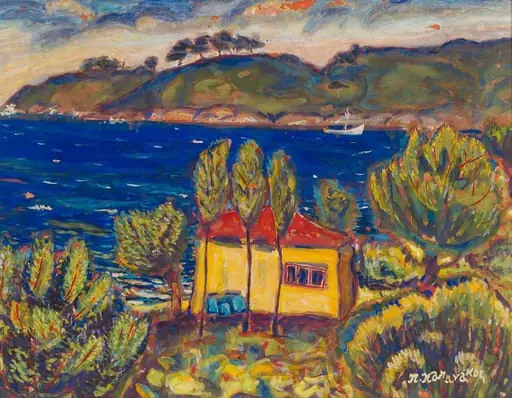
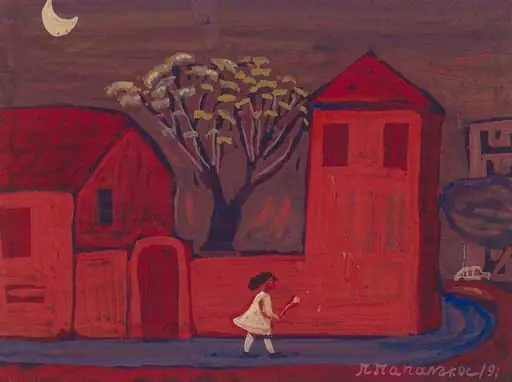
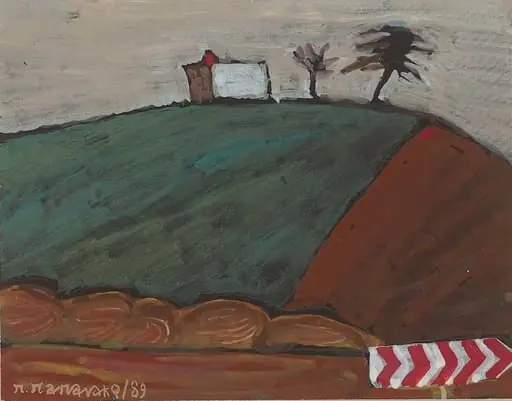
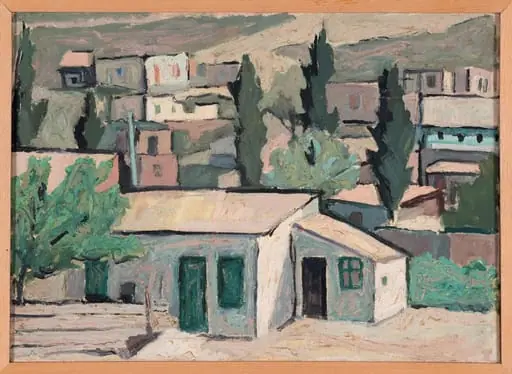
Σπίτι στην εξοχή is an unspecified painting by the Contemporary Realist artist Panos Papanakos. It dates from 1998 and is held in the collection of the Metropolitan Organisation of Museums of Visual Arts of Thessaloniki – MOMus.
About this work
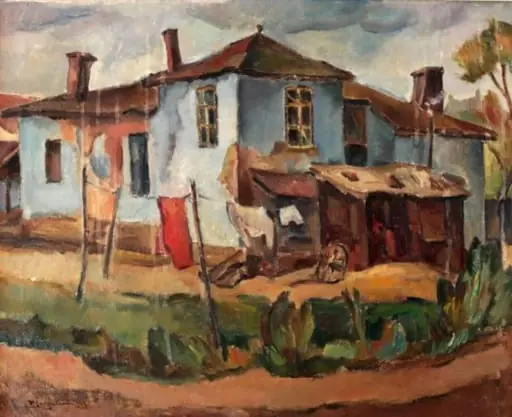
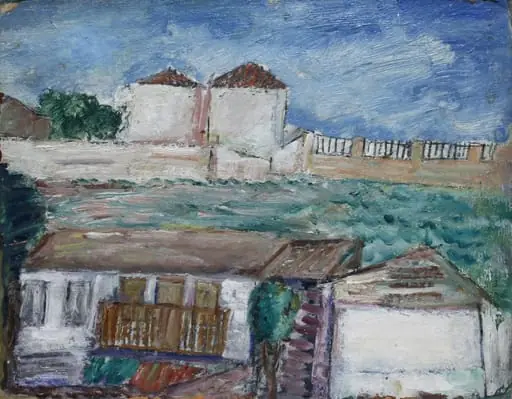
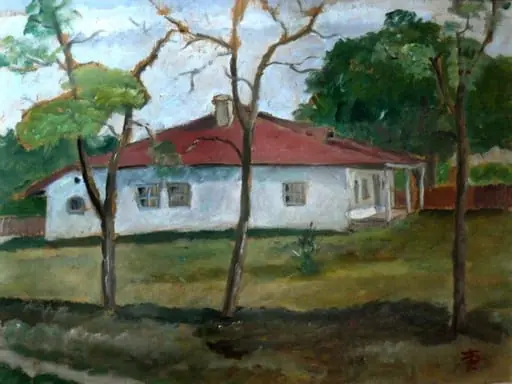
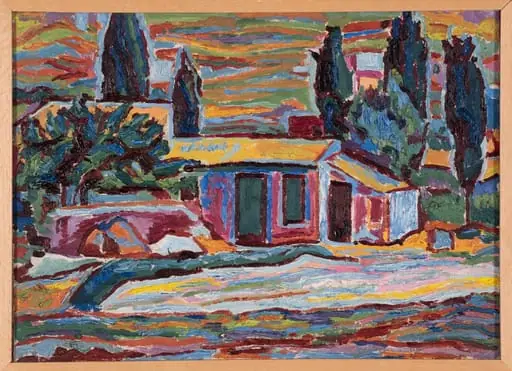
This painting shows a simple white house in the countryside, surrounded by olive trees and a low stone wall.
This painting shows a simple white house in the countryside, surrounded by olive trees and a low stone wall. The colors are soft and muted, giving it a quiet, timeless feel.
Panos Papanakos often painted small scenes like this, focusing on everyday life in Greece. His work blends different styles, shifting with his mood and inspiration.
Look up Papanakos, Panos (1930-1999) to see more of his landscapes.
Overview
Panos Papanakos (1930–1999) produced a body of small-scale tempera paintings centered on rural Greek life. His works often depict modest dwellings, local architecture, and quiet natural settings. He worked without reliance on traditional perspective or tonal modeling, instead prioritizing color and simplified forms to evoke atmosphere. His output reflects a personal, introspective approach to painting, rooted in daily observation rather than grand narrative.
Subject & Meaning
The painting portrays a solitary white house nestled among olive trees and a low stone wall, a common motif in Papanakos’s oeuvre. These scenes are not idealized but quietly observed, capturing the stillness of the Greek countryside. The absence of human figures emphasizes solitude and continuity, suggesting a meditation on place and memory rather than storytelling. The subject matter reflects his deep connection to the land and its quiet rhythms.
Technique & Style
Papanakos employed a sharp, deliberate brushstroke and flattened spatial composition, rejecting chiaroscuro and linear perspective. Color became the primary vehicle for expression, with muted palettes conveying calm and timelessness. His style shifted fluidly between lyrical restraint and expressionistic intensity, often dictated by his emotional state. Details are minimized; recognition of form arises through hue and arrangement rather than precision.
History & Provenance
Papanakos worked primarily in the mid-to-late 20th century, producing most of his paintings in tempera on small supports. While not widely exhibited internationally, his work was known within Greek art circles. He drew inspiration from regional painters like Nikos Gabriel Pentzikis and Nikos Fotaki, yet developed a personal visual language. His paintings remained largely in private hands, with few entering public collections during his lifetime.
Context
His work emerged in postwar Greece, a period marked by rural depopulation and cultural redefinition. Papanakos’s focus on humble, enduring landscapes offered a counterpoint to modernist abstraction and political art. He painted not as a documentarian but as a witness, capturing the quiet persistence of traditional life amid social change. His art reflects a personal response to a transforming nation, rooted in the sensory experience of place.
Legacy
Papanakos’s legacy lies in his quiet, consistent exploration of the Greek countryside through a deeply personal lens. His rejection of academic conventions and emphasis on emotional resonance over technical polish influenced later generations of Greek painters seeking authenticity. Though not part of major movements, his work endures as a subtle testament to the dignity of ordinary scenes and the expressive potential of restrained color and form.
Artist & collection
Museum
Metropolitan Organisation of Museums of Visual Arts of Thessaloniki – MOMus
Continue through works from the same source collection.