Artwork
Redgreen and Violet-Yellow Rhythms
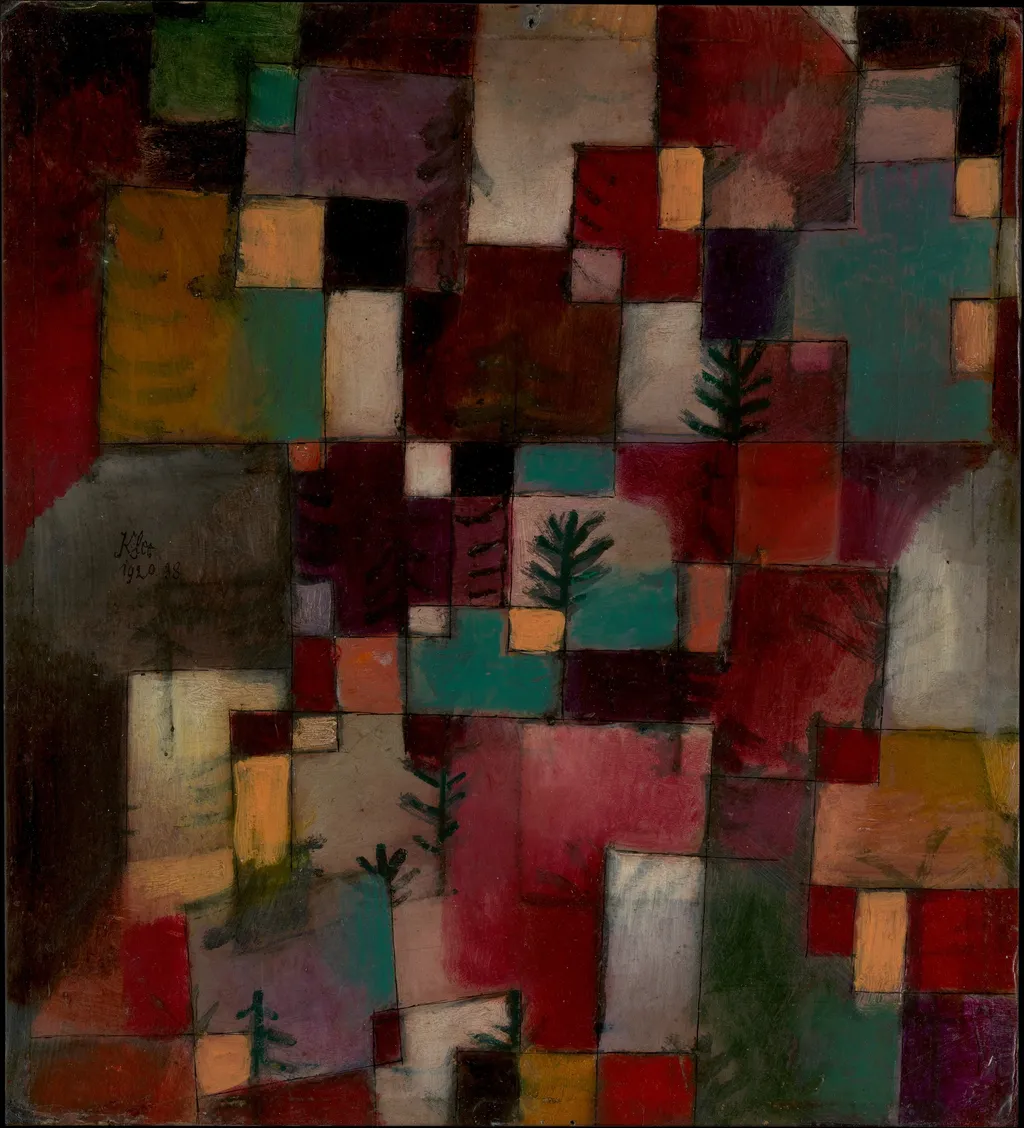
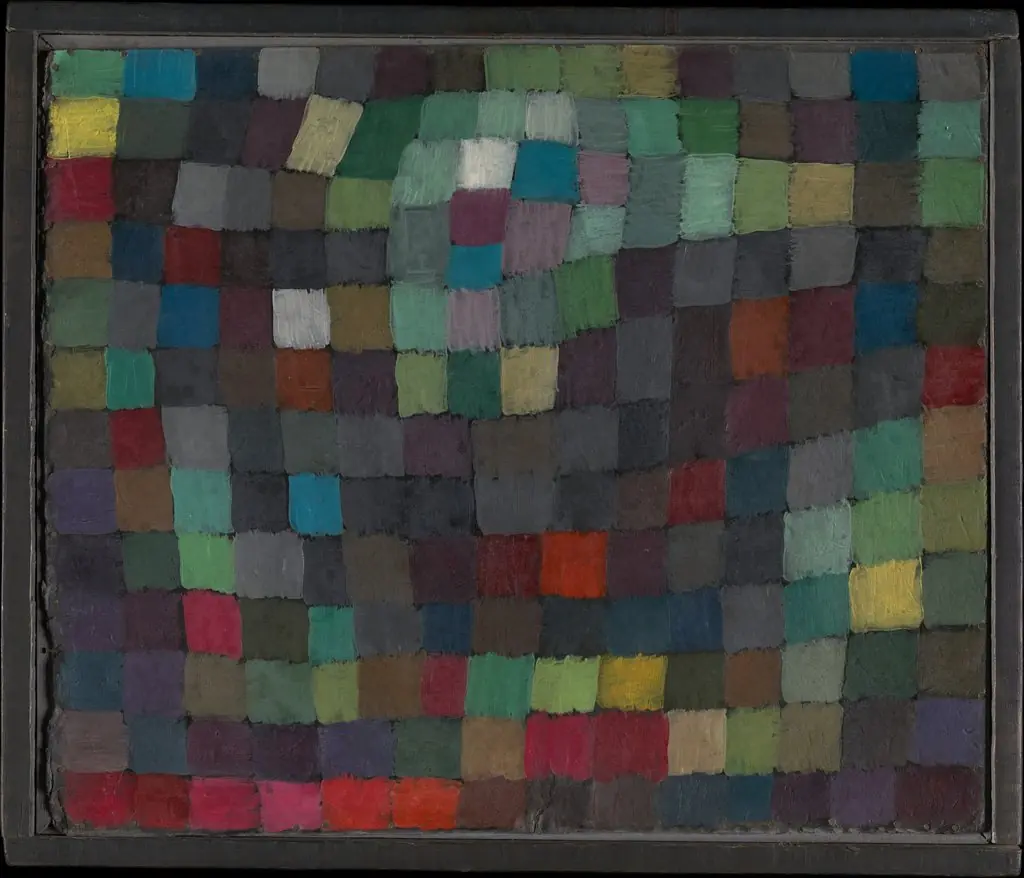
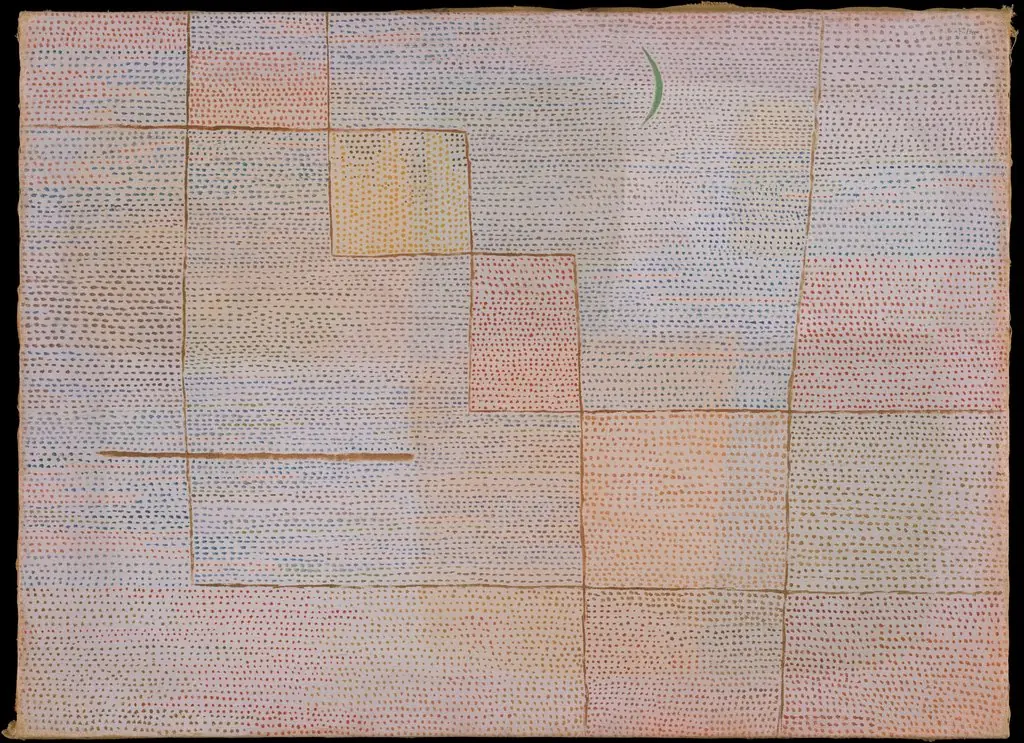
Redgreen and Violet-Yellow Rhythms is an unspecified painting by the Bauhaus artist Paul Klee. It dates from 1920 and is held in the collection of the Metropolitan Museum of Art.
About this work
Technique & Style
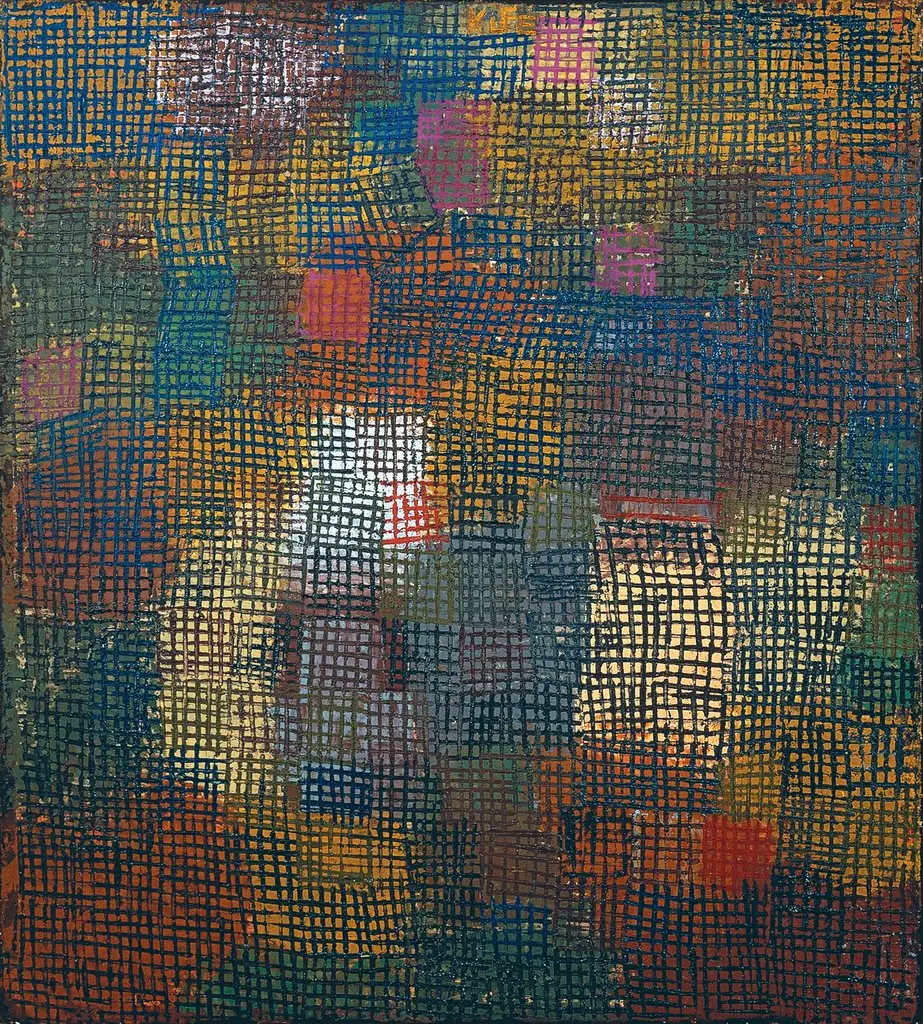
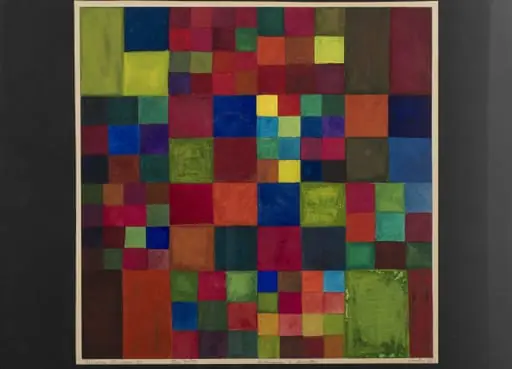
The work exemplifies abstraction through its rhythmic interplay of color fields, where contrasting hues generate visual tension and structured movement.
Paul Klee created Redgreen and Violet-Yellow Rhythms in 1920 as an oil painting on cardboard, measuring 37.5 cm in height and 33.7 cm in width. The work exemplifies abstraction through its rhythmic interplay of color fields, where contrasting hues generate visual tension and structured movement. Such formal qualities reflect Klee's exploration of musicality and spatial dynamics within geometric composition, aligning with his broader artistic inquiries into synesthetic relationships between sound and visual form.
History & Provenance
Paul Klee created Redgreen and Violet-Yellow Rhythms in 1920, marking it as an early abstraction within his oeuvre. The painting’s inception aligns with Klee’s exploration of color theory and rhythmic composition during his tenure at the Bauhaus, where he taught from 1921 onward.
The work has been part of the Metropolitan Museum of Art’s collection since its acquisition. No documented commission or prior private ownership chain is recorded for this piece, suggesting it entered public holdings directly or through intermediary dealers without a traceable provenance before its institutional accession.
The work is held by the Metropolitan Museum of Art, New York, where it is inventoried as accession number 58.105.
It has appeared in one documented exhibition: Paul Klee’s works were shown in the 1941 exhibition Twentieth-Century Art from the Collection of Morton G. Neumann at the Art Institute of Chicago.
Overview
Created in 1920, Redgreen and Violet‑Yellow Rhythms is an abstract oil painting by Paul Klee, a Swiss‑born artist who worked in Germany. The work belongs to the period when Klee was teaching at the Bauhaus school, and it now resides in the collection of the Metropolitan Museum of Art in New York.
Subject & Meaning
The composition consists of a dense network of small rectangular planes rendered in a limited palette of red, green, violet and yellow. The juxtaposition of these hues produces a visual pulse, suggesting a musical or rhythmic quality that invites the viewer to consider color as a language of its own.
Context
Redgreen and Violet‑Yellow Rhythms exemplifies the Bauhaus emphasis on integrating artistic practice with theoretical research. Klee’s work from this period often merged elements of expressionism, cubism and surrealism, using simplified geometric structures to probe the relationship between visual perception and musical rhythm.
Own this work as a print
Artist & collection
Artist
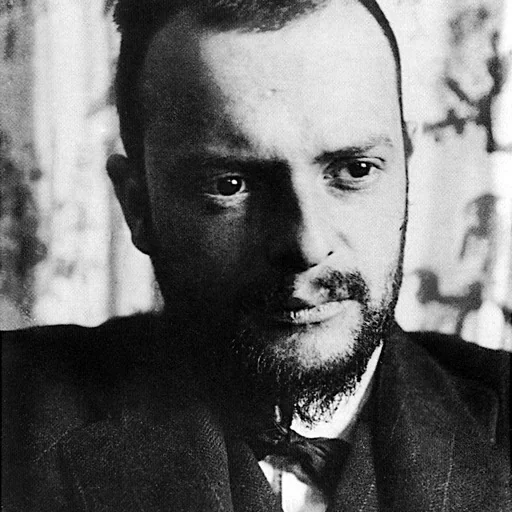
Paul Klee (German:; 18 December 1879 – 29 June 1940) was a Swiss-born German artist.