Artwork
Temple Gardens
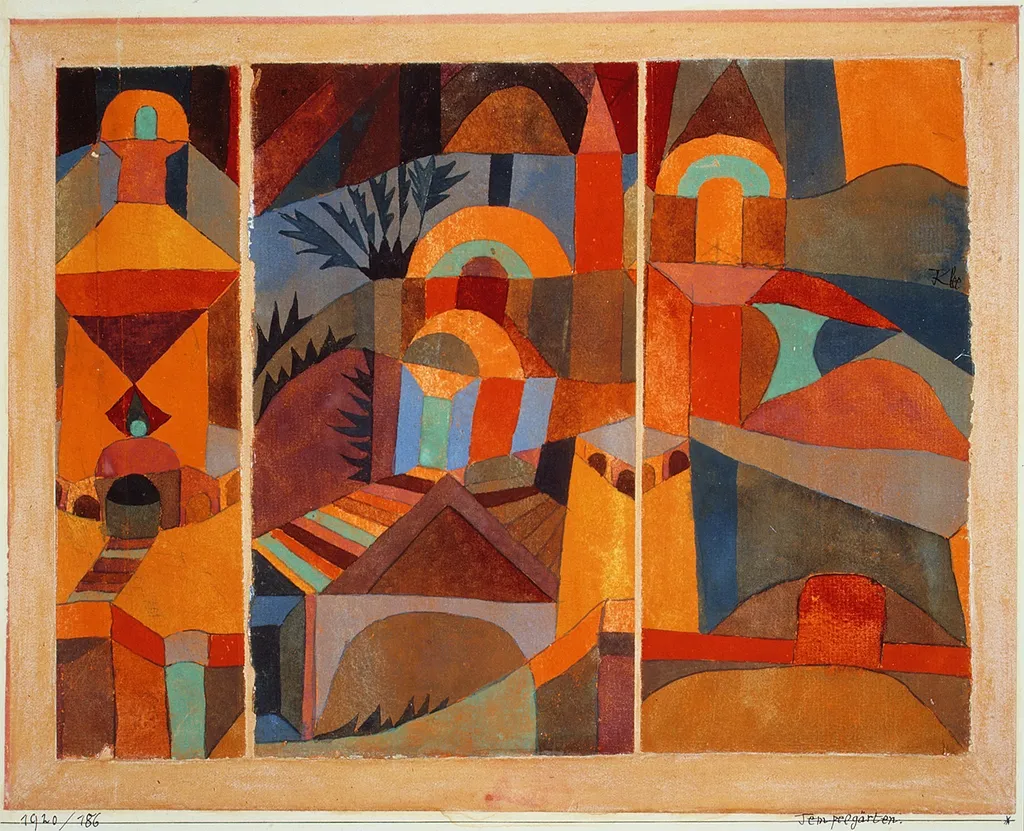
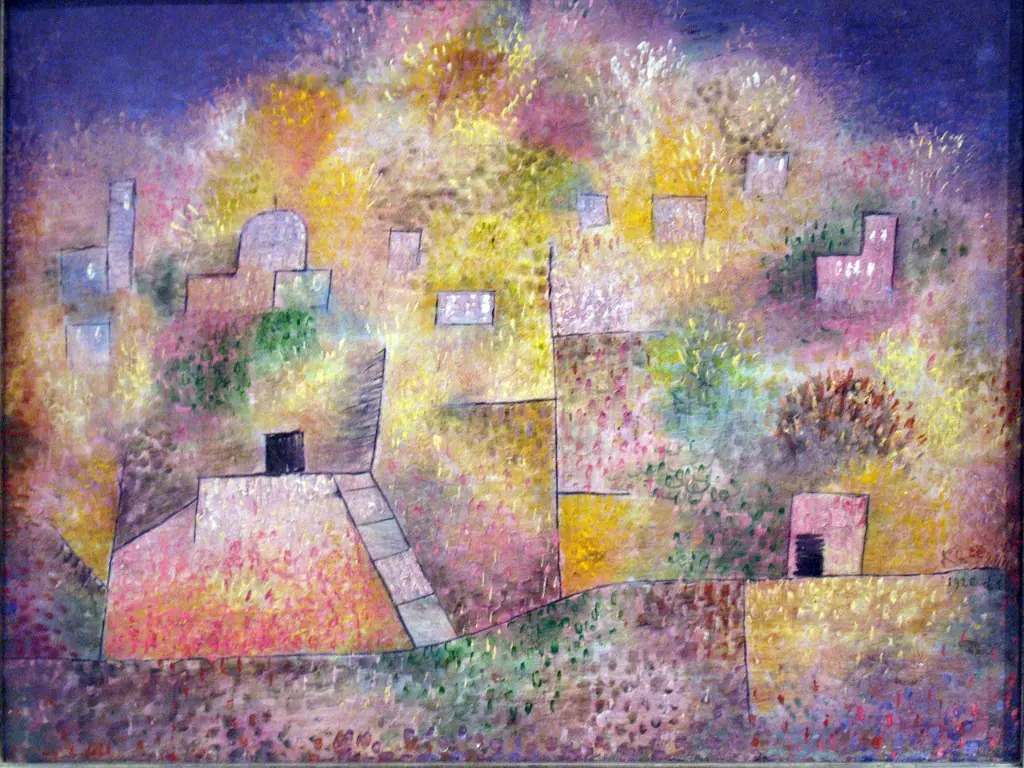
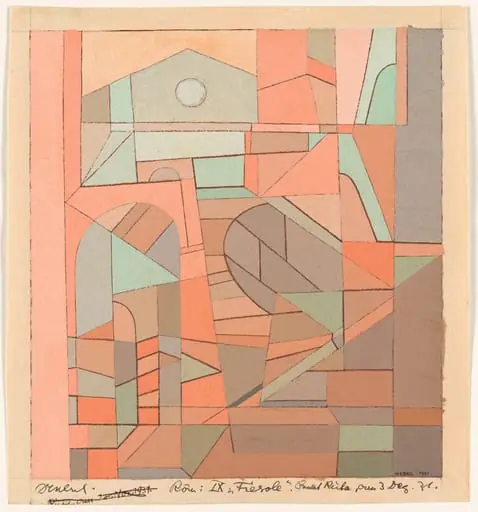
Temple Gardens is an unspecified painting by the Bauhaus artist Paul Klee. It dates from 1920 and is held in the collection of the Metropolitan Museum of Art.
About this work
Subject & Meaning
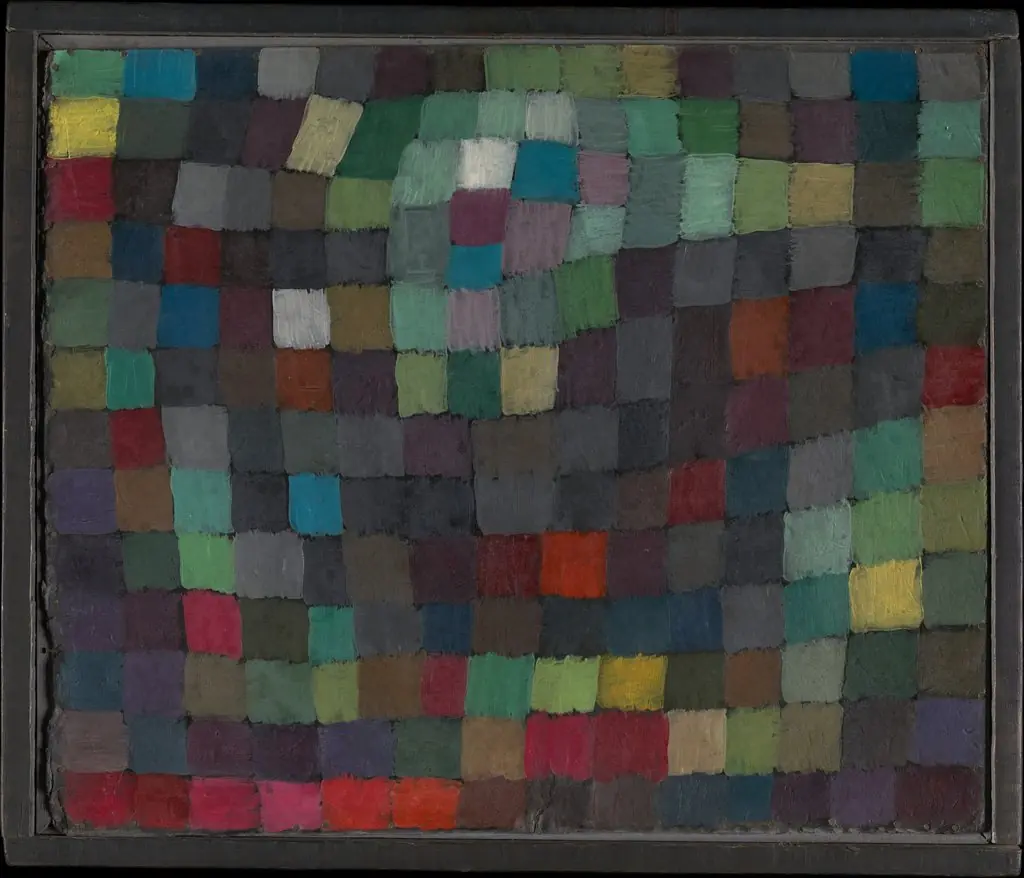
Temple Gardens depicts a garden through the lens of abstraction, as indicated by its classification as abstract art.
Temple Gardens depicts a garden through the lens of abstraction, as indicated by its classification as abstract art. The title suggests a spiritual or sacred space, 'temple' connoting reverence and 'gardens' evoking cultivated nature, yet the work renders this subject non-naturalistically. Rather than representing a literal garden, Klee transforms the theme into a composition of forms, colors, and patterns that evoke the essence or feeling of a garden rather than its physical appearance.
The abstraction serves as a means of distilling the spiritual or contemplative quality implied by the title, aligning with Klee's broader practice of using symbolic and poetic titles to infuse his non-representational works with layered meaning. The garden motif, stripped of realism, becomes a vehicle for exploring harmony, growth, and perhaps transcendence.
Technique & Style
Created in 1920, Temple Gardens is an abstract painting executed by Paul Klee. The work is classified within the genre of abstract art and depicts a garden through non-representational forms. It is housed in the collection of the Metropolitan Museum of Art.
While the specific medium and brushwork techniques are not detailed in the provided records, the piece is identified as a painting with dimensions of 23.8 centimetres in height and 30.2 centimetres in width. The formal qualities rely on abstraction to interpret the subject of a garden rather than employing realistic depiction. The artwork remains a significant example of Klee's early 1920s output, characterized by its shift away from literal representation toward geometric or symbolic interpretation of natural settings.
History & Provenance
Paul Klee created the abstract painting Temple Gardens in 1920. The work measures 23.8 by 30.2 centimetres and depicts a garden through abstraction. Following its creation, the painting entered the collection of the Metropolitan Museum of Art, where it remains housed.
While the specific circumstances of its commission and the detailed chain of ownership between its completion and museum acquisition are not provided in the available records, the work's inception date and current institutional location are established.
Overview
Paul Klee, a Swiss-born German artist, created Temple Gardens in 1920. This abstract painting, now housed at The Metropolitan Museum of Art, reflects his engagement with the Bauhaus movement and his exploration of form and color. The work presents a serene, non-representational interpretation of a garden, characteristic of his unique artistic approach that synthesized various modern art currents.
Context
Created during Klee's tenure at the Bauhaus, Temple Gardens exemplifies the experimental spirit of the influential German art school. Klee, a prominent figure there, explored fundamental principles of design and color, which he later articulated in his significant theoretical writings, compiled as the Paul Klee Notebooks. This painting reflects his pedagogical and artistic investigations into abstract forms.
Own this work as a print
Artist & collection

Artist
Paul Klee (German:; 18 December 1879 – 29 June 1940) was a Swiss-born German artist.