Artwork
Tower in Orange and Green
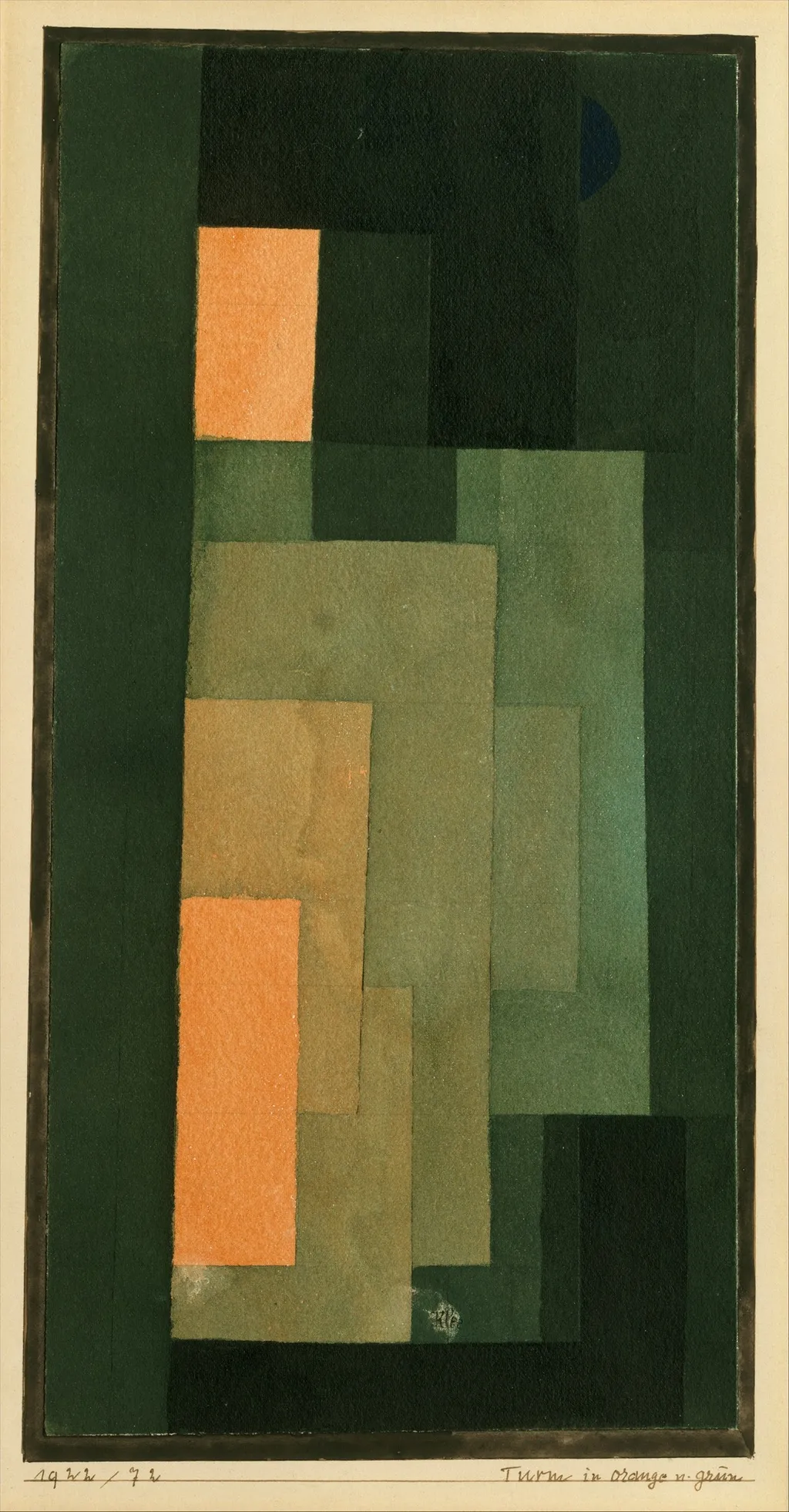
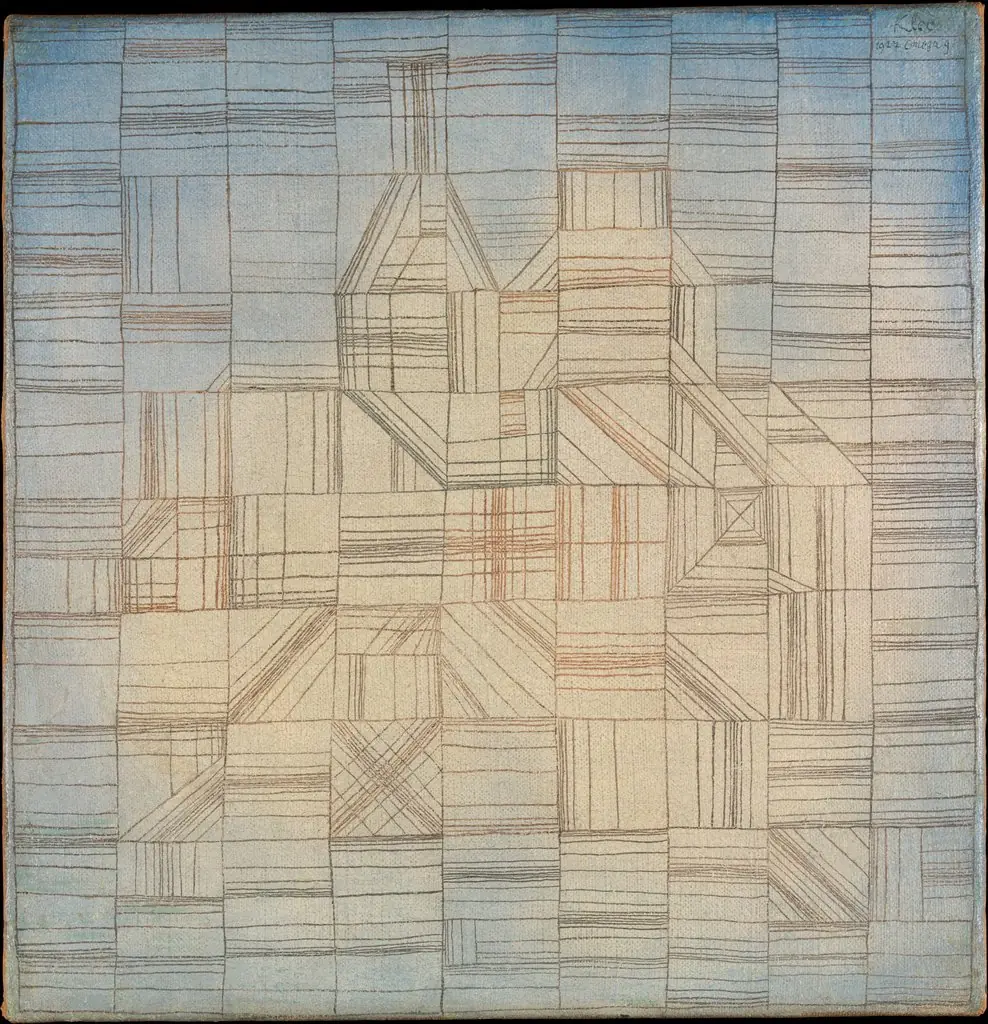
Tower in Orange and Green is an unspecified painting by the Bauhaus artist Paul Klee. It dates from 1922 and is held in the collection of the Metropolitan Museum of Art.
About this work
Subject & Meaning
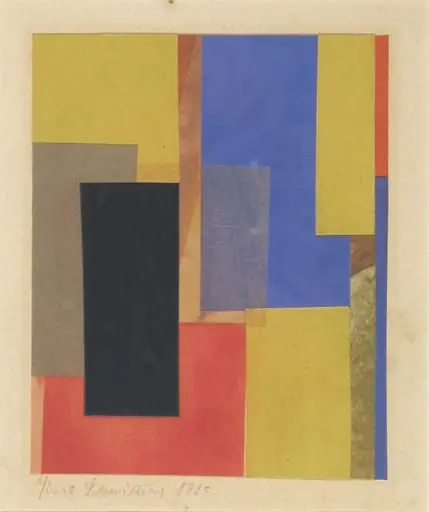
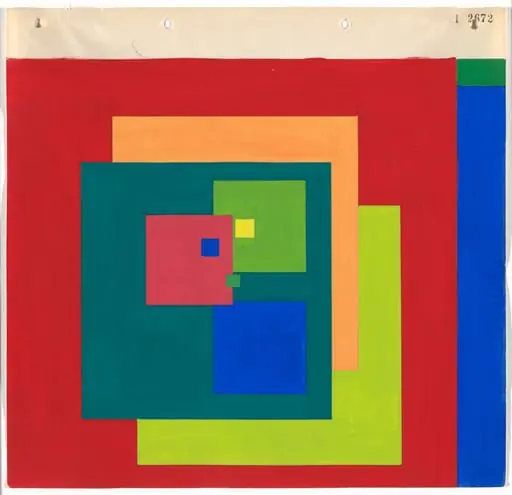
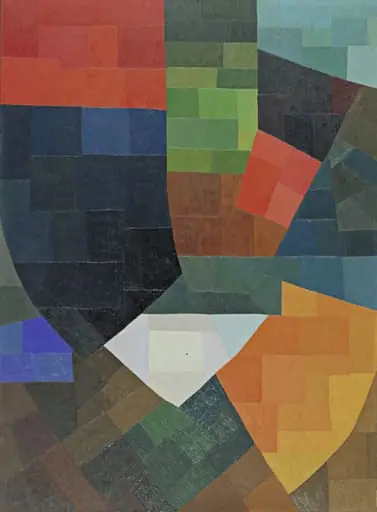
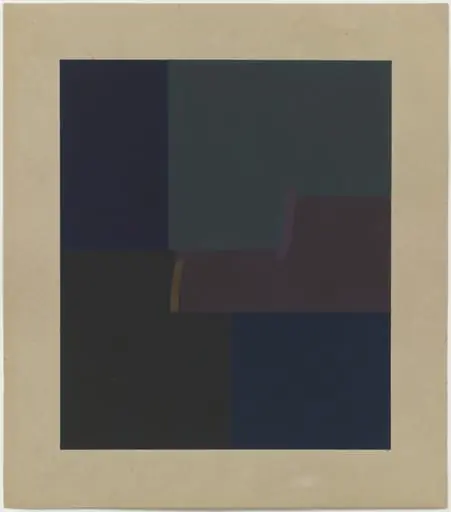
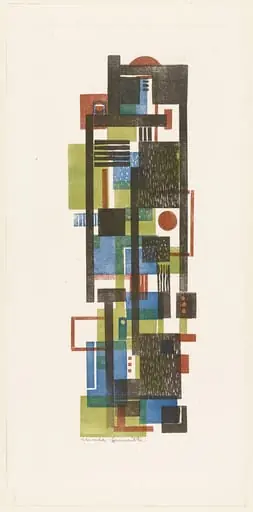
The painting presents an abstracted architectural form rendered in contrasting orange and green hues, suggesting a stylized tower or structural motif rather than a literal representation. Klee’s composition transforms geometric elements into a symbolic language that evokes spatial tension and rhythmic movement, reflecting his interest in the underlying structures of both the natural and artistic world. The work resonates with themes of modernity and the fragmentation of perception, positioning the tower as a metaphor for contemporary industrial architecture while retaining an ambiguous, poetic quality that invites multiple interpretations.
This synthesis of abstraction and symbolic resonance underscores the painting’s significance within Klee’s oeuvre, illustrating how he merges visual rhythm with conceptual depth.
Technique & Style
The formal composition balances structural clarity with lyrical spontaneity, reflecting Klee’s synthesis of Cubist fragmentation and Expressionist color theory.
Paul Klee painted Tower in Orange and Green in 1922 using oil on cardboard, a support commonly employed during his early Bauhaus period. The work features interlocking geometric planes rendered in flat, unmodulated orange and green hues, creating a rhythmic architectural abstraction. Its handling emphasizes precise contouring and layered washes, producing a sense of depth through overlapping translucent shapes.
The formal composition balances structural clarity with lyrical spontaneity, reflecting Klee’s synthesis of Cubist fragmentation and Expressionist color theory. The painting’s surface condition remains stable, with minimal craquelure confined to the cardboard substrate and no visible pigment loss or overpainting.
History & Provenance
Paul Klee created the painting Tower in Orange and Green in 1922. The work is currently held in the collection of the Metropolitan Museum of Art. While the specific commission details and the full chain of ownership prior to its museum acquisition are not detailed in the available records, the artwork's inception is firmly dated to the year 1922.
The painting is part of the Metropolitan Museum of Art's collection and is catalogued under the accession number 1952.1071. It was first exhibited at the Museum of Modern Art in New York in 1923 and later featured in the 1930 exhibition "Modern Art: 1910-1930" at the Museum of Modern Art.
The work has also been included in traveling exhibitions such as the 1949 "Paul Klee: Paintings and Drawings" show at the Art Institute of Chicago and the 1972 "Paul Klee: A Retrospective" at the National Gallery of Art in Washington, D.C.
Context
Paul Klee created Tower in Orange and Green in 1922, a work reflecting his engagement with abstraction and color theory during the Weimar period. It is part of the Metropolitan Museum of Art's collection, where it has been exhibited as an example of his mature synthetic cubist language. Scholarship highlights its synthesis of Cubist structure with expressive color fields, situating the painting within Klee's broader exploration of architectural motifs and his influence on mid-century modernist abstraction.
Overview
Created in 1922, Tower in Orange and Green is an oil painting by Paul Klee that belongs to the collection of the Metropolitan Museum of Art. Executed during his involvement with the Bauhaus, the work presents an abstracted tower built from stacked rectangular planes rendered in a limited palette of orange and green tones against a dark green field.
Artist & collection
Artist
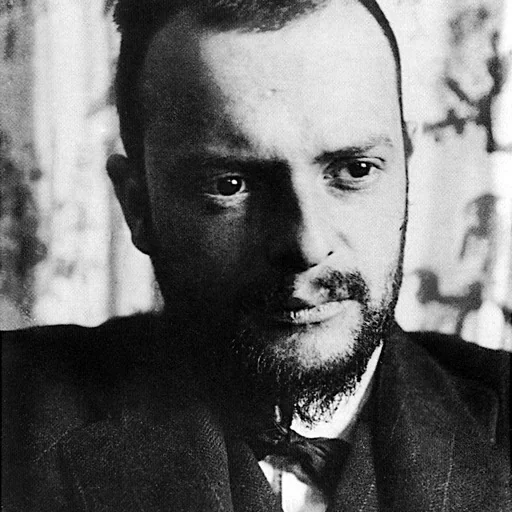
Paul Klee (German:; 18 December 1879 – 29 June 1940) was a Swiss-born German artist.