Artwork
The Falls of Niagara (Copy after an Engraving in The Port Folio Magazine, March 1810)
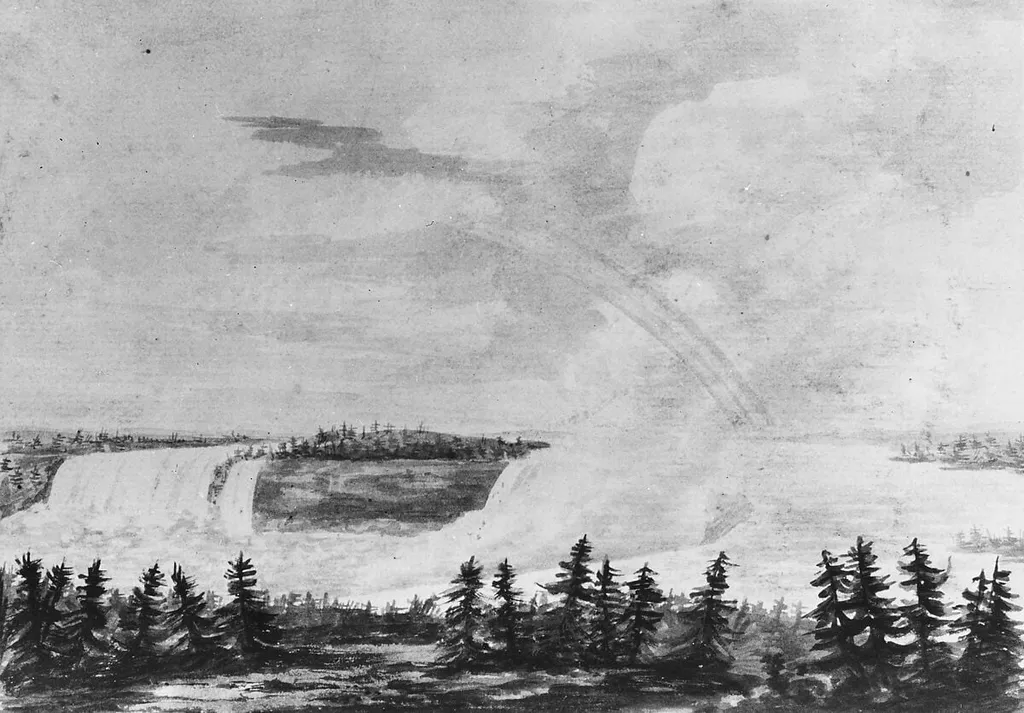
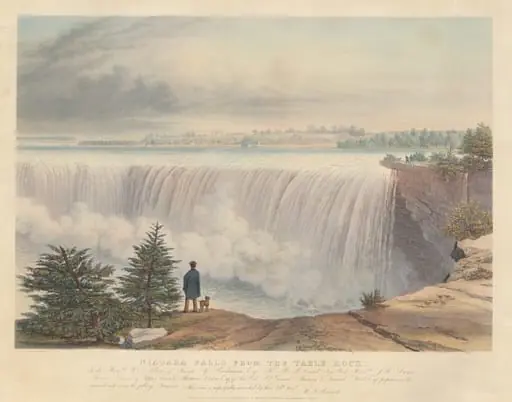
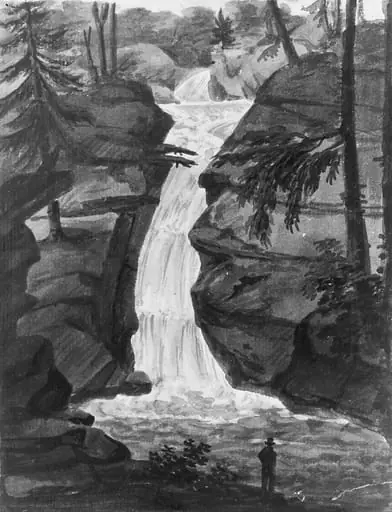
The Falls of Niagara (Copy after an Engraving in The Port Folio Magazine, March 1810) is a watercolor work on paper by the American Folk Art artist Pavel Petrovich Svinin. It dates from 1811 and is held in the collection of the Metropolitan Museum of Art.
About this work
You see a bright watercolor of Niagara Falls: white water crashes over dark rocks, trees cling to the cliffs, and tiny people stand at the edge.
You see a bright watercolor of Niagara Falls: white water crashes over dark rocks, trees cling to the cliffs, and tiny people stand at the edge.
This painting is actually a copy of a printed engraving from 1810. The artist never saw the falls in person, he worked from a magazine picture. That makes it feel a little stiff, like a postcard.
If you like how watercolor builds light in layers, look up glazing.
Subject & Meaning
The work depicts the Falls of Niagara, a landscape scene that prominently features a tree within the composition. As a copy after an engraving originally published in The Port Folio magazine in March 1810, the painting serves as a visual record of this specific print source rather than an original observation of the site. The subject matter centers on the natural grandeur of the falls, rendered through the lens of the earlier engraving.
Technique & Style
The Falls of Niagara is executed in watercolor and gouache on white laid paper, a combination suited to the fluid washes and opaque highlights needed to render cascading water and foliage. The composition, measuring 13.3 by 19.4 cm, adopts a horizontal landscape format, with a tree framing the scene as recorded in the depiction metadata. As a copy after an engraving published in The Port Folio Magazine in March 1810, the work translates the linear qualities of printmaking into the painterly handling of watercolor and gouache, retaining the graphic clarity of the source while exploiting the medium's capacity for atmospheric gradation.
History & Provenance
Pavel Petrovich Svinin created this watercolor and gouache work on white laid paper in 1811. The piece serves as a copy of an engraving of Niagara Falls that was originally published in The Port Folio Magazine in March 1810. The artwork is currently held in the collection of the Metropolitan Museum of Art, where it is classified under the American Wing.
Overview
Created around 1811, this watercolor by Pavel Petrovich Svinin belongs to the American Wing collection. Executed on white laid paper with watercolor and gouache, it reproduces an engraving that appeared in the March 1810 issue of The Port Folio. The image presents a panoramic view of Niagara Falls, rendered in a bright, layered palette.
Context
During the early 1800s, European artists frequently reproduced American scenes from printed accounts, catering to a growing curiosity about the New World. This watercolor exemplifies that trend, illustrating how travel narratives and magazine engravings served as primary visual references for artists unable to journey abroad.
Artist & collection

Artist
Pavel Petrovich Svinyin or Svinin (Russian: Па́вел Петро́вич Свиньи́н; 19 June 1787 – 21 April 1839) was a Russian writer, painter, and editor, known as a "Russian Munchausen" for many exaggerated accounts of his travels.

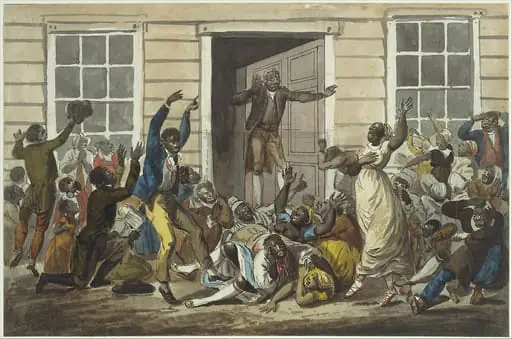 Black Methodists Holding a Prayer Meeting
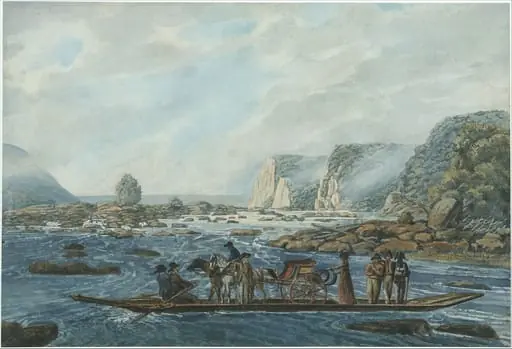 A Ferry Scene on the Susquehanna at Wright's Ferry, near Havre de Grace
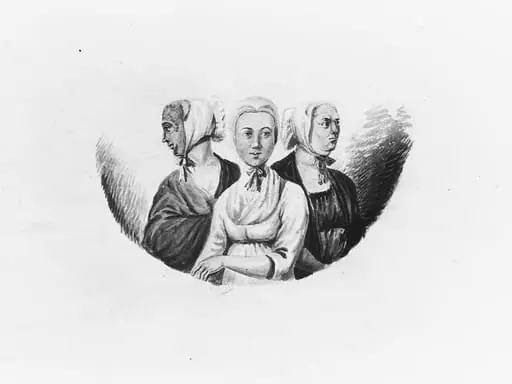 Moravian Sisters
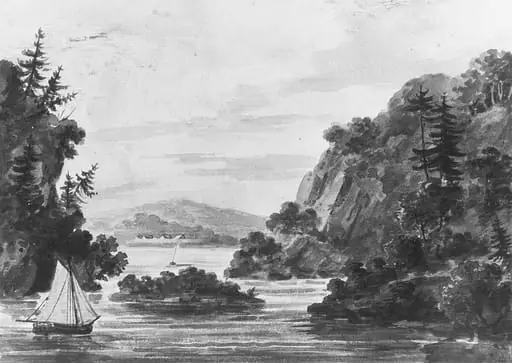 View on the Hudson River (Copy after Engraving by Weld and S. Springsguth in Weld, Travels Through the States of North America, 1807)
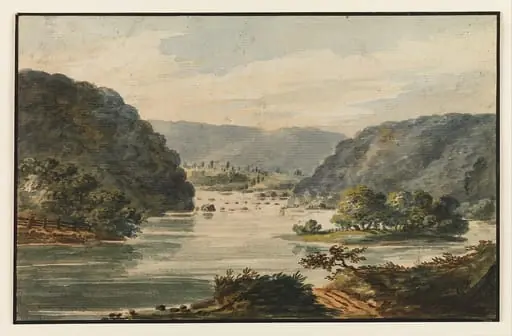 A View of the Potomac at Harpers Ferry
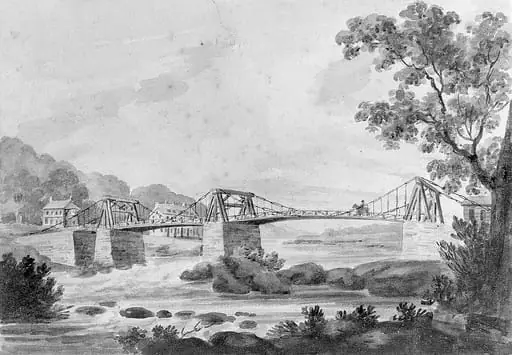 The Falls of the Schuylkill and Chain Bridge
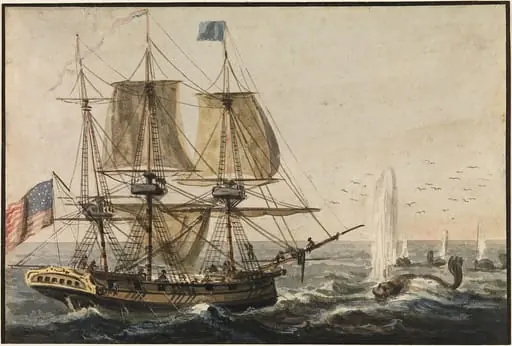 Replenishing the Ship's Larder with Codfish off the Newfoundland Coast
 Upper Falls of Solomon's Creek (after an Engraving in The Port Folio Magazine, December 1809)