Artwork
Upper Falls of Solomon's Creek (after an Engraving in The Port Folio Magazine, December 1809)
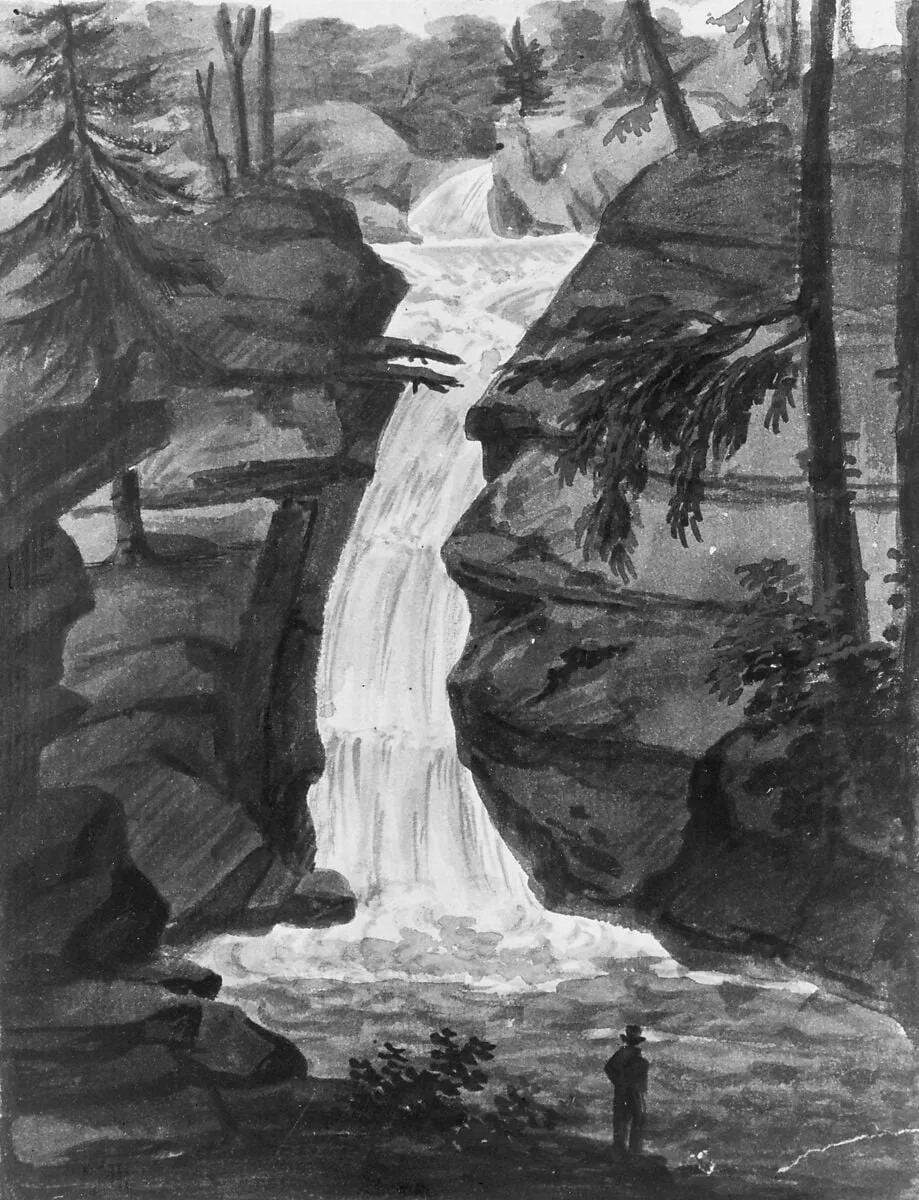
Upper Falls of Solomon's Creek (after an Engraving in The Port Folio Magazine, December 1809) is a watercolor work on paper by the Romanticist artist Pavel Petrovich Svinin. It dates from 1811 and is held in the collection of the Metropolitan Museum of Art. Created circa 1811, this watercolor and gouache composition portrays a modest cascade set within a wooded landscape.
About this work
Subject & Meaning
The composition reflects early American interest in documenting local geography while subtly evoking the sublime qualities of the young republic's terrain.
The landscape portrays a waterfall cascading through a wooded creek, emphasizing the natural force of water and the surrounding vegetation. The composition reflects early American interest in documenting local geography while subtly evoking the sublime qualities of the young republic's terrain. No symbolic allegory is recorded; the work is valued for its topographical accuracy and the artist's intent to capture a specific site after viewing an 1809 engraving in The Port Folio Magazine.
Technique & Style
Pavel Petrovich Svinin executed Upper Falls of Solomon's Creek in 1811 using watercolor and gouache applied to white laid paper. The work measures 18.1 cm in height and 13.7 cm in width. As a landscape genre piece, the composition focuses on the depiction of a creek, waterfall, and surrounding trees.
The medium choice of opaque and transparent water-based pigments on paper supports the detailed rendering of the natural watercourse and foliage.
History & Provenance
Pavel Petrovich Svinin created this watercolor and gouache landscape in 1811, directly after the 1809 publication of an engraving of Upper Falls of Solomon's Creek in The Port Folio Magazine. The work entered the collection of the Metropolitan Museum of Art, where it remains on view in The American Wing (42.95.42). Its dimensions are 18.1 cm by 13.7 cm, and it is classified as an American landscape from the early 19th century.
Overview
Created circa 1811, this watercolor and gouache composition portrays a modest cascade set within a wooded landscape. Rendered on white laid paper, the image shows a creek flowing over rocks, flanked by trees, with the water rendered in bright, swift strokes that suggest motion.
Context
During the early 1800s, American vistas were popular subjects in European publications, feeding a market for exotic imagery. Svinin’s connection to literary circles, including relatives such as Appolon Maykov and Aleksey Pisemsky, positioned him within a network that circulated such visual material.
Artist & collection

Artist
Pavel Petrovich Svinyin or Svinin (Russian: Па́вел Петро́вич Свиньи́н; 19 June 1787 – 21 April 1839) was a Russian writer, painter, and editor, known as a "Russian Munchausen" for many exaggerated accounts of his travels.

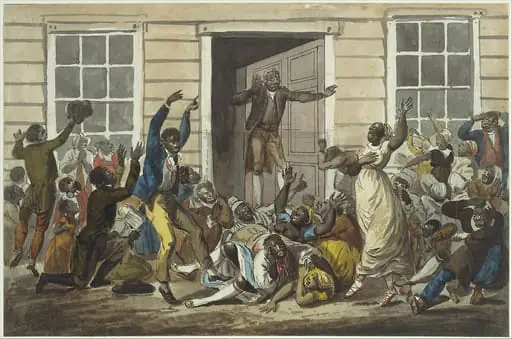 Black Methodists Holding a Prayer Meeting
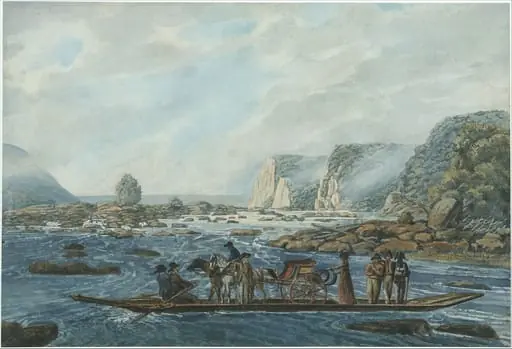 A Ferry Scene on the Susquehanna at Wright's Ferry, near Havre de Grace
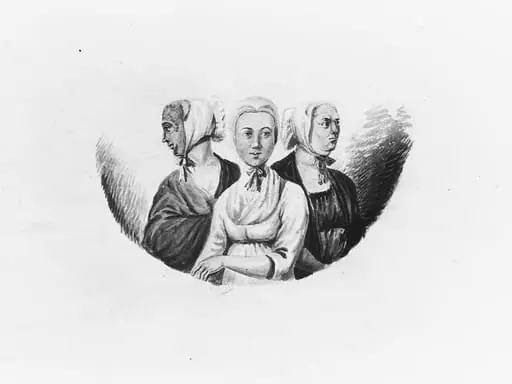 Moravian Sisters
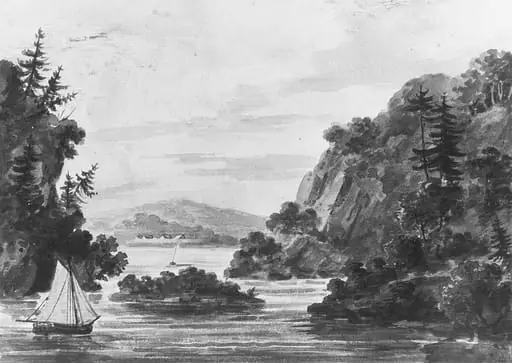 View on the Hudson River (Copy after Engraving by Weld and S. Springsguth in Weld, Travels Through the States of North America, 1807)
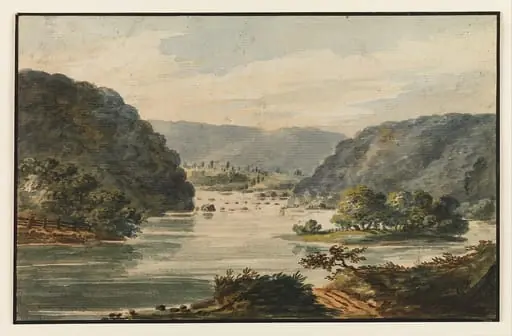 A View of the Potomac at Harpers Ferry
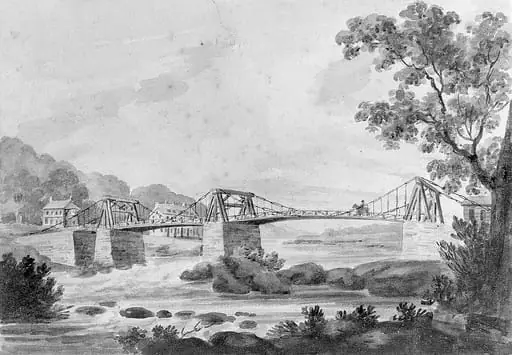 The Falls of the Schuylkill and Chain Bridge
 Replenishing the Ship's Larder with Codfish off the Newfoundland Coast
 Skovrigt landskab med et vandfald
 Skovrigt landskab med et vandfald
 Ischl, Austria
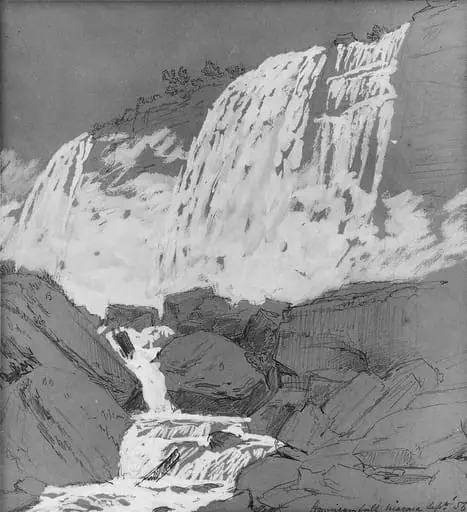 American Falls, Niagara
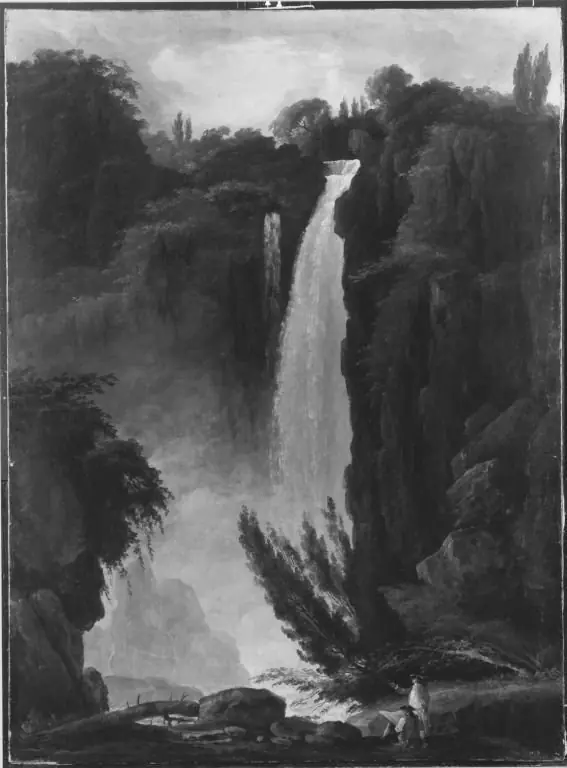 Die Kaskaden von Tivoli
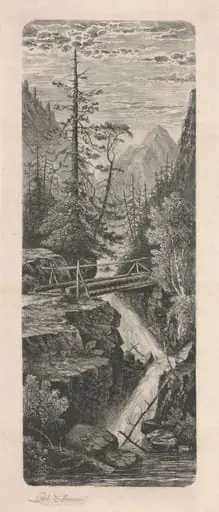 Waterfall, Rocky Mountains
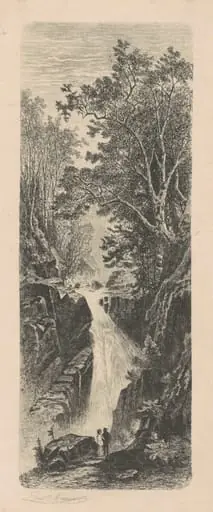 Waterfall, Cumberland Mountains
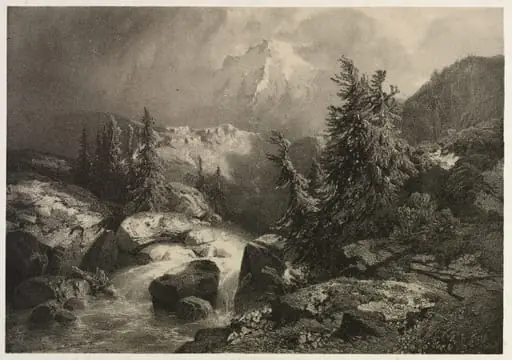 Storm in the Alps
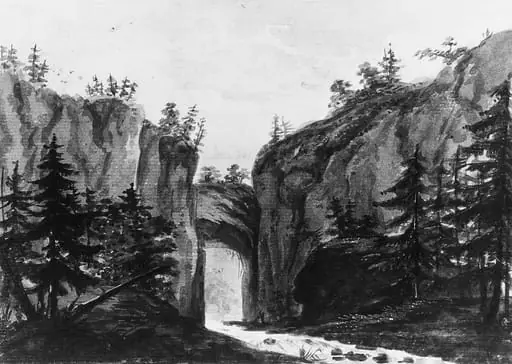 Natural Bridge, Virginia (Copy after an Engraving in François Jean, Marquis de Chastellux, Travels in North America, 1787)
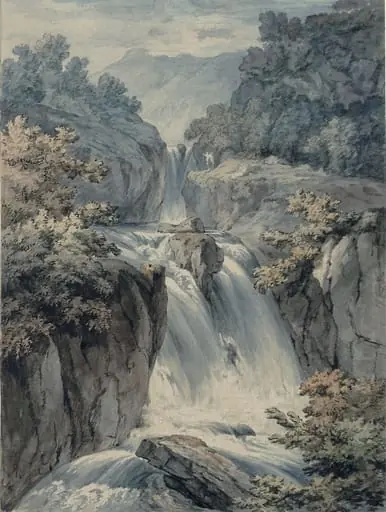 The Waterfall