Artwork
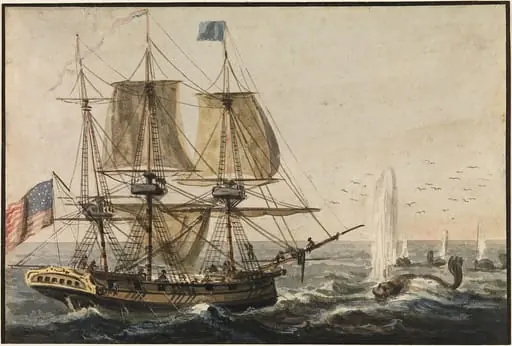
Full Sail off Sandy Hook—Entrance to New York Harbor
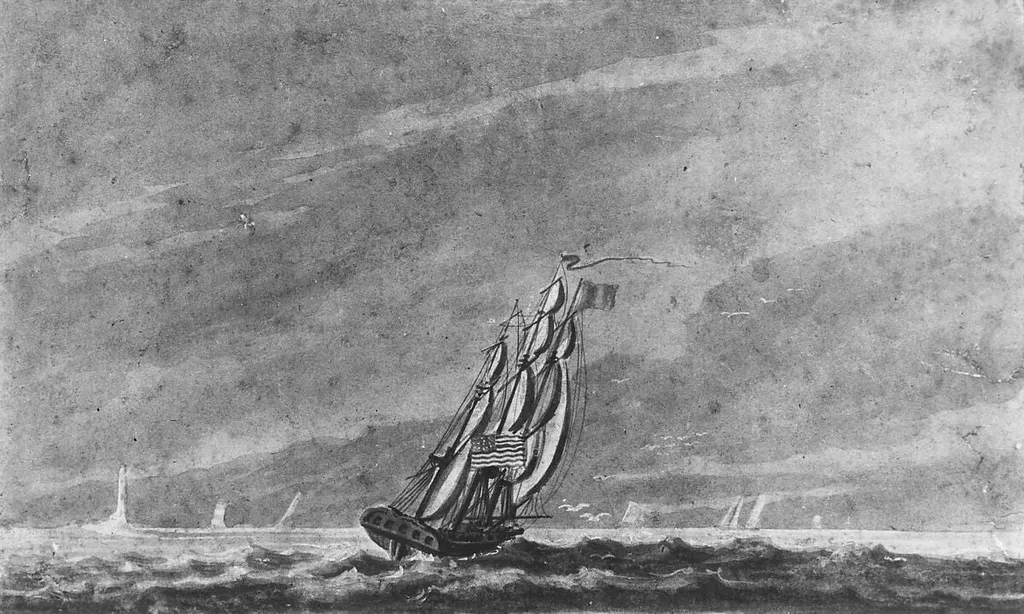
Full Sail off Sandy Hook—Entrance to New York Harbor is a watercolor work on paper by the Romanticist artist Pavel Petrovich Svinin. It dates from 1811 and is held in the collection of the Metropolitan Museum of Art. Created circa 1811, this watercolor combines gouache and lead‑white on a white wove paper support.
- Accession no.
- 42.95.2
- Credit line
- Rogers Fund, 1942
About this work
The tiny white dots on the waves are lead-white highlights, almost like glitter, that make the water pop.
You see a ship with all its sails up, cutting through choppy waves near a sandy shore.
This watercolor was painted by a Russian diplomat who visited America in 1811. He sketched the scene on the spot, then finished it back in St. Petersburg. The tiny white dots on the waves are lead-white highlights, almost like glitter, that make the water pop.
If you like the way light dances on waves, look up other works in the subject seascapes.
Overview
Full Sail off Sandy Hook, Entrance to New York Harbor is a watercolor by the Russian-American artist Pavel Petrovich Svinin (1787/88-1839), dated 1811 and held in the Metropolitan Museum of Art. Executed in watercolor, gouache, and lead white on white wove paper, the work measures 5 1/4 x 8 3/4 inches (13.3 x 22.2 cm) and is classified under The American Wing. The painting depicts a sailing vessel under full sail at the entrance to New York Harbor, capturing a moment of maritime activity that reflects the early nineteenth-century American coastal experience. Its modest scale and fluid technique exemplify Svinin's approach to documenting American scenes during his residence in the United States, offering a rare visual record by an artist who straddled Russian and American cultural spheres. The work was acquired by the Metropolitan Museum in 1942 through the Rogers Fund and remains an important touchstone for understanding transnational artistic perspectives on the young American republic.
Subject & Meaning
The painting centers on a three-masted sailing vessel heeling to starboard as it navigates choppy waters, positioned slightly left of center in the composition. The ship carries full sails and flies a striped flag from its stern, its hull tilted to suggest wind pressing from the port side. Dark rolling waves with whitecaps fill the lower third of the image, while faint vertical shapes on the distant horizon may indicate other vessels or navigational markers. The upper two-thirds are dominated by a turbulent, overcast sky with layered gray clouds streaking diagonally across the picture plane. The choice of Sandy Hook, the sandy peninsula at the northern tip of the New Jersey coast that forms the main entrance to Lower New York Bay, places the scene at a critical juncture of American maritime commerce and immigration. The ship functions as more than mere documentation, it embodies the cultural ambition and economic enterprise of the early republic, a signifier of exploration and exchange at a moment when New York Harbor was becoming one of the busiest ports in the Atlantic world.
Technique & Style
Svinin employed watercolor, gouache, and lead white on white wove paper, working in a fluid, sketch-like manner rather than producing a highly finished composition. The palette is entirely monochromatic, ranging from near-black to pale gray, with wet-on-wet application creating soft atmospheric effects in the sky while crisper lines define the ship's rigging. This handling allows the turbulent sky to merge seamlessly while preserving structural clarity in the vessel itself. The diagonal thrust of the ship against the horizontal horizon generates dynamic tension, a compositional choice that emphasizes movement and the confrontation between human technology and natural forces. The loose, spontaneous quality of the brushwork, particularly in the rendering of clouds and water, suggests Svinin's training in European watercolor traditions adapted to American subjects. The use of lead white for highlights would have provided points of luminosity against the gray tonal range, enhancing the dramatic interplay of light and shadow that animates the maritime scene.
History & Provenance
The work is dated 1811, though the Metropolitan Museum gives a slightly broader range of 1811 to circa 1813. This period corresponds to Svinin's residence in the United States, where he served as a secretary to the Russian consul in Philadelphia and traveled extensively along the eastern seaboard. The painting was acquired by the Metropolitan Museum of Art in 1942 through the Rogers Fund, receiving the object number 42.95.2. It entered the collection of The American Wing, where it remains on public view as part of the museum's holdings of early American art. The relatively late acquisition date, more than a century after the artist's death, reflects the gradual recognition of Svinin's American work within the canon of United States art history.
Context
Pavel Petrovich Svinin occupies a unique position in early American art as a Russian diplomat and amateur painter who produced one of the most extensive visual records of the United States in the early nineteenth century. Arriving in America in 1811, he traveled widely and created numerous watercolors documenting American cities, landscapes, and Native American life. His perspective as an outsider-insider, simultaneously embedded in diplomatic circles and observing American society with fresh eyes, produced images that blend European aesthetic conventions with specific American subjects. Full Sail off Sandy Hook belongs to this body of work created during his brief but productive American sojourn, which lasted until 1813. The painting's focus on maritime commerce aligns with broader artistic interests of the period in celebrating American economic vitality and national expansion. Critical reception of Svinin has emphasized his role as a cultural intermediary, and scholarly attention has increasingly recognized the historical value of his documentary images for understanding the early republic's self-image alongside European perceptions of American potential.
Legacy
While Svinin returned to Russia in 1813 and spent his later career in St. Petersburg, his American watercolors constitute his most enduring artistic contribution, preserved largely in American museum collections. Full Sail off Sandy Hook, Entrance to New York Harbor remains accessible through the Metropolitan Museum's Open Access program, which permits unrestricted commercial and noncommercial use of its image, extending its reach beyond physical exhibition. The work's afterlife is tied to the broader reassessment of early American art, particularly the recovery of images by European-trained artists who worked in the United States during the formative decades of the nineteenth century. As a document of New York Harbor at a pivotal moment in its development, the watercolor continues to serve historians of art, maritime culture, and urban development. Its presence in The American Wing affirms its institutional recognition as part of the narrative of American art, even as its Russian authorship complicates straightforward national categorization, embodying the transnational exchanges that have always shaped American visual culture.
Artist & collection

Artist
Pavel Petrovich Svinyin or Svinin (Russian: Па́вел Петро́вич Свиньи́н; 19 June 1787 – 21 April 1839) was a Russian writer, painter, and editor, known as a "Russian Munchausen" for many exaggerated accounts of his travels.

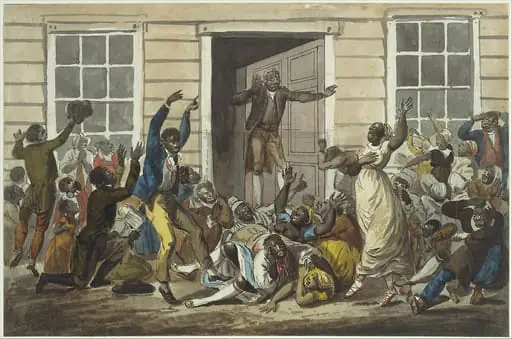 Black Methodists Holding a Prayer Meeting
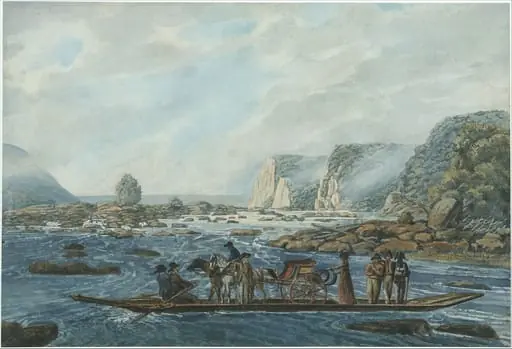 A Ferry Scene on the Susquehanna at Wright's Ferry, near Havre de Grace
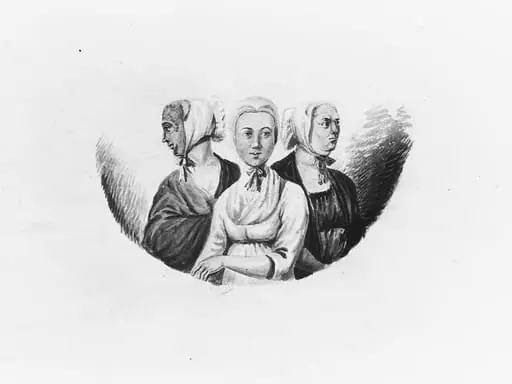 Moravian Sisters
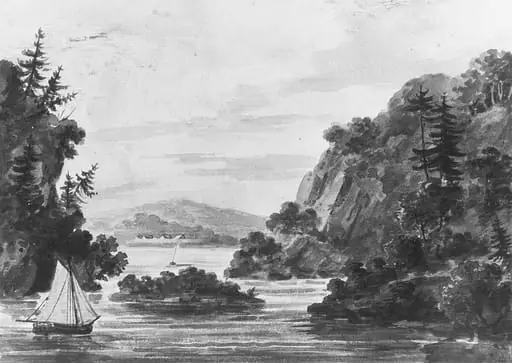 View on the Hudson River (Copy after Engraving by Weld and S. Springsguth in Weld, Travels Through the States of North America, 1807)
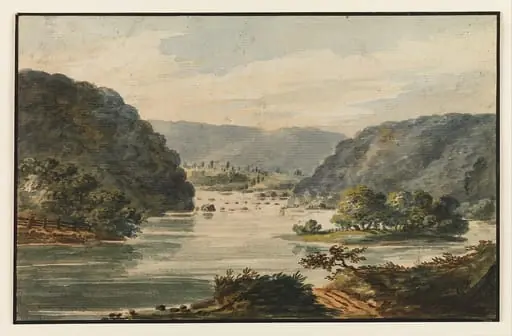 A View of the Potomac at Harpers Ferry
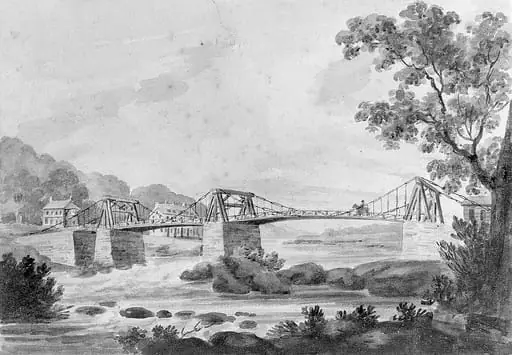 The Falls of the Schuylkill and Chain Bridge
 Replenishing the Ship's Larder with Codfish off the Newfoundland Coast
 Upper Falls of Solomon's Creek (after an Engraving in The Port Folio Magazine, December 1809)