Artwork
Christ on the Way to Calvary
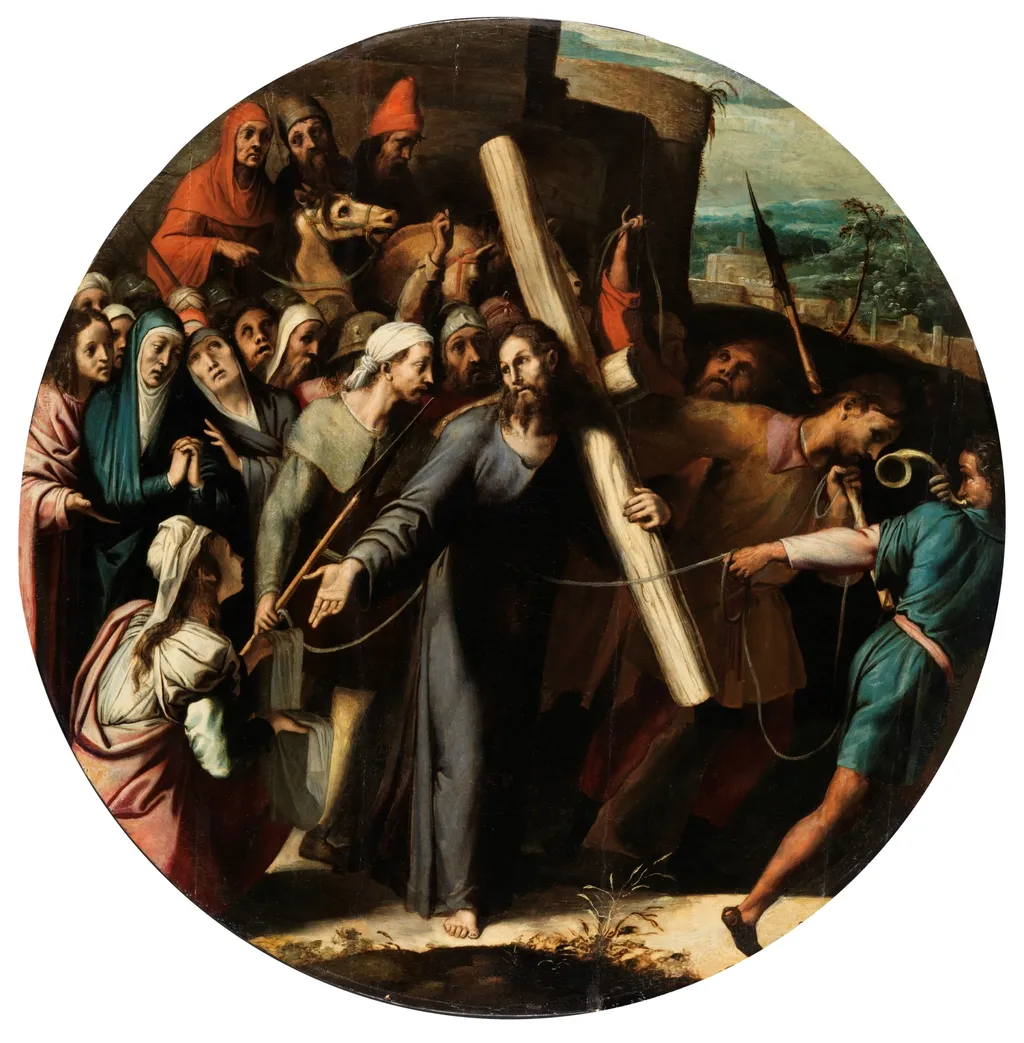
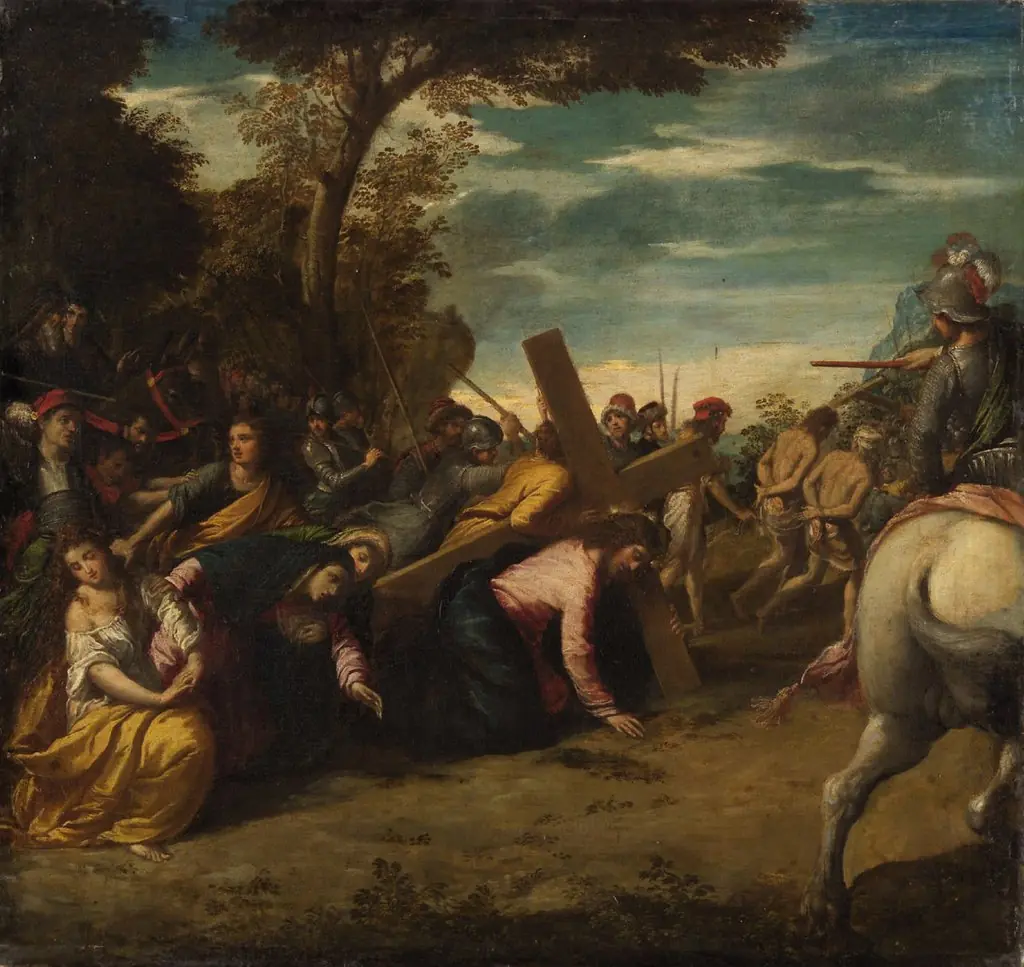
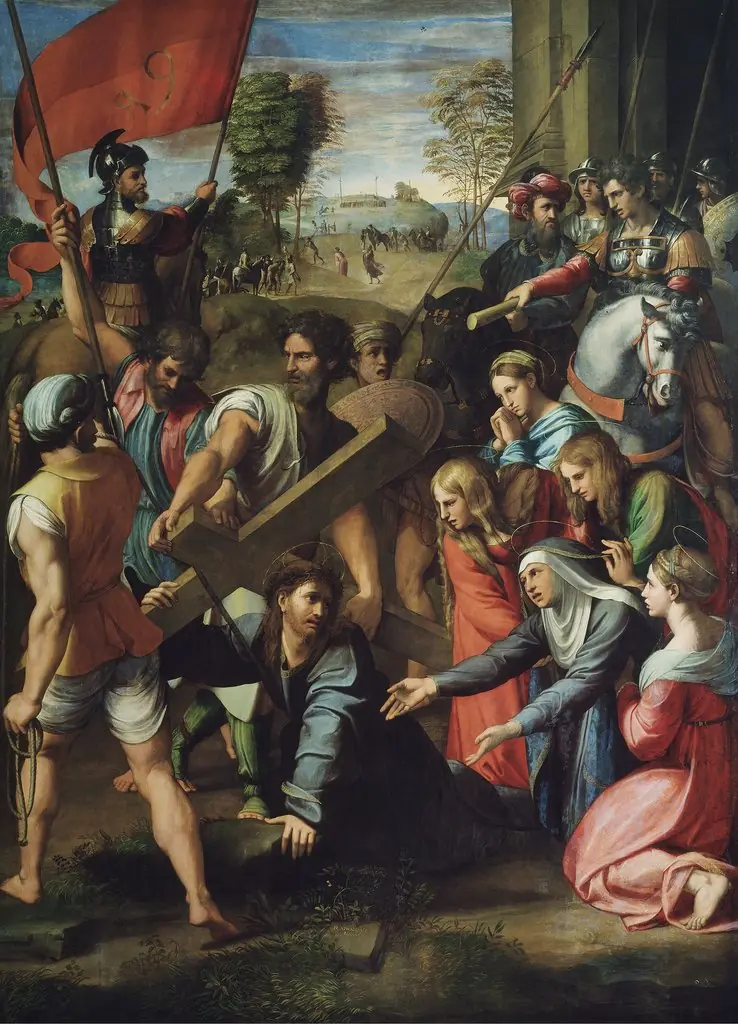
Christ on the Way to Calvary is an unspecified painting by the Mannerist artist Pedro de Campaña. It dates from 1547 and is held in the collection of the Museo del Prado.
About this work
Subject & Meaning
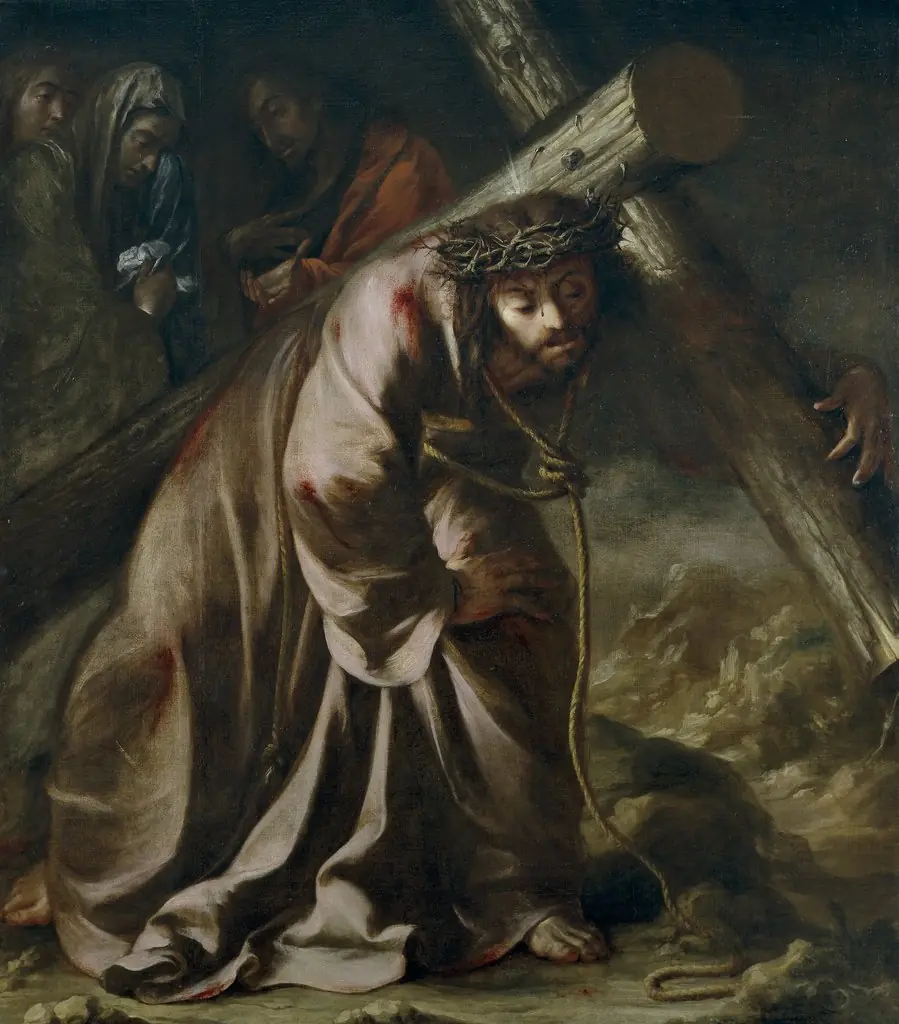
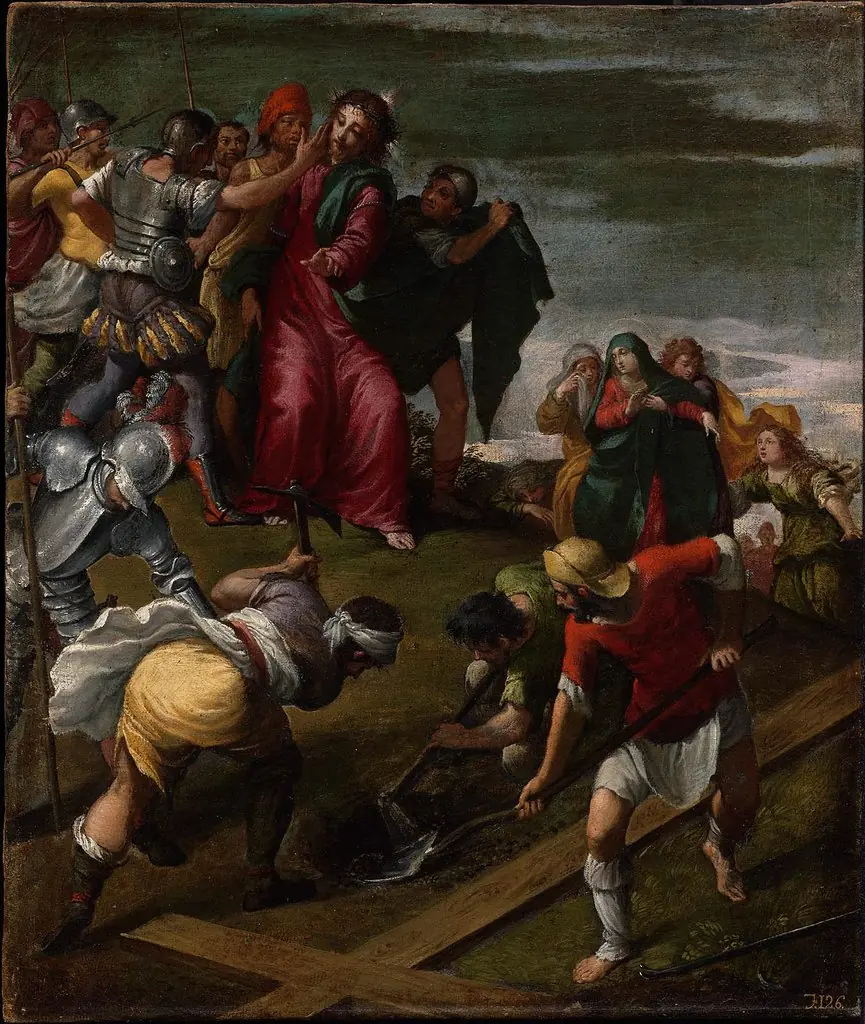
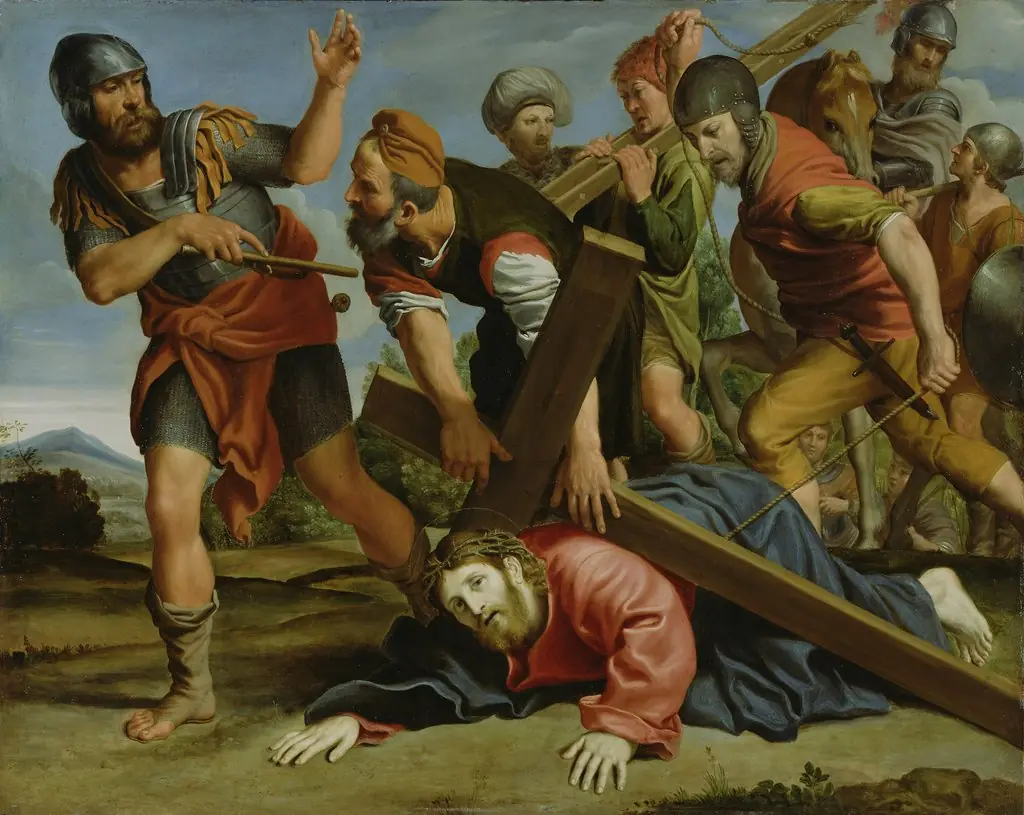
The painting depicts Christ Carrying the Cross, a moment from the Passion narrative in which Jesus is led toward Calvary bearing the crossbeam on his shoulder.
The painting depicts Christ Carrying the Cross, a moment from the Passion narrative in which Jesus is led toward Calvary bearing the crossbeam on his shoulder. The subject aligns with traditional iconography of the Ecce Homo and the Way to Calvary, emphasizing Christ’s physical burden and spiritual resolve. The composition centers on the solitary figure of Christ, whose posture and downward gaze convey endurance and solemnity, while the sparse background focuses attention on the act of bearing the cross. This iconography underscores themes of sacrifice, redemption, and the fulfillment of prophecy within Christian theology.
History & Provenance
Pedro de Campaña created the religious painting Christ on the Way to Calvary in 1547. The work, which depicts Jesus Christ carrying the cross, measures 74 by 74 units. It currently forms part of the collection held by the Museo del Prado.
Overview
Created in 1547 by the Flemish artist Pedro de Campaña, this oil painting portrays the biblical episode of Christ bearing the cross on his way to Calvary. Executed in the Mannerist idiom, the work is part of the Prado Museum’s collection and exemplifies the period’s interest in elongated forms and complex compositions.
Technique & Style
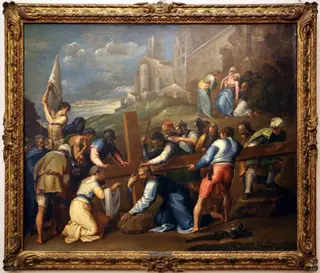
Campaña employs a realistic approach, emphasizing meticulous detail in garments, facial expressions, and the architectural background. The palette is dominated by subdued earth tones, while careful modeling of light and shadow creates a subtle chiaroscuro effect that gives volume to the figures and depth to the cityscape beyond.
Own this work as a print
Artist & collection
Artist
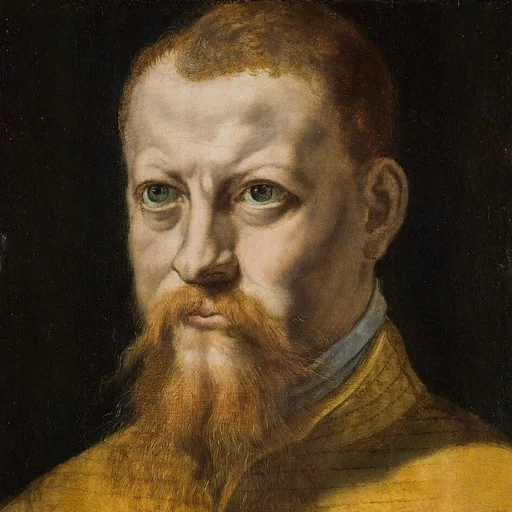
Pedro Campaña (1503–1586) was a Flemish painter of the Renaissance period, mainly active in Italy and Spain. His actual name was Pieter de Kempeneer, translated into French as Champaigne, and was also known as Peter van de Velde.