Artwork
Christ Falling on the Way to Calvary
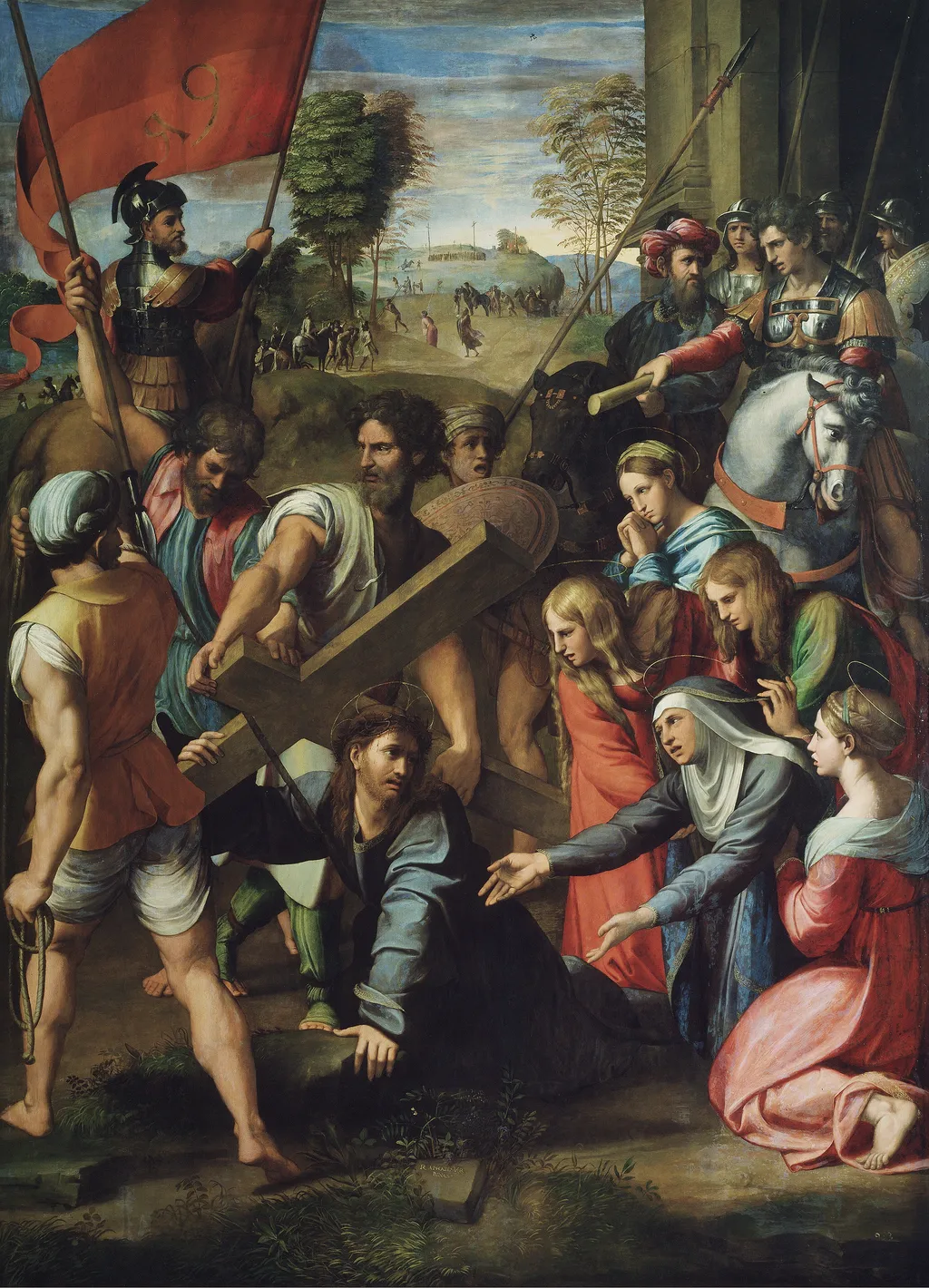
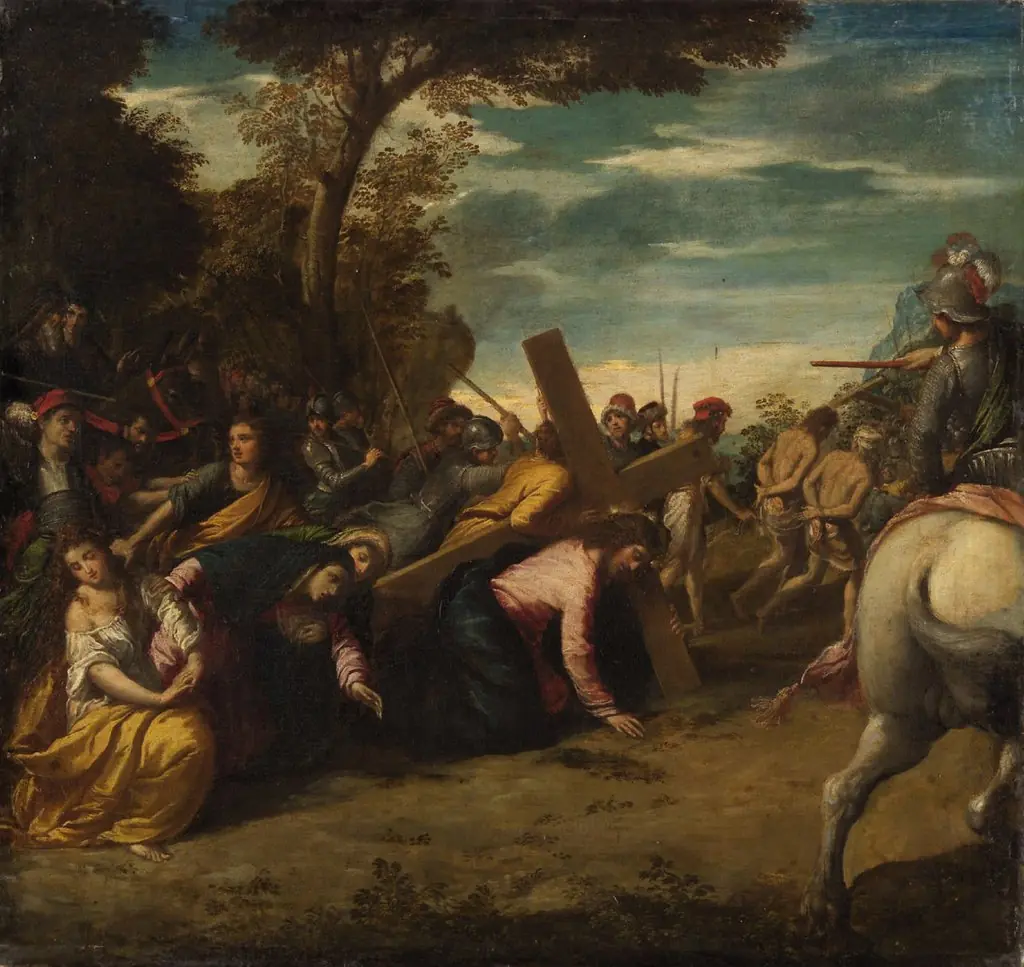
Christ Falling on the Way to Calvary is an oil painting by the High Renaissance artist Raphael. It dates from 1515 and is held in the collection of the Museo del Prado.
About this work
This painting shows Christ carrying the cross on his way to Calvary. Raphael made it around 1515 using oil paint. It now lives at the Museo del Prado in Madrid.
The scene marks a quiet but heavy moment in Christ’s journey. Raphael was still changing his style when he painted this. That’s why experts call it important for his growth.
Look up the Museo del Prado next.
Subject & Meaning
The composition’s theatrical staging, with dense foreground emotion and a distant, almost stage-like background, reinforces the narrative’s dramatic intensity.
Raphael’s Christ Falling on the Way to Calvary depicts the biblical episode of Christ’s journey to Golgotha, capturing the moment he collapses under the weight of the cross. The painting centers on the emotional and physical strain of the scene, emphasizing the Virgin Mary’s anguish, known as the Swoon of the Virgin or Lo Spasimo, as she witnesses her son’s suffering. This iconographic motif, popular in early 16th-century Catholicism, portrays Mary kneeling in distress, though not fully collapsed, underscoring her maternal grief.
Symbolically, the work conveys themes of sacrifice, divine suffering, and human empathy. Simon of Cyrene, compelled to assist Christ, embodies reluctant solidarity, while the armed guards and onlookers contrast with the sorrowful figures of the Virgin and the holy women. The composition’s theatrical staging, with dense foreground emotion and a distant, almost stage-like background, reinforces the narrative’s dramatic intensity. The painting’s title reflects its focus on Mary’s visceral reaction, framing Christ’s Passion through her spiritual torment.
Technique & Style
Originally executed in oil on a wood panel around 1514–1517, the work was transferred to canvas between 1813 and 1822 while in Paris, a common practice in France at the time. This change of support has significantly compromised the painting's condition, leaving its current state described as not very good. Stylistically, the composition concentrates intense emotion within the crowded foreground, treating the distant background like a theatrical stage set with groups of figures and crosses.
The handling reflects High Renaissance principles, though the Virgin's depiction as merely kneeling rather than fainting represents a specific, somewhat controversial interpretation of her agony. While Raphael is credited with the primary design and major painted areas, workshop assistance is acknowledged for less complex sections.
History & Provenance
The panel was commissioned by the Sicilian Olivetan monastery of Santa Maria dello Spasimo in Palermo, with specifying that it was painted on commission from Giacomo Basilico. Raphael executed the work in Rome, with dating the painting to around 1517 and indicating it was finished by 1520. Originally painted in oil on wood, it was shipped by sea to Palermo, but the vessel foundered in a storm.
According to Vasari, as recounted in, the painting was carried in its case by the sea to Genoa, emerging miraculously uninjured. The Sicilian monks recovered it through papal intercession, and it was installed in Palermo, where it acquired great fame.
In 1661 the Spanish Viceroy Ferrando de Fonseca acquired the painting on behalf of King Philip IV of Spain, who had it placed on the main altarpiece of the Royal Alcazar chapel in Madrid. It was seized by Napoleon and taken to Paris between 1813 and 1822, during which time it was transferred from panel to canvas. Unlike many works taken as booty, it was returned to the Spanish royal collection and later transferred to the Museo del Prado, where it remains today.
The painting Christ Falling on the Way to Calvary (c. 1515) is held in the Museo del Prado in Madrid. It was originally commissioned by the Sicilian monastery of Santa Maria dello Spasimo in Palermo and painted in Rome around 1517. The work survived a shipwreck during transport, was recovered in Genoa, and later acquired by the Spanish Viceroy Ferrando de Fonseca in 1661 for King Philip IV.
It remained in Spain until 1813, when Napoleon took it to Paris, where it was transferred to canvas. The painting was eventually returned to Spain and entered the Prado collection. A 1674 copy by Juan Carreño de Miranda is displayed at the Real Academia de Bellas Artes de San Fernando in Madrid.
Context
Christ Falling on the Way to Calvary occupies a pivotal place in Raphael’s late Roman oeuvre, marking a stylistic turn toward heightened emotional compression and dramatic staging that culminates in the High Renaissance’s synthesis of form and feeling.
Scholars emphasize its role in the vogue for the "Spasimo" theme, devotion to the Virgin’s anguish at Christ’s fall, which, though theologically debated, became a locus of Counter-Reformation piety. The panel’s tempestuous sea voyage, recorded by Vasari, further cemented its legendary status, transforming the work into an emblem of divine protection and artistic prestige. Its later transfer to canvas in France and its return to Spain after Napoleonic seizure underscore the painting’s itinerant cultural authority across early modern Europe.
Once contested, the composition is now widely accepted as largely autograph, with workshop assistance confined to subsidiary passages. This consensus reframes the work within Raphael’s late Roman religious narratives, linking it to contemporaneous altarpieces that orchestrate sacred drama through spatial illusion and expressive gesture.
Legacy
The painting, known as Lo Spasimo, acquired significant fame in Palermo following its miraculous survival of a shipwreck while en route to the Sicilian monastery of Santa Maria dello Spasimo. Its reputation as a divine work was cemented by this legend, which was recorded by Giorgio Vasari. The work's influence is evidenced by a 1674 copy commissioned for the Royal Alcazar of Madrid, executed by Juan Carreño de Miranda, who meticulously replicated the original's color and precise drawing.
Art historical analysis suggests the composition reflects Raphael's engagement with Albrecht Dürer's woodcut The Large Passion, specifically regarding the depiction of Christ's fall and the Swoon of the Virgin. Although its attribution to Raphael was once disputed, modern consensus accepts it as largely his own hand, marking it as an important work in the development of his style.
Overview
Christ Falling on the Way to Calvary, also referred to as Lo Spasimo or Il Spasimo di Sicilia, is an oil painting executed by Raphael around 1514–1516. The work measures roughly 267 × 199 cm and is part of the collection of the Museo del Prado in Madrid. It occupies a pivotal position in the artist’s oeuvre, marking a transitional phase in his artistic development.
Own this work as a print
Artist & collection
Artist
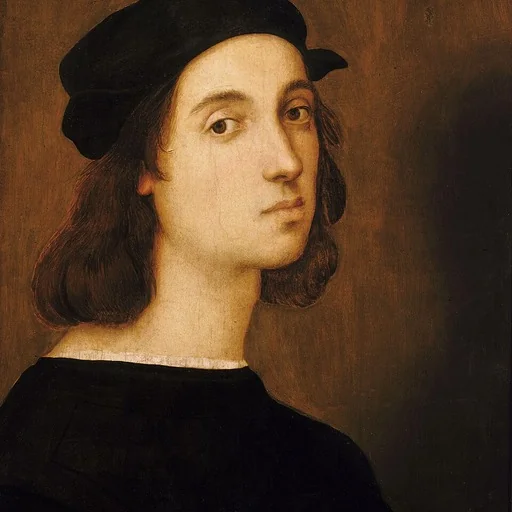
Raphael was born Raffaello Sanzio in Urbino on April 6, 1483, the son of Giovanni Santi, a painter and poet attached to the ducal court.