Artwork
An army camp
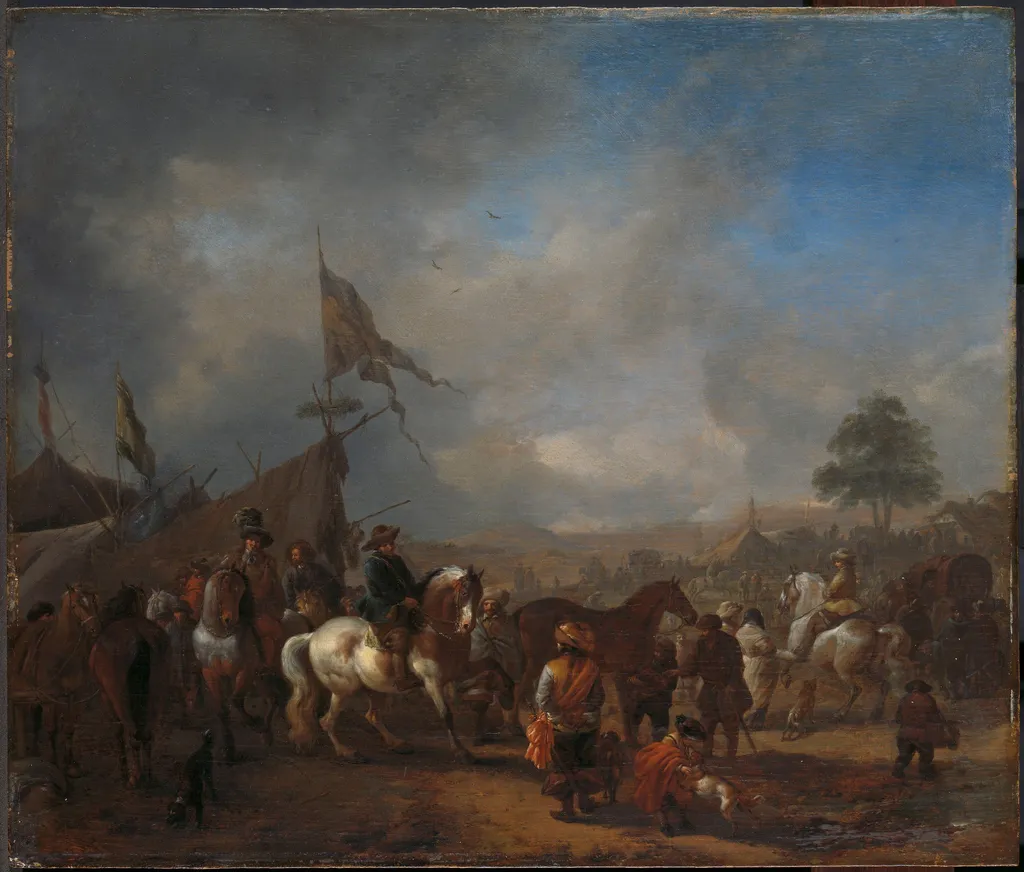
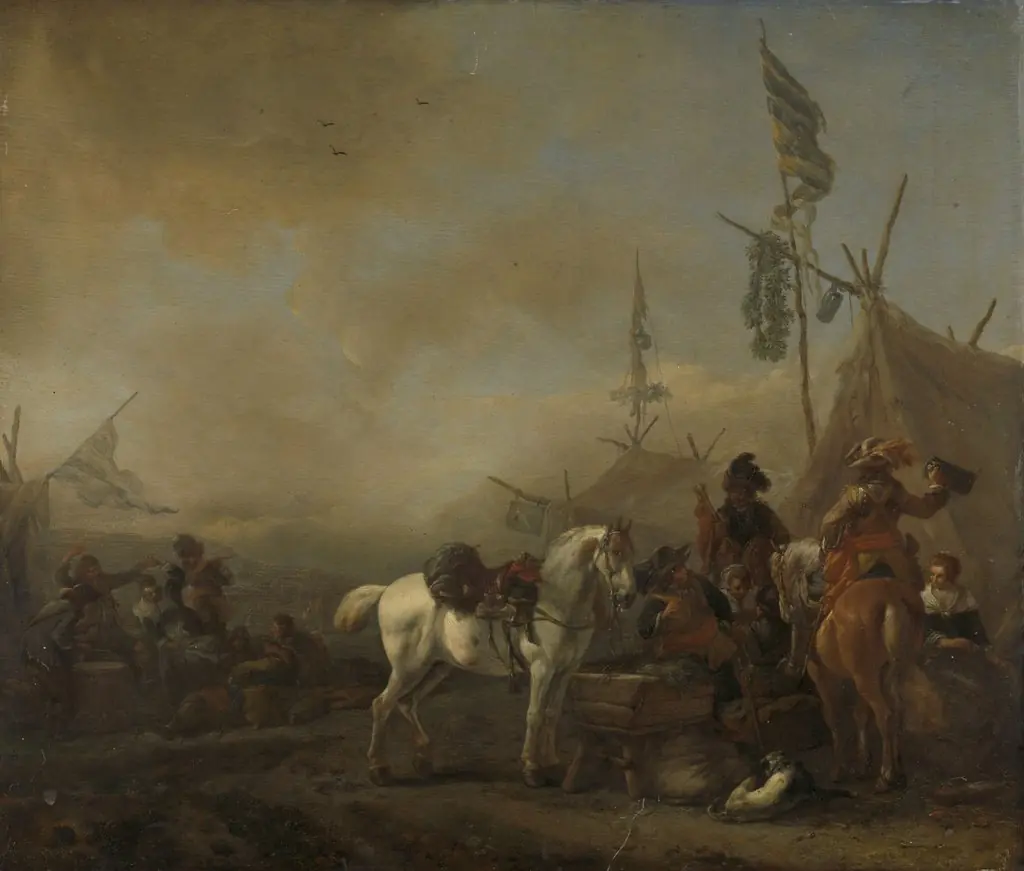
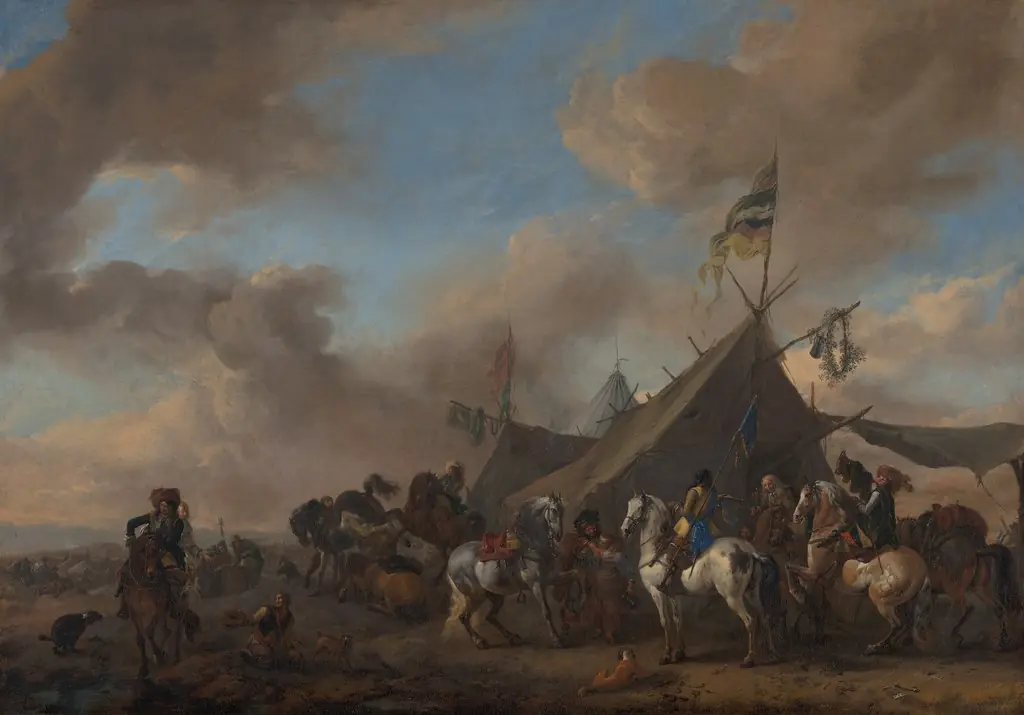
An army camp is an oil painting by the Dutch Golden Age artist Philips Wouwerman. It dates from 1650 and is held in the collection of the Rijksmuseum.
About this work
Subject & Meaning
The figures’ gestures and clustered equipment convey both the logistical demands of camp life and the latent readiness of mounted troops.
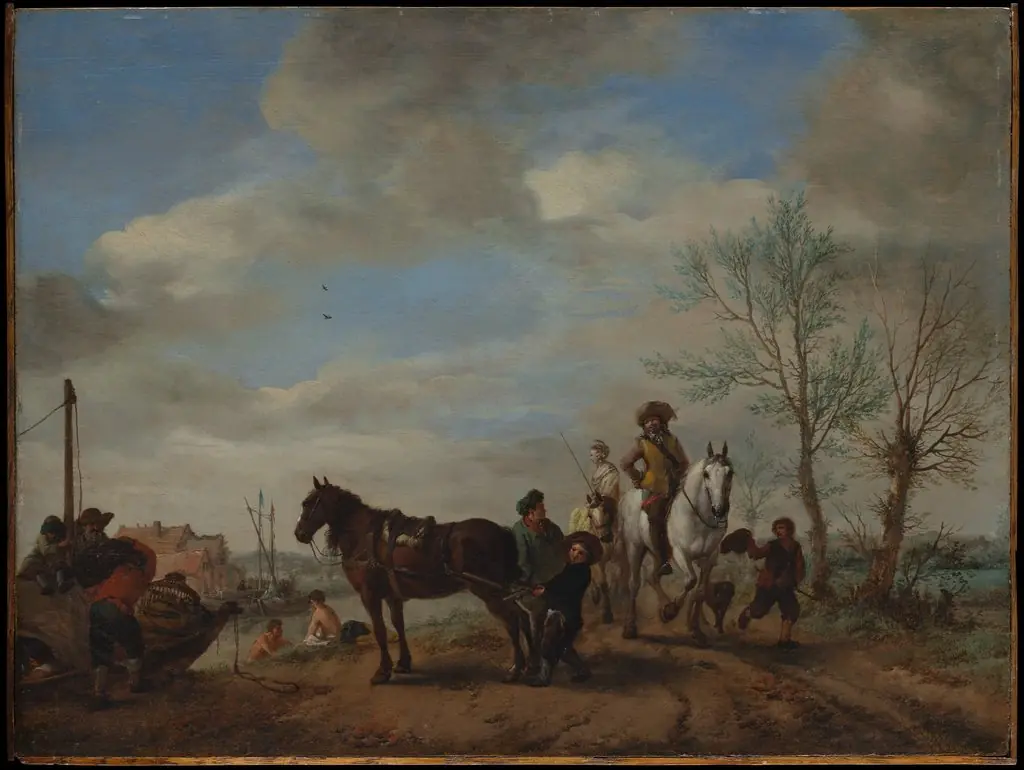
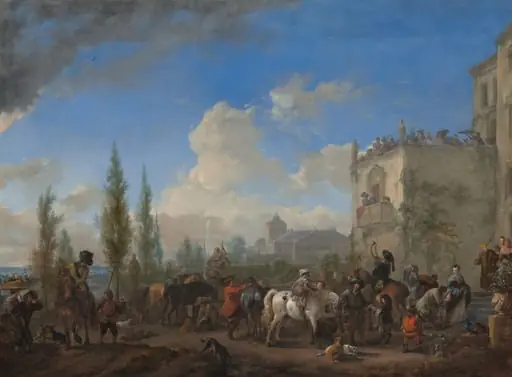
The painting depicts a military encampment populated by cavalry soldiers and camp followers, including a sutler tending a stall. Wouwerman’s scene emphasizes the organized bustle of a Seventeenth‑century army at rest, where tents, horses, and supply activities coalesce into a snapshot of martial routine. The figures’ gestures and clustered equipment convey both the logistical demands of camp life and the latent readiness of mounted troops.
In this context, the sutler’s presence symbolizes the intersection of civilian provisioning with military necessity, grounding the image in the material realities of early modern warfare.
Technique & Style
Created in 1650, An army camp is an oil painting executed on a panel support. The work measures 42 cm in height and 49 cm in width. As a genre scene depicting a military encampment with cavalry and sutlers, the piece reflects the artist's characteristic handling of such subjects.
The painting is currently held in the Rijksmuseum in Amsterdam as part of the Adriaan van der Hoop collection.
History & Provenance
The painting An army camp was created by Philips Wouwerman in 1650, executed in oil on panel and classified as a genre scene depicting a military camp, sutler, and cavalry. It entered the collection of Adriaan van der Hoop, who owned the work and was based in Haarlem. The work is part of the holdings of the Rijksmuseum and Amsterdam Museum, both institutions that list it within their collections and display it at the Rijksmuseum.
An army camp is an oil painting on panel created by Philips Wouwerman in 1650. It measures 42 by 49 centimeters and was owned by Adriaan van der Hoop before entering the Rijksmuseum collection. The work has been exhibited at the Rijksmuseum in Amsterdam, where it remains part of the permanent display.
The painting is catalogued in the Rijksmuseum inventory as SK-C-272 and is also listed in the Adriaan van der Hoop collection. It was included in a 2015 exhibition titled "Dutch Seventeenth-Century Genre Scenes" at the Rijksmuseum, highlighting its genre scene classification and military subject matter.
Overview
Philips Wouwerman, a Dutch painter active in the mid‑17th century, produced the oil work titled An army camp around 1650. The canvas records a bustling military encampment, populated by mounted troops, foot soldiers and a sutler attending to supplies. The scene reflects the genre‑type compositions that were popular in the Dutch Golden Age, and it now belongs to the collection of the Rijksmuseum.
Context
In the 1650s the Dutch Republic was at peace after the Eighty‑Year War, yet military themes remained popular in art as symbols of national strength and as exotic subjects. Wouwerman, a member of the Haarlem Guild of St. Luke, specialized in such scenes, integrating his knowledge of equine anatomy with lively, anecdotal storytelling.
Own this work as a print
Artist & collection
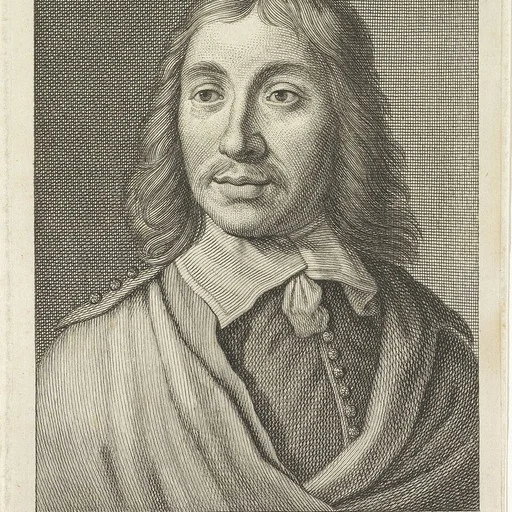
Artist
Philips Wouwerman (also Wouwermans) (24 May 1619 (baptized) – 19 May 1668) was a Dutch painter of hunting, landscape and battle scenes. He became prolific during the Dutch Golden Age and joined the Haarlem Guild of St. Luke.