Artwork
Army camp
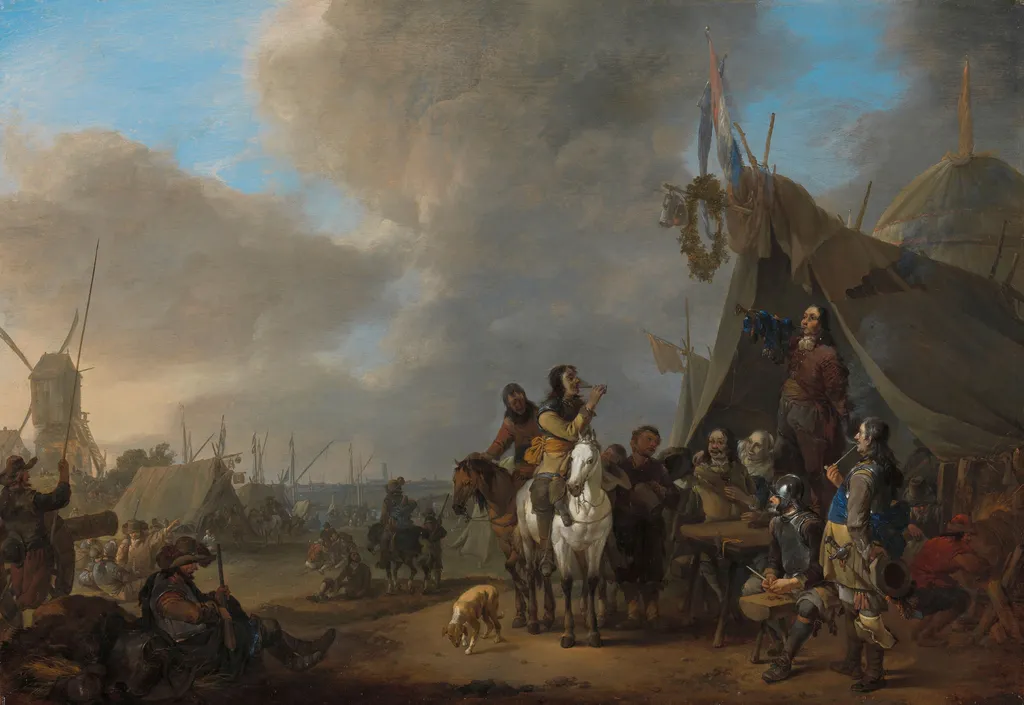
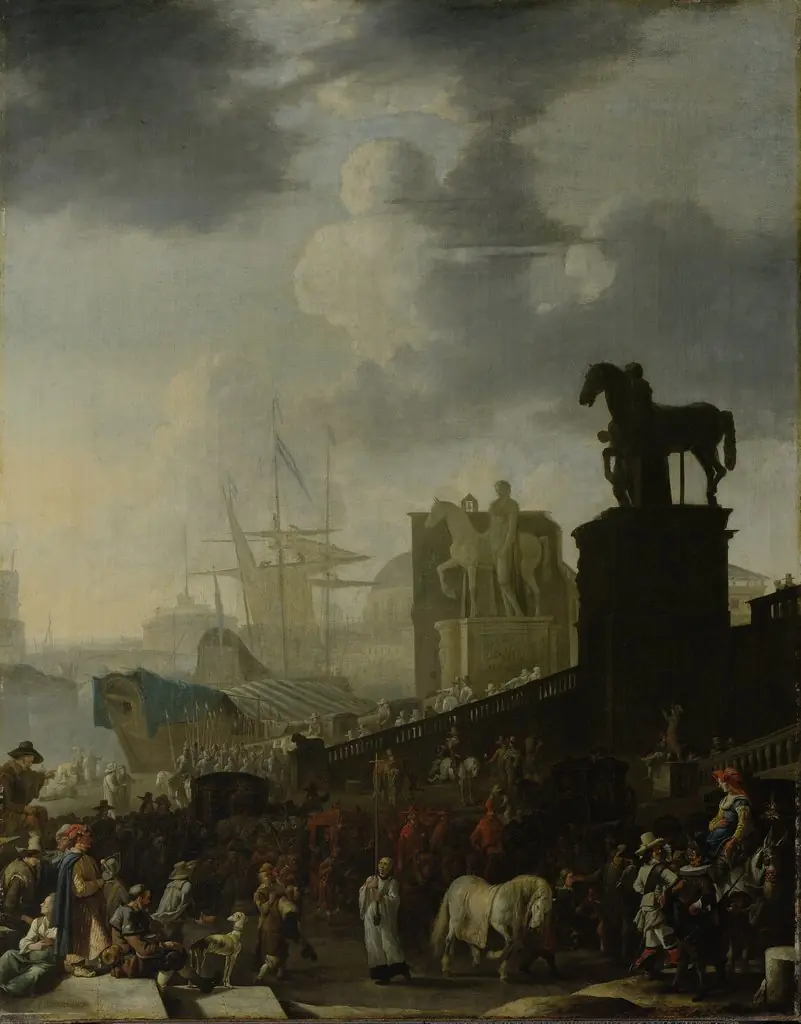
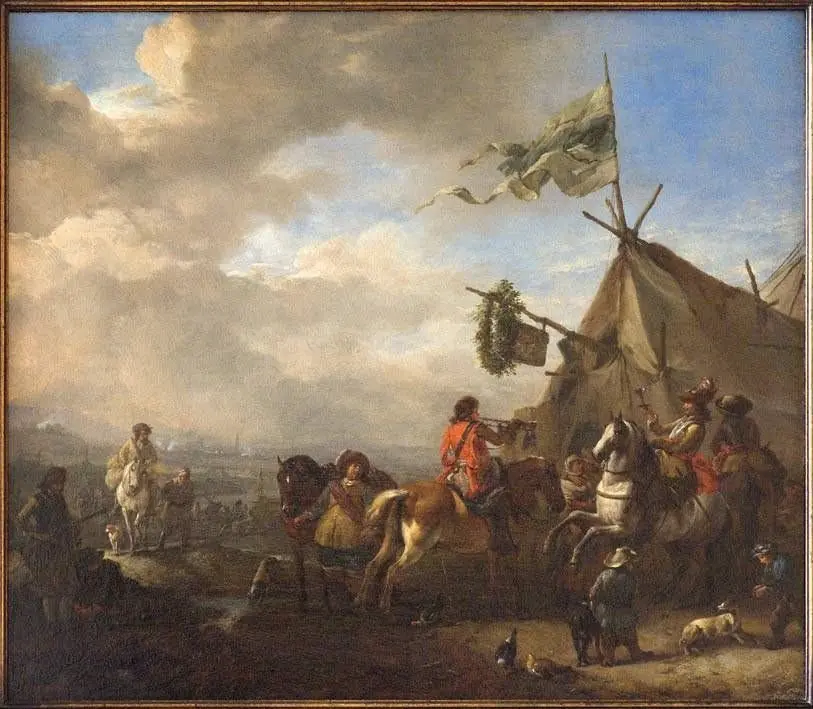
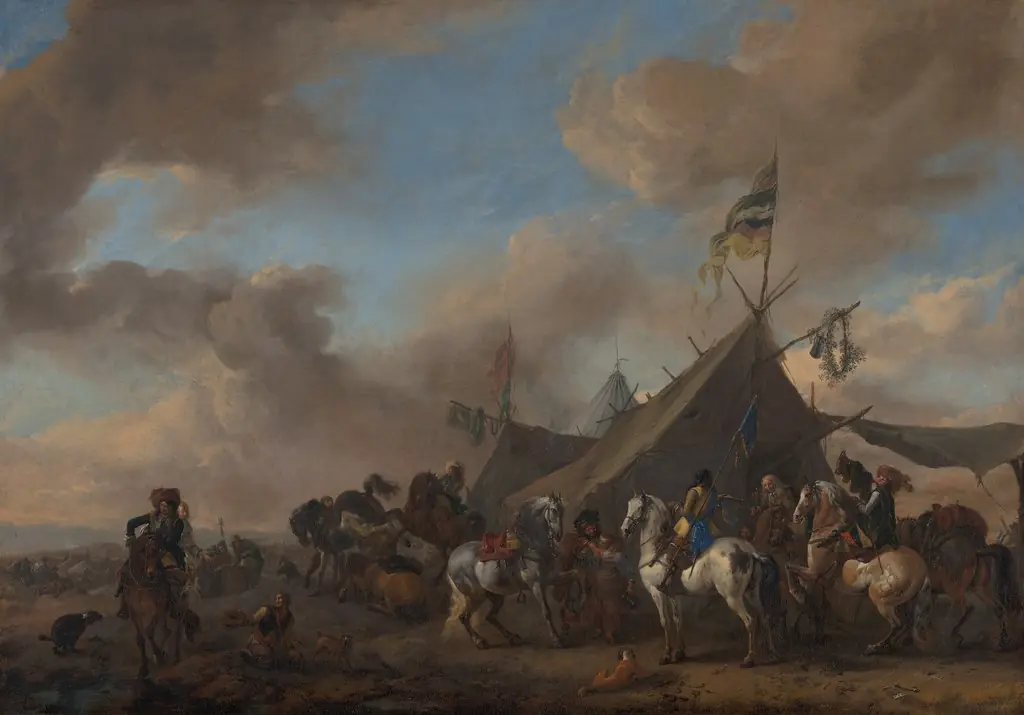
Army camp is an oil painting by the Dutch Golden Age artist Johannes Lingelbach. It dates from 1650 and is held in the collection of the Rijksmuseum.
About this work
Subject & Meaning
By situating these elements within a realistic terrain, the artist conveys both the strategic planning and the transient stability of such installations.
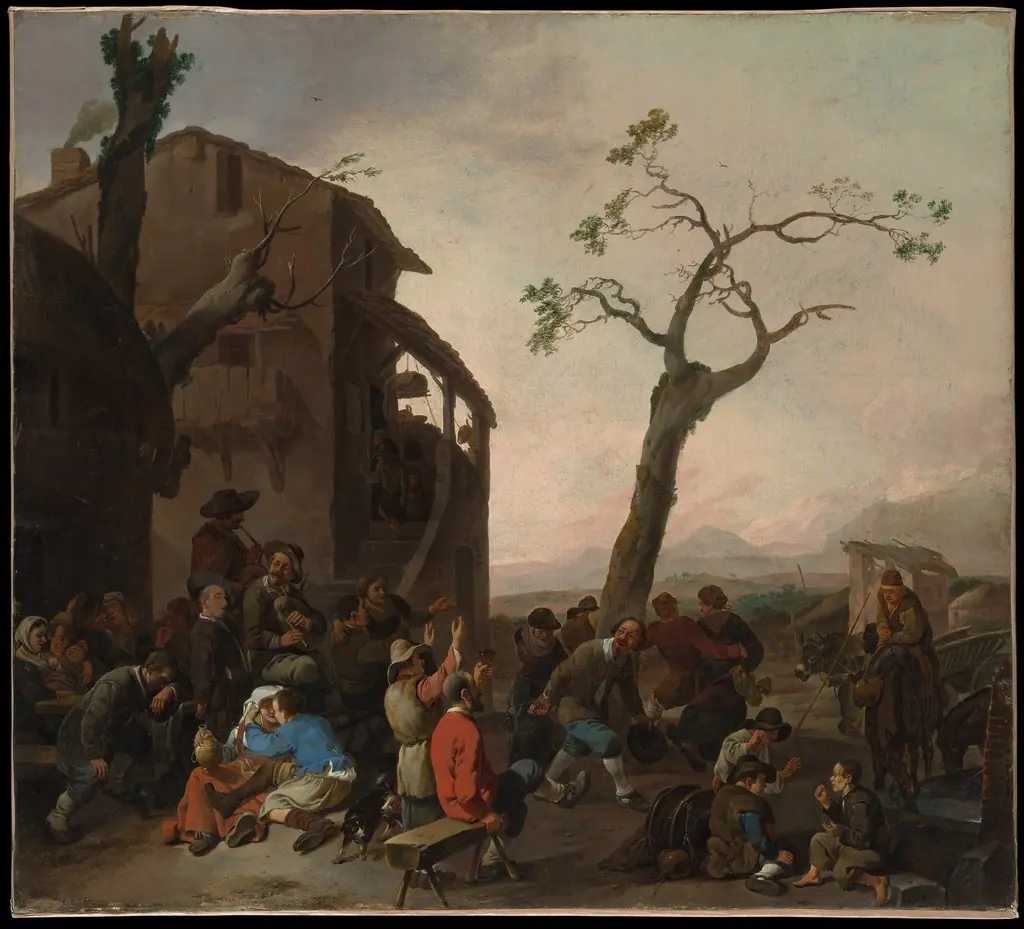
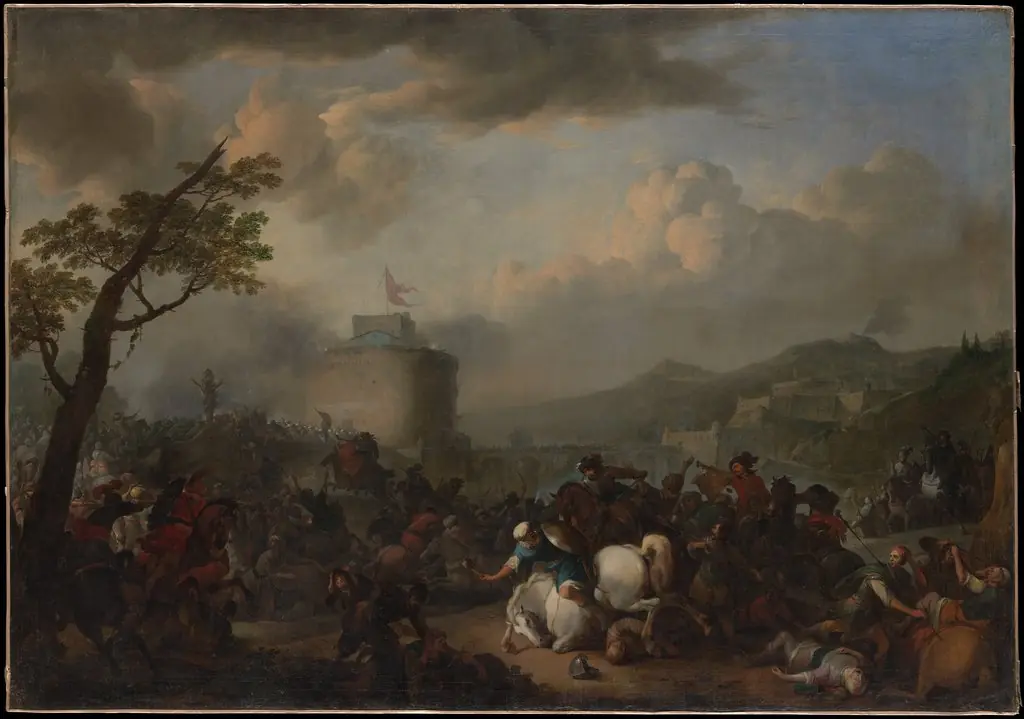
The painting depicts a military encampment, presenting soldiers and their equipment as central symbols of organized authority and readiness. Lingelbach's landscape genre emphasizes expansive natural scenery juxtaposed with human activity, using the camp setting to comment on the intersection of nature and disciplined order. The work thus represents a commentary on 17th-century martial life and the logistical structures of war.
The composition highlights tents, artillery, and marching troops, underscoring themes of preparation and the temporary nature of military bases. By situating these elements within a realistic terrain, the artist conveys both the strategic planning and the transient stability of such installations.
The piece is part of the Rijksmuseum collection and was originally owned by Leendert Dupper before entering the museum's holdings.
Technique & Style
The artwork is an oil painting executed on wooden panel, reflecting the Dutch Golden Age landscape tradition through its detailed rendering of military encampment scenes. Lingelbach's composition emphasizes atmospheric perspective and precise architectural elements characteristic of 17th-century vedute, with the medium's handling producing rich textural contrasts across the canvas surface.
History & Provenance
Army camp is an oil painting on panel by Johannes Lingelbach, dated to 1650. The work entered the collection of Leendert Dupper before passing into the holdings of the Rijksmuseum, where it is currently held. No further details of commission, intermediate ownership, or acquisition circumstances are documented in the available sources.
Context
Johannes Lingelbach's Army camp (1650) exemplifies 17th-century Dutch landscape painting within the broader context of Dutch Golden Age art. The work was created during a period when military encampments were common subjects reflecting contemporary life and historical events. It is housed in the Rijksmuseum collection, which holds significant works from this era, and was originally owned by Leendert Dupper before entering the museum's collection.
Scholars have noted Lingelbach's role in advancing realistic landscape painting, though specific critical reception details of this particular work are not documented in the provided sources.
The painting's classification as a landscape genre piece aligns with its depiction of natural scenery and human activity, contributing to the evolution of the genre in European art history.
Overview
Johannes Lingelbach, a Dutch painter active in the mid‑17th century, produced the oil work Army camp around 1650. Classified within the landscape tradition of the Dutch Golden Age, the canvas records a bustling military encampment beside water, populated by soldiers, tents and a flag bearing a cross. The composition captures a moment of organized activity under a dramatic sky.
Own this work as a print
Artist & collection
Artist
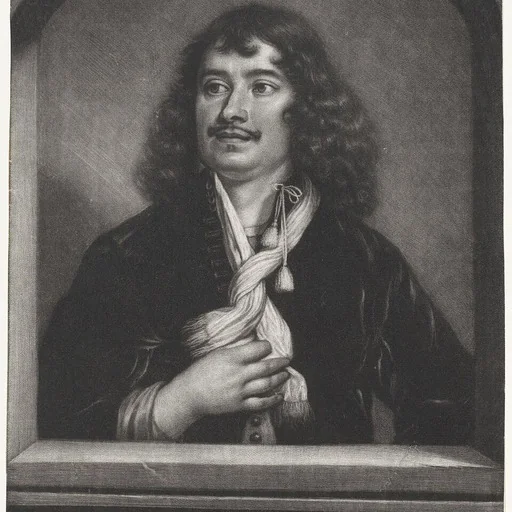
Johannes (or Johann) Lingelbach (1622 – 3 November 1674) was a Dutch Golden Age painter, associated with the second generation of Bambocciate, a group of genre painters working in Rome from 1625–1700.