Artwork
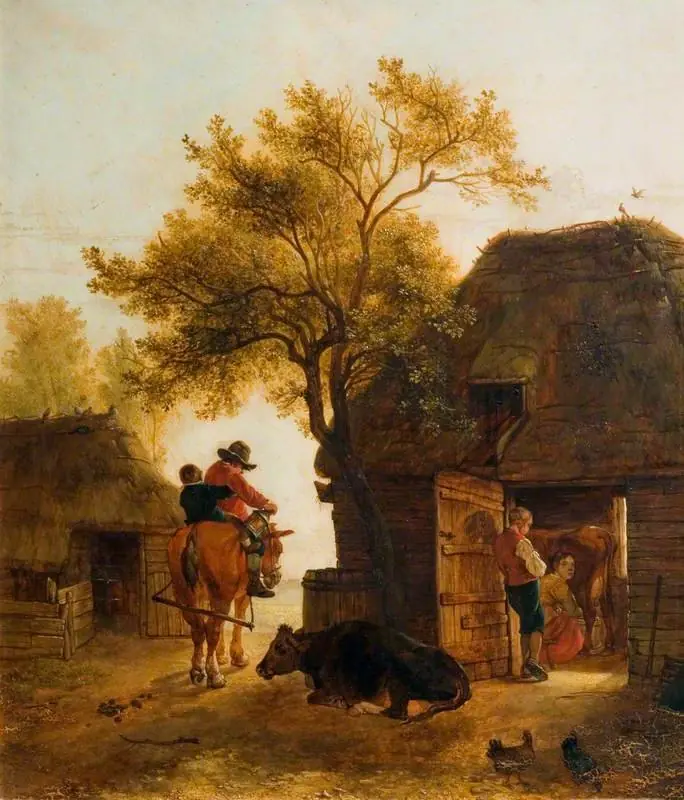
The Rider's Halting Place
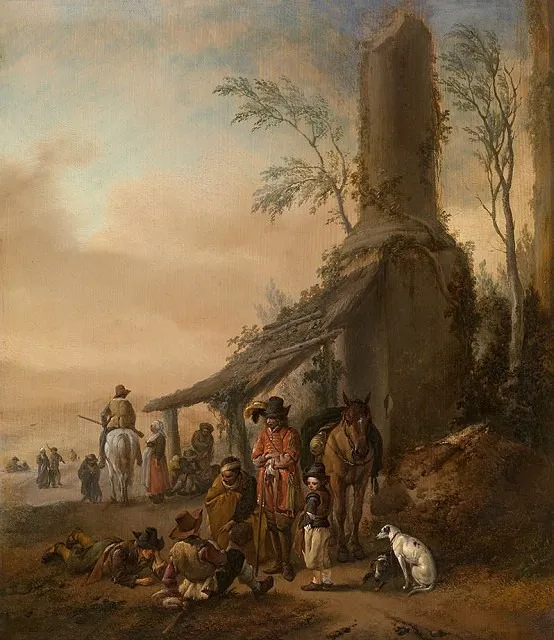
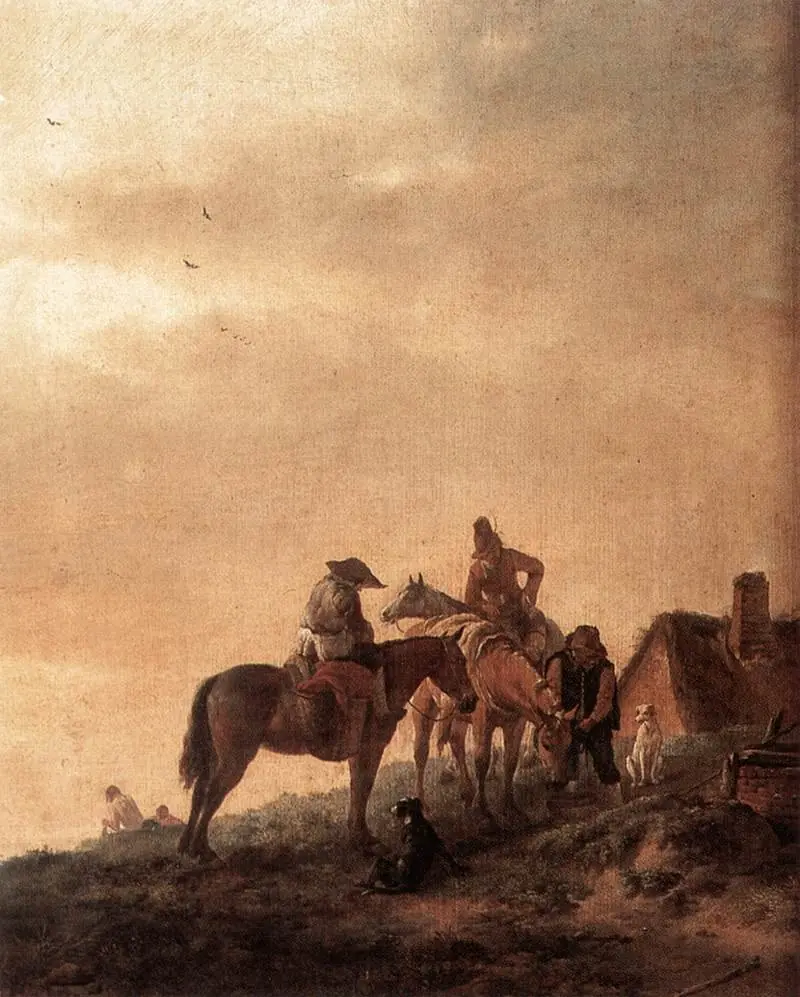
The Rider's Halting Place is an oil painting by the Dutch Golden Age artist Philips Wouwerman. It dates from 1653 and is held in the collection of the Royal Museum of Fine Arts Antwerp.
About this work
Subject & Meaning
The work belongs to the artist's characteristic repertoire of equestrian scenes, a subject he treated prolifically throughout his active career.
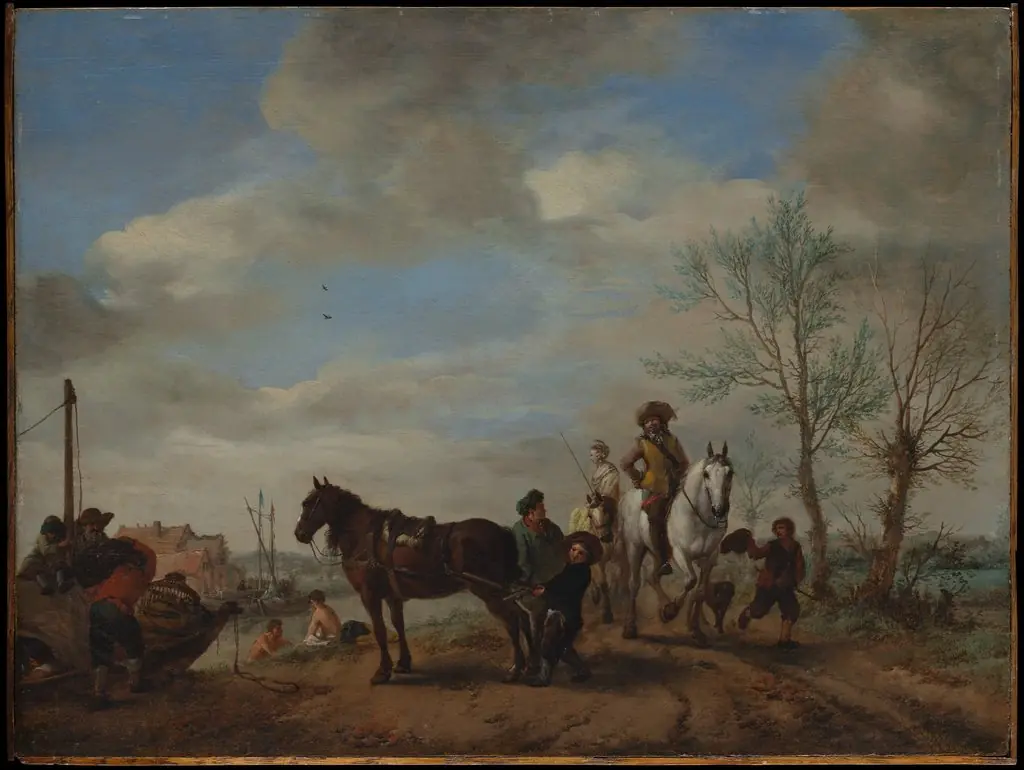
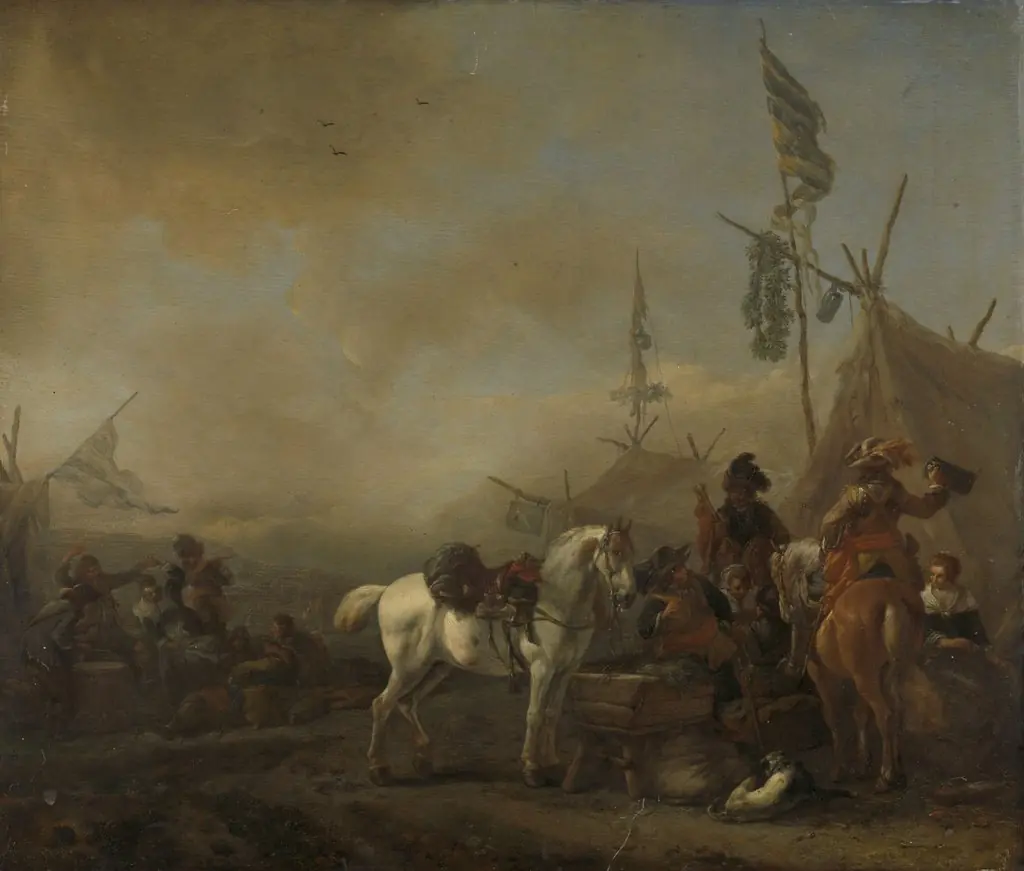
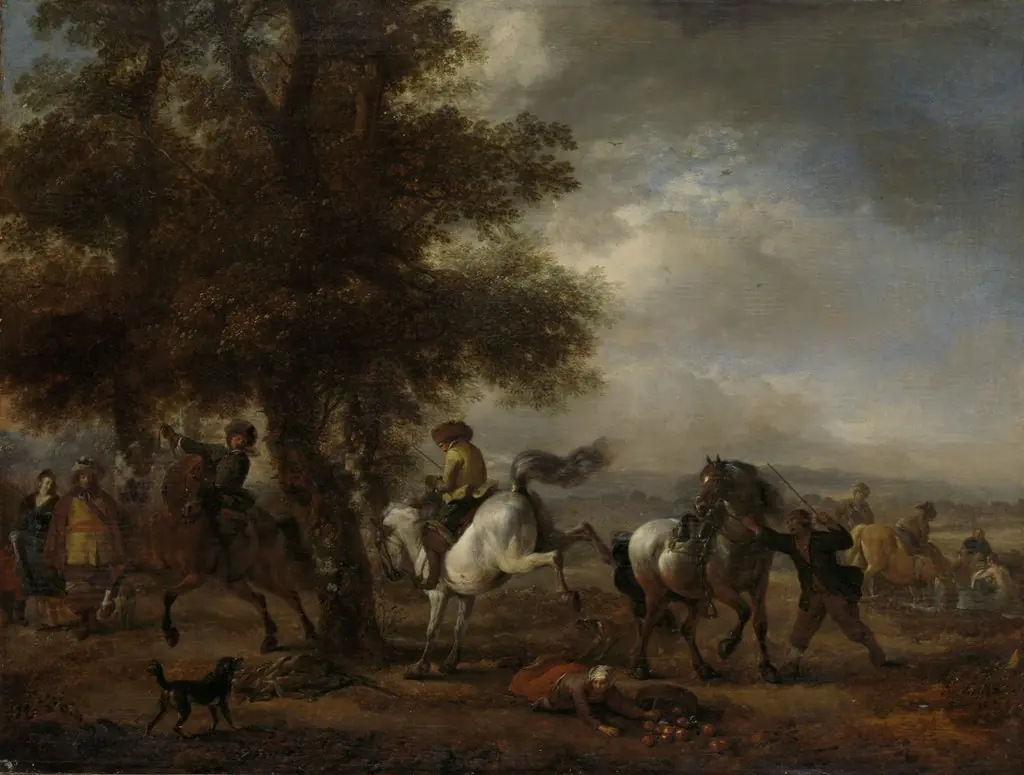
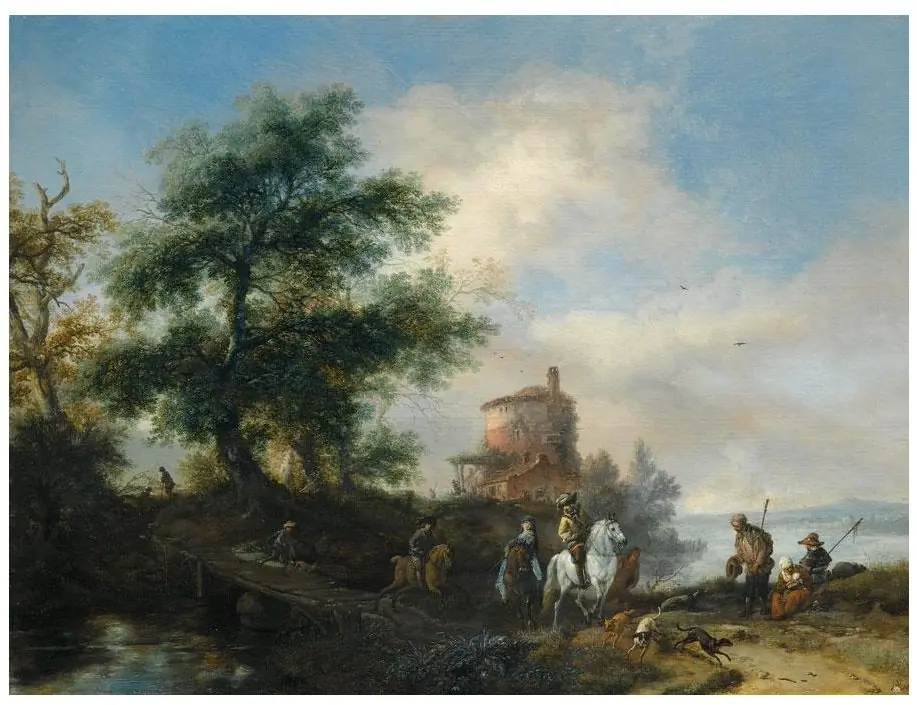
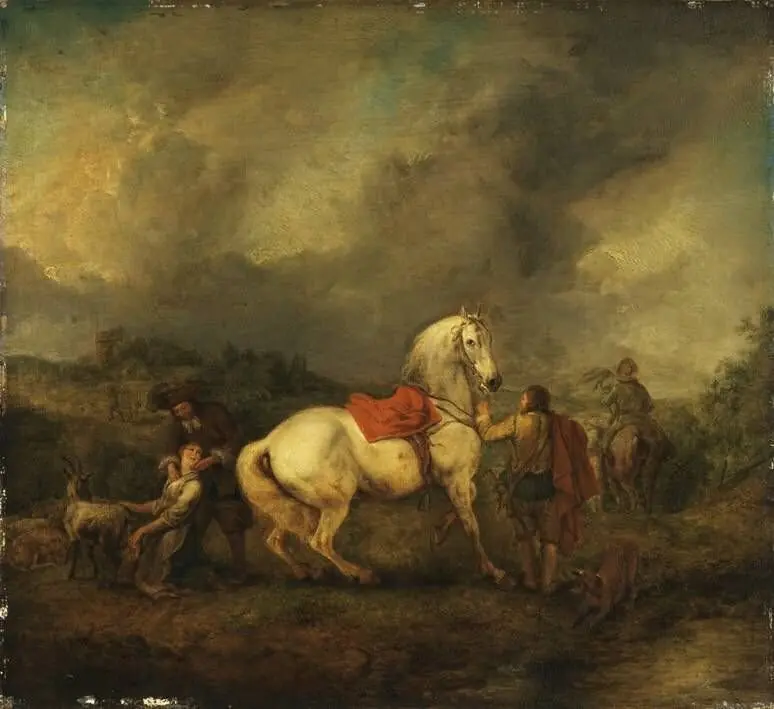
The Rider's Halting Place is a landscape painting in which Philips Wouwerman depicts a halting place for a rider, set among trees and accompanied by people and horses. The work belongs to the artist's characteristic repertoire of equestrian scenes, a subject he treated prolifically throughout his active career.
Wouwerman specialized in landscapes populated with horses and riders, and this panel reflects that signature focus by combining a natural setting with figures pausing at a stopping point in the countryside. The presence of trees, horses, and people anchors the composition within the Dutch Golden Age tradition of genre-inflected landscape painting, where everyday rural activity is observed within an atmospheric outdoor setting.
As a halting place, the scene evokes the routine rhythms of travel and rest in the seventeenth-century countryside, presenting the rider's pause as a quiet, observational moment rather than a narrative climax.
Technique & Style
Executed in oil paint on a wooden panel, this work measures 35.4 cm in height and 30.7 cm in width. Created in Haarlem, the painting exemplifies Philips Wouwerman's prolific output of landscapes featuring horses and riders. The composition depicts figures alongside a horse and trees, adhering to the artist's characteristic focus on equestrian scenes within natural settings.
As a representative piece of the Dutch Golden Age, the work utilizes the medium to render these genre elements on a small-scale support.
Context
The Rider's Halting Place is a small panel painting by the Dutch Golden Age artist Philips Wouwerman, who worked in Haarlem and was active from 1639 until his death in 1668. Wouwerman built his reputation on a prolific output of equestrian landscapes, and this work fits squarely within that specialty, depicting horses, riders, and trees in a landscape setting. The painting is held in the Royal Museum of Fine Arts Antwerp under inventory number KMSKA 501, situating it within the broader canon of seventeenth-century Dutch landscape painting collected by major European institutions.
As a characteristic example of Wouwerman's horse-and-rider scenes, the work contributes to the body of imagery that made him one of the most collected Dutch painters of his era, with compositions of this type widely copied and imitated by later artists.
Legacy
The Rider's Halting Place has been recognized for its role in advancing landscape painting within the Dutch Golden Age, particularly influencing later depictions of equestrian scenes and atmospheric depth. Its inclusion in the Royal Museum of Fine Arts Antwerp's collection has ensured continued scholarly attention, cementing its reputation as a representative work of Philips Wouwerman's mastery in blending narrative and naturalistic detail.
Overview
The Rider's Halting Place is an oil painting by Philips Wouwerman, a prolific Dutch Golden Age painter known for his equestrian scenes. The work depicts riders paused in a landscape, characteristic of Wouwerman's oeuvre.
History & Provenance
The exact date of The Rider's Halting Place is unknown, but it falls within Wouwerman's active period (1639-1668). The painting is now part of the collection at the Royal Museum of Fine Arts in Antwerp, Belgium.
Artist & collection
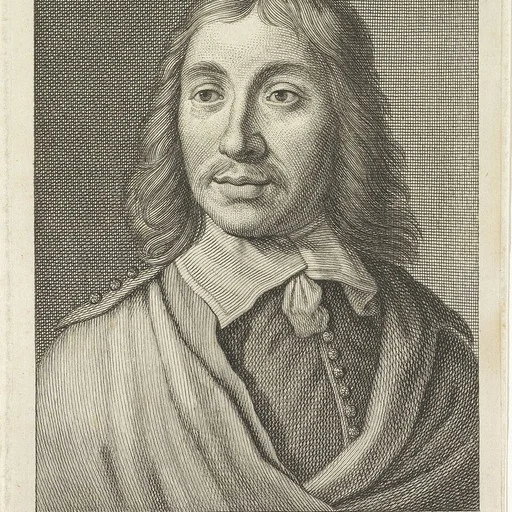
Artist
Philips Wouwerman (also Wouwermans) (24 May 1619 (baptized) – 19 May 1668) was a Dutch painter of hunting, landscape and battle scenes. He became prolific during the Dutch Golden Age and joined the Haarlem Guild of St. Luke.