Artwork
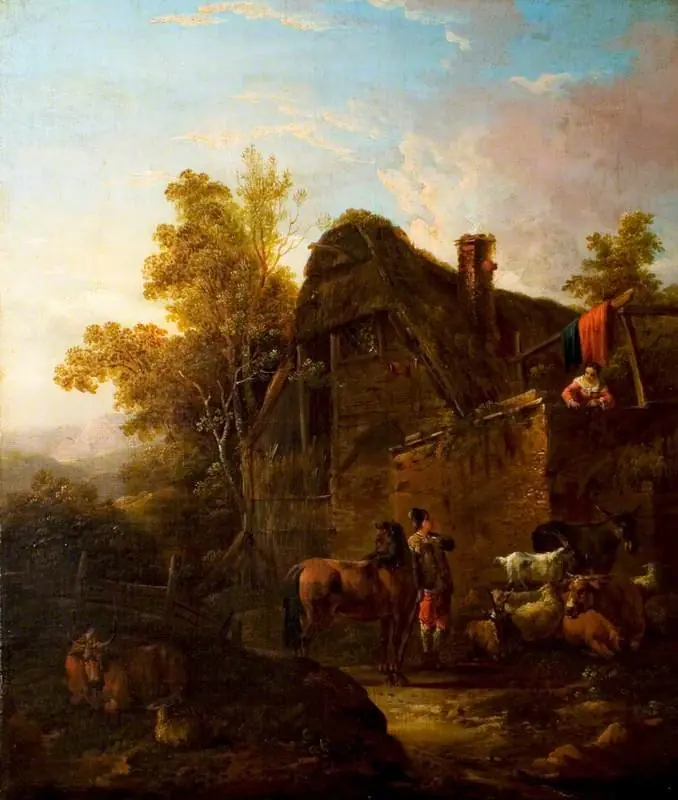
Farmyard: Evening, Milking Time
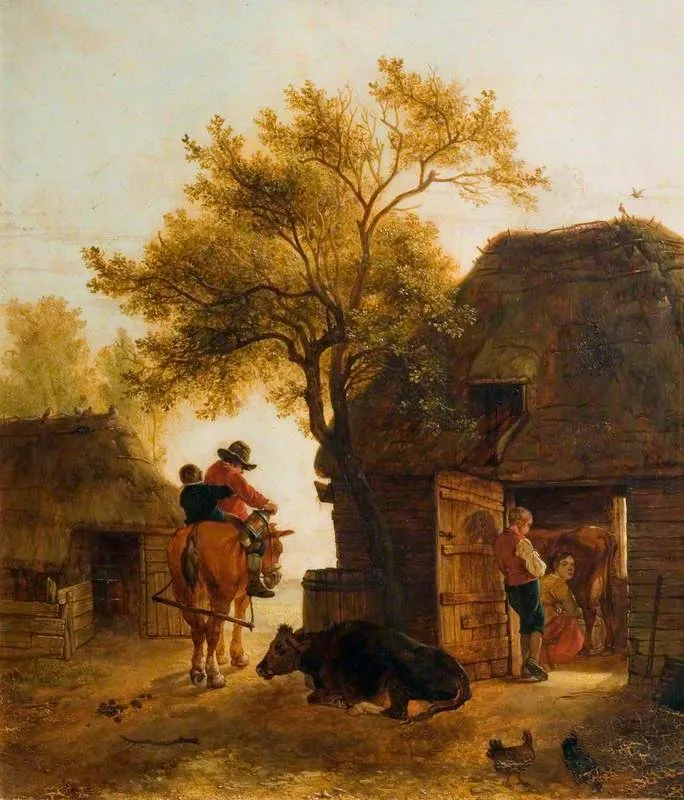
Farmyard: Evening, Milking Time is an oil painting by James M. Burnet. It dates from 1812 and is held in the collection of the Victoria and Albert Museum. James M.
About this work
Overview
Unlike the grand historical narratives popular in early 19th-century Britain, this painting prioritizes the quiet dignity of agricultural routine.
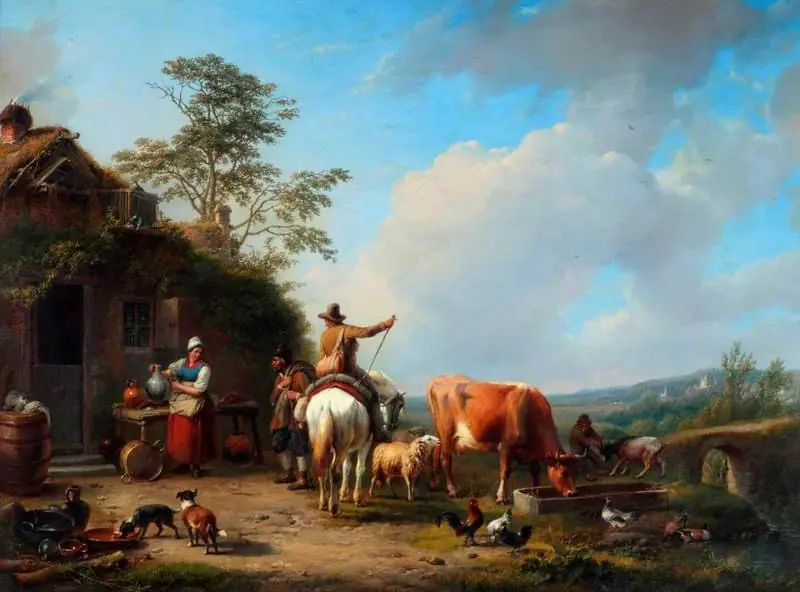
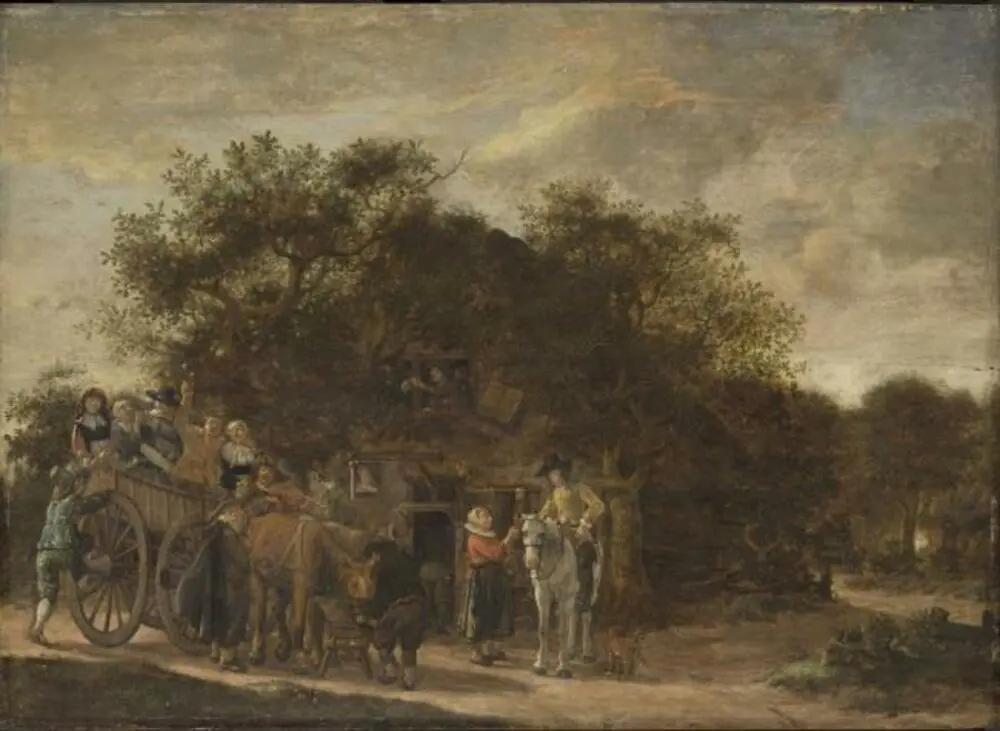
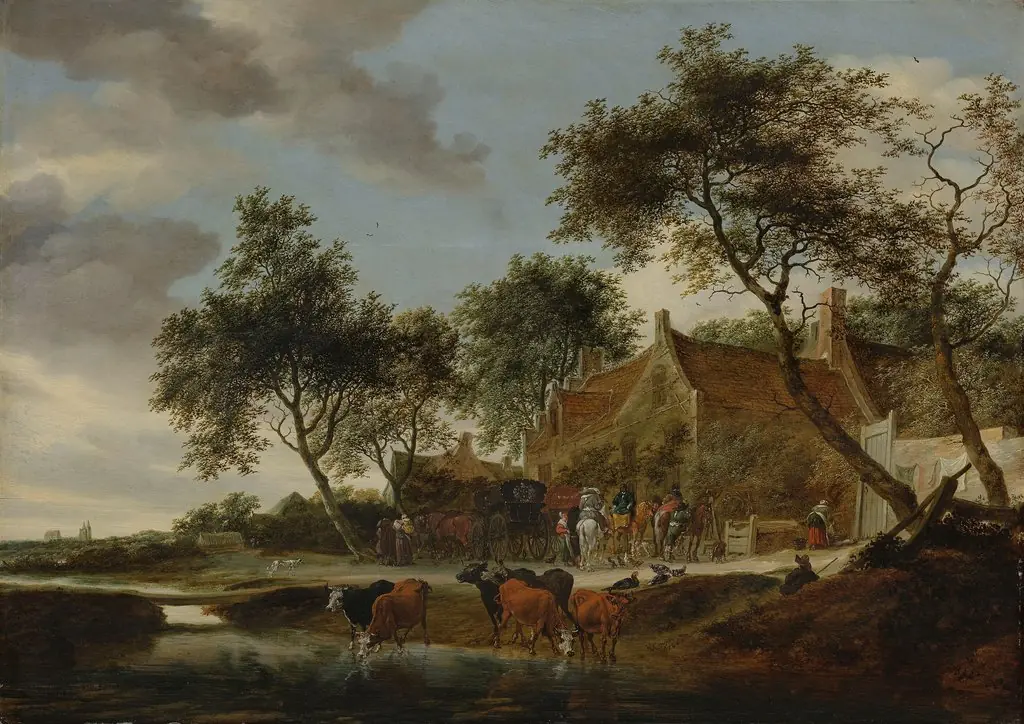
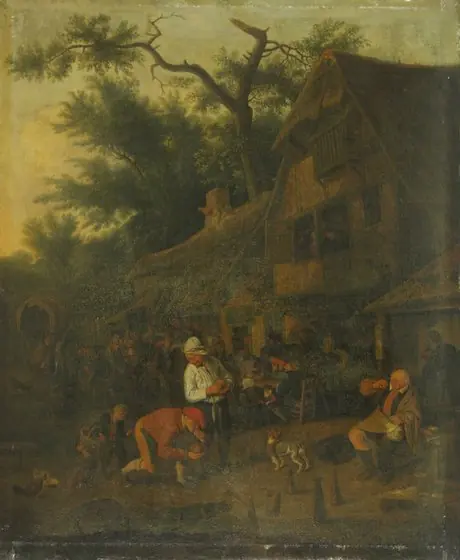
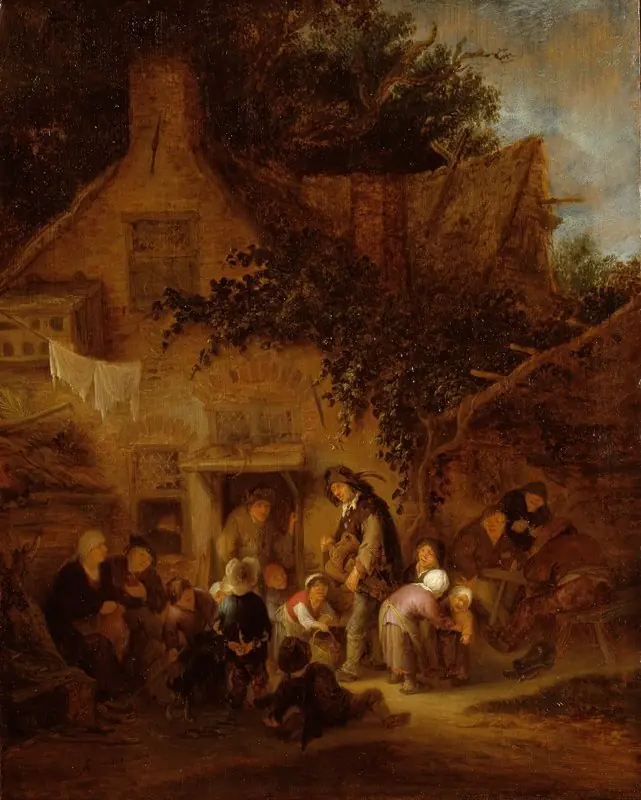
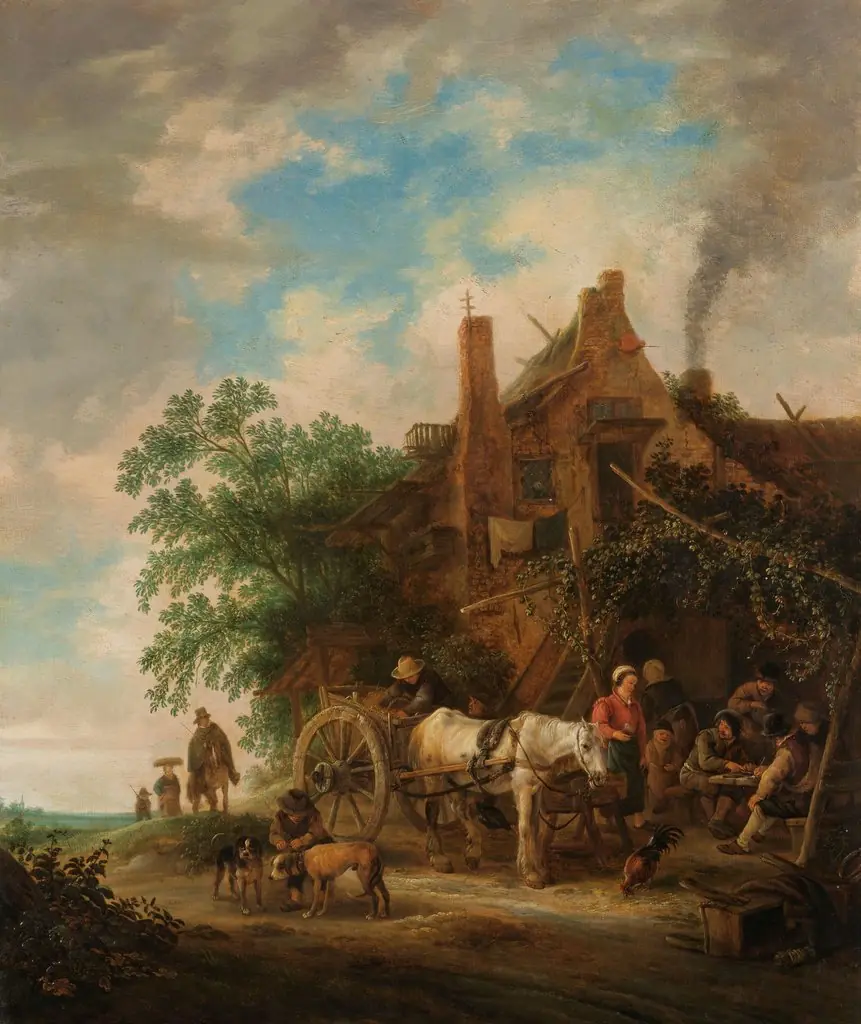
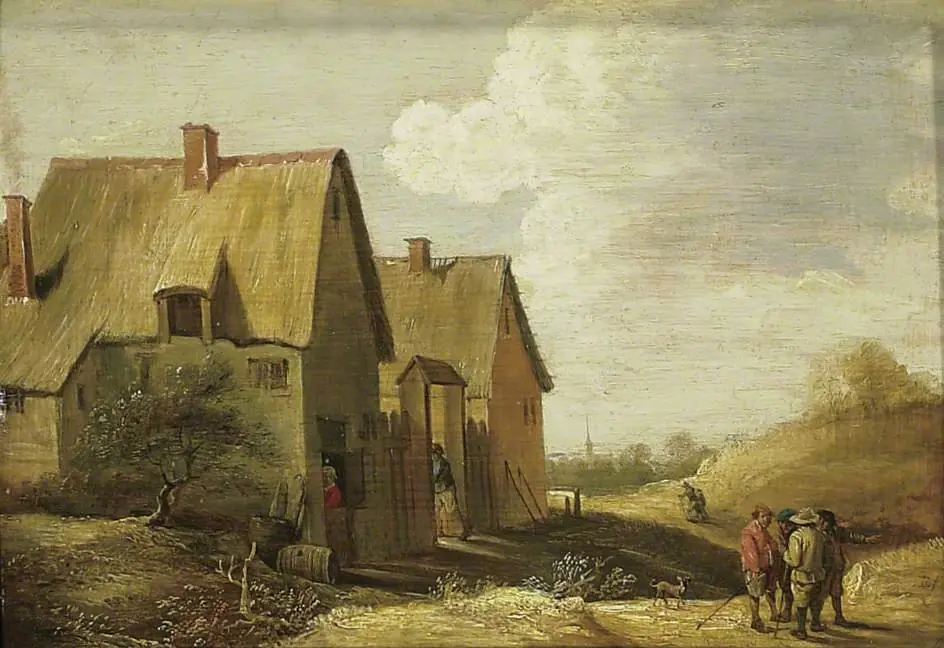
James M. Burnet's 'Farmyard: Evening, Milking Time,' executed in 1812, captures a tranquil moment of rural labor in late summer. The composition centers on a man seated beside a cow, engaged in the act of milking, which anchors the foreground. To the right, a woman stands within the shadowed doorway of a thatched cottage, observing the scene, while a figure on horseback enters from the left, suggesting the return of workers or the arrival of a visitor.
Burnet employs a soft, diffused light characteristic of the evening hour to unify the rustic elements, including the textured thatch and the foliage of the background tree. This work exemplifies Burnet's focus on domesticated pastoral life, a recurring theme in his brief career before his death in 1816. Unlike the grand historical narratives popular in early 19th-century Britain, this painting prioritizes the quiet dignity of agricultural routine.
The artist's handling of oil paint renders the textures of the animals and the architecture with a naturalistic precision that reflects the British school's growing interest in genre subjects during the Regency period.
Subject & Meaning
The work captures a moment of daily agricultural labor, emphasizing the rhythm of countryside life. By placing the milking activity in the foreground, Burnet highlights the intimate relationship between humans and livestock, while the presence of the woman and the rider suggests a broader community engaged in shared routines.
Technique & Style
Burnet employs a warm, earthy palette that reinforces the painting’s homely mood. Strong contrasts of light and shadow, chiaroscuro, model the figures and structures, giving them a three‑dimensional presence. The handling of oil paint renders soft textures in the thatch and fur, while maintaining clear delineation of forms.
History & Provenance
Created in the early nineteenth century, the canvas entered the collection of the Victoria and Albert Museum, where it remains on display. Its acquisition reflects the museum’s interest in British genre scenes that document rural life during the period.
Artist & collection