Artwork
STUDIUL VALORILOR
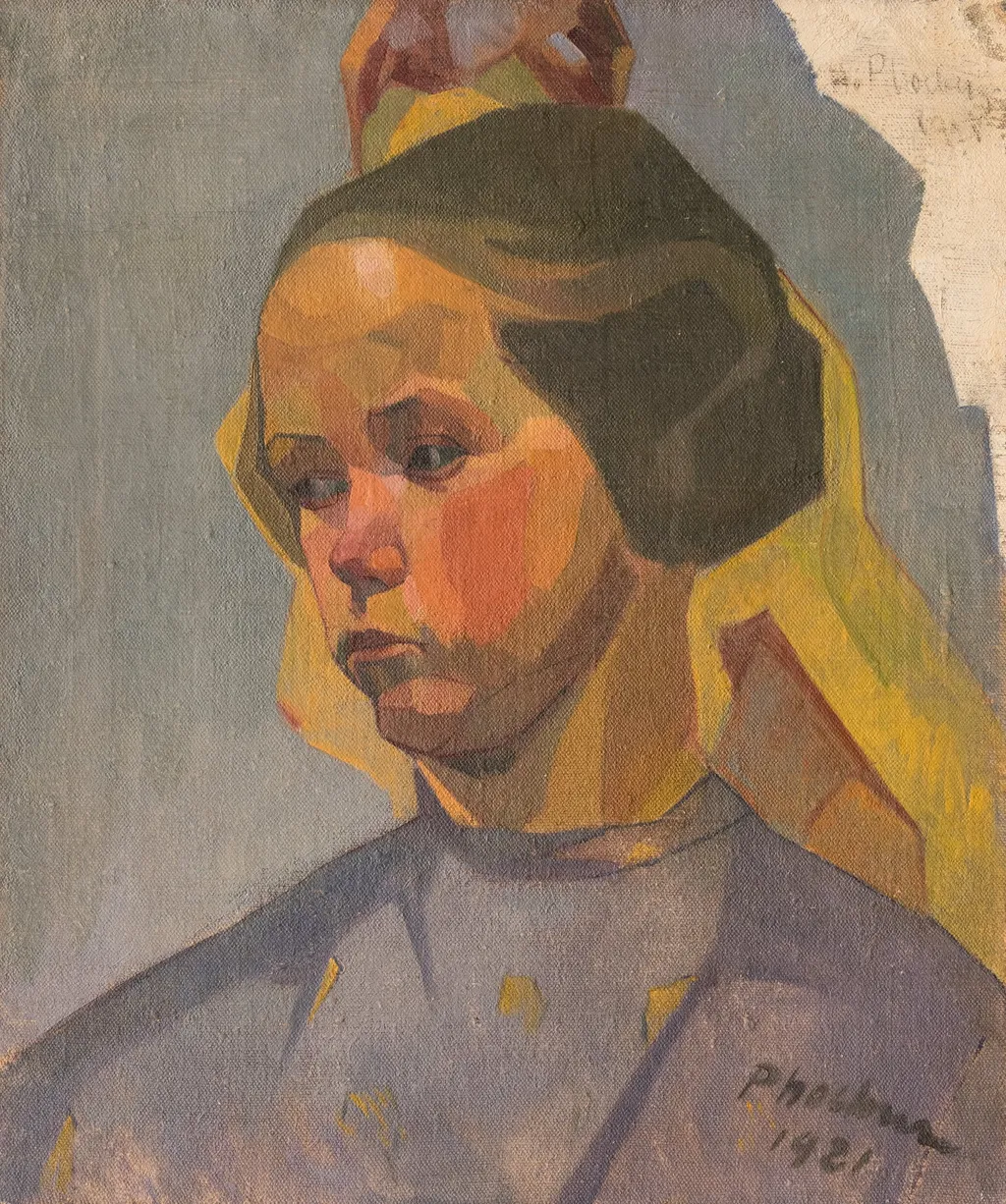
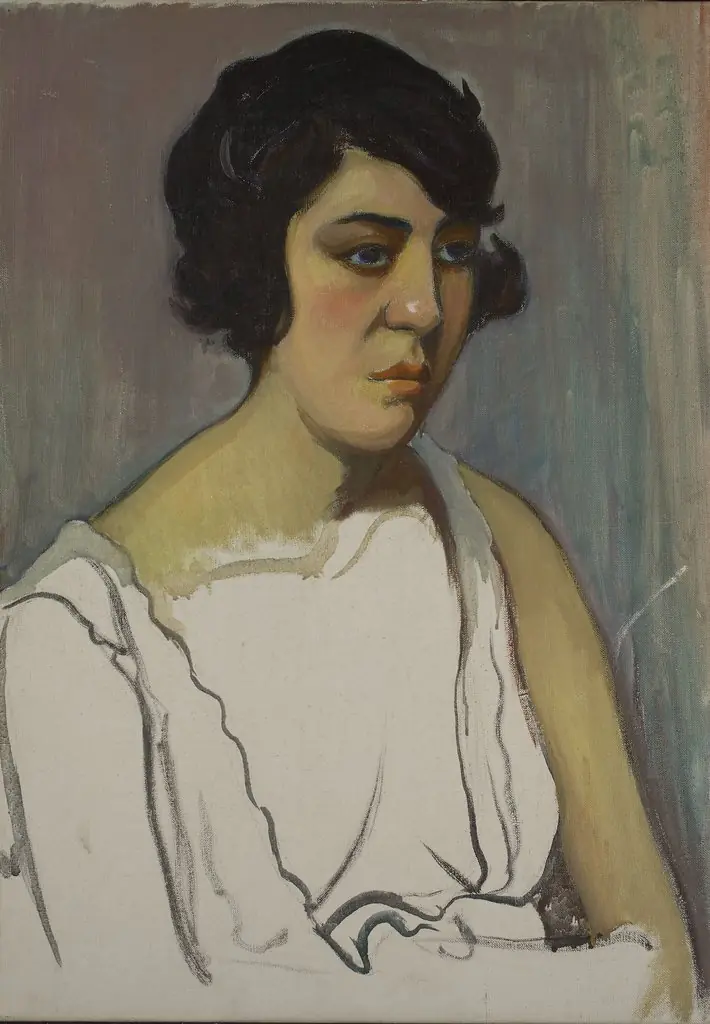
STUDIUL VALORILOR is a print by Alexandru Phoebus. It dates from 1921 and is held in the collection of the National Museum of Art of Romania.
About this work
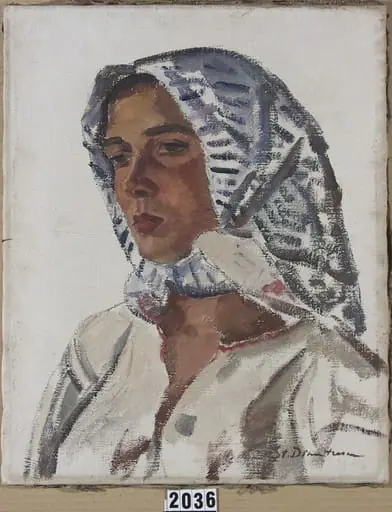
The woman's features are depicted in a realistic style, with attention to detail in her facial expression and the folds of her clothing.
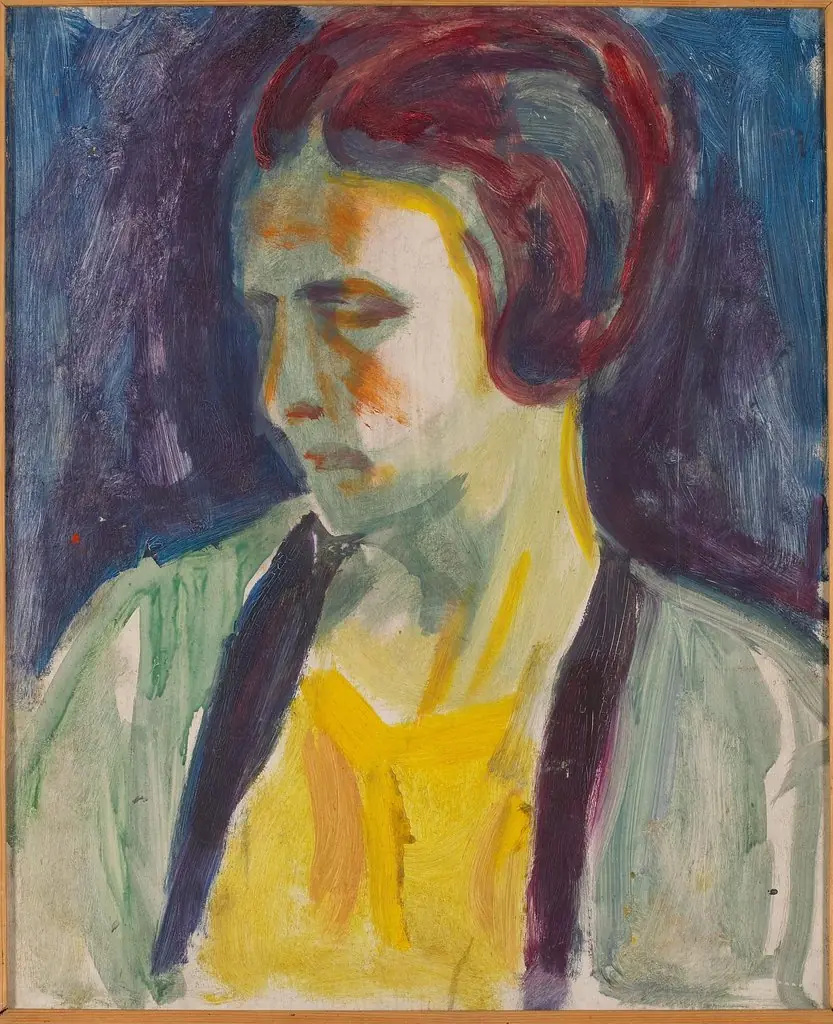
The painting is a portrait of a woman with a yellow headscarf, set against a grey background. Her face is turned to the left, and she wears a purple shirt. The artist's signature and the year 1921 are visible in the bottom-right corner.
The woman's features are depicted in a realistic style, with attention to detail in her facial expression and the folds of her clothing. The use of color is subdued, with muted tones that add to the overall sense of calm in the painting.
This portrait is reminiscent of the work of other artists who have explored the use of chiaroscuro in their paintings.
Overview
Painted in 1921 by Alexandru Phoebus, this portrait captures a woman in quiet repose. Rendered in oil or tempera, the composition centers on her turned head and modest attire, set against a neutral grey field. The artist signs and dates the work in the lower right, anchoring it to a specific moment in early 20th-century Romanian art. The tone is restrained, avoiding dramatic flourish in favor of intimate observation.
Subject & Meaning
The subject is a woman wearing a yellow headscarf and a purple shirt, her gaze directed leftward, away from the viewer. Her expression is calm and unadorned, suggesting introspection rather than performance. The absence of context or narrative elements shifts focus to her presence alone, inviting contemplation of individual dignity amid ordinary life. The choice of clothing hints at regional or personal identity without overt symbolism.
Technique & Style
Phoebus employs a realistic approach with careful attention to facial structure and fabric texture. Subtle gradations of light and shadow define the contours of her face and the folds of her garments, evoking chiaroscuro without theatrical intensity. Colors are muted, soft yellows, purples, and greys, creating harmony and stillness. Brushwork is precise but not overly refined, preserving a sense of quiet immediacy.
History & Provenance
Created in 1921, the work emerged during a period of cultural redefinition in Romania following World War I. While little is documented about its early ownership, its survival suggests it was retained within private or institutional collections. The artist’s signature and date confirm its origin, but no exhibition history or public record from the 1920s is known to exist.
Context
In early 20th-century Romania, portraiture often balanced academic tradition with emerging modern sensibilities. Phoebus’s work aligns with regional artists who favored psychological depth over ornamentation. The subdued palette and focus on everyday subjects reflect broader European trends toward realism, distinct from the avant-garde movements gaining traction elsewhere at the time.
Legacy
Though not widely exhibited or reproduced, STUDIUL VALORILOR remains a representative example of Phoebus’s quieter, introspective style. It contributes to the understanding of Romanian interwar portraiture, where personal presence took precedence over grand narrative. Its endurance in collections underscores its value as a modest yet resonant document of its era.
Own this work as a print
Artist & collection