Artwork
View of the Castel Sant'Angelo in Rome
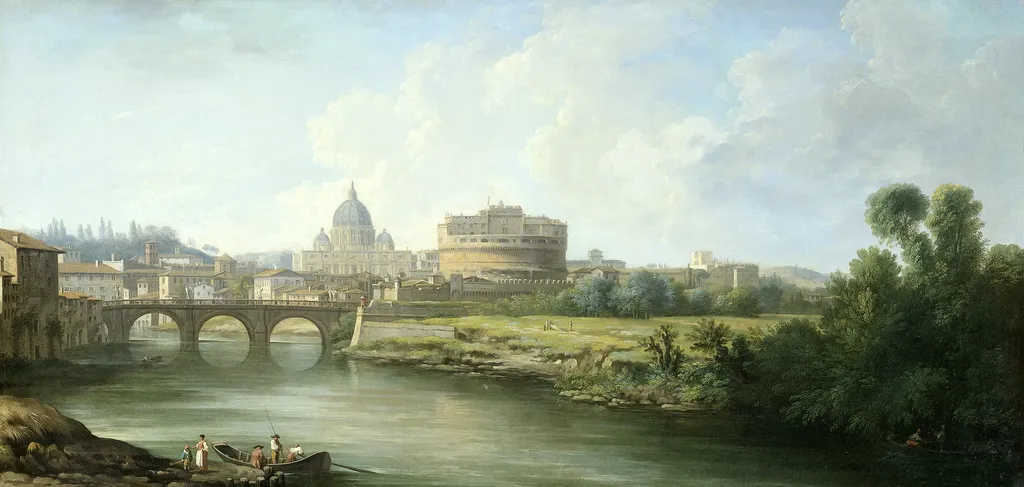
View of the Castel Sant'Angelo in Rome is an oil painting by the Rococo painting artist Pierre-Antoine Demachy. It dates from 1500 and is held in the collection of the Rijksmuseum.
About this work
Technique & Style
View of the Castel Sant'Angelo in Rome is an oil painting executed on canvas in 1500. The work depicts a boat, a tree, and a bridge, and is housed in the Rijksmuseum. It measures 48 cm in height by 97.8 cm in width.
Legacy
Pierre-Antoine Demachy's 1500 oil painting View of the Castel Sant'Angelo in Rome entered the Rijksmuseum collection, where it remains on display.
Pierre-Antoine Demachy's 1500 oil painting View of the Castel Sant'Angelo in Rome entered the Rijksmuseum collection, where it remains on display. The work depicts a boat, tree, and bridge spanning the Tiber River beneath the fortress, reflecting early 16th-century Roman topography. Its precise rendering of urban detail influenced later vedute painters who adopted similar compositional approaches to cityscapes.
Contemporary scholars cite the painting as an example of Demachy's contribution to veduta tradition, noted for its atmospheric perspective and architectural accuracy.
Overview
Pierre‑Antoine Demachy’s oil painting titled View of the Castel Sant’Angelo in Rome depicts a tranquil riverside scene dominated by the massive fortress of Castel Sant’Angelo and a neighboring domed church. A stone bridge arches across the water, carrying pedestrians and carts, while a small boat with two figures drifts nearby. The composition is framed by trees and modest buildings that line the banks, creating a balanced urban landscape.
Subject & Meaning
The work presents a peaceful moment on the Tiber, emphasizing the coexistence of monumental architecture and everyday activity. The presence of the bridge, carts, and boat suggests the flow of commerce and travel, while the calm water and softened light convey a sense of stability and continuity within the historic cityscape.
History & Provenance
Created circa 1500, the painting entered the collection of the Rijksmuseum, where it remains on display. Its attribution to Demachy aligns the work with his broader oeuvre of architectural capriccios, reinforcing his reputation for rendering imagined yet plausible urban vistas.
Context
Although the painting reflects Rococo’s interest in decorative elegance, its subject matter, an iconic Roman landmark, connects it to a longstanding tradition of Grand Tour imagery. By portraying a recognizable monument within a serene setting, the work bridges French artistic trends with the allure of Italian heritage that fascinated 18th‑century travelers.
Artist & collection
Artist
Pierre-Antoine Demachy (17 September 1723 – 10 September 1807) was a French artist who specialized in painting ruins, Trompe-l'œil architectural decorations and imaginative scenes of Paris.

- View of the Tiber in Rome with the Castel Sant'Angelo
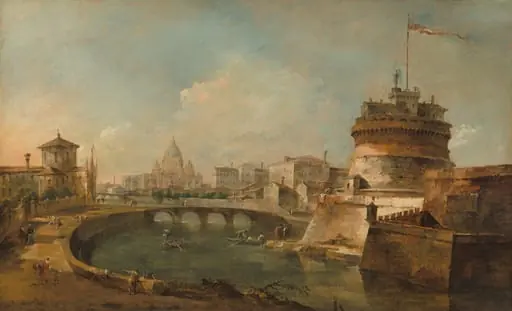 Fanciful View of the Castel Sant'Angelo, Rome
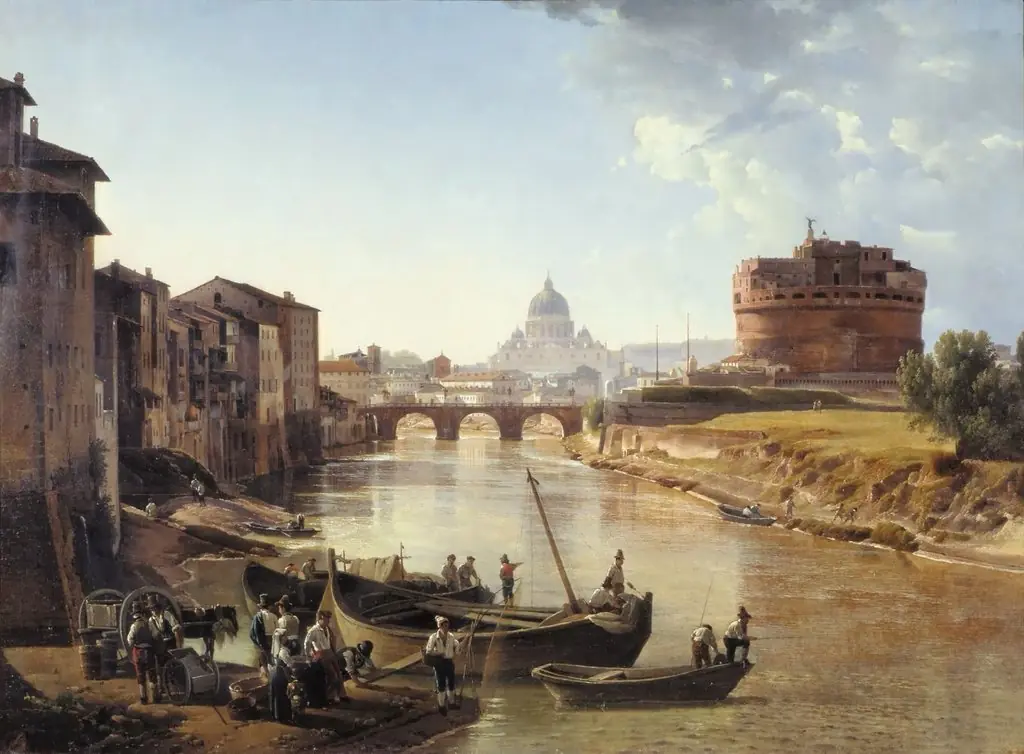 The New Rome. Castel Sant'Angelo
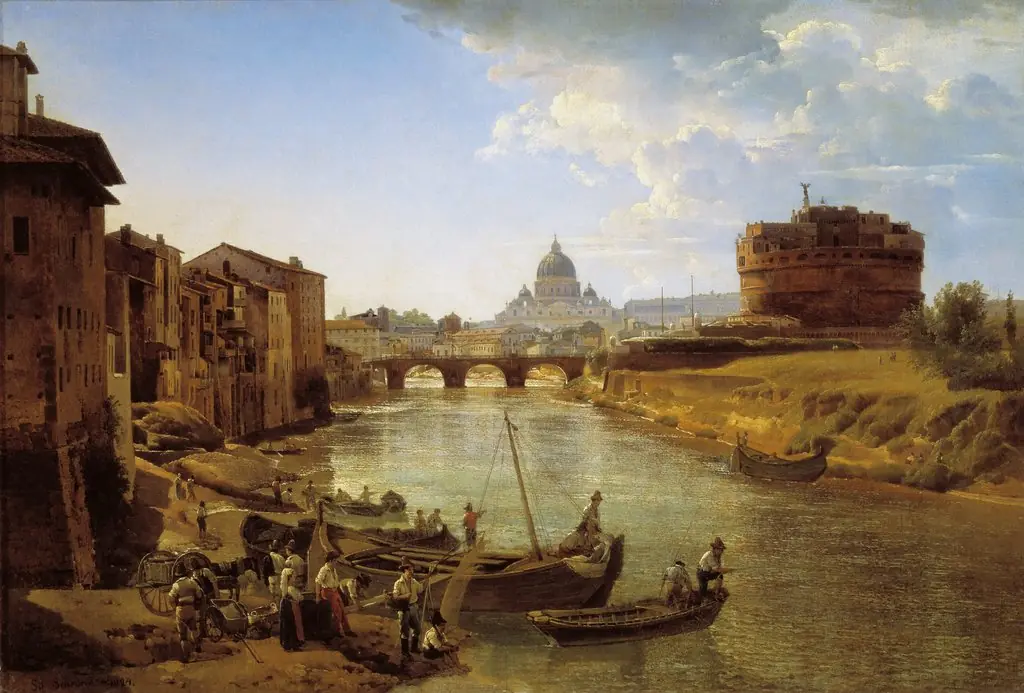 New Rome. The Castle of S.Angelo
 A View across the Tiber from Trastevere towards Castel S. Angelo
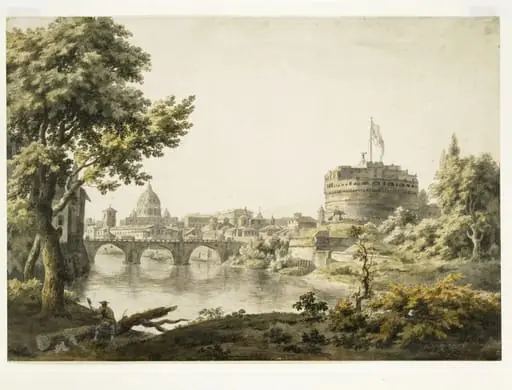 A view of Rome with the Tiber, the Castle of S. Angelo, and in the background St. Peter's
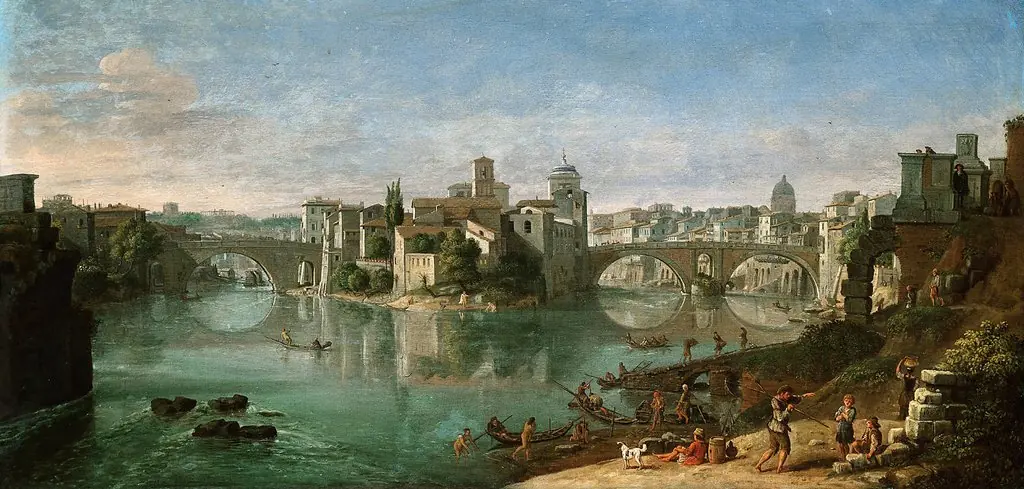 View of Tiber in Rome
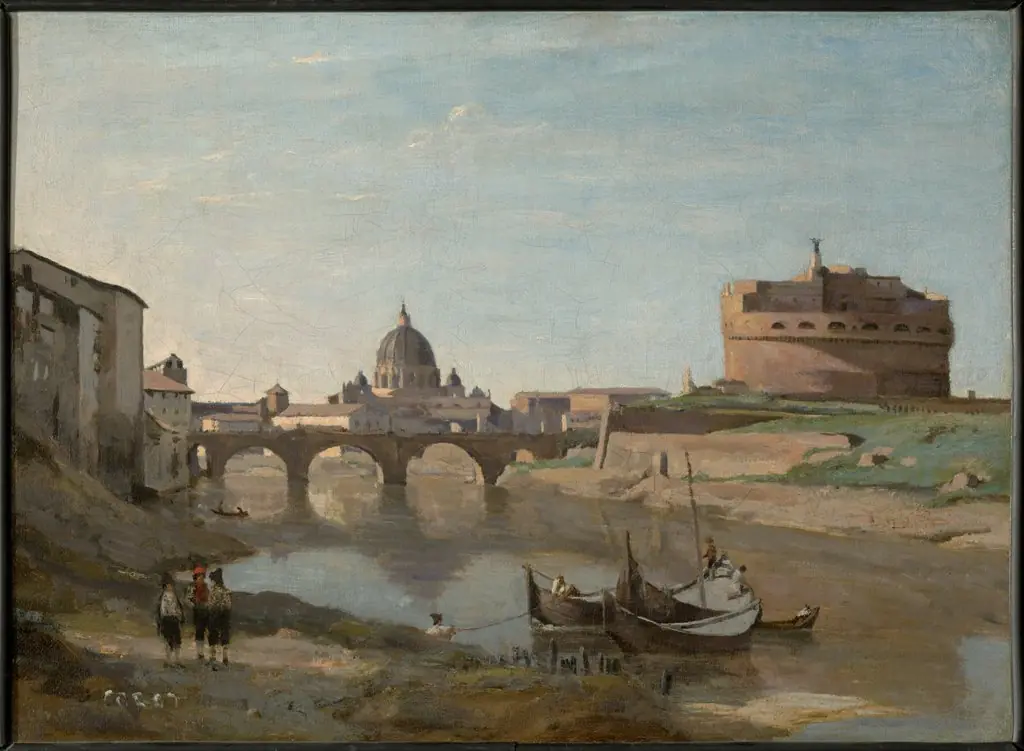 Castel Sant'Angelo, Rome
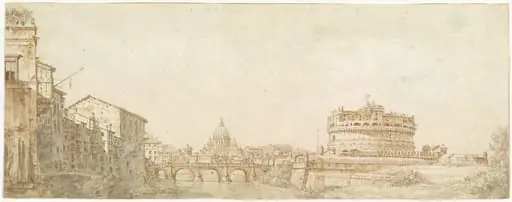 View of Rome with the Dome of Saint Peter's and the Castel Sant' Angelo