Artwork
The way station
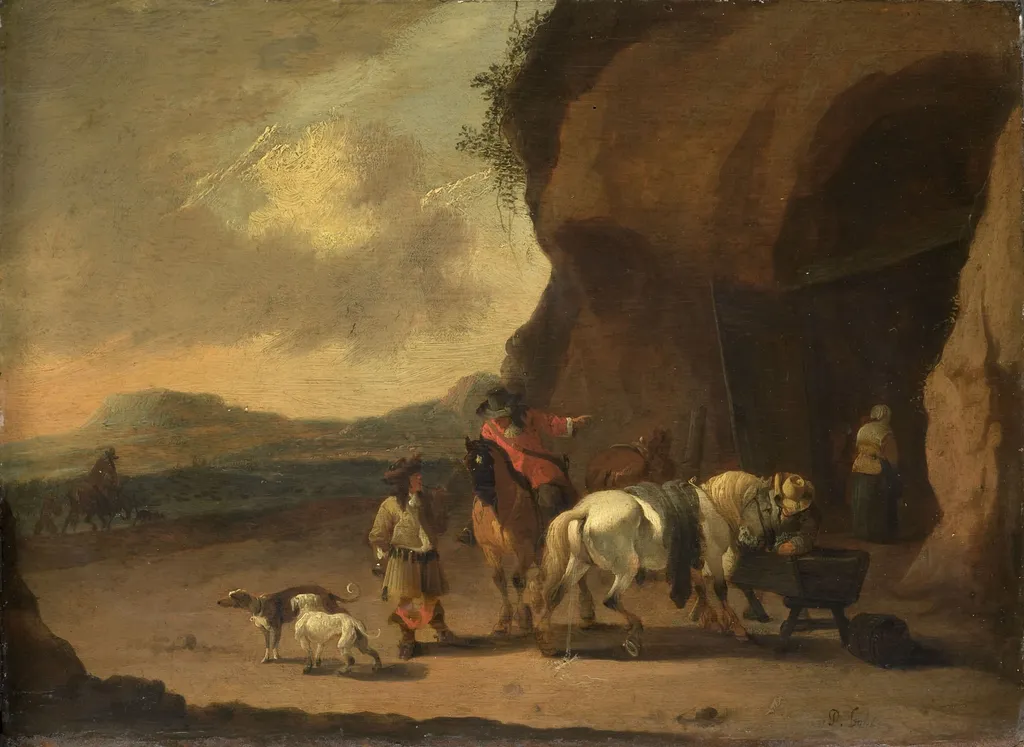
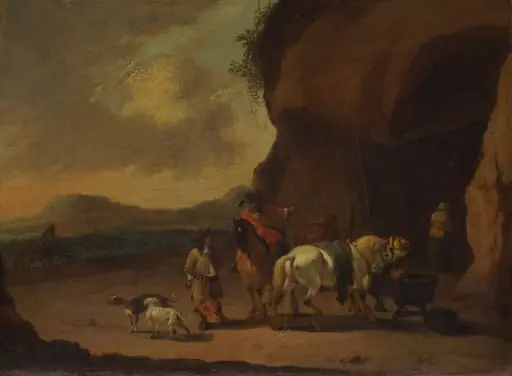
The way station is an oil painting by the Dutch Golden Age artist Pieter Bout. It is held in the collection of the Rijksmuseum.
About this work
Subject & Meaning
The work serves as a straightforward representation of 17th-century Flemish landscape art, prioritizing the observation of the horse within its environment.
Created in 1694 by Pieter Bout, The Way Station is a landscape painting that centers on the depiction of a horse. As a genre work, the piece utilizes the animal figure to anchor the composition within a rural setting, reflecting the artist's focus on equestrian subjects within the landscape tradition. The title suggests the scene represents a resting point or transit hub for travelers and their mounts, though the specific narrative context of the station itself is not detailed beyond the presence of the animal.
The work serves as a straightforward representation of 17th-century Flemish landscape art, prioritizing the observation of the horse within its environment.
Technique & Style
The way station is an oil painting executed on panel, a support commonly used by Pieter Bout for his modest-scale cabinet pictures. The work measures 26 cm in height by 34.5 cm in width, giving it a horizontal landscape orientation. Classified as a landscape painting, it depicts a horse within a way-station scene, consistent with Bout's specialization in this genre.
The painting was produced in Brussels in 1694. The small panel format and oil medium are characteristic of Bout's output, allowing for the fine detail typical of late seventeenth-century Flemish landscape cabinet pieces.
History & Provenance
Pieter Bout created the oil painting The Way Station in 1694. The work was produced in Brussels and executed on a panel support. At some point in its history, the piece entered the collection of Cornelis Hoogendijk. It is currently held by the Rijksmuseum.
Overview
The Way Station is a 1698 oil painting by Pieter Bout, a Flemish artist associated with the Dutch Golden Age landscape tradition. The work showcases a serene scene of a horse, rider, and dog at a resting point in front of a cave, set against a expansive landscape.
Context
The painting reflects the late 17th-century Flemish landscape tradition, blending architectural and rural elements. Its style bridges the gap between the preceding Flemish masters and the forthcoming 18th-century artistic movements.
Own this work as a print
Artist & collection
Artist
Pieter Bout (between 1640 and 1645 – between 17 June 1689 and 1719) was a Flemish painter, draughtsman and printmaker.

- Horsemen Halted on a Mountain Pass
 The hunting party
 A Hunting Party
 Italian landscape with antique ruins and herders
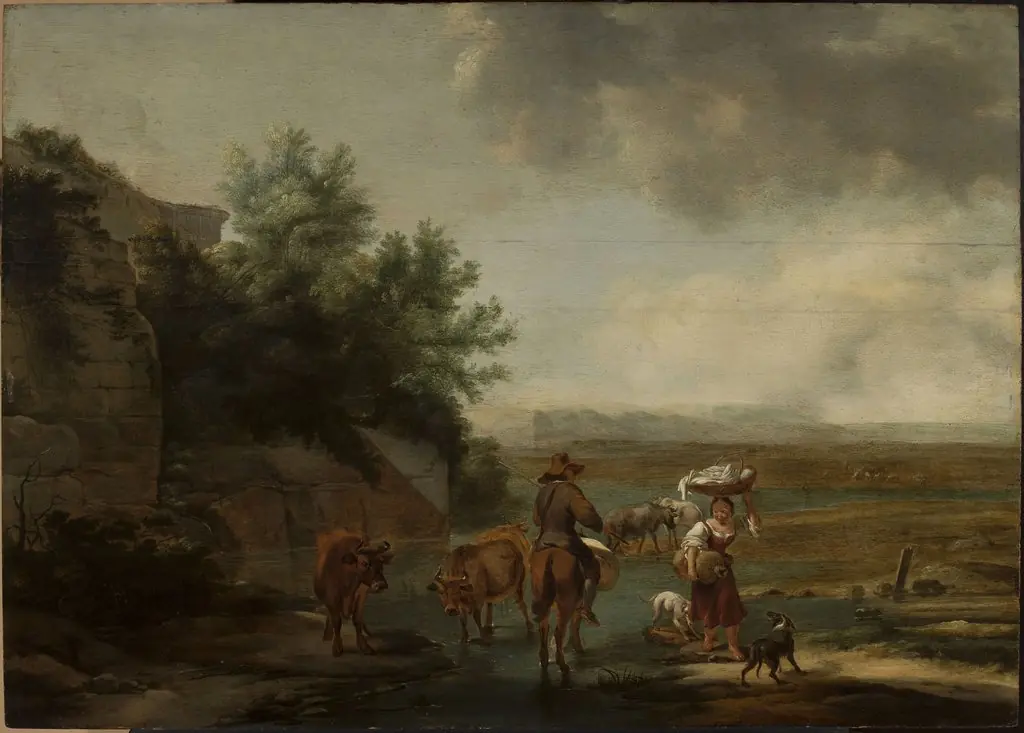 Pastoral landscape
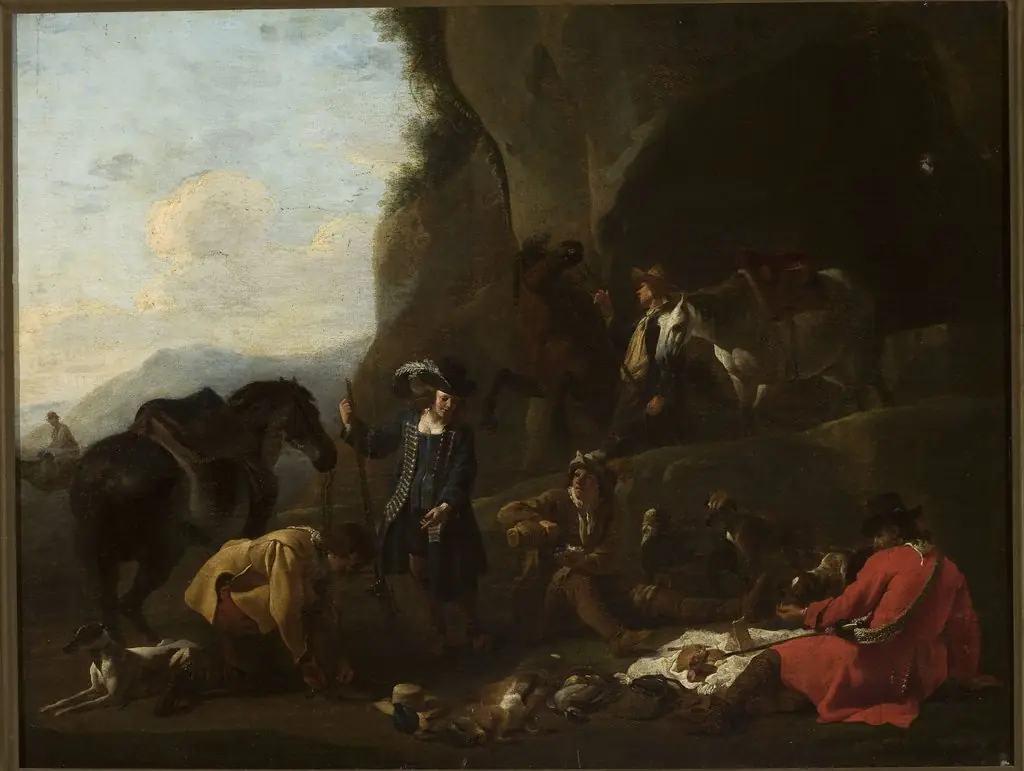 Rest during the hunt
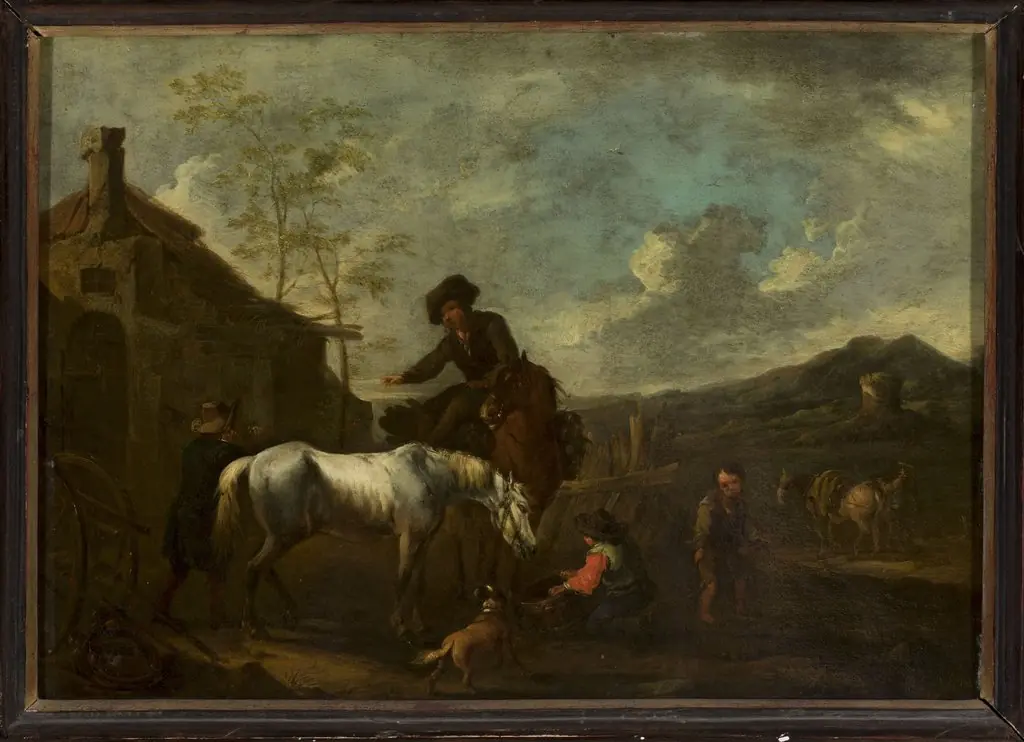 Watering the horses
 Huilua soittava paimen ja karjaa
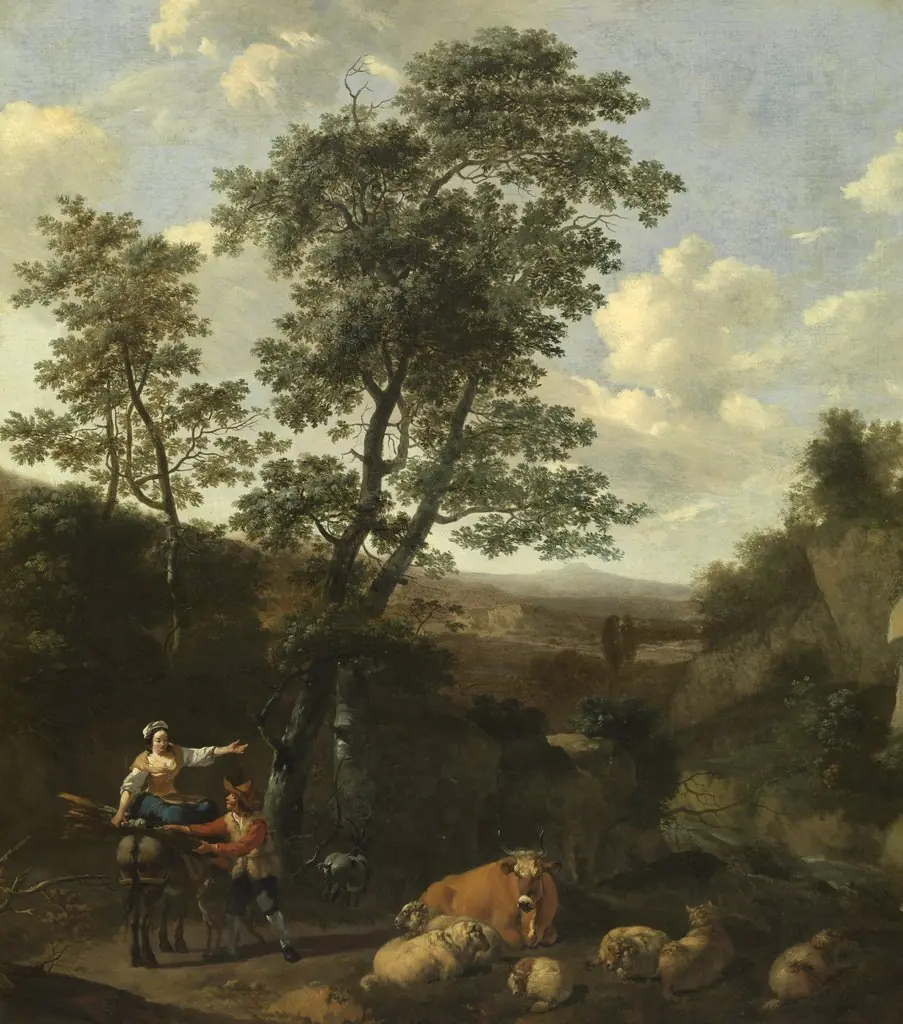 Italian Landscape
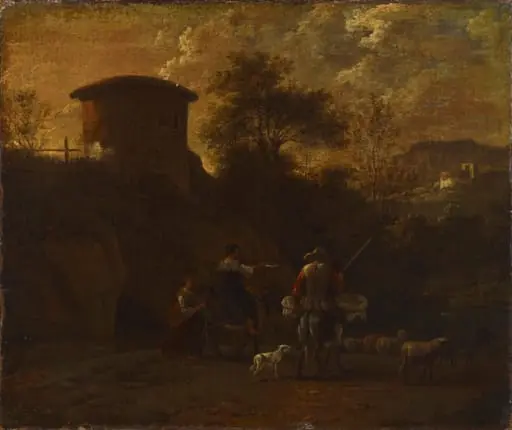 Rauniomaisema ja karjaa paimentava perhe
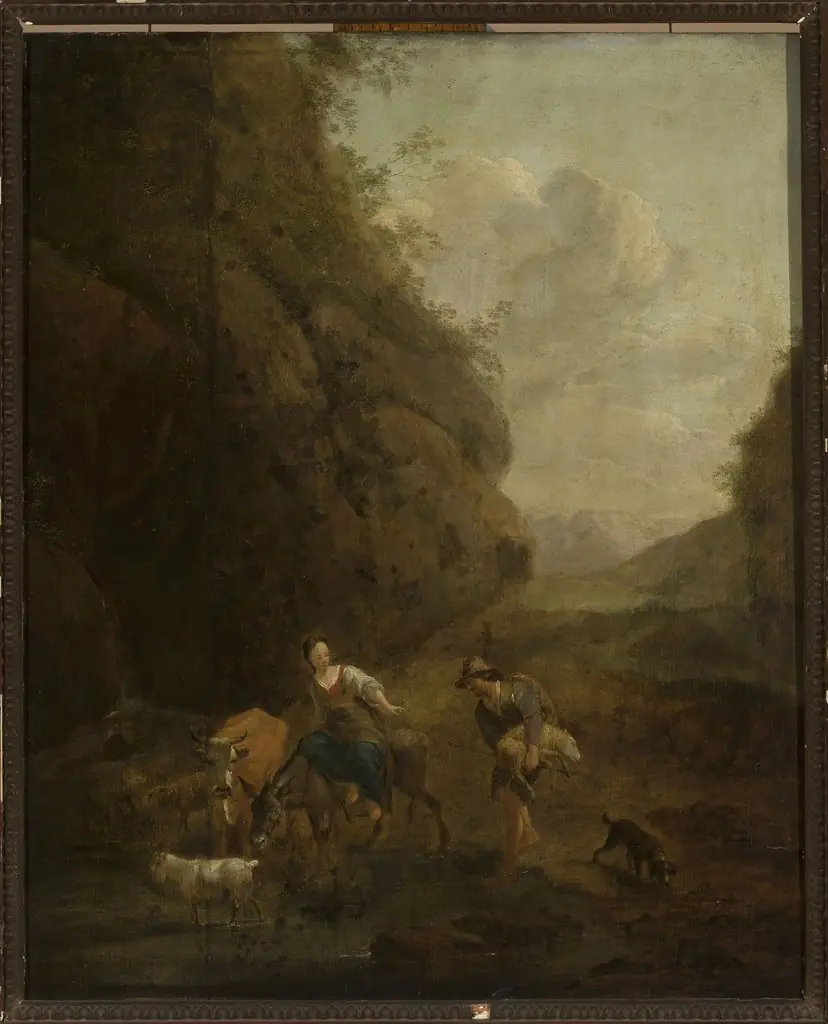 Pastoral scene
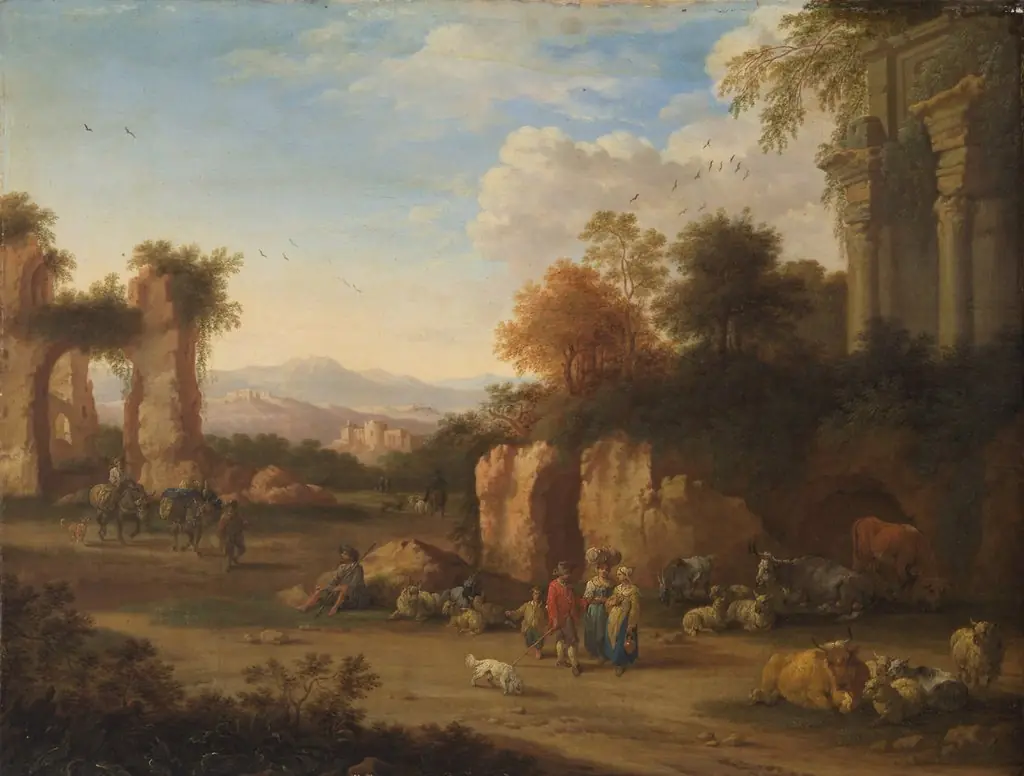 Italian landscape with ancient ruins and peasants