Artwork
Saint George and the Dragon
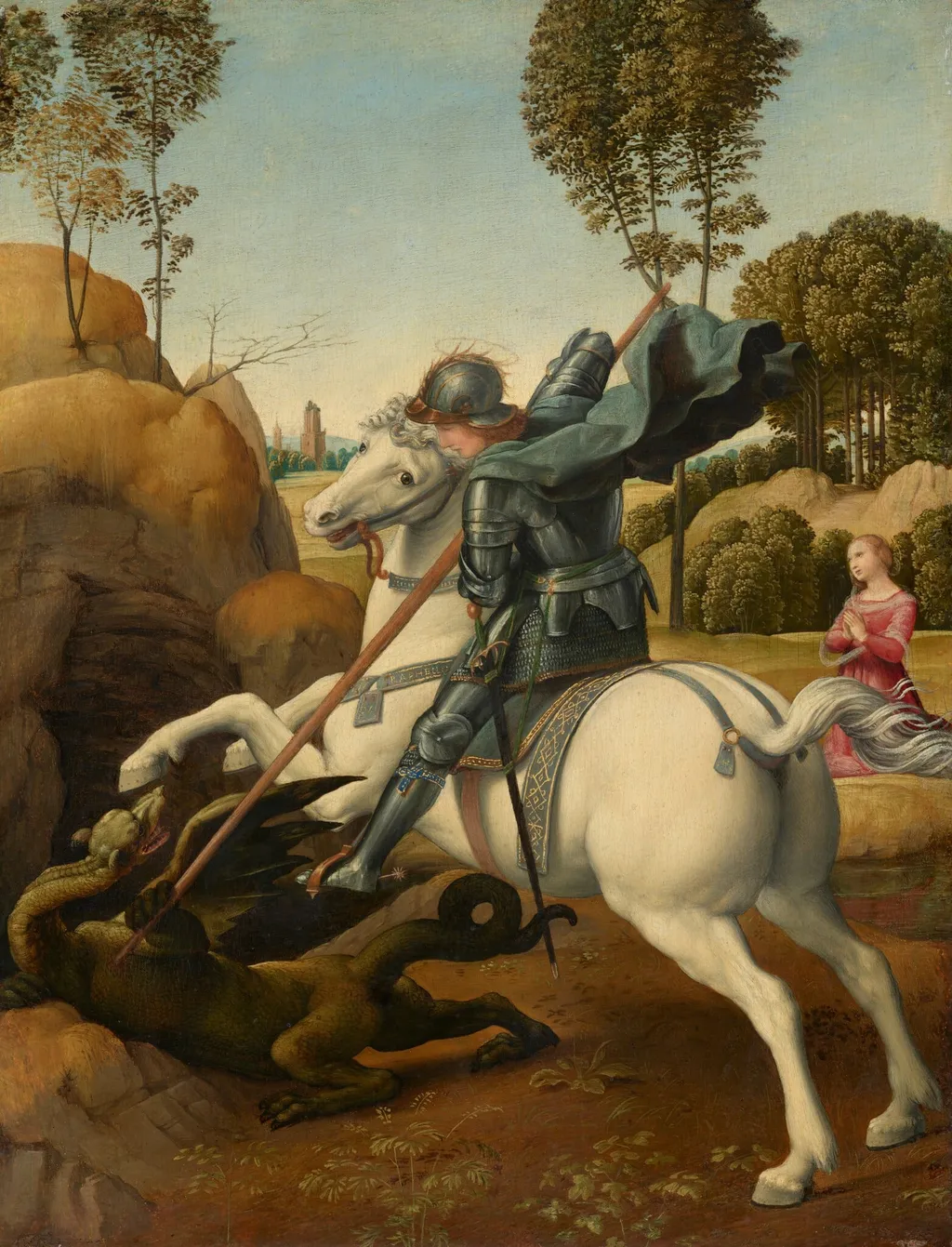
Saint George and the Dragon is an oil painting by the High Renaissance artist Raphael. It dates from 1506 and is held in the collection of the National Gallery of Art.
- Inscription
- Inscribed:across center on breast strap of horse: RAPHELLO / .V. (Raphael of Urbino); on garter: HONI (beginning of themotto of the Order of the Garter, Honi soit qu *
About this work
Andrew Mellon bought it from the Soviet sale of Hermitage treasures in 1931 and gave it to the National Gallery of Art.
A knight in gleaming armor drives his lance into a writhing dragon as a princess kneels in prayer among the rocks. Raphael painted this palm-sized panel around 1506 for the court of Urbino, signing it on the horse's breast strap and looping a blue Garter ribbon marked 'HONI' around Saint George's knee. Andrew Mellon bought it from the Soviet sale of Hermitage treasures in 1931 and gave it to the National Gallery of Art.
Subject & Meaning
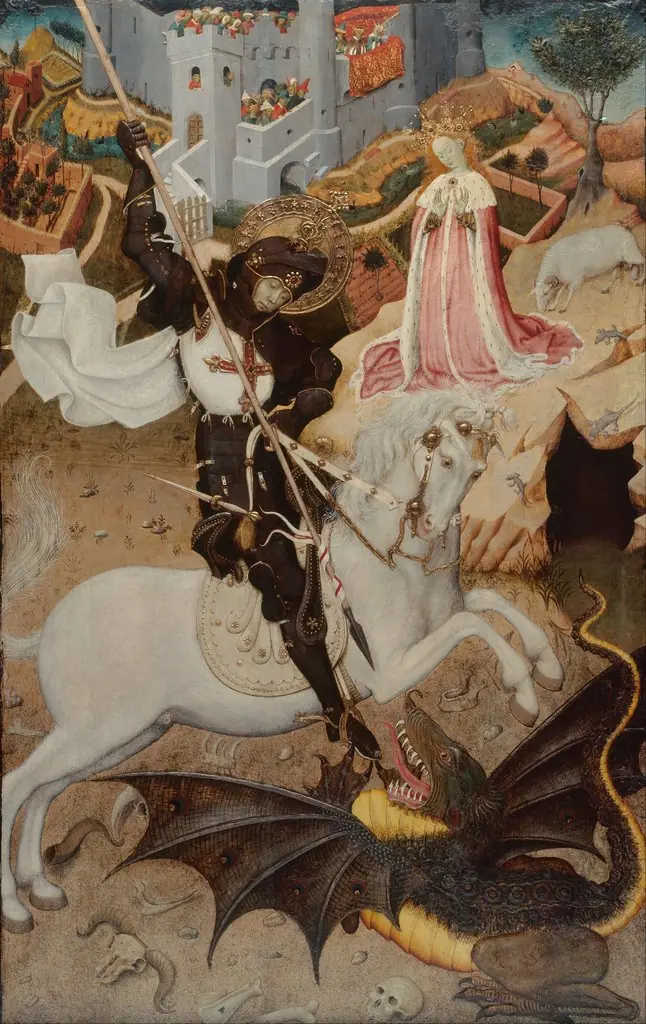
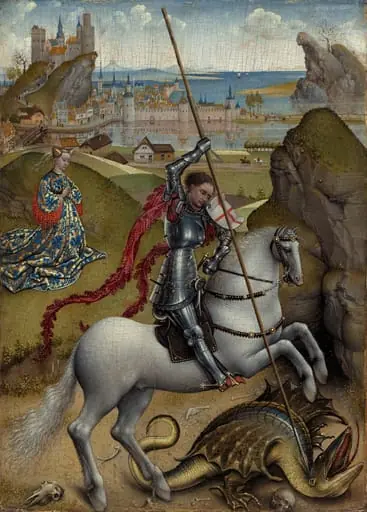
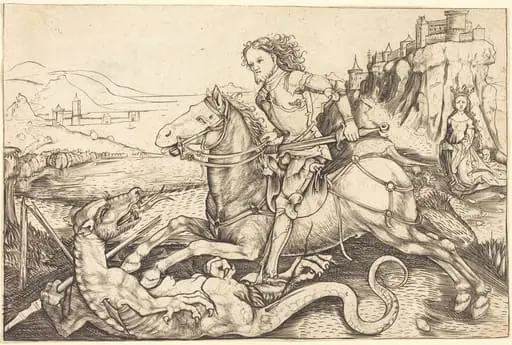
The painting illustrates the legend of Saint George and the Dragon. Saint George, depicted in armor with a spear and sword and an aureola, engages in combat with a dragon while a damsel in distress kneels in prayer nearby in a rural landscape with a tower and broad-leaved tree. As a religious work, the iconography carries Christian symbolism: Saint George personifies Christian chivalry and faith triumphing over the dragon, a symbol of evil, while the damsel may represent the Church or virtue rescued from sin. The inclusion of prayer and kneeling reinforces the spiritual dimension of the subject.
Technique & Style
Raphael executed Saint George and the Dragon in oil on panel, a medium typical of portable devotional works. The panel support measures 28.5 × 21.5 cm, indicating a small, intimate scale likely intended for private contemplation. Stylistically, the painting belongs to the High Renaissance, evident in its balanced composition, clear spatial organization, and refined modeling of forms.
The handling of oil paint allows for subtle transitions of light and shadow, particularly in the rendering of armor, the horse’s musculature, and the dragon’s scales. The figures are set against a rural landscape with a distant tower and broad-leaved trees, creating a sense of depth while maintaining the saint and his confrontation as the focal point. The overall effect is one of harmonious, dynamic equilibrium, characteristic of Raphael’s early mature style.
History & Provenance
Painted in 1505, this work's documented provenance begins in early 17th-century England. It was owned by William Herbert, 3rd Earl of Pembroke, at Wilton House by 1627, and later given to King Charles I. Sold during the Commonwealth in 1651, it passed through French collectors, Charles d'Escoubleau, Laurent Le Tessier de Montarsy, and Pierre Crozat, before entering the Crozat family collection. Catherine II of Russia acquired it in 1772 for the Imperial Hermitage.
In March 1931, Andrew W. Mellon purchased it through Matthiesen Gallery, Colnaghi, and Knoedler, deeding it to his trust in 1932, and ultimately gifting it to the National Gallery of Art in 1937.
Saint George and the Dragon is held at the National Gallery of Art in Washington, D.C. It was accessioned in 1937 as a gift from Andrew W. Mellon. No specific inventory or accession number is recorded in the sources, and no exhibition history is documented.
Context
This painting, created in 1505 by Raphael during the High Renaissance, is a small oil panel depicting Saint George and the Dragon. As a work by one of the period’s most celebrated masters, it has passed through distinguished collections, including that of Charles I of England and Catherine the Great of Russia, before entering the National Gallery of Art in Washington. Its long and prestigious provenance testifies to its enduring art-historical significance.
The composition, based on the popular legend, exemplifies Raphael's early command of narrative and landscape within the High Renaissance idiom.
Overview
Raphael's Saint George and the Dragon, painted around 1505, is a small oil on wood panel now housed in the National Gallery of Art in Washington, D.C. This compact work depicts the traditional Christian legend of Saint George, a knight in shining armor, confronting a fearsome dragon to rescue a princess. The painting exemplifies the artist's early High Renaissance style and was likely created for a diplomatic exchange involving the court of Urbino.
Own this work as a print
Artist & collection

Artist
Raphael was born Raffaello Sanzio in Urbino on April 6, 1483, the son of Giovanni Santi, a painter and poet attached to the ducal court.


- Saint George and the Dragon
 Saint George and the Dragon
 Saint George and the Dragon
 Saint George and the Dragon
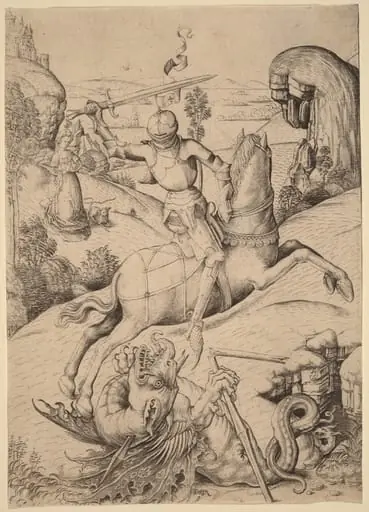 Saint George and the Dragon
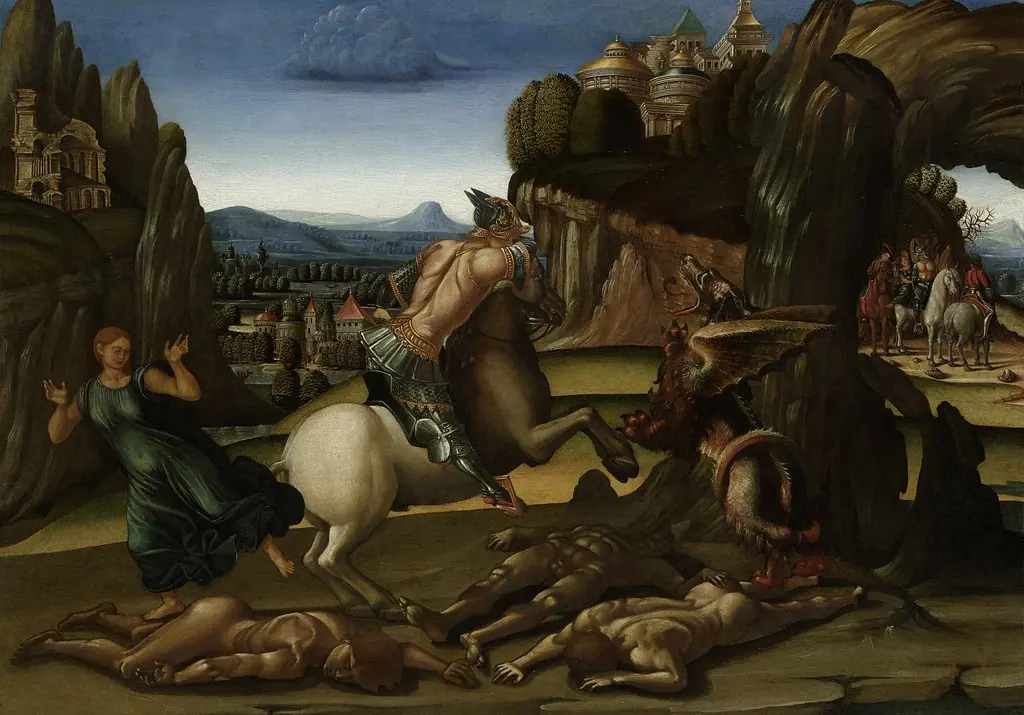 Saint George and the Dragon
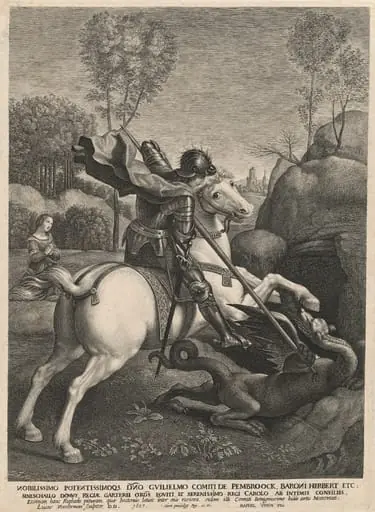 Saint George and the Dragon
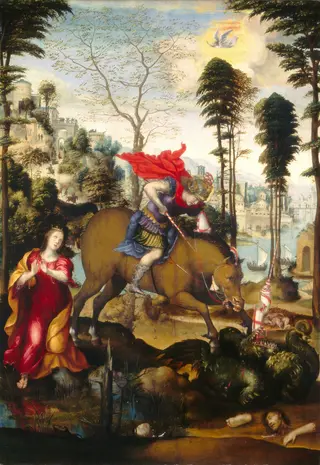
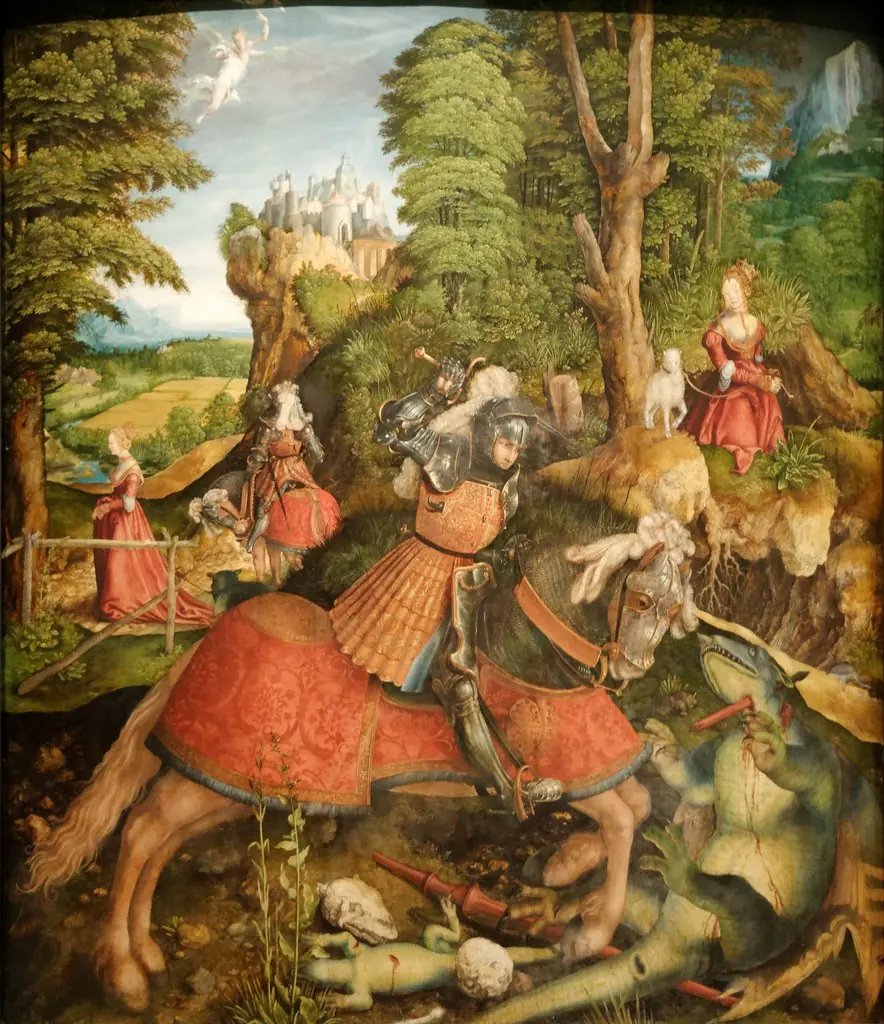 Saint George fighting the dragon
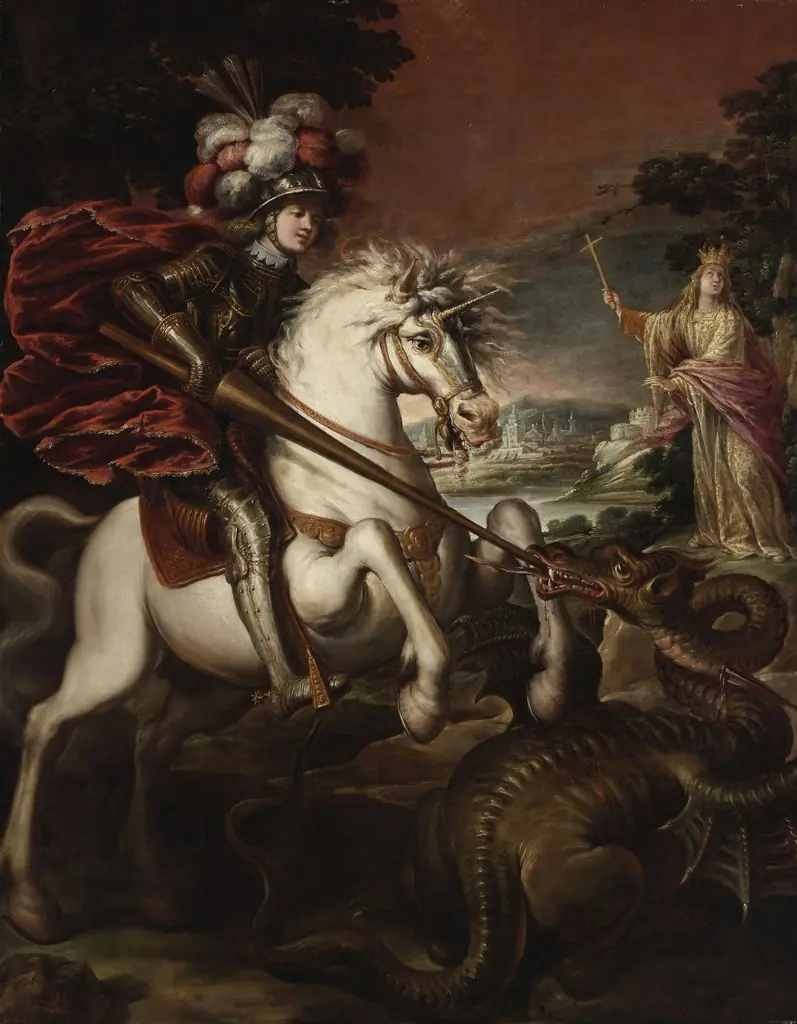 Saint George Slaying the Dragon
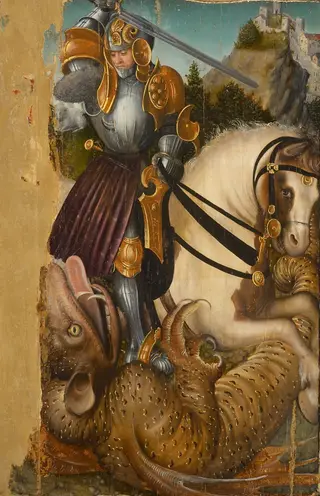 Saint George Fighting the Dragon
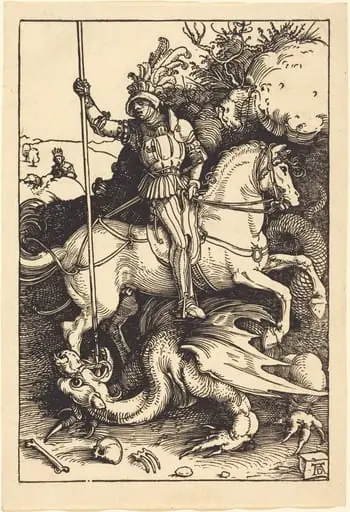 Saint George Killing the Dragon
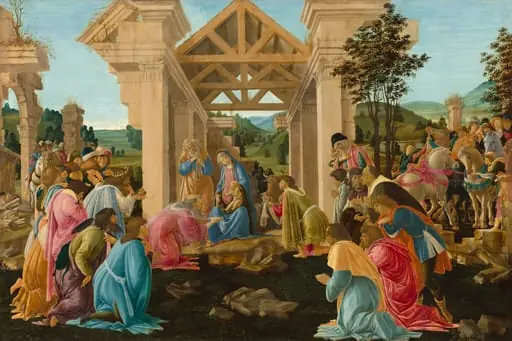 Compared in the Renaissance Florence course