Artwork
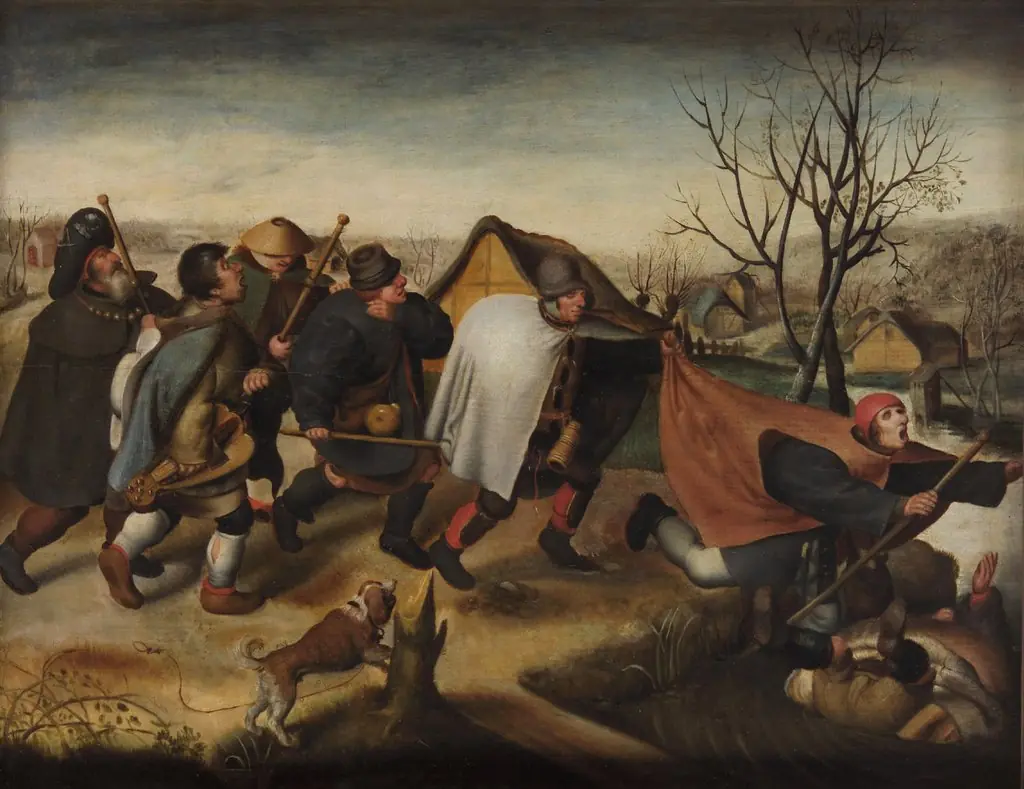
Peasants Being Attacked by Bandits
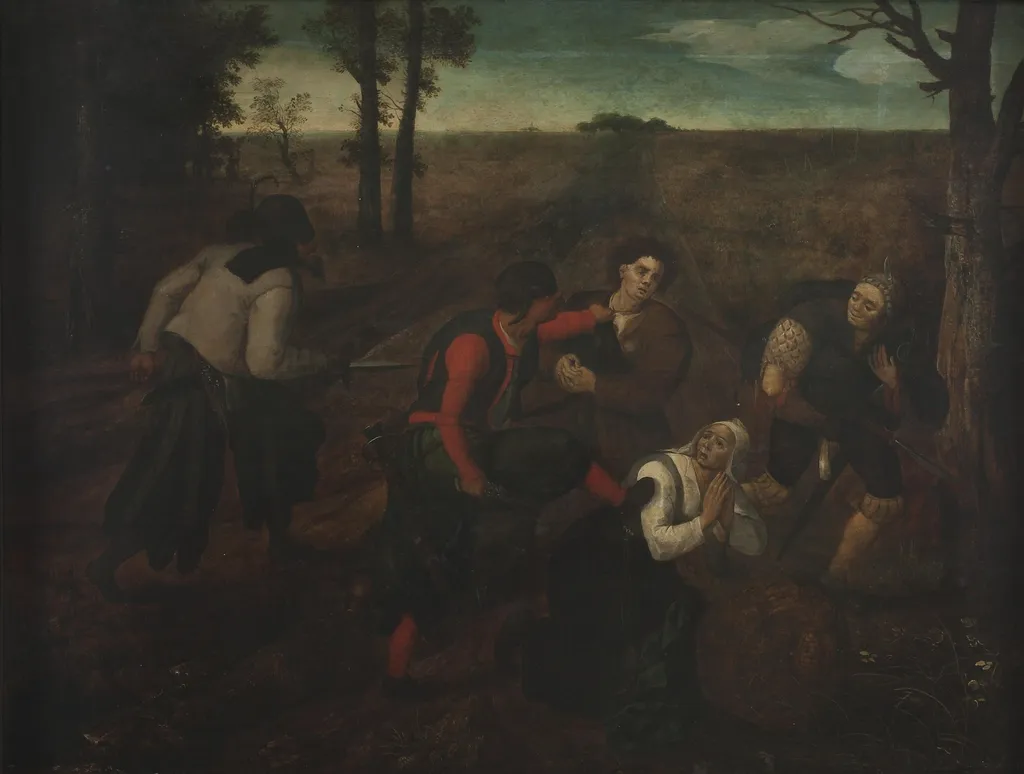
Peasants Being Attacked by Bandits is an oil painting by the Dutch Golden Age artist Pieter Brueghel the Younger. It dates from 1550 and is held in the collection of the Hermitage Museum.
About this work
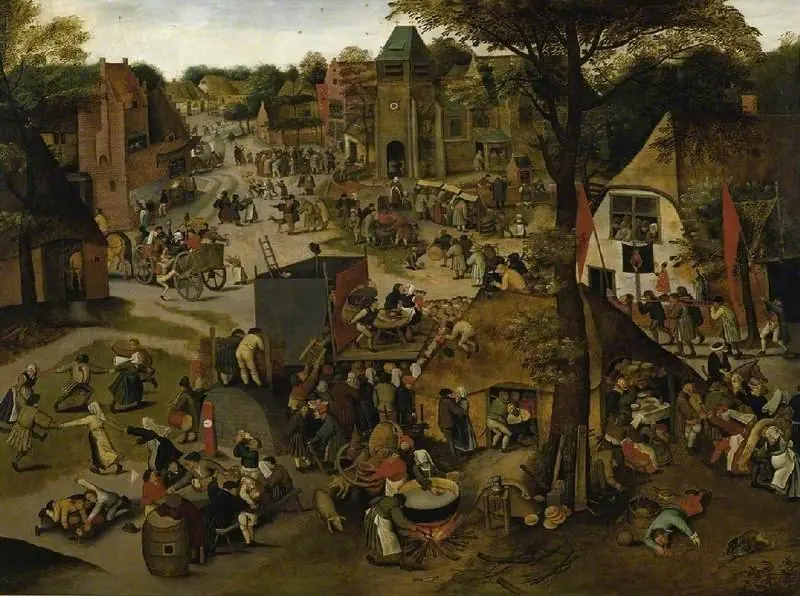
In the foreground, a group of peasants are shown being assaulted by bandits, with one peasant being dragged away while another lies on the ground.
This painting depicts a chaotic scene of peasants being attacked by bandits. In the foreground, a group of peasants are shown being assaulted by bandits, with one peasant being dragged away while another lies on the ground. The bandits are dressed in dark clothing and appear to be armed with swords and shields.
In the background, a landscape of rolling hills and trees can be seen, with a few buildings visible in the distance. The overall atmosphere of the painting is one of violence and chaos, with the peasants appearing to be helpless against the bandits.
The painting is a powerful depiction of the struggles of rural life in the 16th century, and it highlights the dangers and hardships faced by peasants during this time period. To learn more about the artist's use of chiaroscuro, look up Pieter Brueghel the Younger.
Overview
Peasants Being Attacked by Bandits is an oil painting created by Pieter Brueghel the Younger around 1550. It belongs to the Dutch Golden Age and is now part of the State Hermitage Museum's collection.
Subject & Meaning
The painting portrays a chaotic scene of rural conflict, where peasants are violently attacked by bandits. The depiction highlights the hardships and dangers faced by rural populations in the 16th century.
Technique & Style
Executed in oil paint, the work showcases Brueghel the Younger's ability to convey intense drama. The composition contrasts a tumultuous foreground, where peasants are assaulted, with a serene background landscape of rolling hills and distant buildings.
History & Provenance
Created in the late 16th century by Pieter Brueghel the Younger, the painting is an example of his studio's prolific output, often based on his father Pieter Bruegel the Elder's themes. Its current location is the State Hermitage Museum.
Context
The work reflects the social realities of its time, portraying the vulnerability of peasants to banditry, a common threat in 16th-century rural life. It also illustrates the continuation of Pieter Bruegel the Elder's influences through his son's work.
Legacy
While part of a broader tradition, the painting's specific legacy is more nuanced, primarily serving as an example of Pieter Brueghel the Younger's contribution to disseminating his father's style and themes throughout the Dutch Golden Age.
Own this work as a print
Artist & collection
Artist
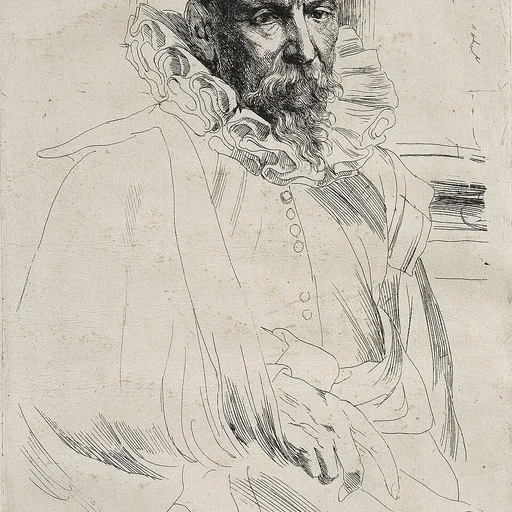
Pieter Brueghel the Younger ( BROY-gəl, also US: BROO-gəl; Dutch:; between 23 May and 10 October 1564 – between March and May 1638) was a Flemish painter known for numerous copies after his father Pieter Bruegel the…

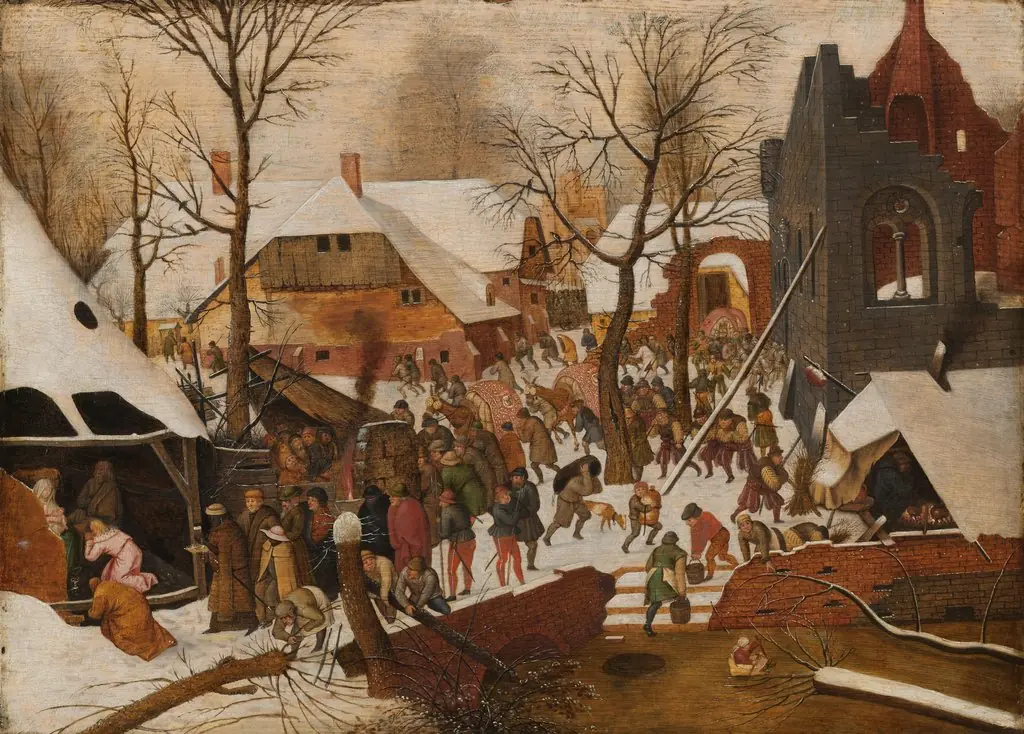 Adoration of the magi
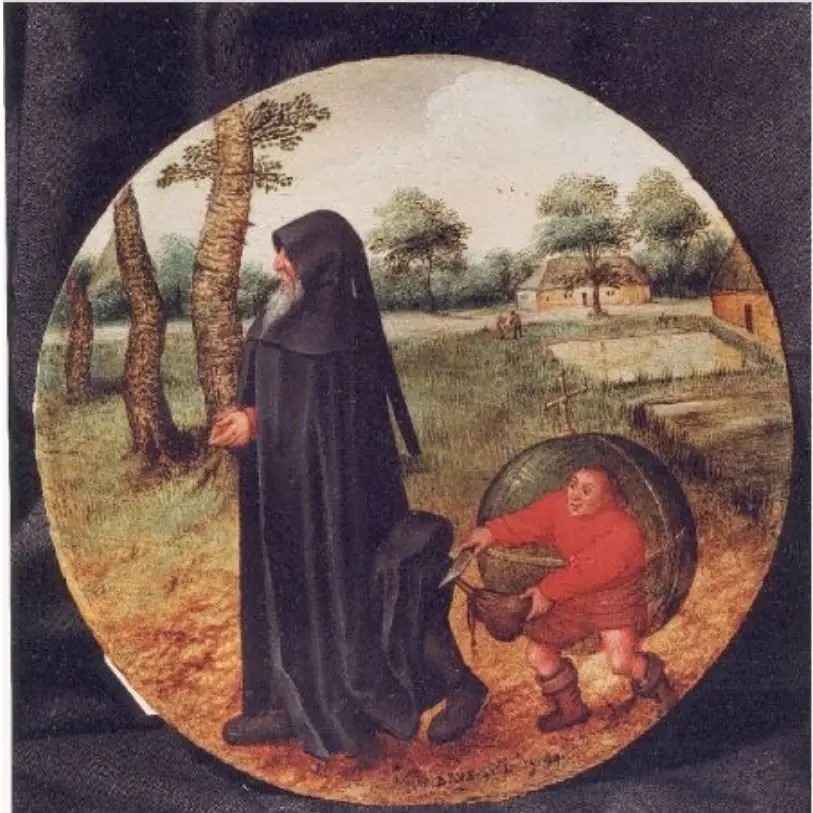 I Mourn because the World is so Untrustworthy
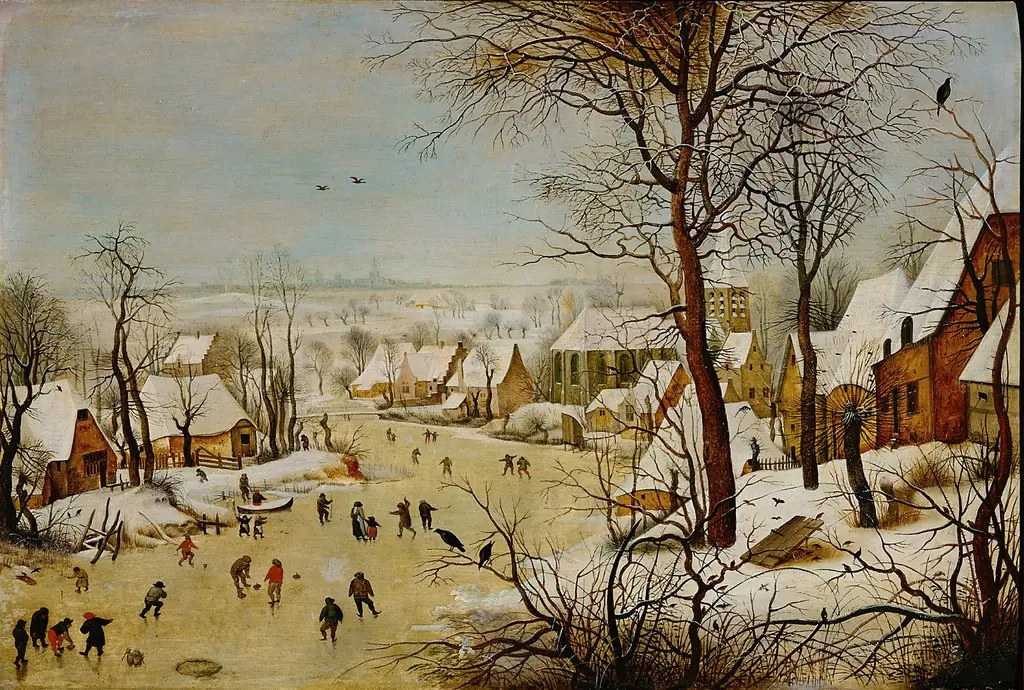 Winter Landscape with a Bird Trap
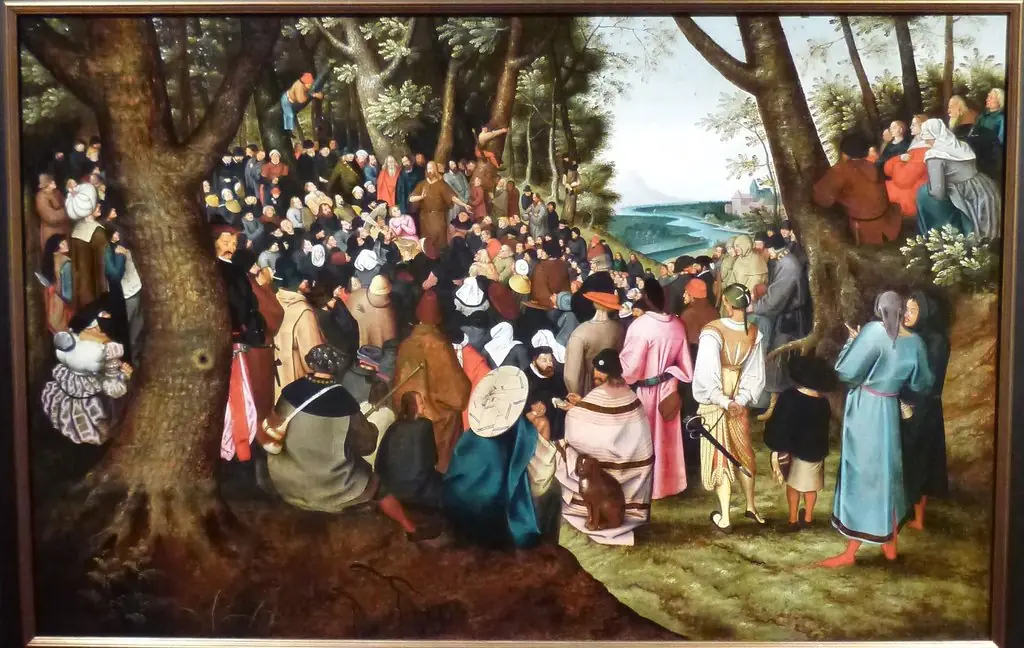 The Sermon of John the Baptist
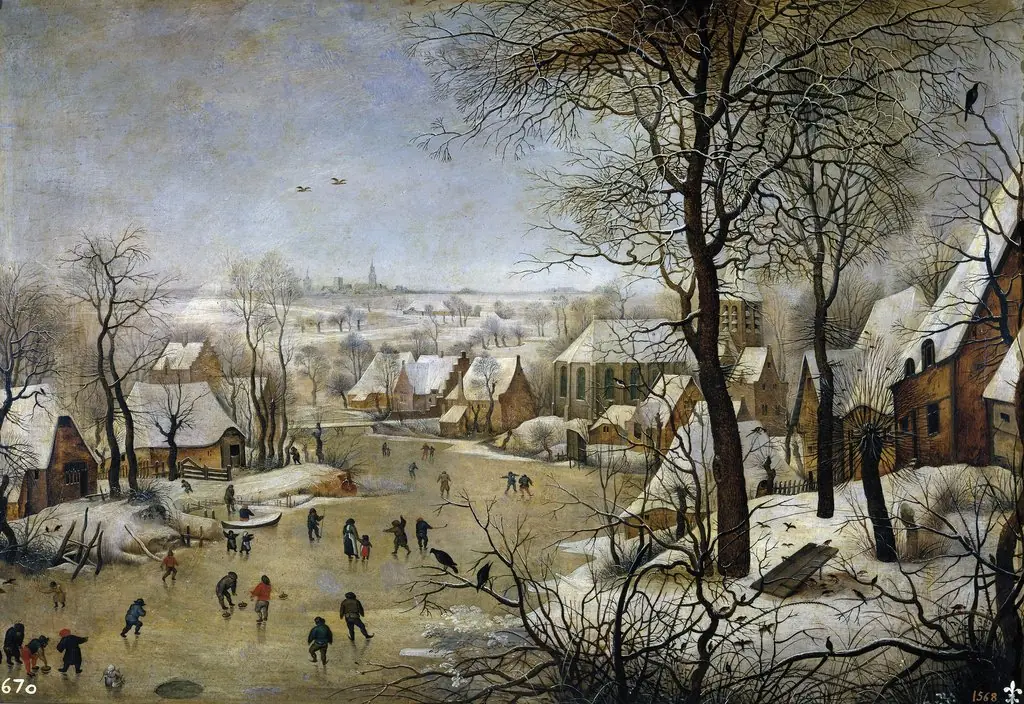 Winter Landscape with a Bird-trap
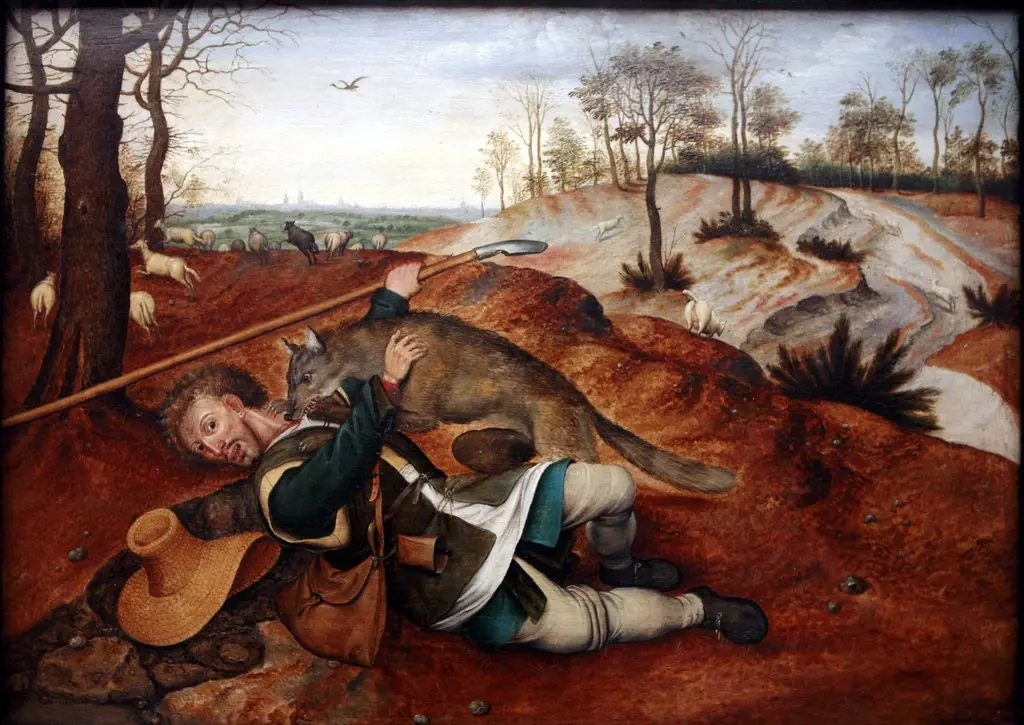 The Good Shepherd
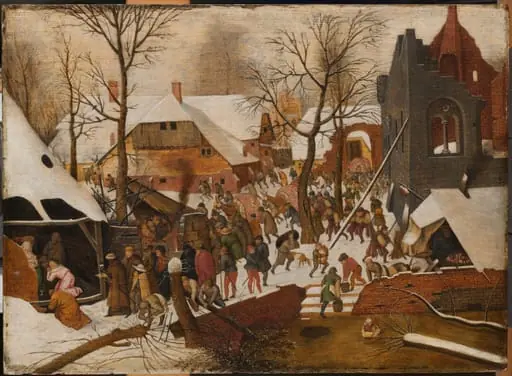 The Adoration of the Magi
 A Village Festival, With a Theatrical Performance and a Procession in Honour of St Hubert and St Anthony