Artwork
Still-Life with Chinese Teabowls
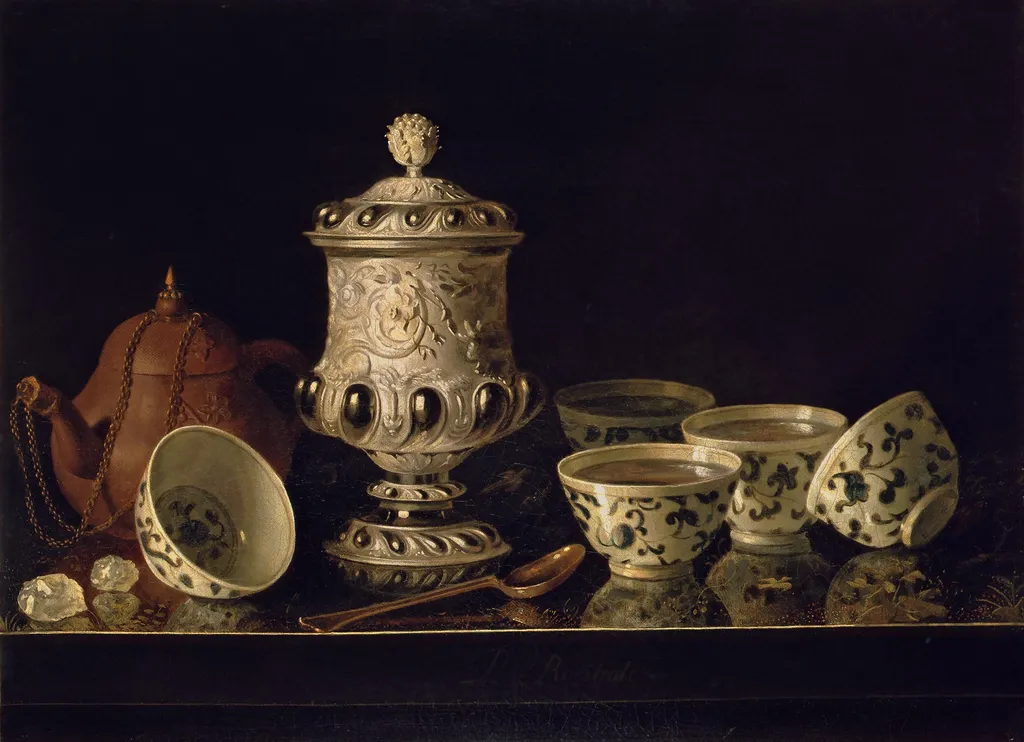
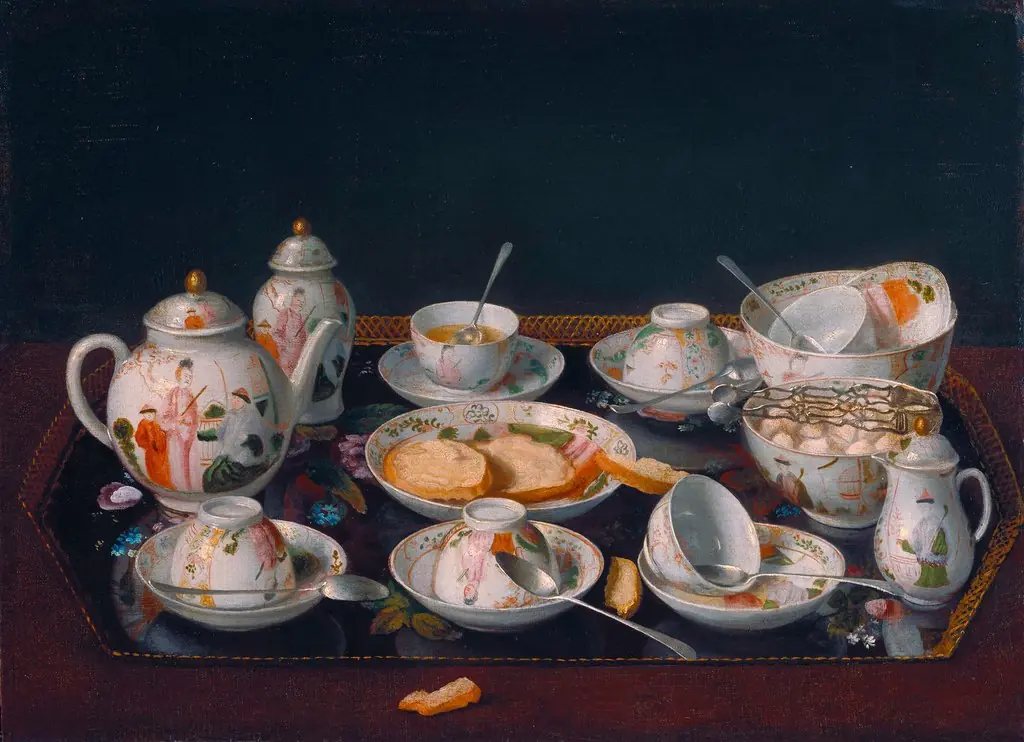
Still-Life with Chinese Teabowls is an oil painting by the Dutch Golden Age artist Pieter Gerritsz van Roestraten. It dates from 1670 and is held in the collection of the Gemäldegalerie Berlin.
About this work
Subject & Meaning
Their inclusion conveys wealth and the cultural fascination with Eastern ceramics, while also serving as a visual record of contemporary material culture.
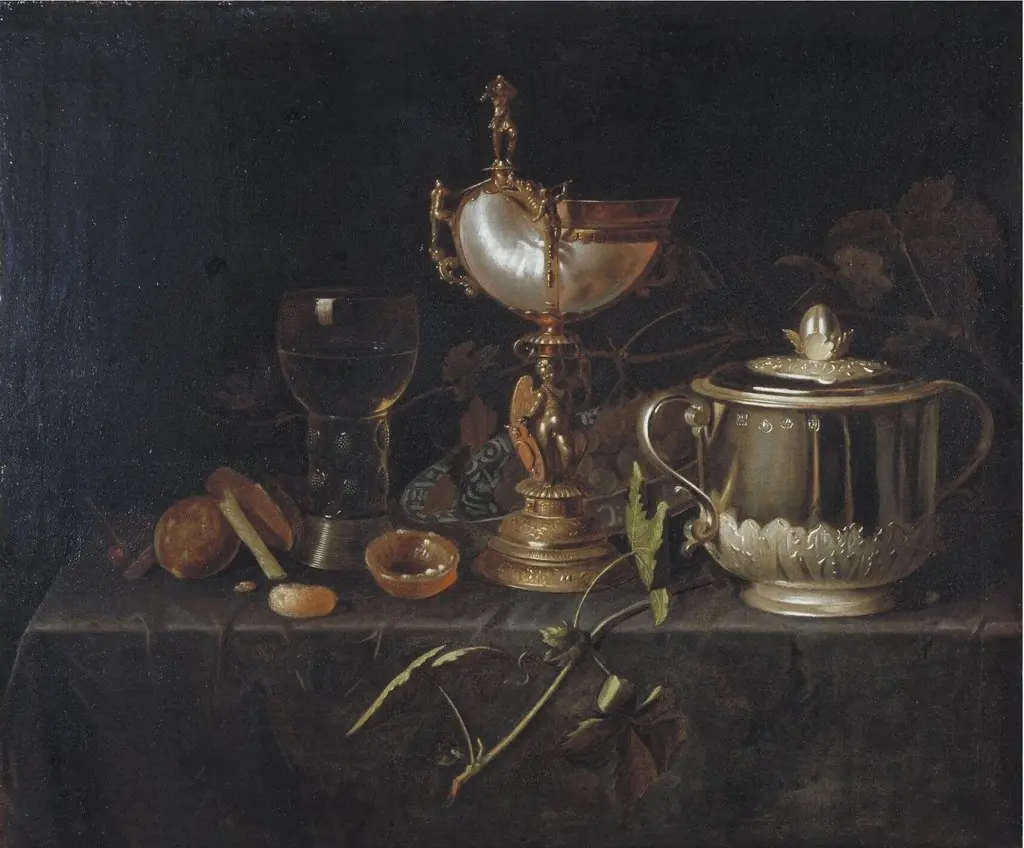
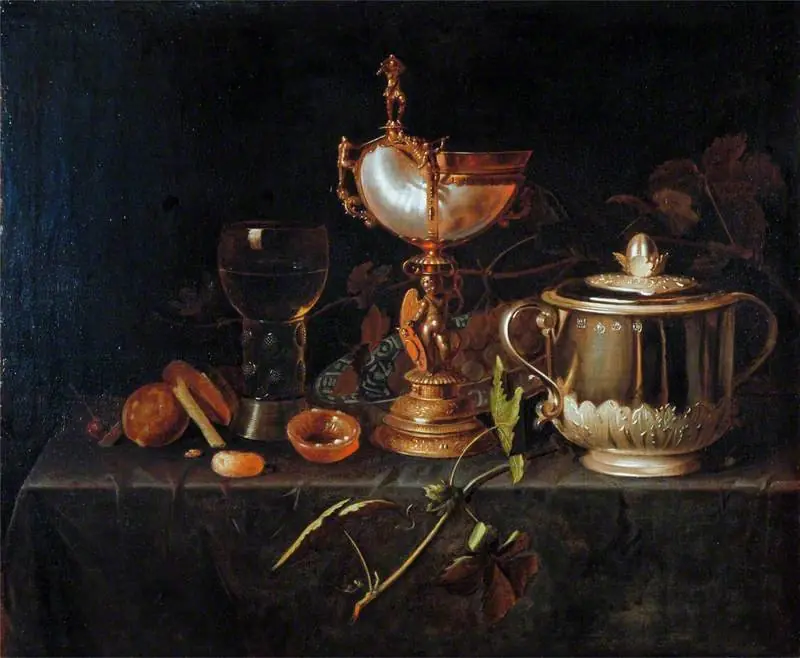
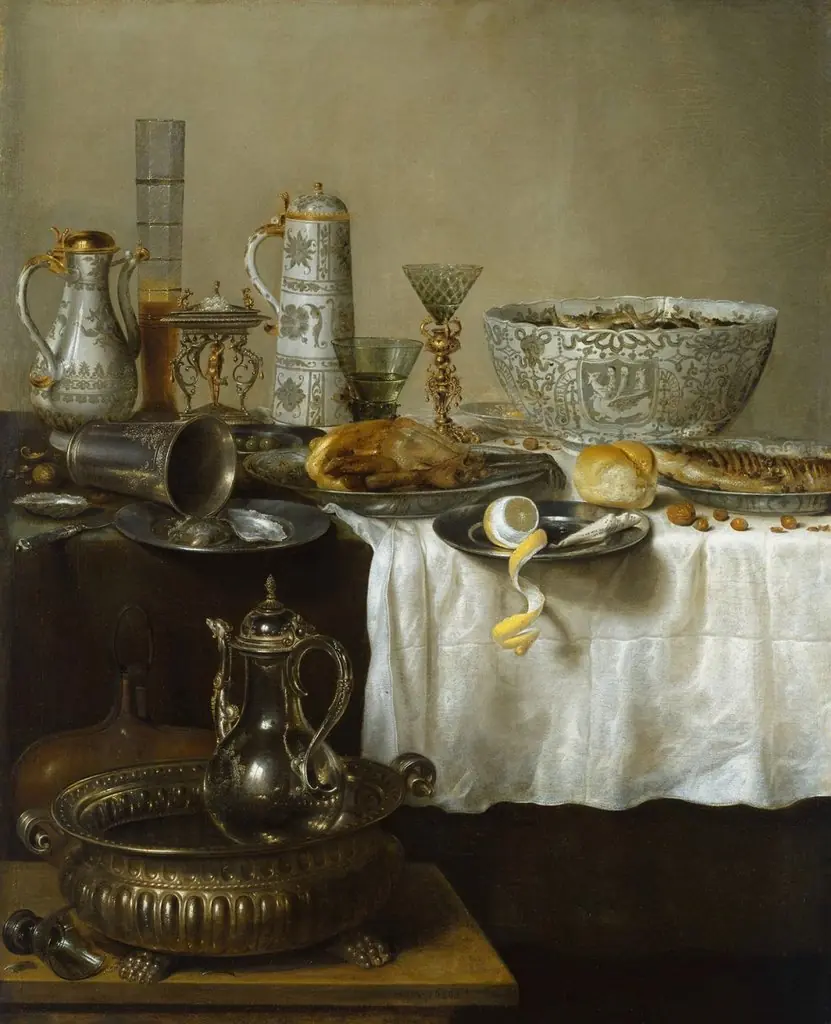
The painting shows a Chinese teapot, teacup, covered beaker and sugar bowl arranged on a tabletop. These objects reference the ritual of tea consumption and the exotic trade goods that entered European domestic life in the seventeenth century. Their inclusion conveys wealth and the cultural fascination with Eastern ceramics, while also serving as a visual record of contemporary material culture.
The work belongs to the still‑life genre popular in Dutch Golden Age painting, emphasizing careful observation of texture and form. By depicting imported porcelain alongside everyday household items, the composition underscores themes of abundance and the collector’s taste.
The artist Pieter Gerritsz van Roestraten rendered the scene with a muted palette, allowing the bright glazes of the ceramics to stand out. The arrangement suggests both aesthetic balance and a subtle commentary on the transient nature of material pleasure.
Technique & Style
The work is painted in oil on canvas, measuring 35 cm in height and 48 cm in width. Stylistically, it belongs to the Dutch still-life tradition, characterized by a restrained palette and meticulous attention to the reflective surfaces of the objects depicted.
Handling emphasizes smooth, blended transitions in the depiction of reflective metal and porcelain, with sharply focused highlights and soft-edged shadows to suggest volume and tactility. The composition is arranged horizontally, with the Chinese teabowls and a covered beaker positioned centrally to draw the viewer’s eye across the still-life arrangement.
History & Provenance
Pieter Gerritsz van Roestraten created the oil painting Still-Life with Chinese Teabowls in 1670. The work depicts a still life arrangement featuring a teapot, teacup, covered beaker, and sugar. It is currently held in the collection of the Gemäldegalerie Berlin.
No specific details regarding the original commission, the artist's creation process, or the subsequent chain of ownership prior to its current location are provided in the available records.
Still-Life with Chinese Teabowls is housed in the Gemäldegalerie Berlin, where it is accessioned as part of the museum’s collection. The work entered the collection following its creation in 1670 by Pieter Gerritsz van Roestraten, and has remained in the gallery’s permanent display since acquisition.
Overview
Created in 1670, this oil painting presents a modest arrangement of domestic objects on a tabletop: a covered beaker, a small dish of sugar, a white teacup adorned with blue motifs, and a brown teapot suspended from a chain. The composition is rendered in muted tones, the objects illuminated by a gentle, diffused light that emphasizes their material qualities.
Own this work as a print
Artist & collection
Artist
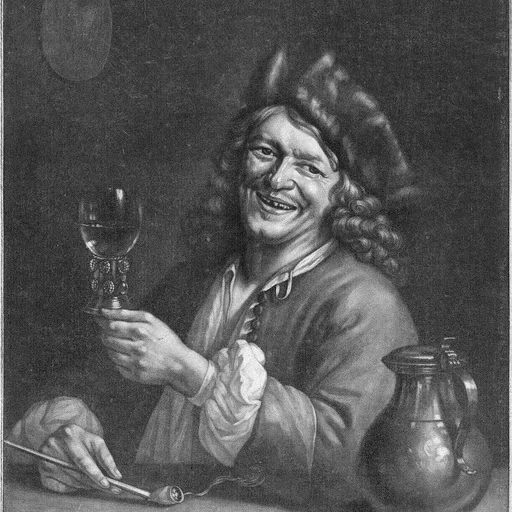
Pieter Gerritsz van Roestraten
Pieter Gerritsz van Roestraten or Pieter Gerritsz van Roestraeten (21 April 1630 – 10 July 1700) was a Dutch painter of still lifes, in particular floral and vanitas still lifes.