Artwork
Still-Life with Chinese Porcelain Bowl
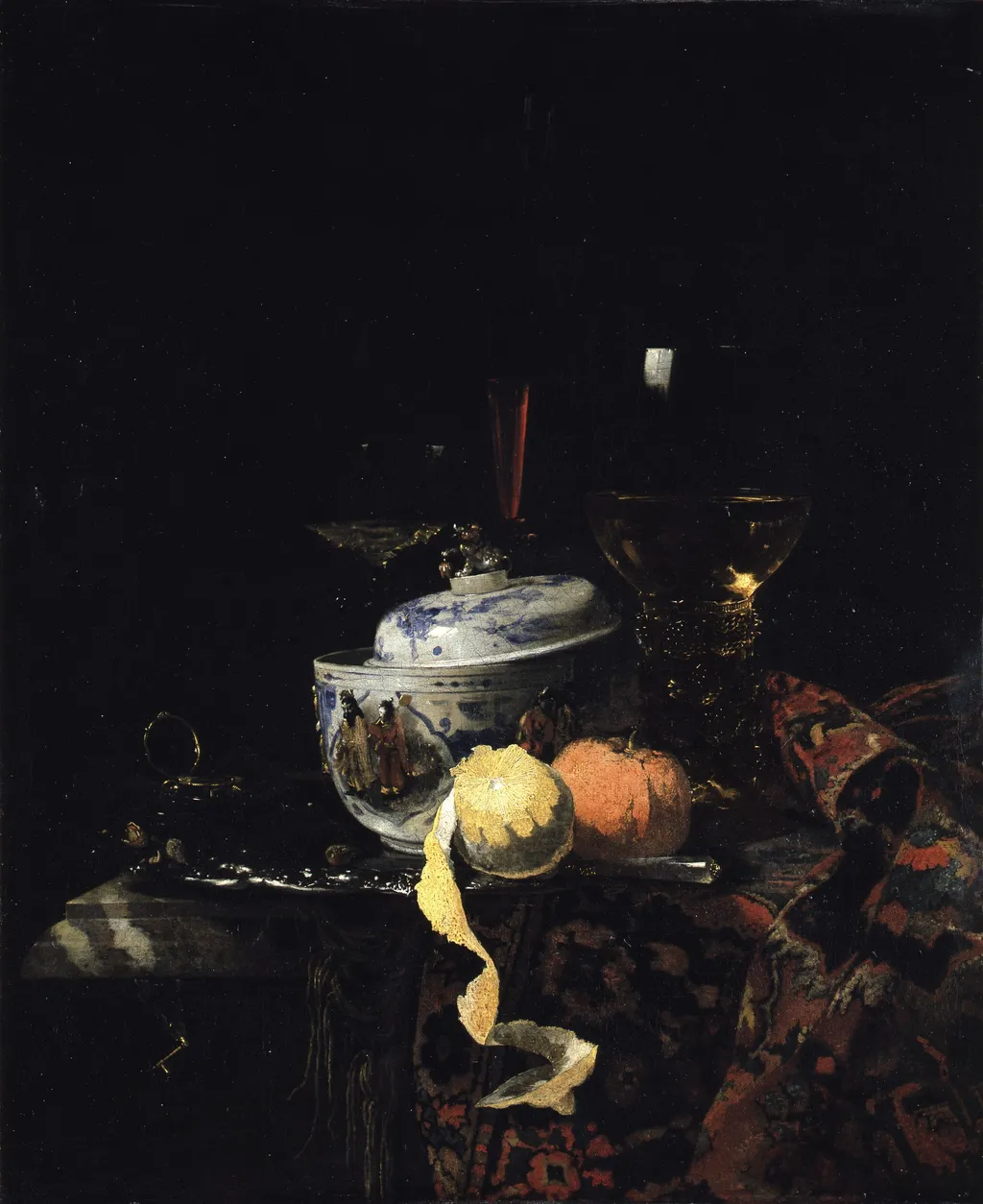
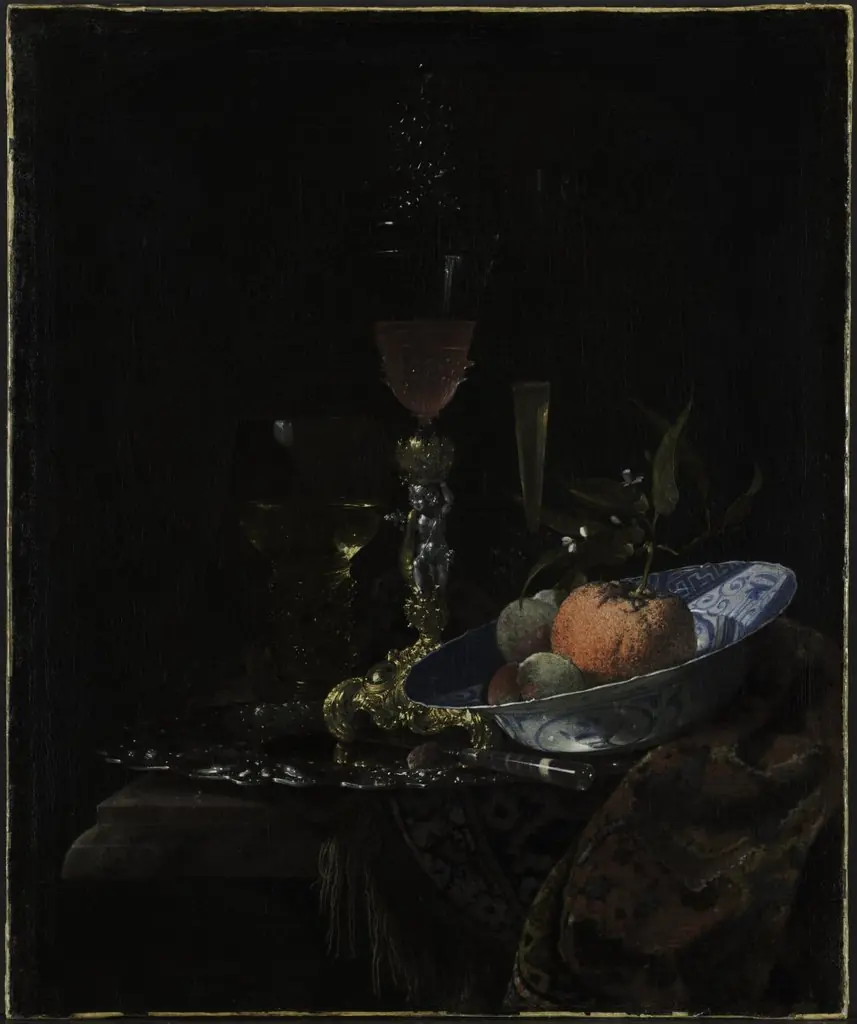
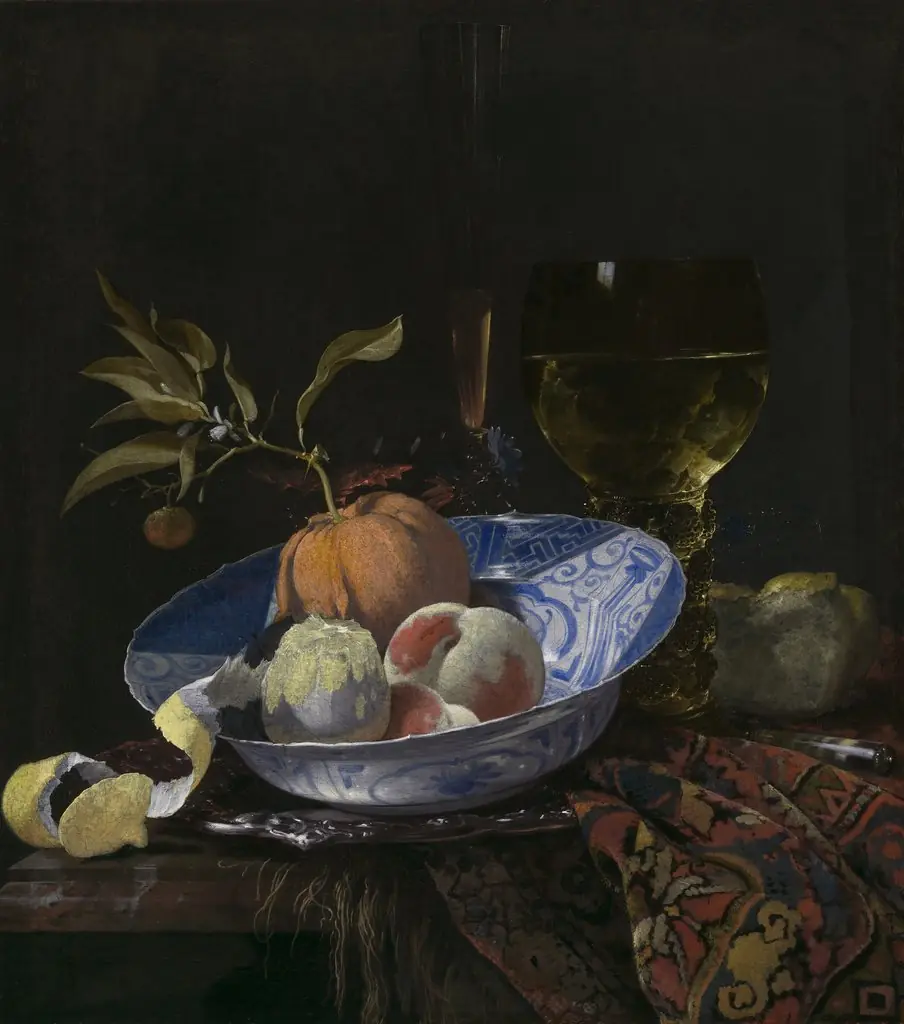
Still-Life with Chinese Porcelain Bowl is an oil painting by the Dutch Golden Age artist Willem Kalf. It dates from 1662 and is held in the collection of the Gemäldegalerie Berlin.
About this work
Overview
Measuring 64 by 53 centimetres, the work is held in the Gemäldegalerie Berlin, where it entered the collection of the Staatliche Museen.
Still-Life with Chinese Porcelain Bowl is an oil on canvas painting by the Dutch Golden Age artist Willem Kalf, dated 1662. Measuring 64 by 53 centimetres, the work is held in the Gemäldegalerie Berlin, where it entered the collection of the Staatliche Museen. Kalf, born in Rotterdam in 1619 and active until his death in Amsterdam in 1693, is widely regarded as the most accomplished still-life painter of his generation. This painting exemplifies the so-called pronkstilleven, or ostentatious still life, a genre that flourished in the Netherlands during the seventeenth century as the newly wealthy bourgeoisie sought to display their status through art. The painting's significance lies in its extraordinary technical refinement, its meditation on luxury and transience, and its value as a document of global trade and cultural exchange in the Dutch Republic.
Subject & Meaning
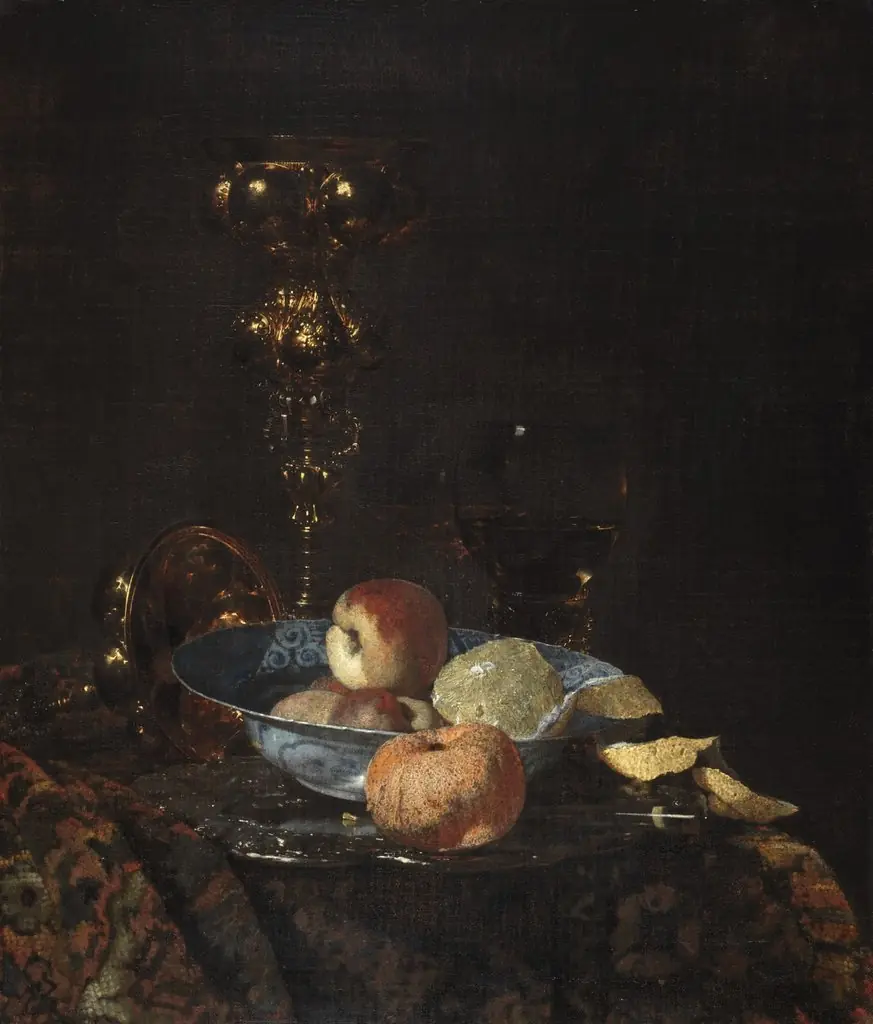
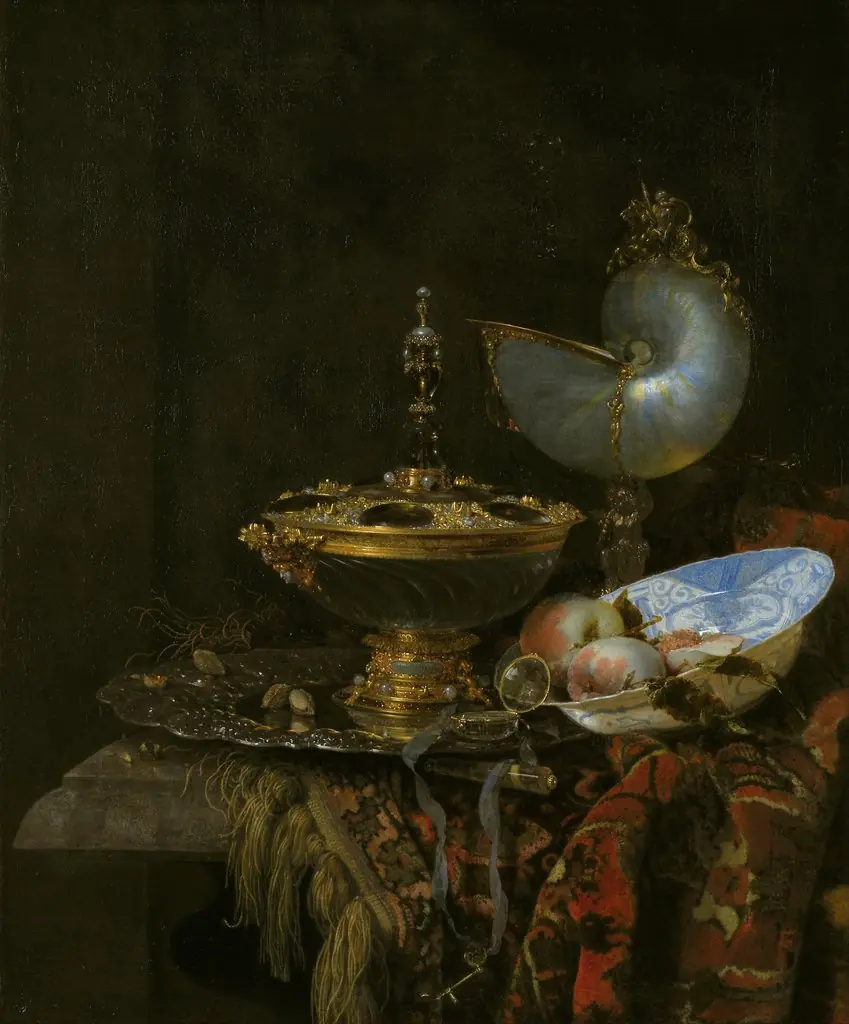
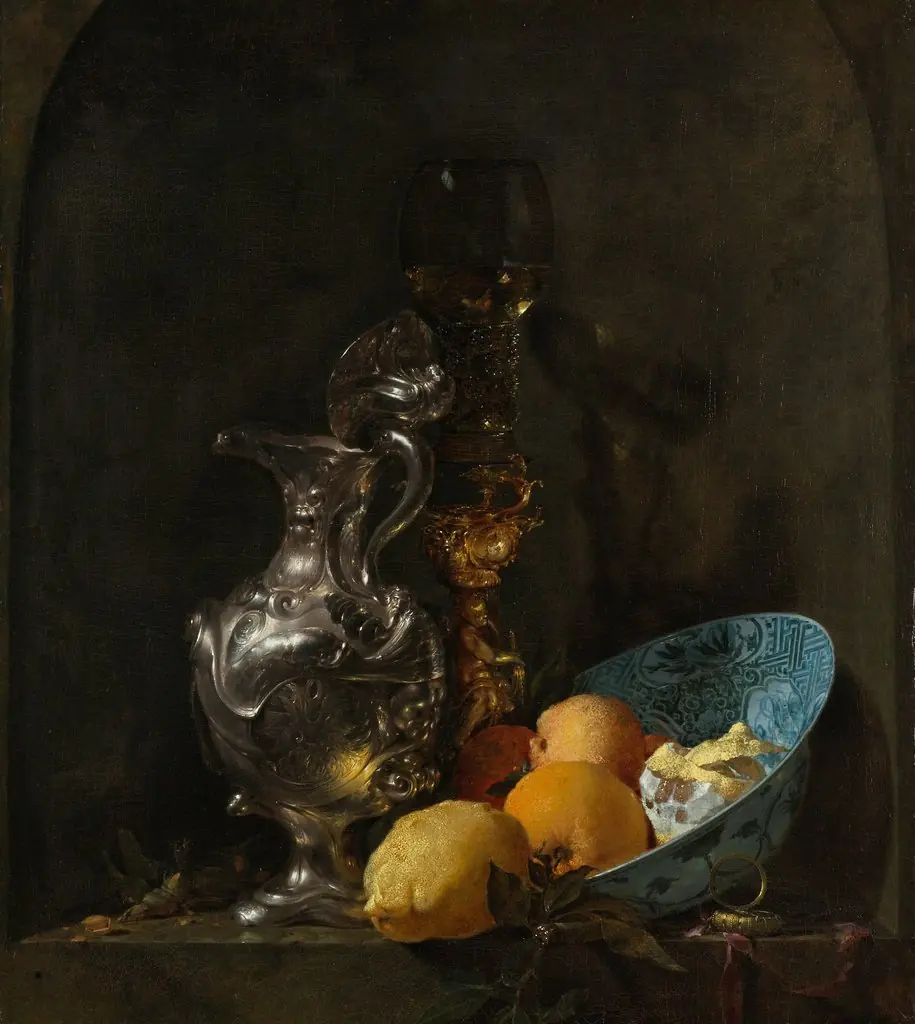
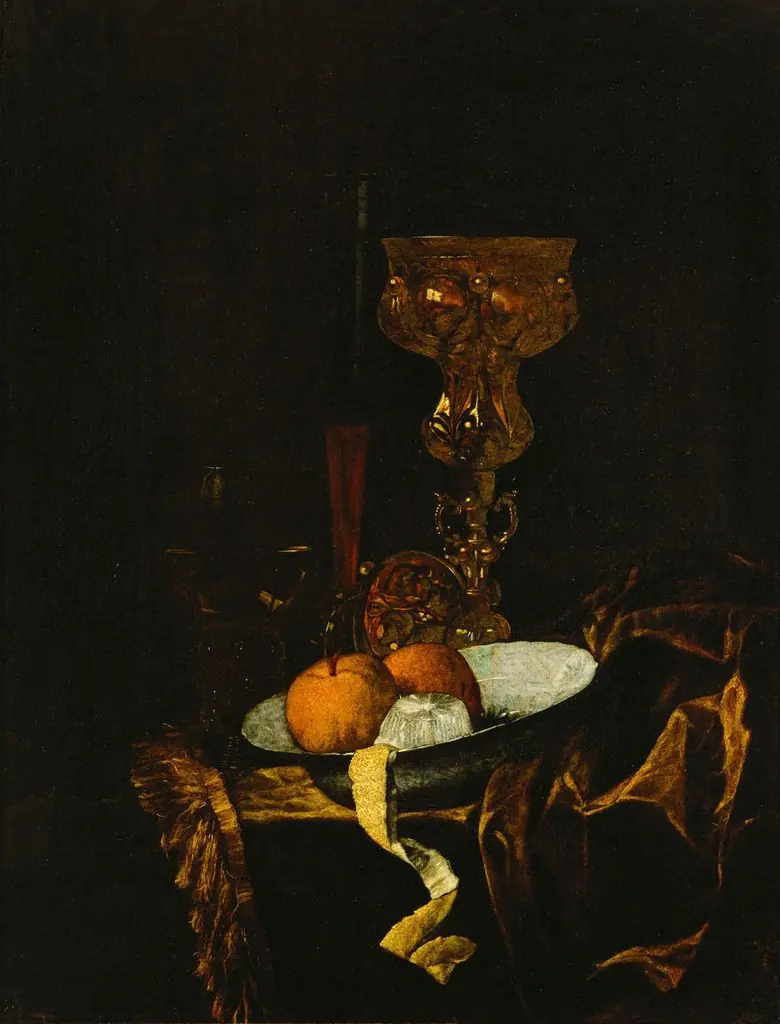
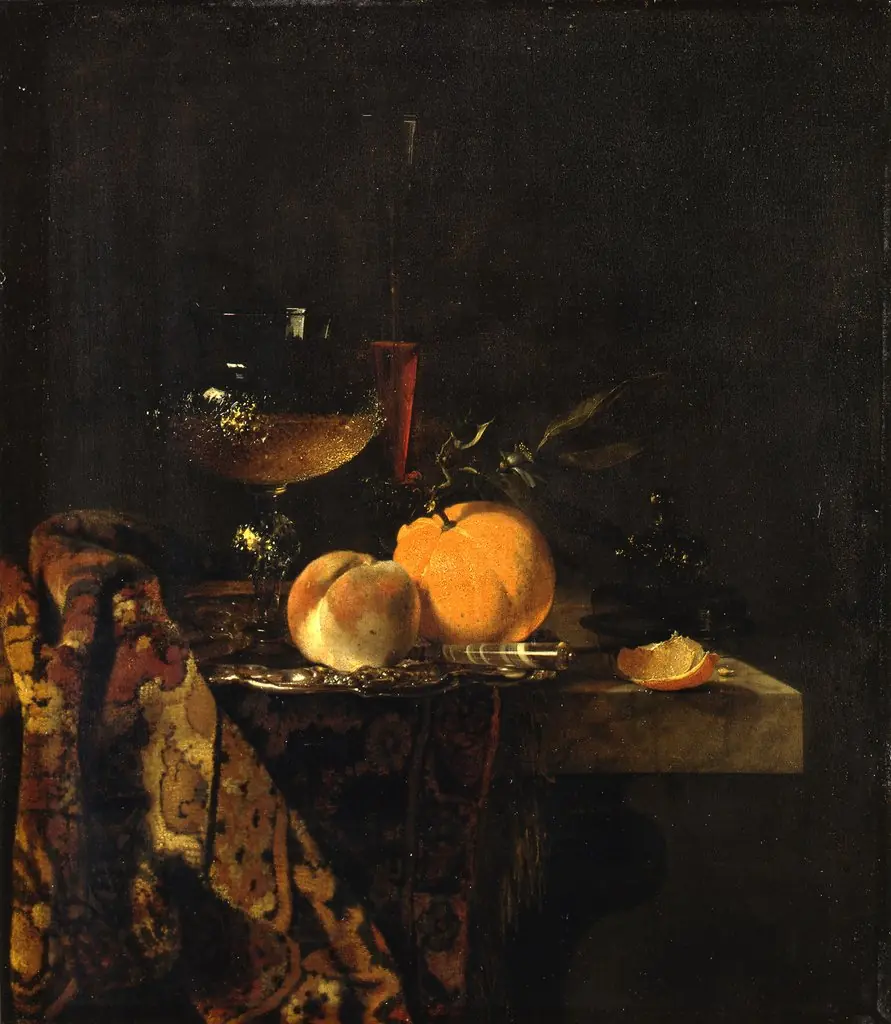
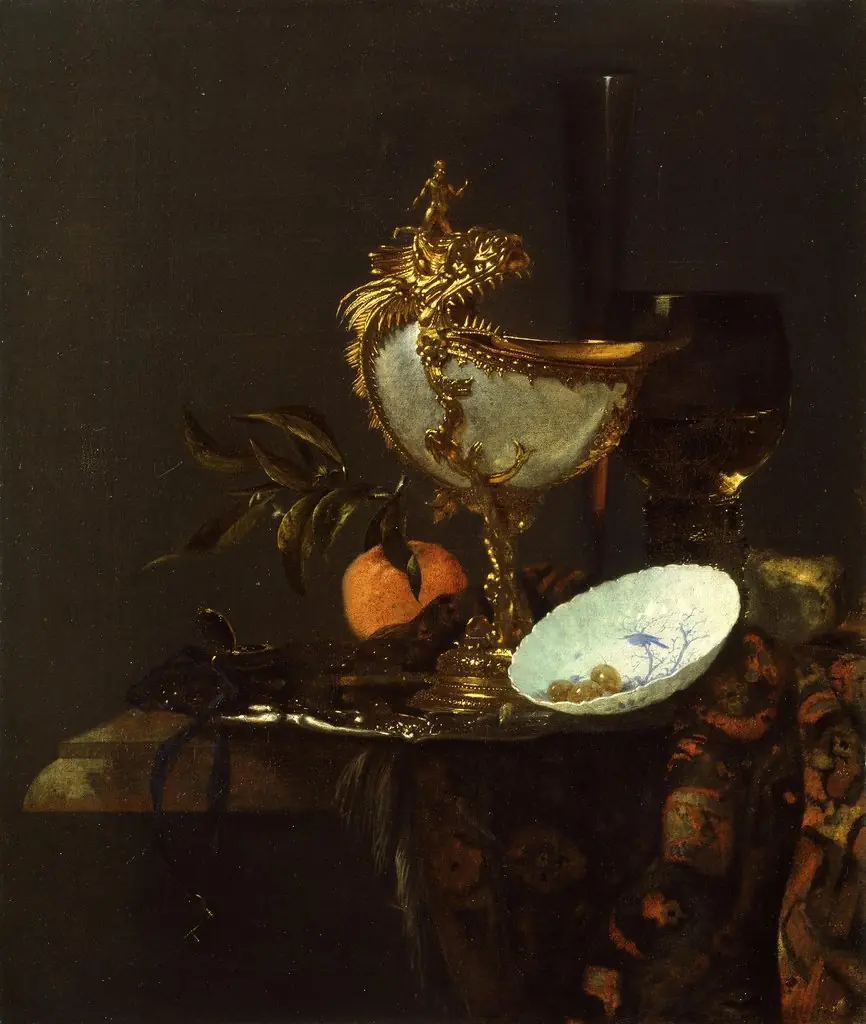
The composition centres on a blue-and-white Chinese porcelain lidded bowl, decorated in relief with paired figures identified as the Eight Immortals of Taoism, while the knob of the lid takes the form of a fu dog. This bowl rests on a dark reflective surface, presumably a marble tabletop, alongside a partially peeled lemon with a long curling rind, an unpeeled orange, and a small knife with an agate handle arranged on a silver presentation plate, probably made in Amsterdam. Behind these objects stand three distinct glasses: a tall flute glass serving as a vertical axis, a Venetian-style glass, and a large rummer with ornate gold detailing. To the left sits a small dark vessel with a ring handle, while a richly patterned red fabric, identified as a Herat carpet, drapes across the right foreground and over the table edge. The background is almost entirely black. The iconography carries multiple resonances. The exotic objects, Chinese porcelain and citrus fruits alike, signal the reach of Dutch maritime trade into Asia and the Mediterranean. Yet the peeled lemon, the perishable fruit, and the transient nature of luxury goods also invoke the vanitas tradition, reminding viewers of mortality and the fleeting quality of earthly pleasures. The watch, when it appears in related compositions, reinforces this temporal symbolism, while the lemon has been interpreted as an allusion to moderation.
History & Provenance
The painting was created in 1662, during Kalf's mature Amsterdam period. Kalf had settled in Amsterdam in 1653 following his marriage to Cornelia Fluvier, and it was there that he developed the refined style of carefully selected and staged objects seen in this work. The Chinese bowl itself probably dates from the Ming dynasty, making it an older object rather than contemporary porcelain, a pattern typical of Kalf's practice of depicting earlier items. The painting is now held in the Gemäldegalerie Berlin, having entered the collection of the Staatliche Museen. It has been featured in scholarly publications, including the 2019 catalogue 200 Masterpieces of European Painting from the Gemäldegalerie Berlin by Katja Kleinert and Jan Kelch.
Context
Kalf's development of this distinctive style followed formative years in Paris between 1642 and 1646, where he encountered new tendencies in still-life painting that he subsequently absorbed and transformed. Shortly after his return to Holland, he forged his personal approach: rich still-lifes of luxury items mysteriously lit, displayed before dark backgrounds, and often placed on eastern tablecloths. The Dutch Republic's thriving overseas trade provided unprecedented access to exotic goods from distant lands, and no other Dutch still-life painter applied himself to Chinese porcelain with such dedication or rendered this material as faithfully as Kalf. The objects he depicted, silver, glass, porcelain, and textiles, were popular prestige items among the wealthy bourgeoisie. Yet Kalf typically restricted the opulence of his compositions, concentrating on a few items per painting that he rendered to their best advantage. Critics and scholars have consistently ranked him among the most important still-life painters of the seventeenth century, with his works characterised by convincing representation of the most diverse materials and a masterly depiction of light.
Legacy
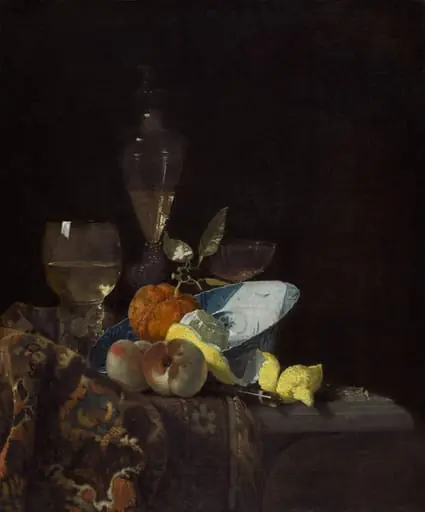
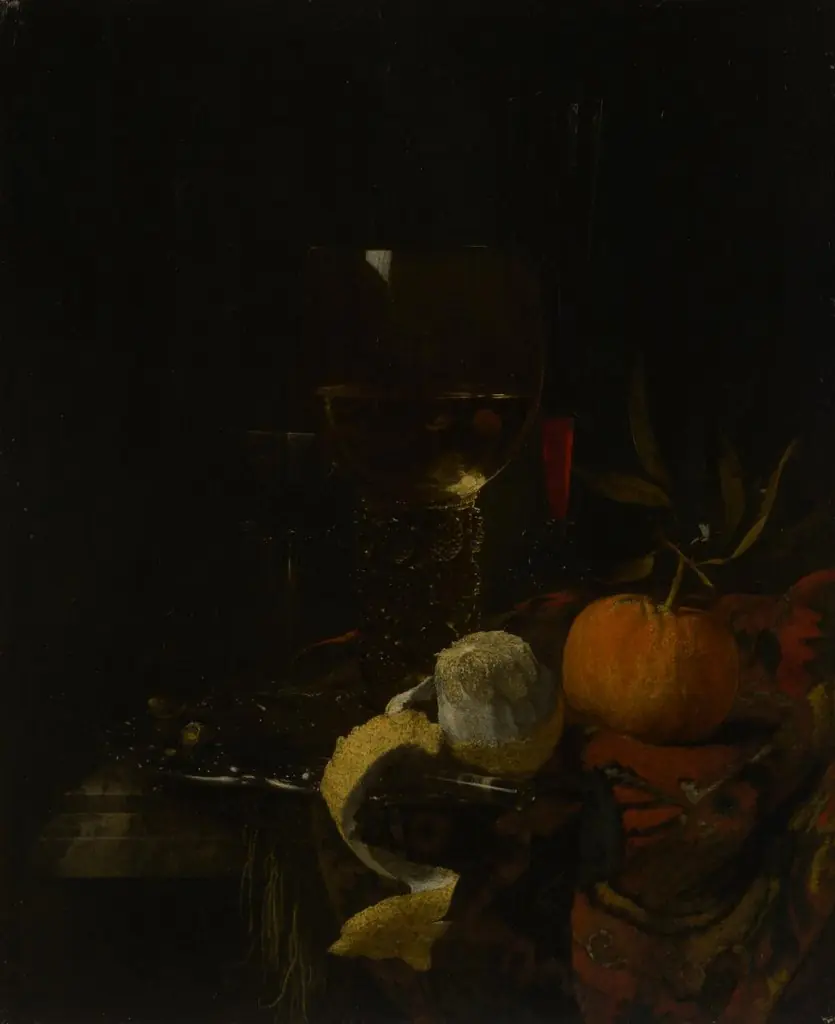
Still-Life with Chinese Porcelain Bowl occupies a central place in Kalf's oeuvre and in the broader history of European still-life painting. The work demonstrates Kalf's habitual practice of showing certain objects in new configurations again and again, while also changing and varying the individual items themselves. Most of the tableware depicted here was painted several times by Kalf in varying constellations, making the identification of actual objects today almost impossible. A canvas now in Strasbourg depicts related fruit and glassware, while another in the Metropolitan Museum of Art, dated 1659, includes the oriental rug, the Chinese bowl, and the tray with glasses. This method of recombining prized motifs across multiple works established a model of serial composition that influenced subsequent still-life practice. The painting continues to serve as a key document for understanding the intersection of art, commerce, and global exchange in the Dutch Golden Age, as well as the enduring tension between material splendour and moral reflection that defines the still-life tradition.
Own this work as a print
Artist & collection
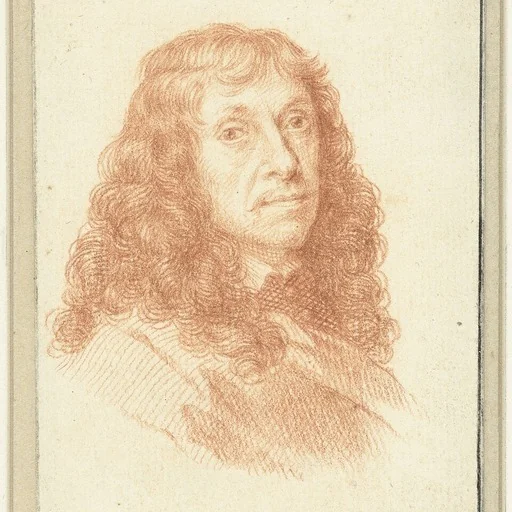
Artist
Willem Kalf (1619 – 31 July 1693) was one of the most prominent Dutch still-life painters of the 17th century, the Dutch Golden Age.