Artwork
Sumptuous still life
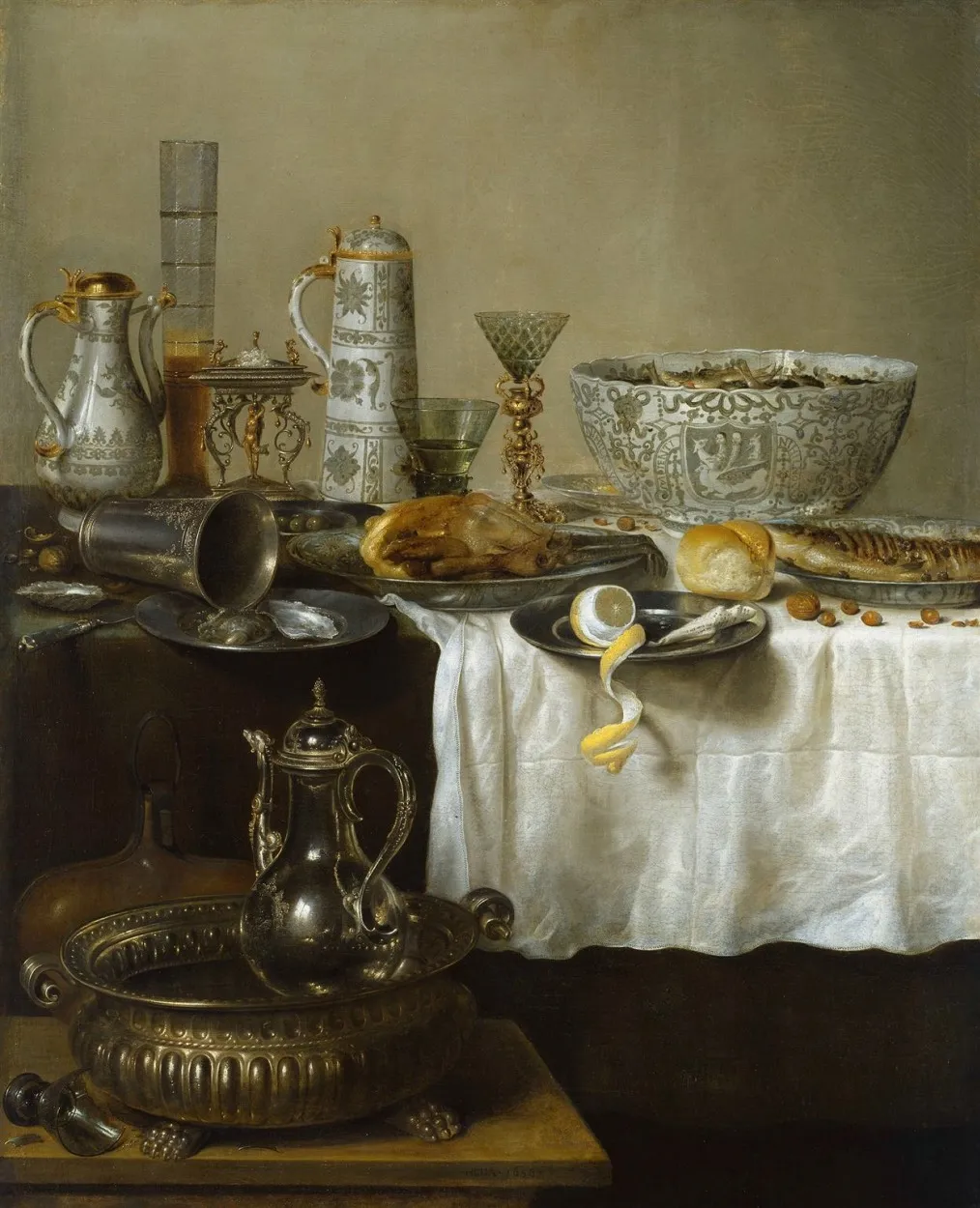
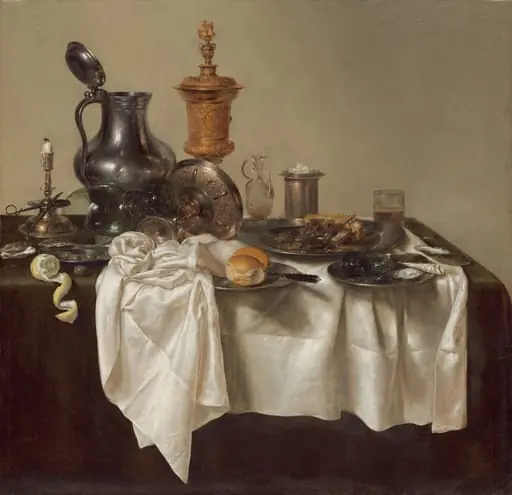
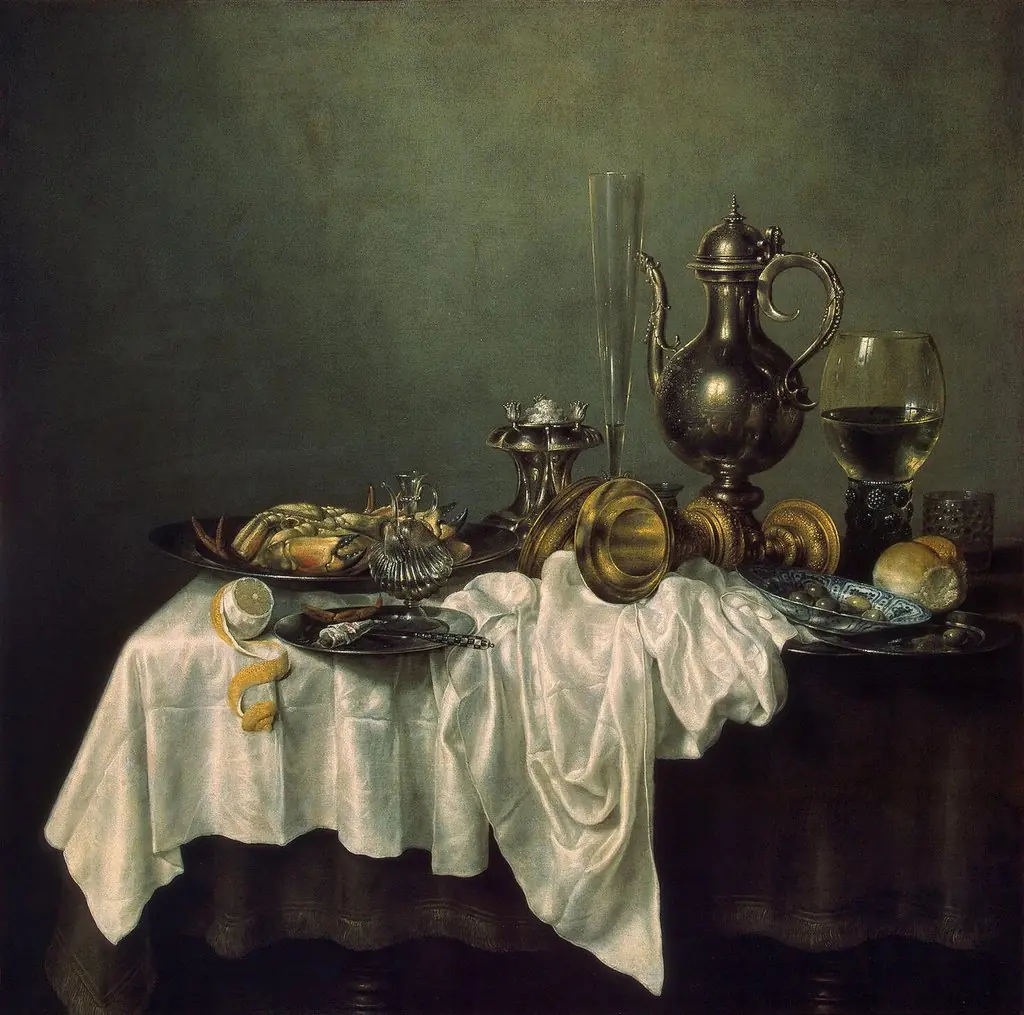
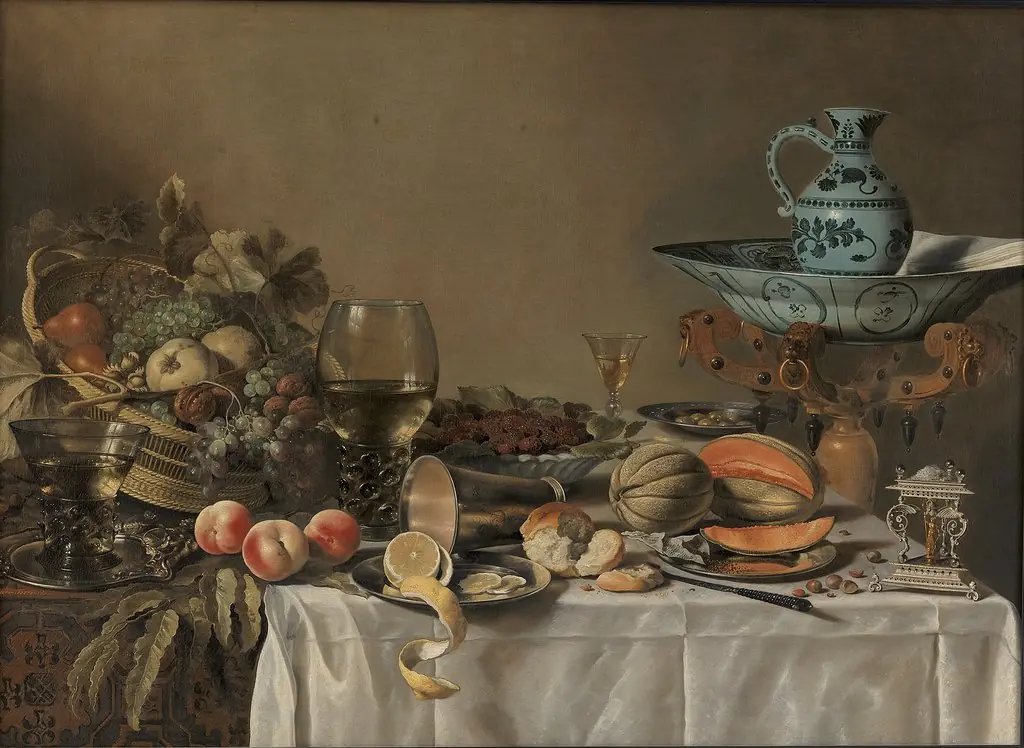
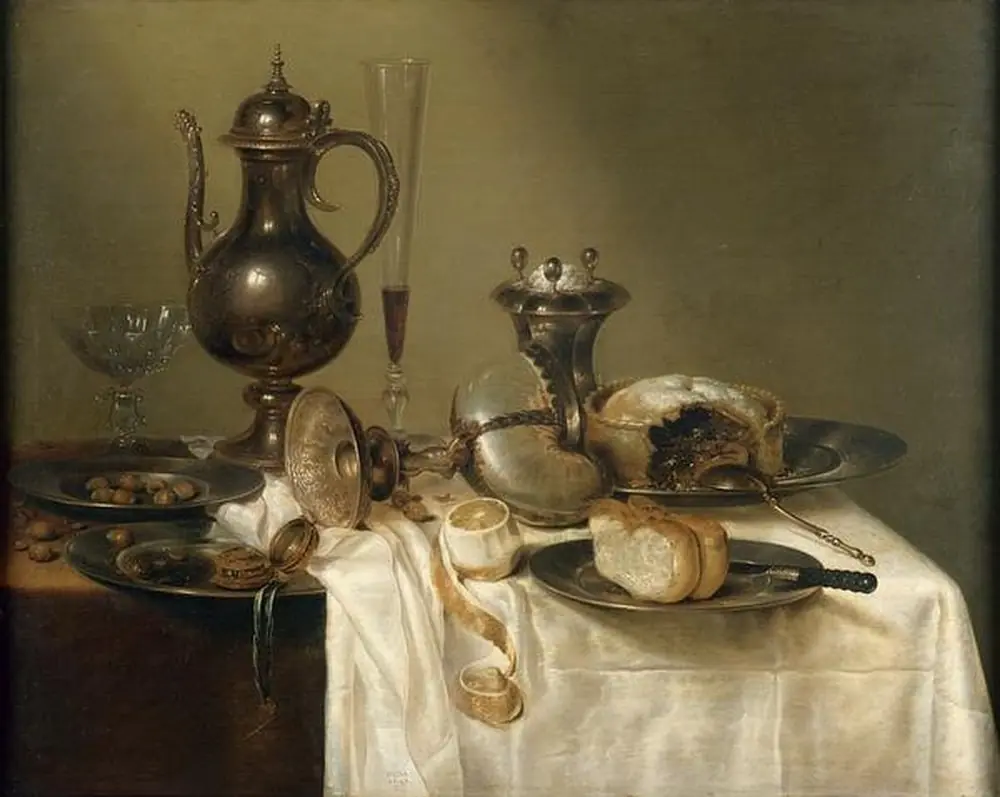
Sumptuous still life is an oil painting by the Dutch Golden Age artist Willem Claesz Heda. It dates from 1638 and is held in the collection of the Hamburger Kunsthalle.
About this work
Subject & Meaning
The inclusion of a berkemeyer glass and a salt cellar by Pieter Claesz underscores the artist’s dialogue with contemporary still-life conventions.
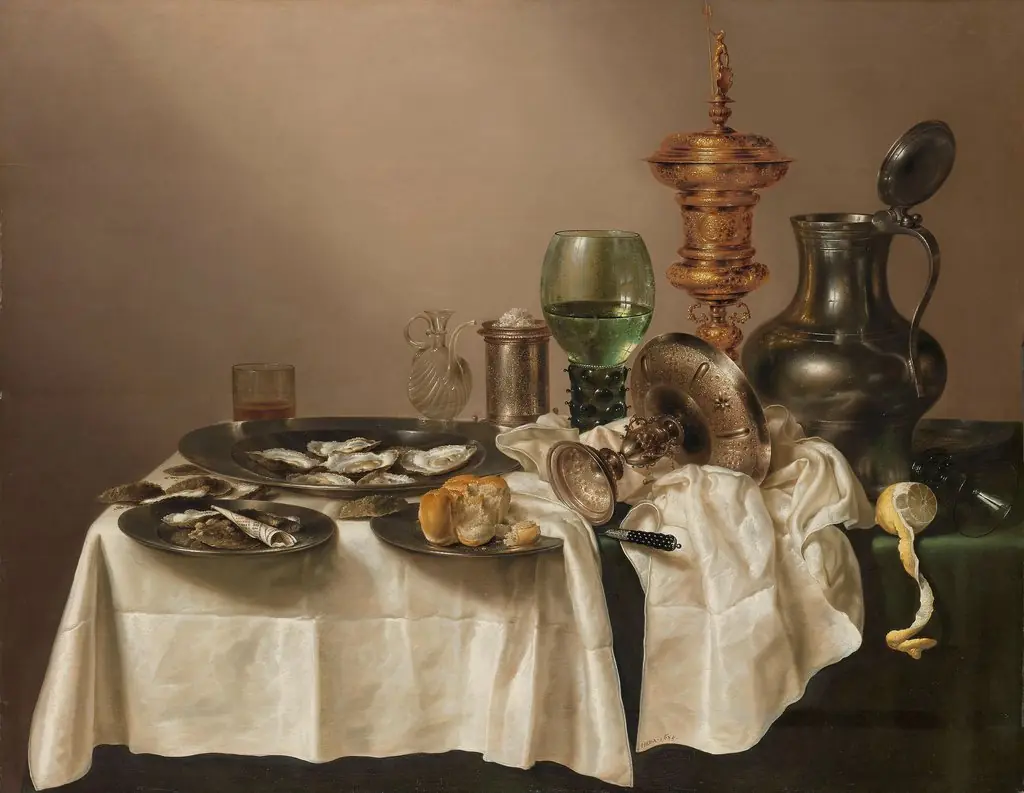
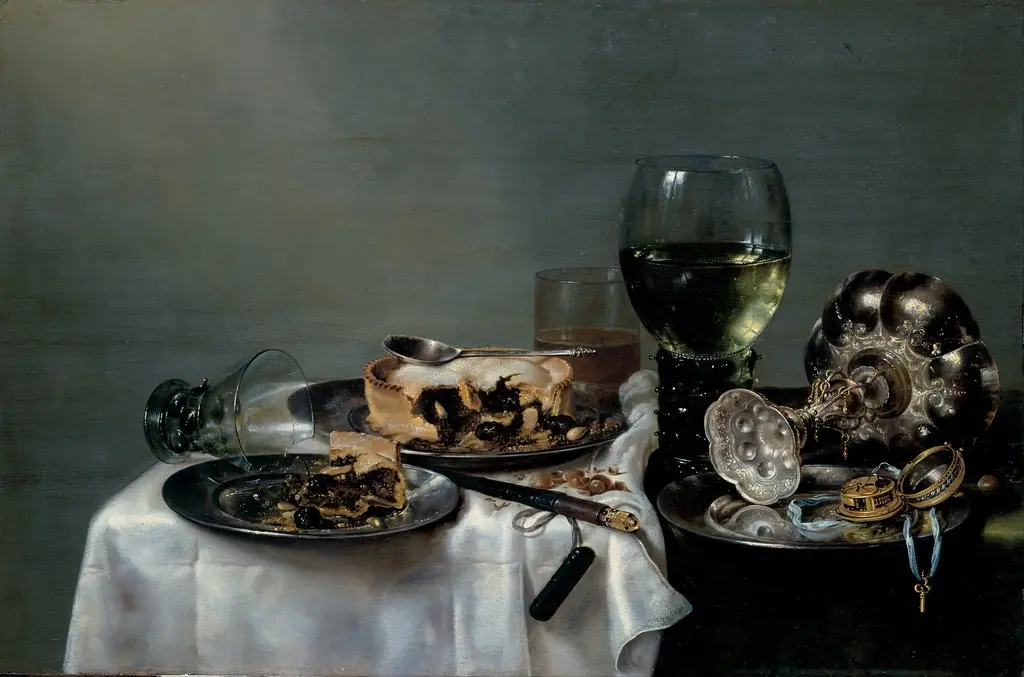
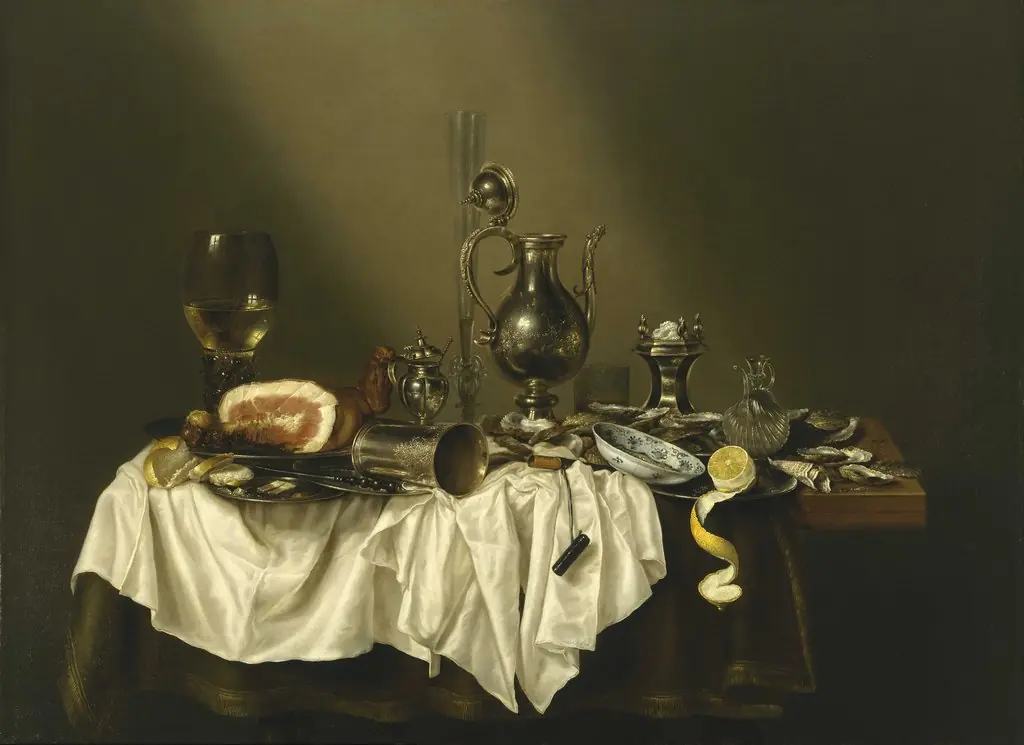
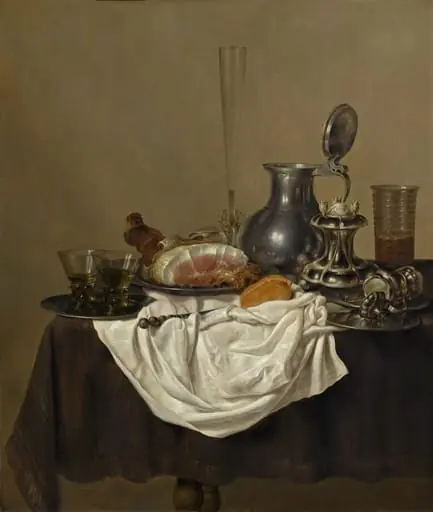
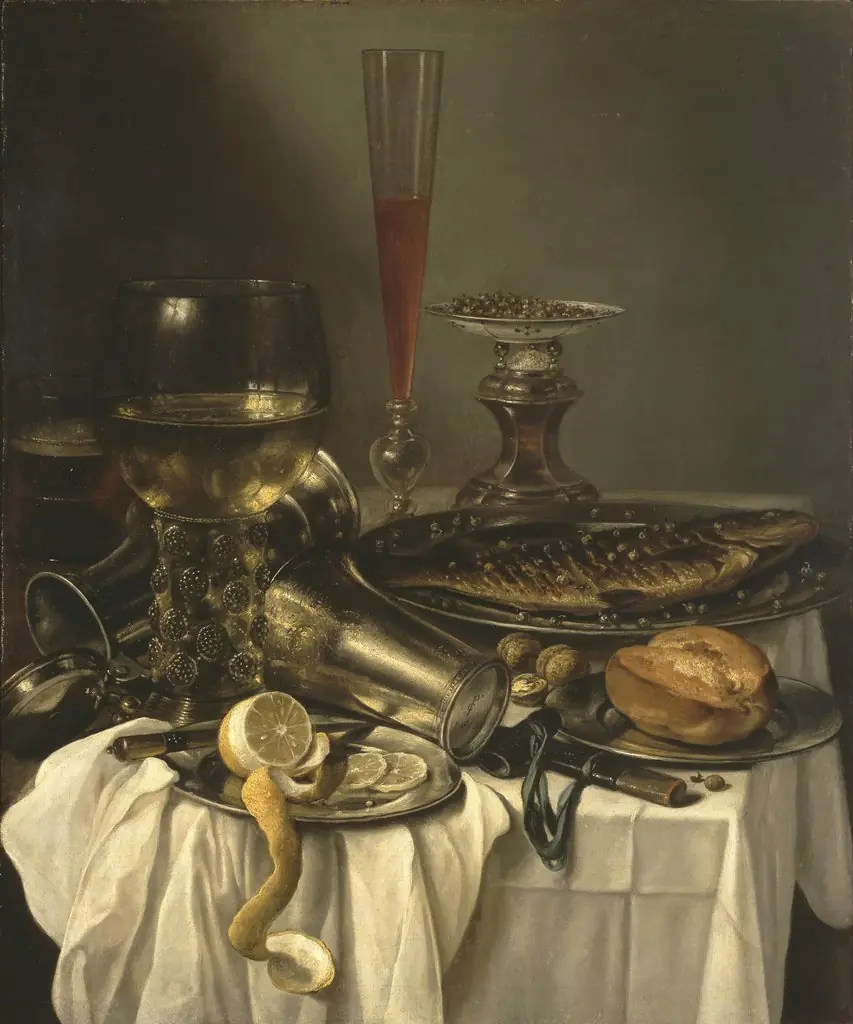
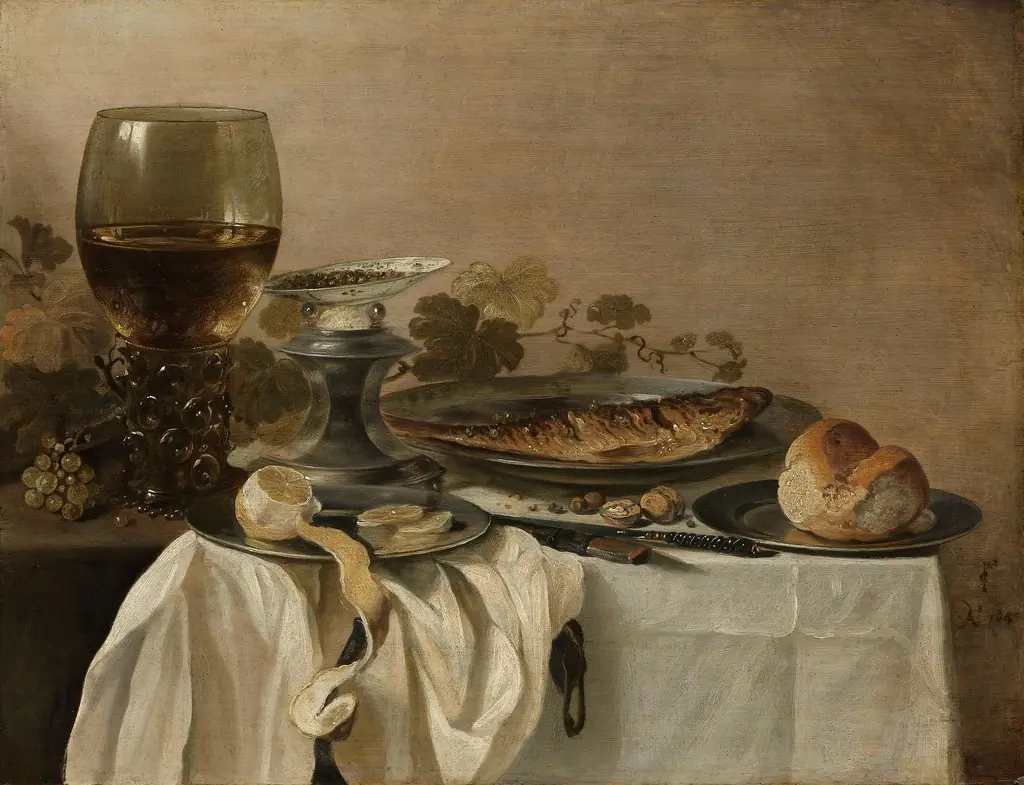
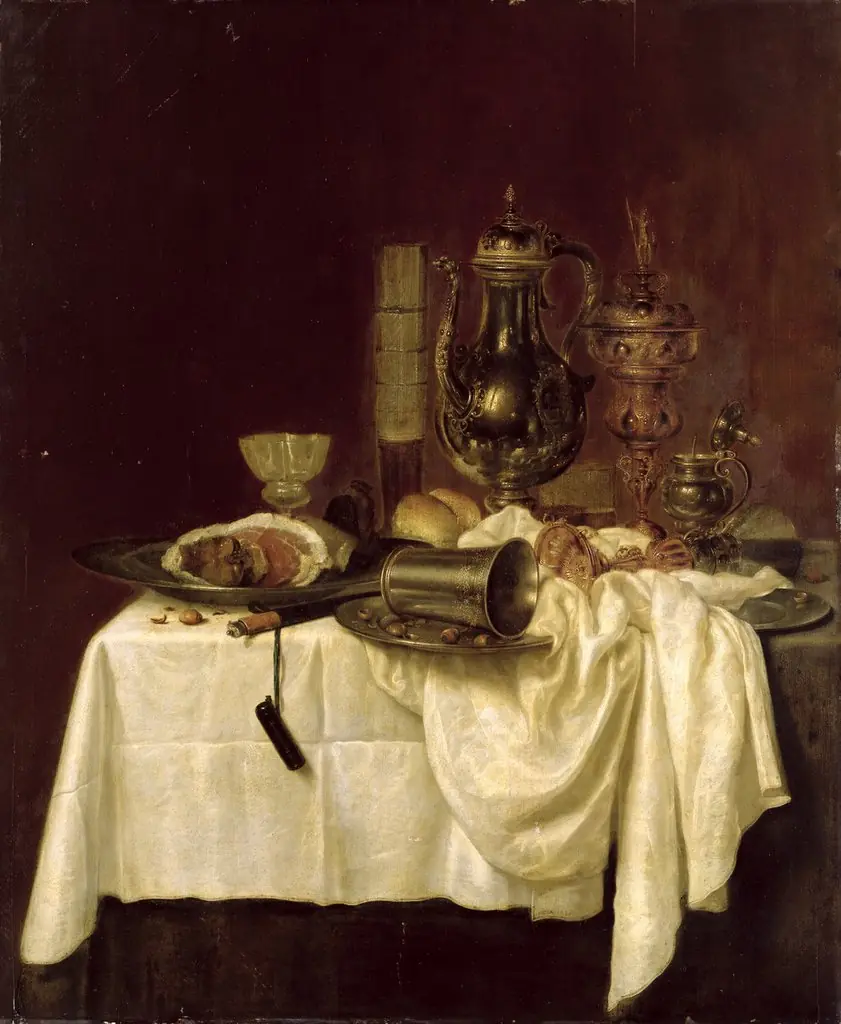
This still life centers on a partially eaten meal arranged on a draped table, anchored by a silver-goblet holder and a blue-and-white Chinese Kraak porcelain dish. A lemon peel, walnut, and roast chicken signal wealth and transience, while an oyster and knife evoke consumption and decay. The inclusion of a berkemeyer glass and a salt cellar by Pieter Claesz underscores the artist’s dialogue with contemporary still-life conventions.
The composition’s precise rendering of textures and reflective surfaces reflects the vanitas tradition, where abundance underscores the inevitability of time’s passage.
Technique & Style
The work is an oil painting on canvas executed in 1638 by Willem Claesz. Heda, exemplifying the Dutch pronkstillevens of the period. Handling emphasizes restrained, controlled brushwork to articulate reflective metals and translucent glass, while broader passages of the tablecloth and foodstuffs are rendered with softer, blended strokes.
The composition balances diagonal axes formed by the overturned goblet and knife with horizontal accents of the tabletop and still-life elements, creating a studied asymmetry that guides the viewer’s eye across the scene.
Formal qualities include a muted palette of silvery grays, ochres, and browns enlivened by accents of red and white, with the reflective surfaces of the berkemeyer and metalwork catching light. The still-life elements, including Chinese Kraak porcelain, a partially peeled lemon, walnut, roast chicken, and oyster, are rendered with precise detail, underscoring the artist’s command of texture and light.
History & Provenance
Willem Claesz. Heda executed this oil painting on canvas in 1638. The work, which depicts an elaborate arrangement of food and luxury items including Chinese ceramics and a roast chicken, has been recorded as part of the collection at the Hamburger Kunsthalle.
No specific details regarding the original commission or the intermediate ownership history between its creation and its current museum residence are provided in the available records.
The painting is held in the collection of the Hamburger Kunsthalle, where it is located. Created in 1638, the work measures 118.4 cm in height and 97.5 cm in width. The available records identify the piece as an oil painting on canvas depicting a still life with various objects, including Chinese ceramics and food items. No specific inventory number or details regarding past exhibitions are provided in the current documentation.
Context
Sumptuous still life (1638) by Willem Claesz Heda, housed in the Hamburger Kunsthalle, is celebrated for its meticulous rendering of luxury objects and subtle chiaroscuro. Art historians regard it as a pinnacle of Dutch Golden Age banquetsstill life, reflecting contemporary fascination with material abundance and transience. The composition, featuring Chinese ceramics, Kraak porcelain, and a lemon, has been extensively analyzed in scholarship on 17th-century Dutch painting, situating Heda within the broader tradition of tonal still life that influenced later European art movements.
Legacy
The painting's composition of lavish food items and reflective surfaces has been cited as a precursor to later Dutch banquet scenes, influencing artists who emphasized texture and light in still-life arrangements. Its inclusion in the Hamburger Kunsthalle collection has ensured continued scholarly attention to Heda's role in shaping 17th-century Dutch realism.
The work is held in the Hamburger Kunsthalle collection and is frequently referenced in studies of Dutch Golden Age painting.
Overview
Created in 1638 by Haarlem artist Willem Claesz Heda, this oil painting exemplifies the Dutch Golden Age’s focus on still‑life subjects. The work is part of the Hamburger Kunsthalle’s collection and presents a meticulously arranged banquet scene on a white‑draped table.
Artist & collection
Artist
Willem Claeszoon Heda (December 14, 1593/1594 – c. 1680/1682) was a Dutch Golden Age painter from the city of Haarlem devoted exclusively to the painting of still life. He is known for his innovation of the late…