Artwork
The Expulsion of Hagar
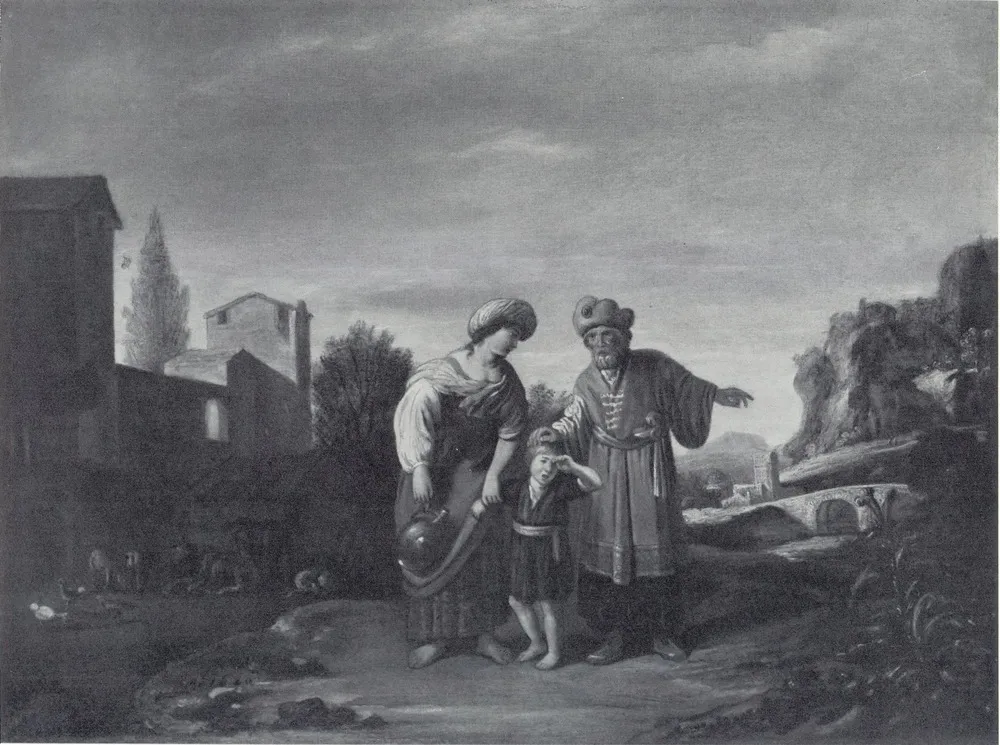
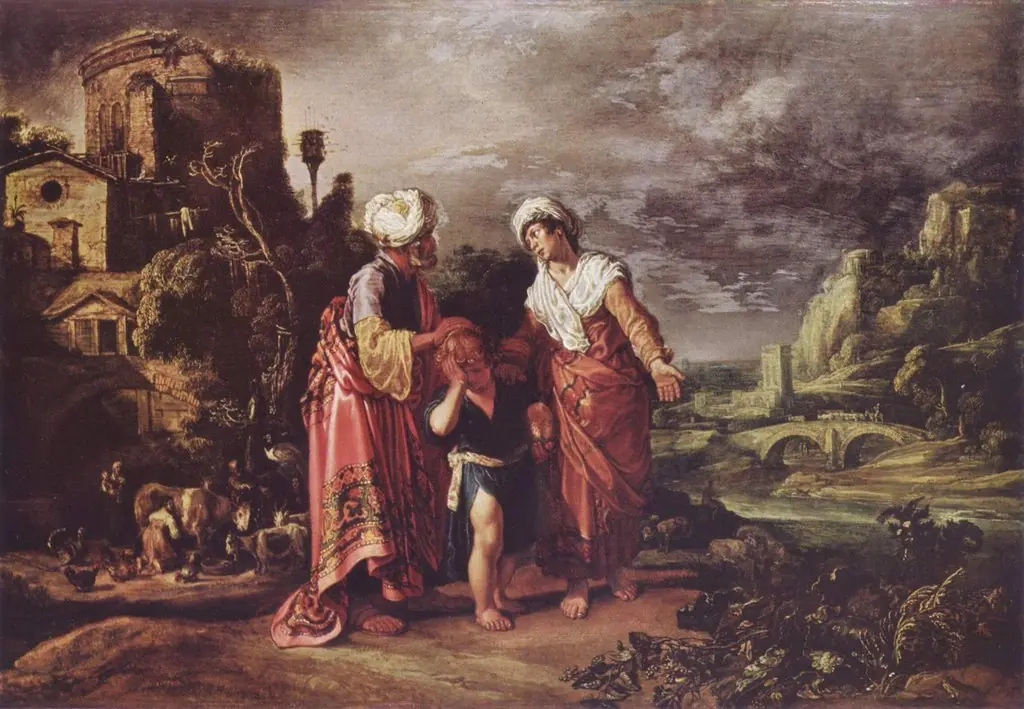
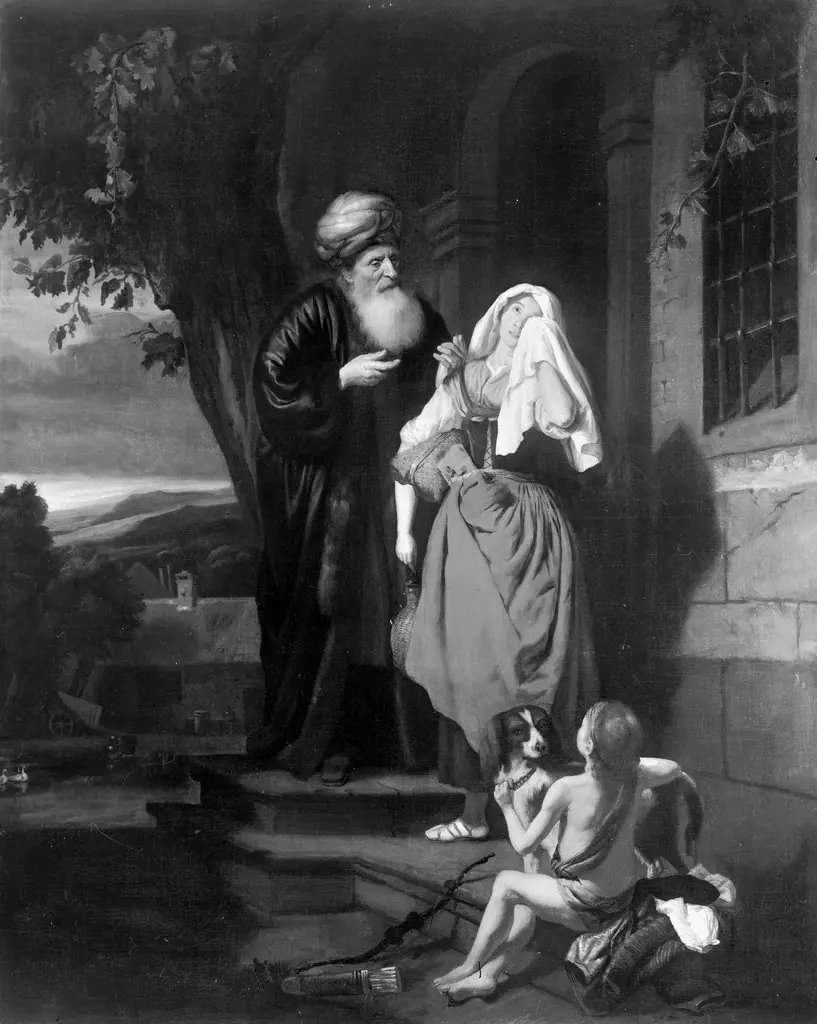
The Expulsion of Hagar is an oil painting by the Dutch Golden Age artist Pieter van Bie. It dates from 1642 and is held in the collection of the Pyotr Semyonov-Tyan-Shansky collection.
About this work
Technique & Style
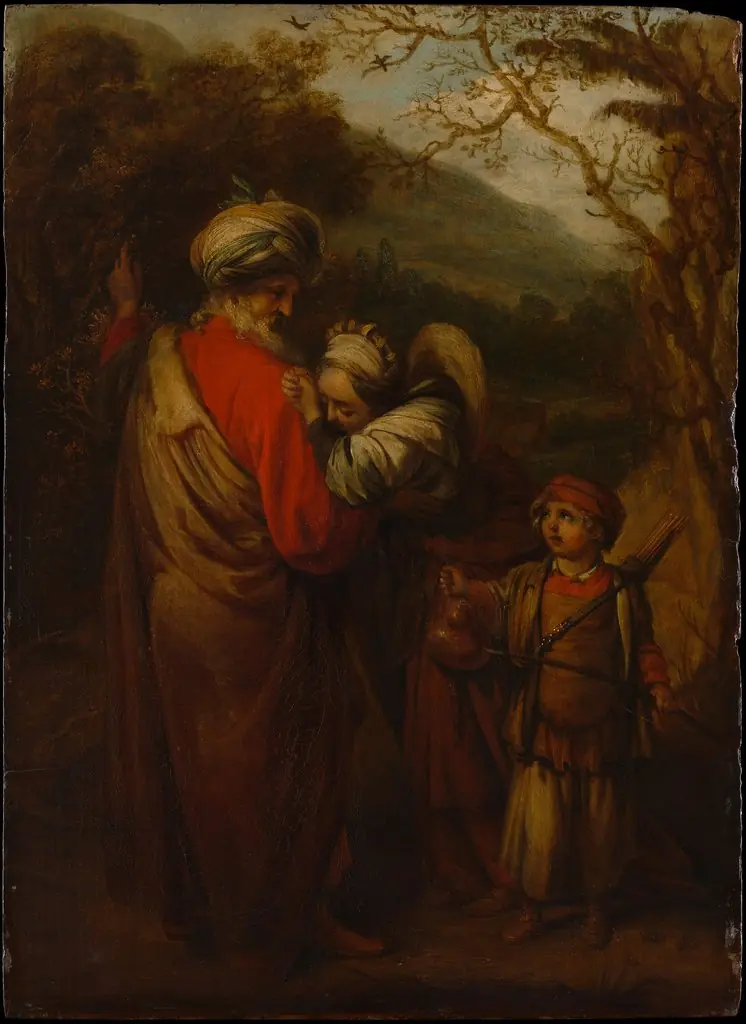
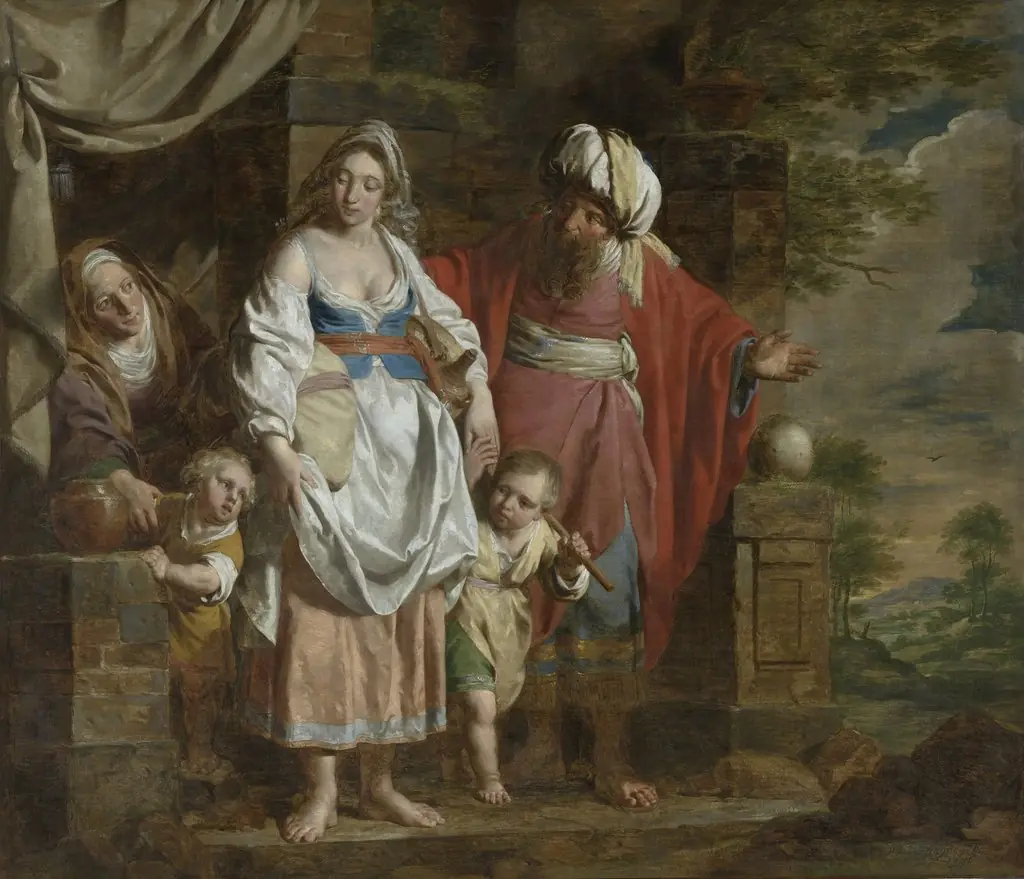
The painting depicts the biblical narrative of the banishment of Hagar and Ishmael alongside Abraham, rendered within the religious genre.
Pieter van Bie's The Expulsion of Hagar is executed in oil paint on a panel support, a medium and substrate combination characteristic of 17th-century Dutch religious painting. Created in 1642, the work measures 53 cm in height and 72 cm in width. The painting depicts the biblical narrative of the banishment of Hagar and Ishmael alongside Abraham, rendered within the religious genre.
The composition relies on the material properties of oil on panel to define the figures and setting of the expulsion scene.
History & Provenance
The Expulsion of Hagar is an oil painting on panel attributed to Pieter van Bie, created in 1642 as a religious work depicting the banishment of Hagar and Ishmael. It entered the collection of Pyotr Semyonov-Tyan-Shansky, a noted Russian patron, and remains in the Hermitage Museum in Saint Petersburg. The work measures 53 cm in height by 72 cm in width and was produced in the Netherlands, reflecting the Dutch Golden Age tradition of biblical narrative painting.
Dating is anchored to the documented inception of 1642, and the painting’s provenance traces directly from its creation to its acquisition by Semyonov-Tyan-Shansky before its transfer to the Hermitage Museum.
Pieter van Bie's oil-on-panel painting, The Expulsion of Hagar, is held in the collection of the Hermitage Museum in Saint Petersburg. The work forms part of the specific Pyotr Semyonov-Tyan-Shansky collection within the museum's holdings. The inventory links the piece to the Hermitage Museum as its current location, where it remains part of the permanent display of religious art. No specific exhibition history beyond its status as a collection item is provided in the available records.
Overview
Pieter van Bie’s 1642 oil on canvas, titled The Expulsion of Hagar, portrays a biblical episode in a tranquil riverside setting. The composition centers on three figures: an elderly man, a woman, and a child, positioned near a gently flowing river beneath a soft, cloud‑dappled sky. Simple architecture and distant trees frame the scene, while a modest bridge hints at a broader landscape.
Subject & Meaning
The work visualizes the scriptural moment when Abraham, obeying divine command, sends Hagar and her son Ishmael away. The man, identified as Abraham, points toward the water, perhaps indicating the path to exile. Hagar, turned away from him, clutches the child’s hand with resolve, underscoring themes of maternal protection and forced separation.
Context
The expulsion of Hagar and Ishmael was a frequent subject in Dutch Golden Age painting, offering artists a way to explore themes of faith, obedience, and human vulnerability. Van Bie’s rendition aligns with contemporary devotional works, yet distinguishes itself through a subdued, almost contemplative treatment of the narrative rather than dramatic spectacle.
Artist & collection
Artist
Pieter van Bie was a Dutch painter born in 1620, active during the Dutch Golden Age of the seventeenth century.
Museum
Pyotr Semyonov-Tyan-Shansky collection
Continue through works from the same source collection.