Artwork
Blessed Maria Vittoria Fornari's Vision of the Trinity
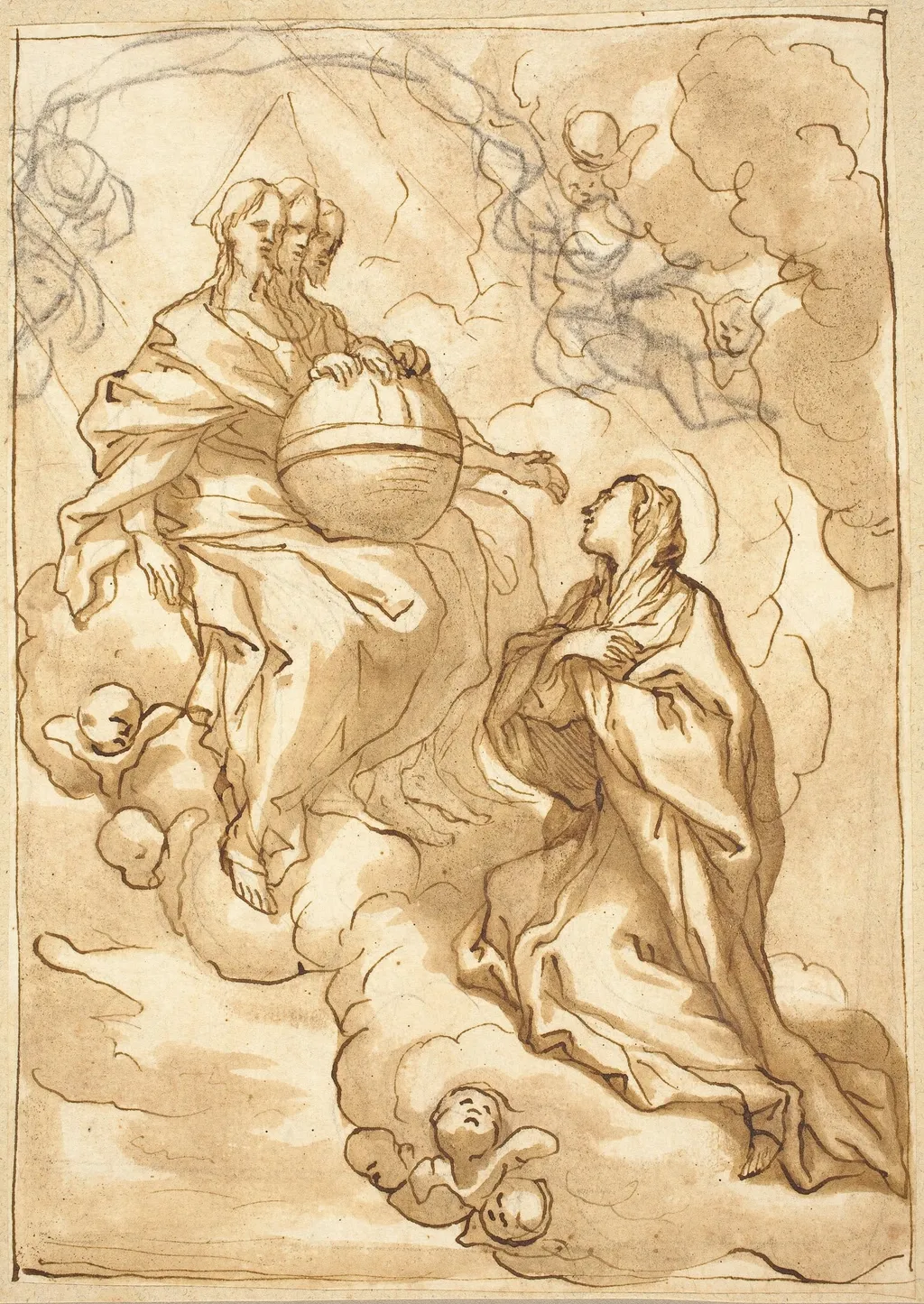
Blessed Maria Vittoria Fornari's Vision of the Trinity is an ink drawing by the Baroque artist Domenico Piola. It dates from 1670 and is held in the collection of the National Gallery of Art.
- Inscription
- Inscribed:by later hand on mount, lower right in pen and brown ink: D. Piola; above that, in graphite, in graphite: 64; by later hand on mount, upper left verso in graphite: 62 / 27
About this work
Overview
This ink and chalk drawing, dated around 1670, is attributed to Domenico Piola, a Genoese artist active during the Baroque period.
This ink and chalk drawing, dated around 1670, is attributed to Domenico Piola, a Genoese artist active during the Baroque period. Executed on laid paper, it captures a spiritual vision through delicate linear work and subtle tonal gradations. The medium, brown ink with wash and black chalk, allows for both precision and atmospheric softness, characteristic of preparatory religious sketches of the era.
Subject & Meaning
The image depicts Blessed Maria Vittoria Fornari’s mystical encounter with the Trinity. Two robed figures hover amid clouds, one cradling a vessel, the other gesturing toward a small, emerging cherub. The cherub’s partial visibility suggests the ineffable nature of the divine, while the gestures and positioning imply revelation and intercession, aligning with Counter-Reformation devotional themes of personal divine encounter.
Technique & Style
Piola employed layered ink washes and light black chalk to model forms with minimal strokes, creating a sense of buoyancy and ethereal motion. The sketchy lines and muted shading avoid heavy definition, emphasizing transience and spiritual lightness. The use of graphite underdrawing reveals a methodical approach, while the final touches in chalk add contrast and depth without overwhelming the delicate composition.
History & Provenance
The drawing originated as a devotional study, likely linked to the cult of Blessed Maria Vittoria Fornari, a Genoese laywoman venerated for her visions. It remained within religious or private collections in Liguria before entering institutional hands. Its survival as a standalone sheet suggests it was valued not merely as a sketch but as a relic of spiritual inspiration.
Context
Created during the height of the Baroque in northern Italy, the work reflects the period’s emphasis on emotional immediacy and mystical experience in religious art. Piola’s approach aligns with Genoese traditions that favored intimate, expressive renderings over grand spectacle, responding to Counter-Reformation calls for accessible, heartfelt devotion among the faithful.
Legacy
Though not widely exhibited, the drawing exemplifies how Baroque artists translated private visions into visual language through restrained yet evocative means. It contributes to the understanding of devotional drawing as a bridge between personal spirituality and public religious practice, preserving the quiet intensity of faith in a time of doctrinal fervor.
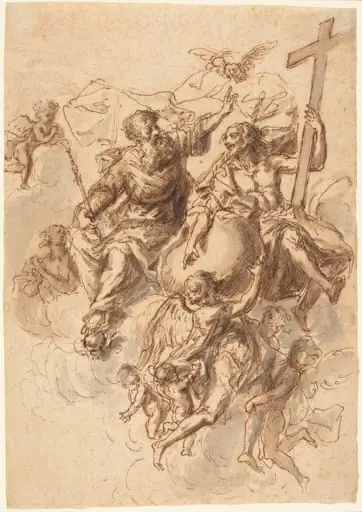
Own this work as a print
Artist & collection

Artist
Domenico Piola (1627 – 8 April 1703) was a Genoese painter of the Baroque period.

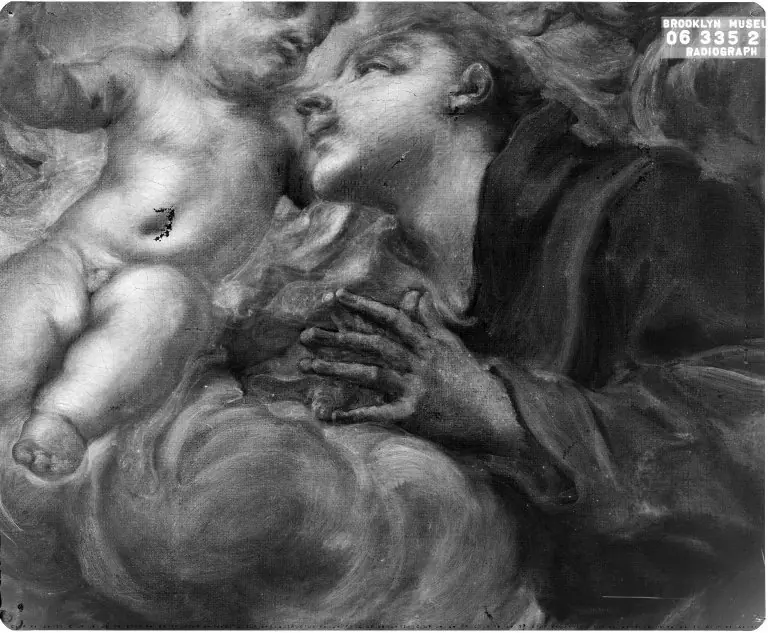 Appearance of the Christ Child to Saint Anthony of Padua
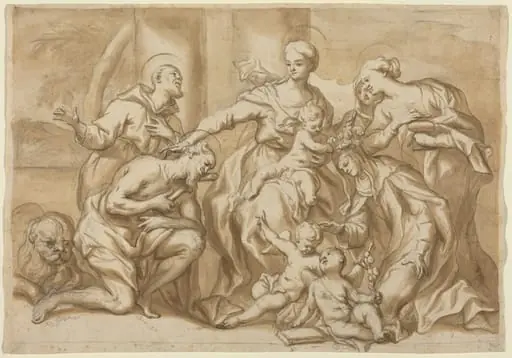 Madonna Surrounded by Saints
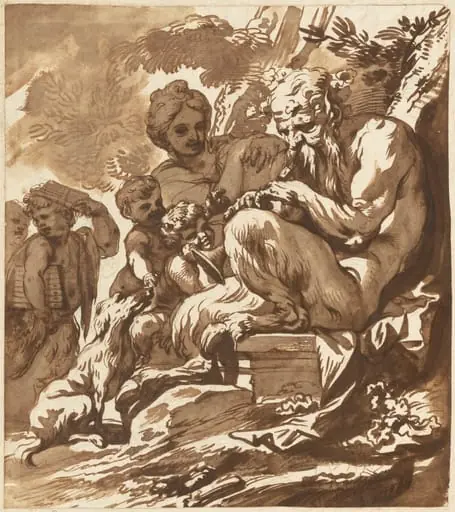 A Satyr Entertaining His Family
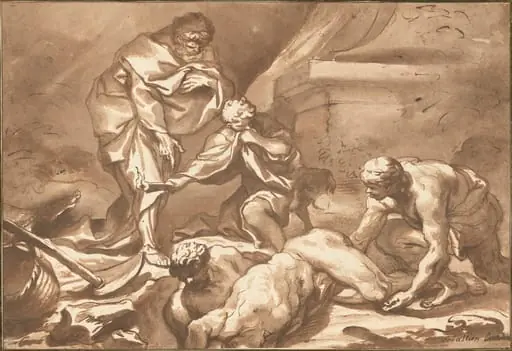 Tobit Burying the Dead
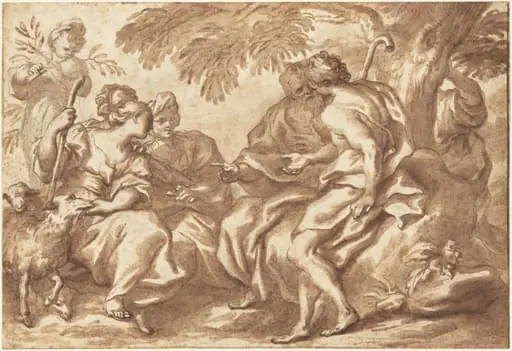 The Meeting of Jacob and Rachel
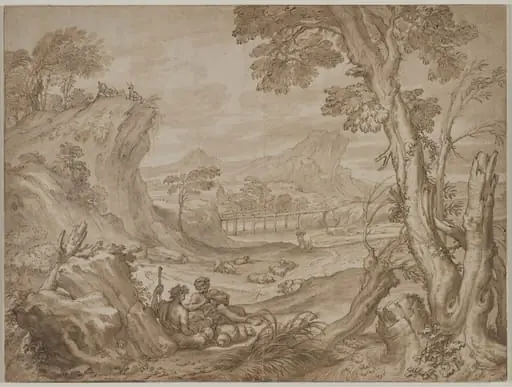 Landscape with Shepherds
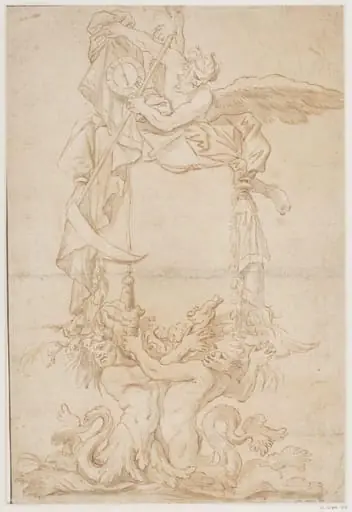 Ornamental design, probably for a title page: a figure of Time resting on a cartouche held up by a pair of tritons and holding a clock
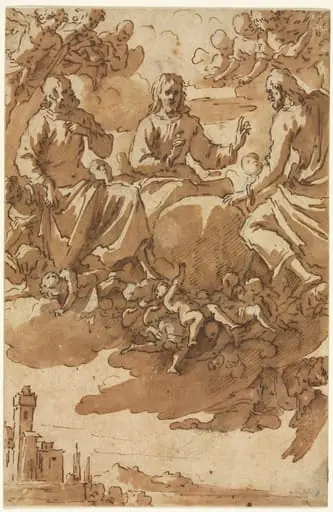 Christ in Glory with Two Saints
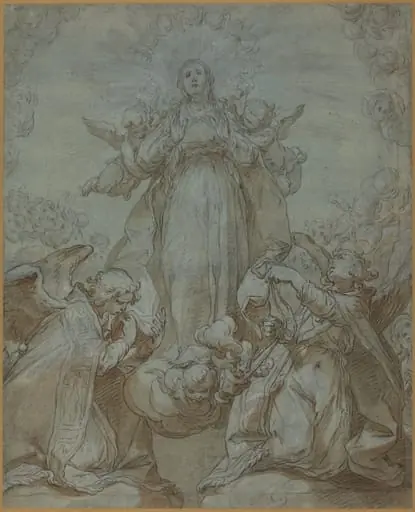 The Virgin in Glory
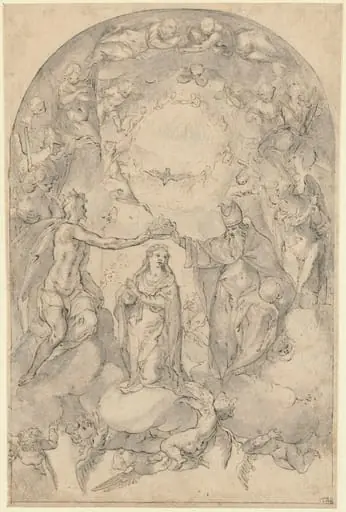 The Assumption and Coronation of the Virgin
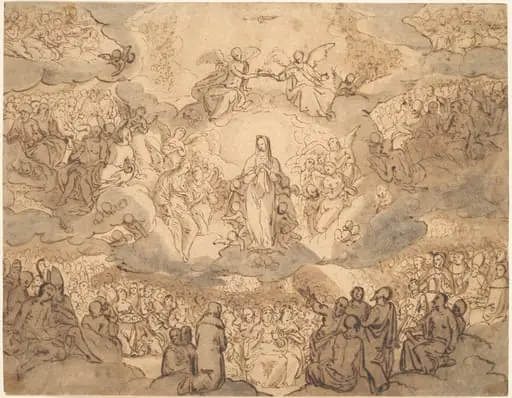 The Virgin, Queen of Heaven
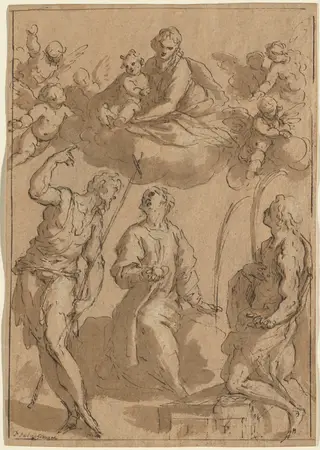 Madonna and Child in Glory with Saints John the Baptist, Stephen, and Lawrence
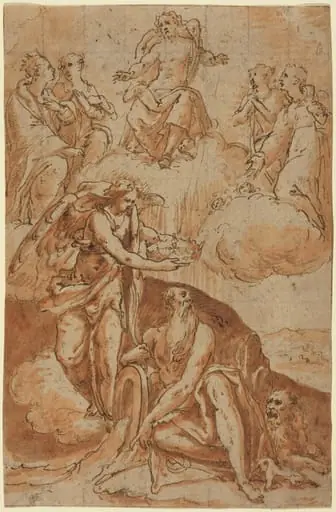 Saint Jerome (?)
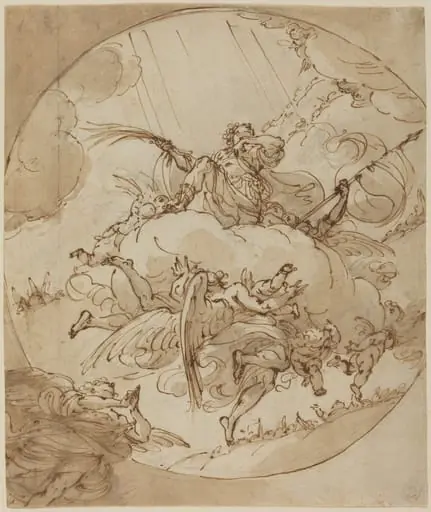 The Apotheosis of San Vitale
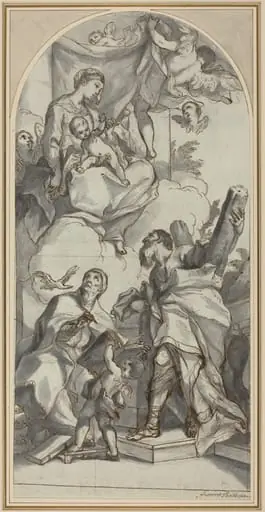 The Madonna and Child in Glory with Saints Gregory the Great and Andrew
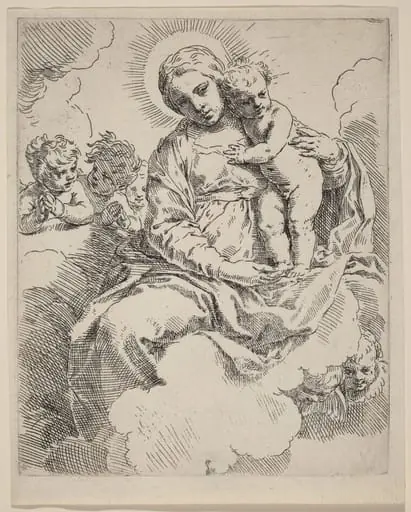 The Virgin and Child
![The Ecstasy of Saint Francis [recto], by Sebastiano Ricci](https://artifactworldgallery.com/img/sebastiano-ricci--the-ecstasy-of-saint-francis-recto--5f53f9b59775e5dd-w320.webp) The Ecstasy of Saint Francis [recto]
The Ecstasy of Saint Francis [recto]