Artwork
St. Dionysius
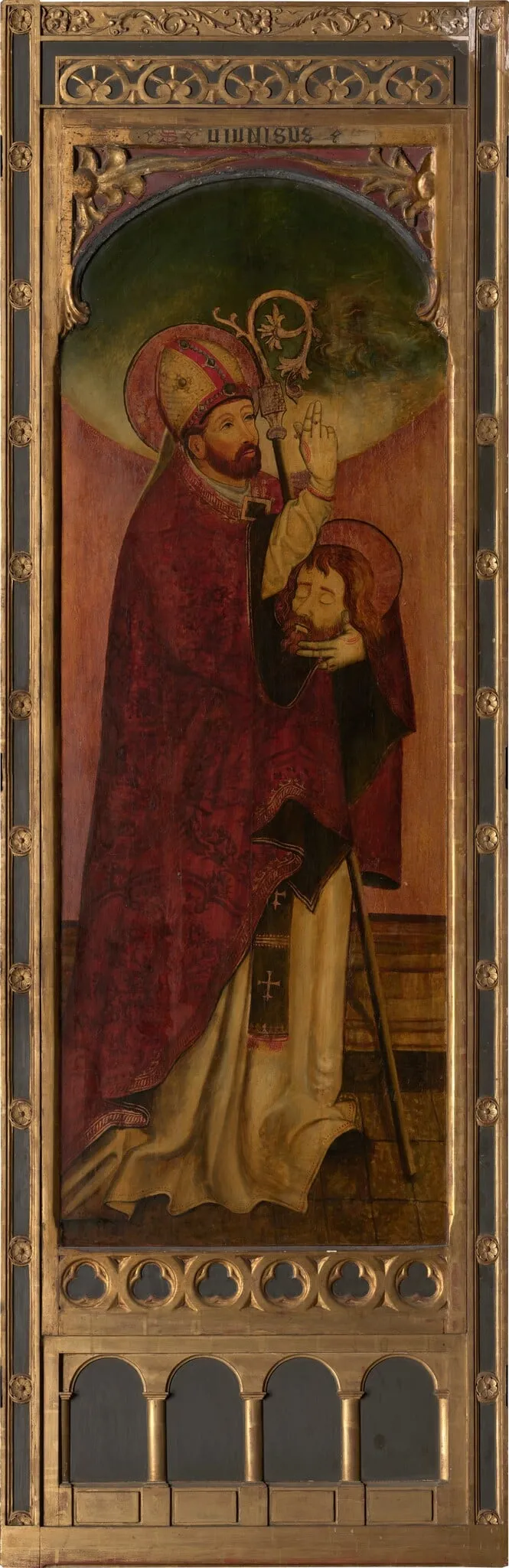
St. Dionysius is an oil painting. It dates from 1488 and is held in the collection of the National Gallery of Art. St.
- Inscription
- Inscribed:on the moldings above the painting, probably from the early 1900s: S. Dionisus; S. Sebastianus; S. Barba[r]a; S. Laurentius
About this work
Technique & Style
The panel support and the work's overall condition have remained stable enough to preserve these stylistic qualities through the centuries.
The painting is executed in oil on panel, a medium that became increasingly prevalent in fifteenth-century European art. Its dimensions of 73.2 × 54.5 cm indicate a modestly scaled devotional panel, consistent with Portuguese religious painting of this period. The artist employed a relatively flat, hieratic presentation typical of late medieval Iberian devotional imagery, with Saint Dionysius depicted frontally in his episcopal regalia.
The paint surface shows the direct, unmodulated color application characteristic of early oil painting in the Portuguese tradition, where detail in the mitre, crozier, and liturgical vestments takes precedence over volumetric illusionism. The panel support and the work's overall condition have remained stable enough to preserve these stylistic qualities through the centuries.
History & Provenance
The panel was painted in 1488 by an unidentified Portuguese artist active in the late fifteenth century. No contemporary commission record survives, and the work entered documented ownership only in the early twentieth century.
Its first recorded owner was the New York financier William Salomon, who acquired it before 1919. After his death, the painting appeared in his estate sale at the American Art Galleries on 5 April 1923 as lot 358, catalogued under the Spanish School of the seventeenth century. It passed to T.R. Williams, then to the industrialist William R. Timken.
Upon Timken's death in 1949, the panel descended to his widow, Lillian Guyer Timken, who bequeathed it to the National Gallery of Art in 1960.
The painting is held in the collection of the National Gallery of Art in Washington, D.C., which it entered in 1960 via the Timken bequest.
Overview
St. Dionysius is an oil painting rendered on a wooden panel, depicting a lone male figure. The work portrays a man, presumed to be a saint, situated within an unadorned environment. This piece exemplifies the artistic practices prevalent during its creation, offering a glimpse into devotional art of the period.
Subject & Meaning
The painting focuses on a solitary male figure, identified by its title as Saint Dionysius. He is presented in a straightforward, unembellished setting, which emphasizes his spiritual contemplation or humble nature. This direct portrayal aligns with traditional hagiographic representations, aiming to convey the saint's character and devotion without elaborate narrative details.

Artist & collection

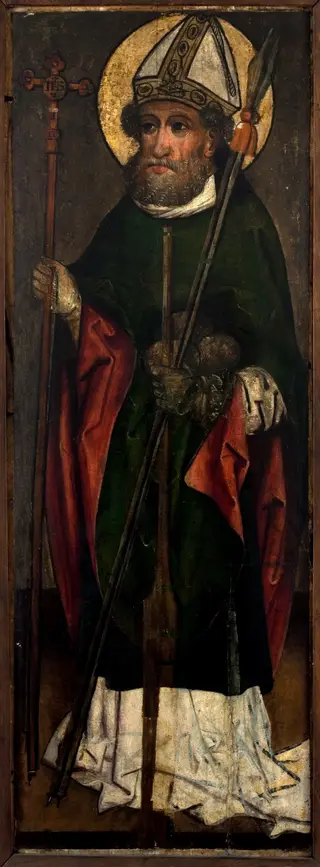 St Adalbert (obverse); Mary from the scene of the Annunciation (reverse). Wing of the altar retable from Snoza
 A papal Saint
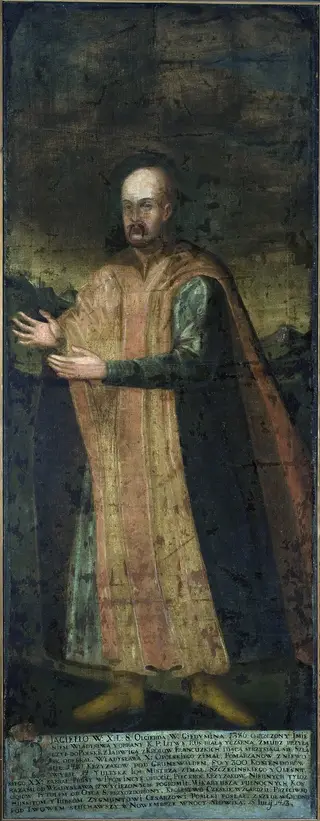 Portrait of king Władysław Jagiełło (1348–1434)
![Our Lady of Sorrows and St John the Evangelist from the scene of the Crucifixion. The wing of the altar retable [?] from Chełmiec](https://artifactworldgallery.com/img/our-lady-of-sorrows-and-st-john-the-evangelist-from-the-scen--a539683940b08071-w320.webp) Our Lady of Sorrows and St John the Evangelist from the scene of the Crucifixion. The wing of the altar retable [?] from Chełmiec
Our Lady of Sorrows and St John the Evangelist from the scene of the Crucifixion. The wing of the altar retable [?] from Chełmiec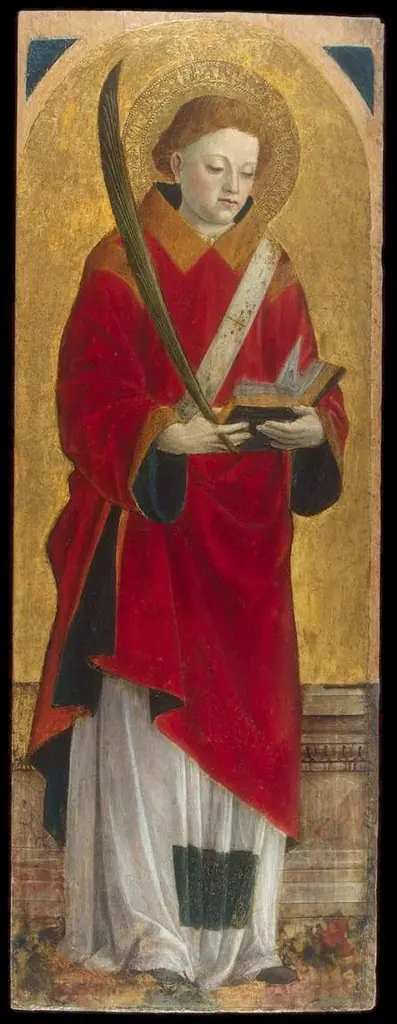 St Stephen (wing of a polyptych)
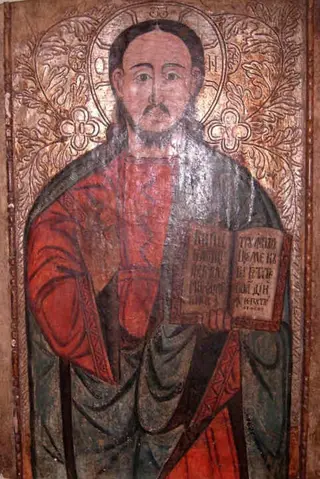 Iisus Invățător
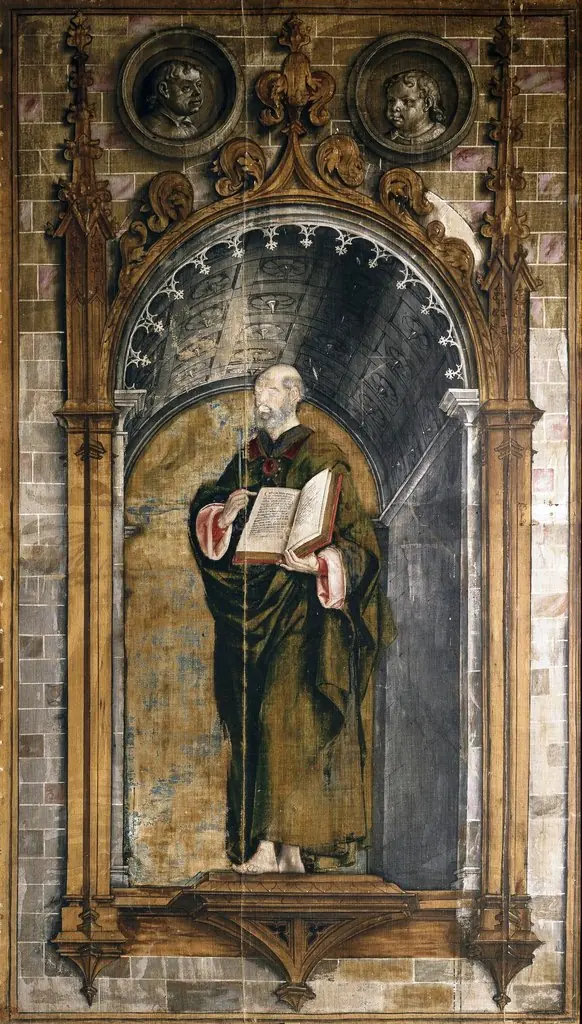 Saint Peter
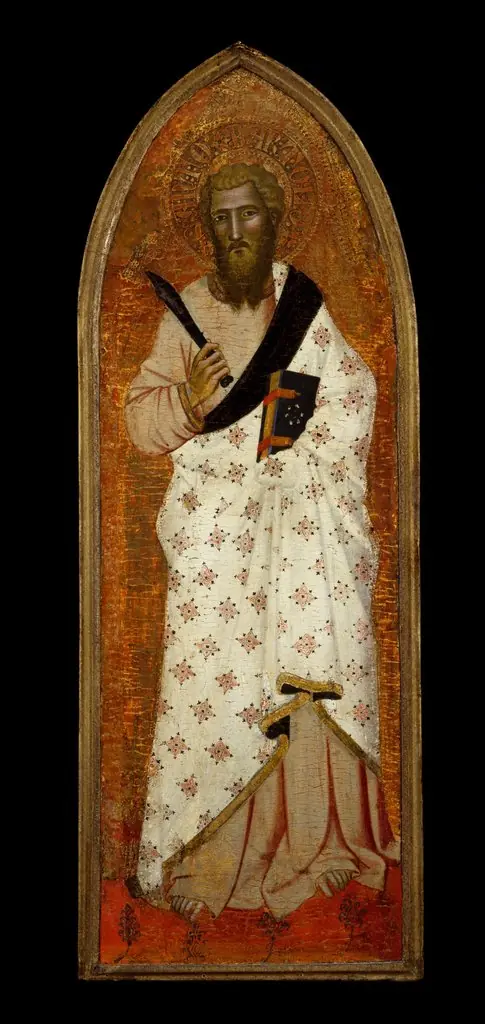 Saint Bartholomew
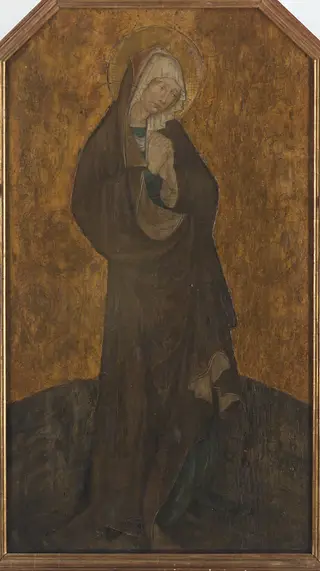 Our Lady of Sorrows
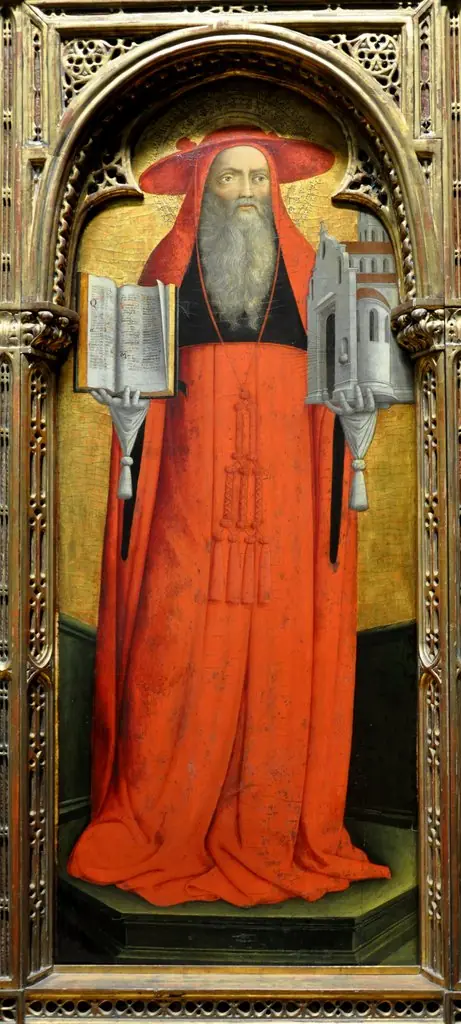 Hieronymusaltar von Santo Stefano in Venedig: Der heilige Hieronymus
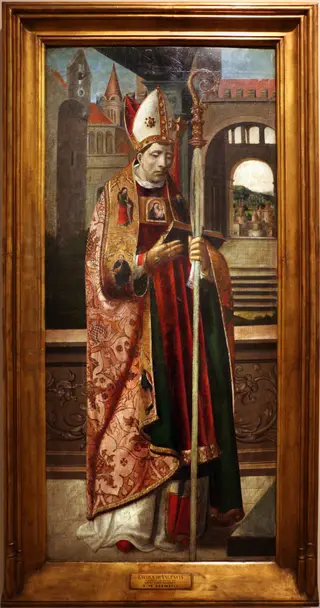 due vescovi
- St Matthias. The wing from the altar retable from Trzebunia