Artwork
Sketch for Flower Kitchen
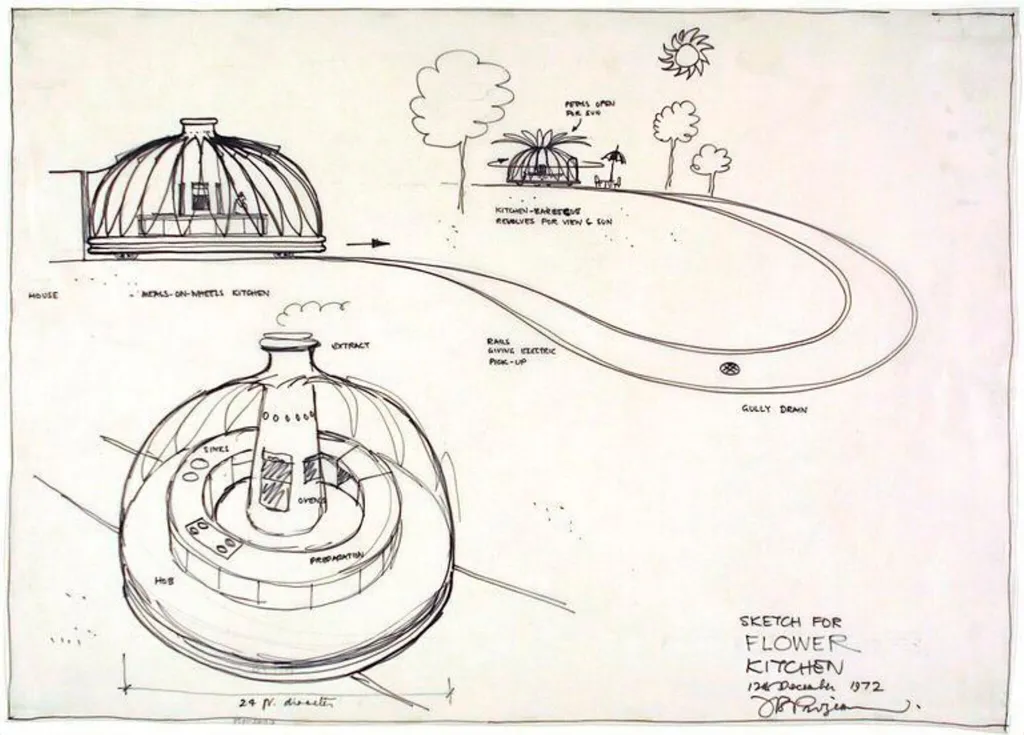
Sketch for Flower Kitchen is a drawing by John B. Prizeman. It dates from 12 and is held in the collection of the Victoria and Albert Museum.
About this work
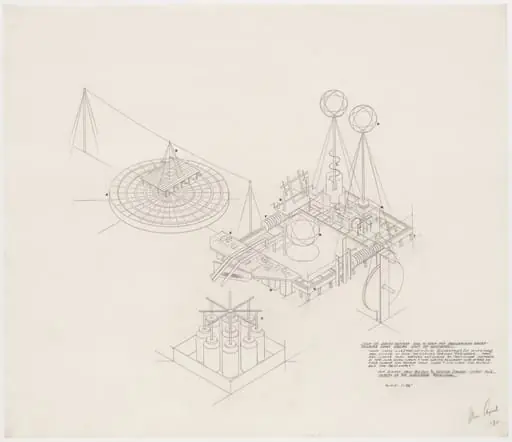
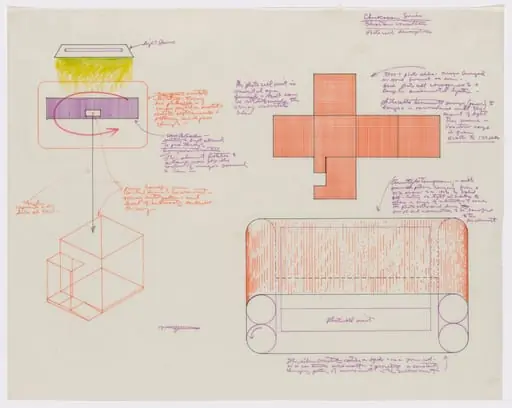
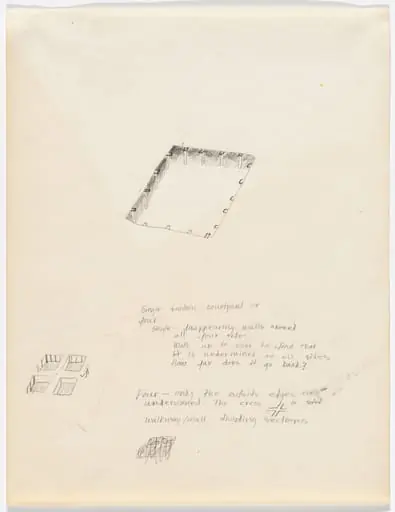
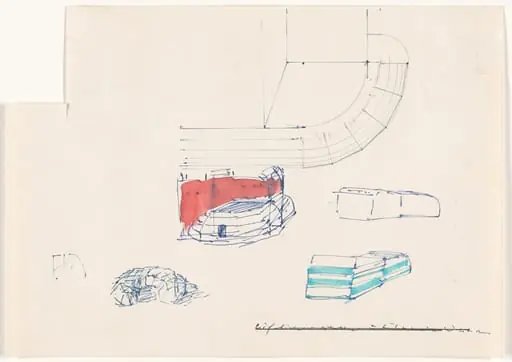
This drawing shows early plans for a wild kitchen design from 1972 by British architect John Prizeman.
This drawing shows early plans for a wild kitchen design from 1972 by British architect John Prizeman. It’s a sketch, not a finished painting, done in felt-tip on tracing paper.
The kitchen rolls around the garden on rails shaped like a flower. As it moves, the windows open like petals to catch the sun. Westinghouse turned this one-off idea into an actual kitchen for a house.
See other playful designs by Prizeman, John B.
Overview
Created in 1972 by British architect John Prizeman, this drawing is an early conceptual sketch for a mobile kitchen designed to move through a garden on rails. Executed in felt-tip on tracing paper, it captures a speculative architectural idea that blends whimsy with functional innovation. The drawing serves as a visual proposal rather than a technical blueprint, emphasizing movement and form over construction details.
Subject & Meaning
The design imagines a kitchen shaped like a blooming flower, rotating to follow sunlight and opening its window-petals to capture natural light and views. This concept reflects 1970s countercultural ideals, particularly the organic, nature-centered ethos of 'flower power,' while also echoing the ornamental glass structures of Victorian conservatories. The kitchen becomes a living extension of the garden, blurring boundaries between interior and exterior.
Technique & Style
Prizeman used tracing paper to suggest the garden as a continuous, translucent ground, allowing the kitchen’s form to appear as if gliding across it. The fluid, unbroken lines of the felt-tip pen convey motion and spontaneity, reinforcing the idea of effortless rotation. The medium’s transparency and immediacy support the sketch’s exploratory nature, prioritizing imaginative expression over precision.
History & Provenance
Though never mass-produced, the design was realized as a single custom unit by Westinghouse Domestic Appliances in the United States. The drawing remained a key document of Prizeman’s experimental phase, illustrating his interest in playful, non-traditional domestic spaces. Its survival offers insight into a brief moment when architectural fantasy intersected with consumer appliance innovation.
Context
Emerging during a period of architectural experimentation and rising environmental awareness, the design responded to shifting attitudes toward domestic life. It challenged the static nature of the traditional kitchen, proposing adaptability and harmony with nature. Similar ideas appeared in other radical projects of the era, though few were built, making this one of the rare instances where fantasy became physical reality.
Legacy
The sketch endures as a symbol of speculative architecture’s potential to reimagine everyday spaces. While the actual kitchen remains a singular artifact, the drawing continues to inspire discussions on mobility, sustainability, and the emotional relationship between people and their homes. It stands as a quiet testament to the value of imaginative thinking in design.
Own this work as a print
Artist & collection
Artist
John B. Prizeman made loose, ink-on-paper drawings in the early 1970s. His sketch for Flower Kitchen shows a room full of vases and stems, quick lines suggesting petals and stems rather than solid shapes. It belongs to…