Artwork
On the canal at Abbeville
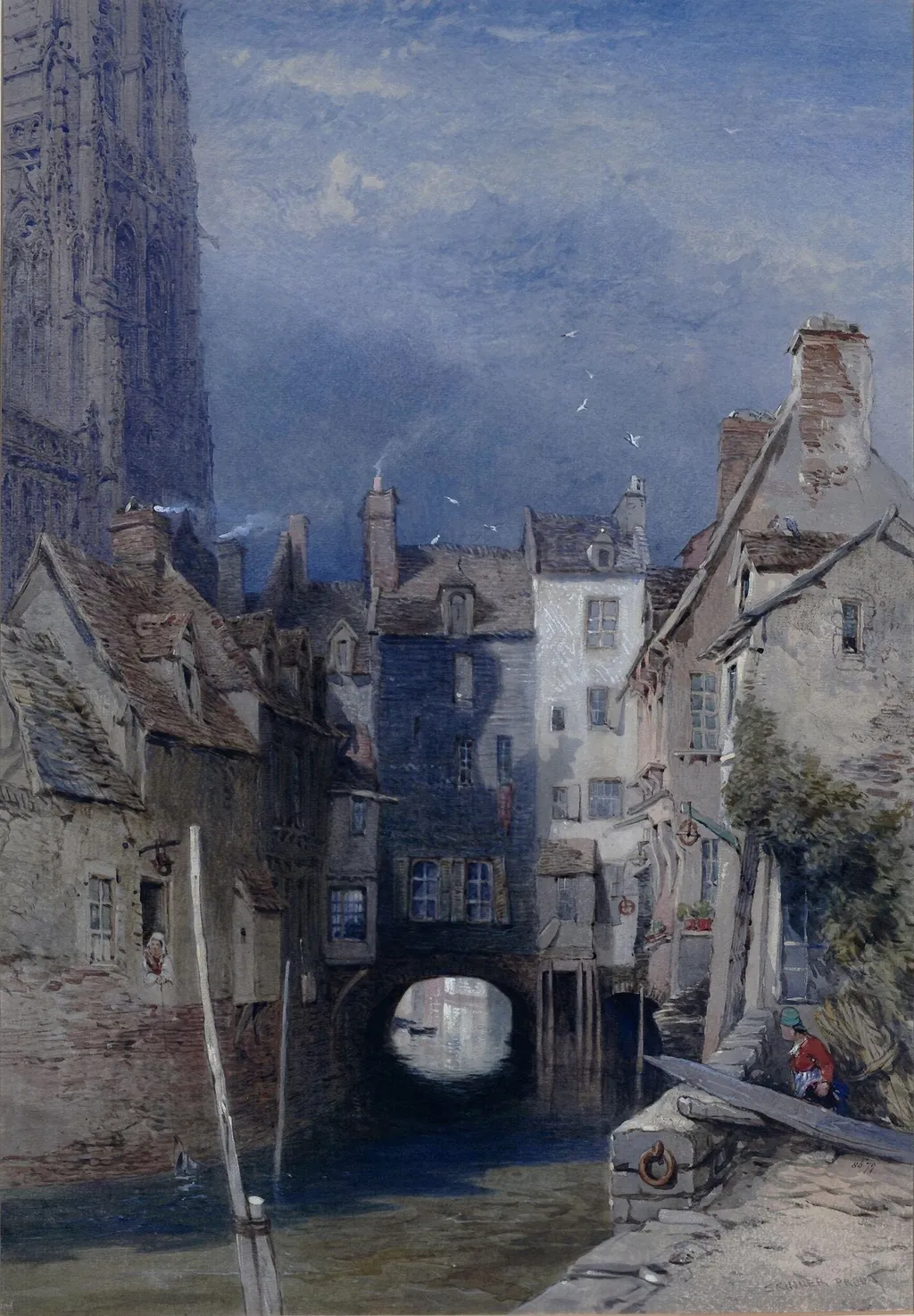
On the canal at Abbeville is a watercolor work on paper by Samuel Prout. It dates from 1850 and is held in the collection of the Victoria and Albert Museum. Created in 1850, this watercolour by Prout captures a quiet moment along a canal in Abbeville, northern France.
About this work
Overview
The work is part of the Victoria and Albert Museum’s collection, preserved as an example of 19th-century topographical watercolour.
Created in 1850, this watercolour by Prout captures a quiet moment along a canal in Abbeville, northern France. The composition centers on the waterway flanked by modest, weathered buildings, with a narrow bridge crossing near the foreground. The artist’s signature is present, confirming authorship.
The work is part of the Victoria and Albert Museum’s collection, preserved as an example of 19th-century topographical watercolour.
Subject & Meaning
The scene portrays everyday urban life along a working canal, with smoke rising from chimneys suggesting domestic activity. The presence of vegetation clinging to aged masonry hints at time’s quiet erosion of human structures. No figures are visible, lending the image a still, contemplative tone.
The church in the distance anchors the scene in place, subtly reinforcing the town’s civic and spiritual character.
Technique & Style
Prout employed delicate washes of watercolour to render the cloudy sky and reflective water, using subtle gradations to suggest atmosphere. Buildings are rendered with precise, restrained lines, emphasizing texture over detail. The muted palette of greys and earth tones reinforces the overcast conditions, while the soft edges of foliage and brickwork convey a sense of damp, humid air typical of northern France.
History & Provenance
The watercolour was produced during Prout’s later years, when he frequently documented French and Belgian towns. It entered the Victoria and Albert Museum’s collection through its long-standing acquisition of 19th-century British watercolours, particularly those with topographical significance. No earlier ownership records are publicly documented, but its preservation suggests it was valued within artistic circles soon after completion.
Context
In the mid-19th century, British artists like Prout traveled extensively across Europe, recording architectural scenes for both scholarly and aesthetic interest. Abbeville, a historic town in Picardy, was known for its medieval structures and canal network, making it a fitting subject. This work aligns with a broader trend of documenting vernacular architecture before industrialization transformed such landscapes.
Legacy
Prout’s watercolours, including this one, contributed to the recognition of topographical art as a serious genre in Britain. Though not widely exhibited today, the piece remains a quiet testament to his skill in capturing atmosphere and architectural character with minimal means. It continues to inform studies of 19th-century landscape representation and the British interest in continental vernacular.
Own this work as a print
Artist & collection

Artist
Samuel Prout was a British watercolourist, and one of the masters of watercolour architectural painting, who largely invented the genre of the grand steet scene in British watercolour painting, mostly with picturesque scenes from…

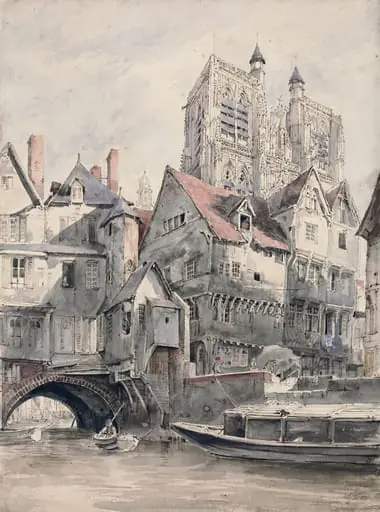
- Abbeville, with the Bridge and Towers of St. Wulfran
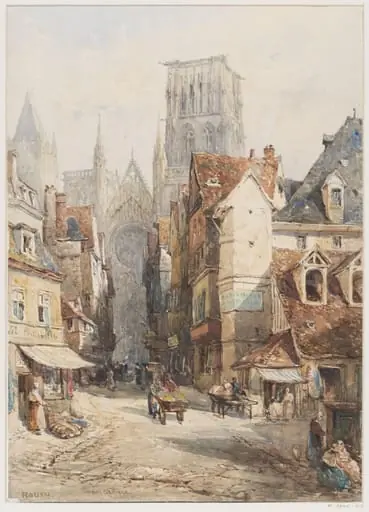 Rouen. The South Porch and Towers of the Cathedral, seen from Rue du Bac
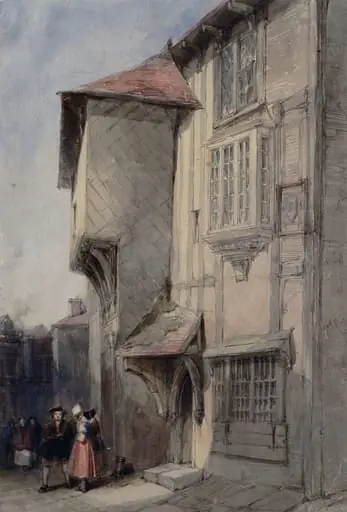 A street scene
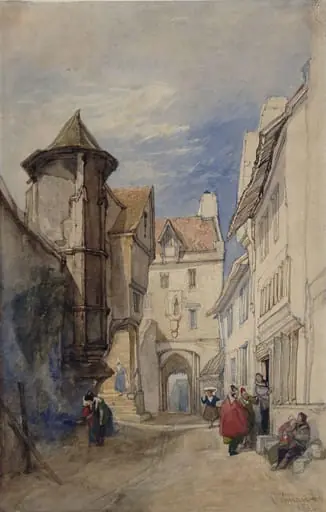 A Gateway in a Norman Town
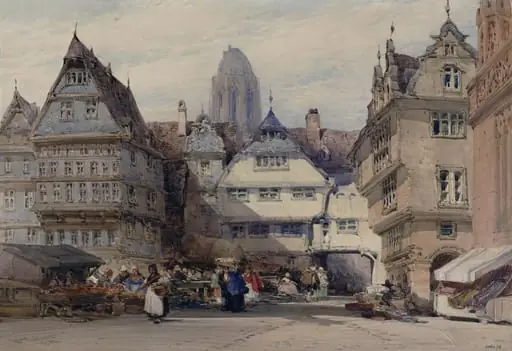 Market Place, Frankfort
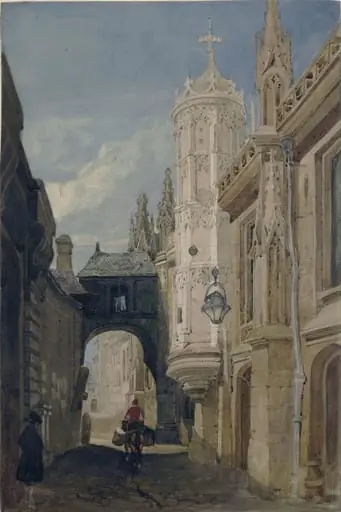 The Palais de Justice and the Rue St Lo, Rouen
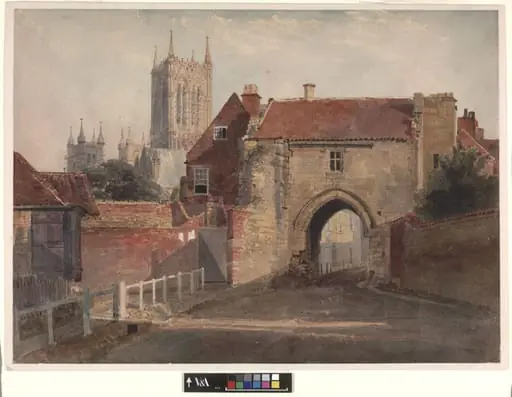 Potter Gate, Lincoln
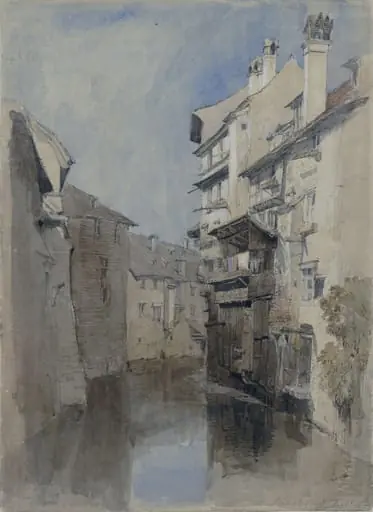 Strasbourg
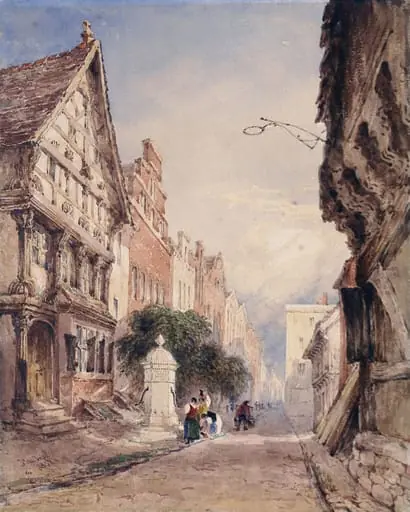 Street Scene
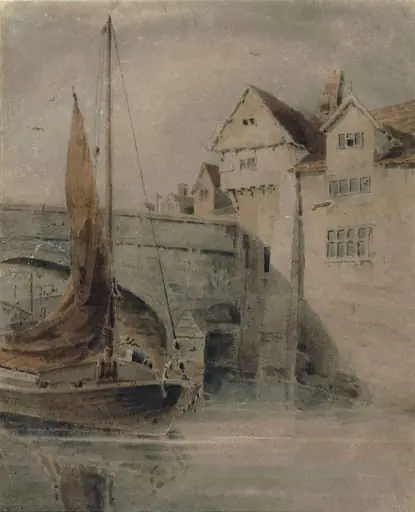 Fye Bridge, Norwich
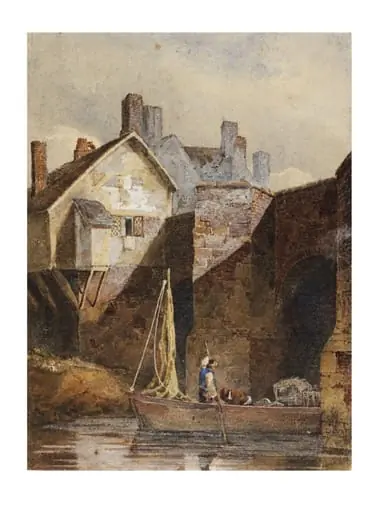 Canal scene with barge and houses in background