Artwork
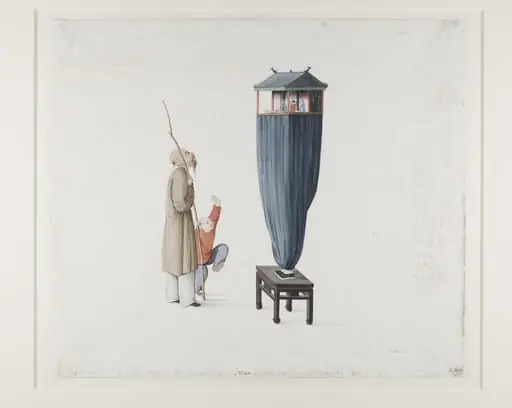
A Peep Show
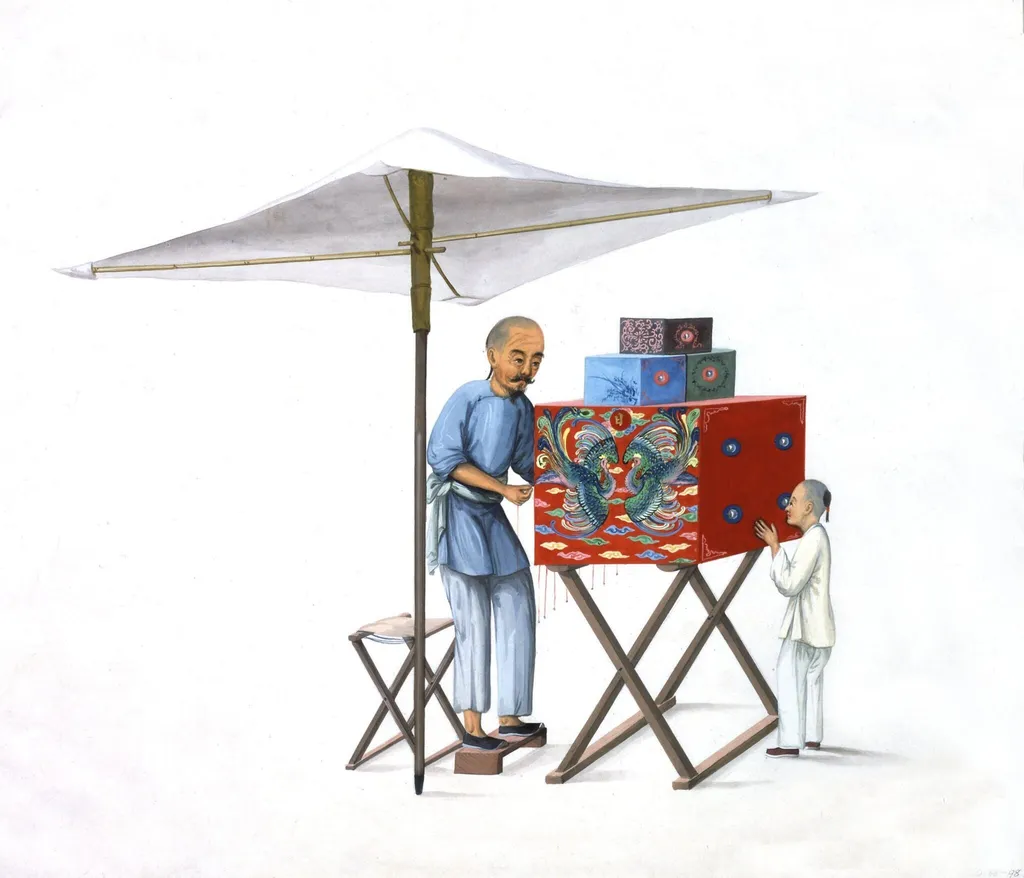
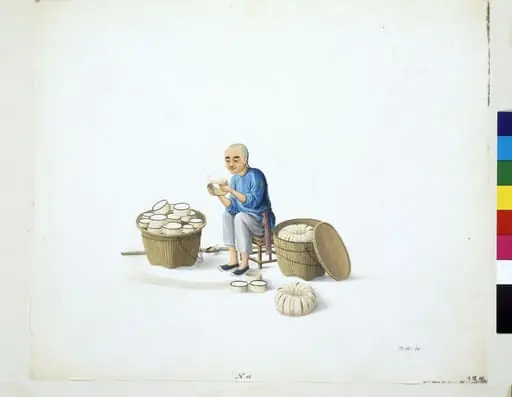
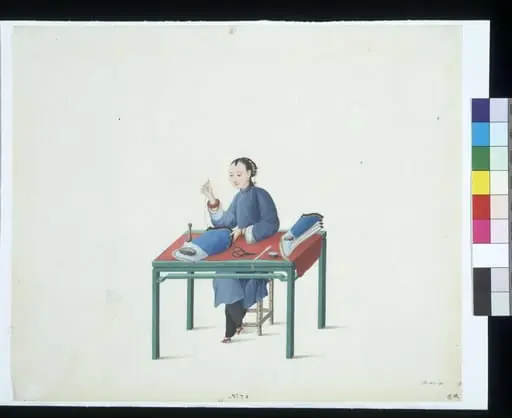
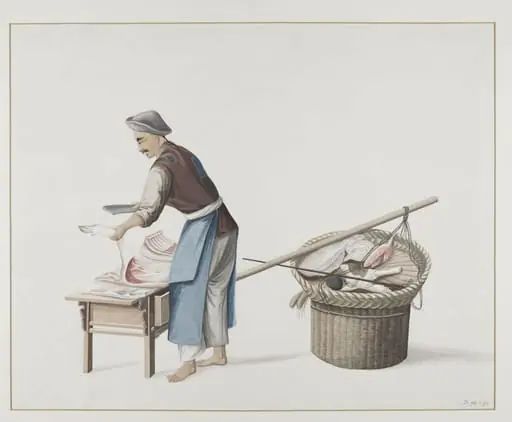
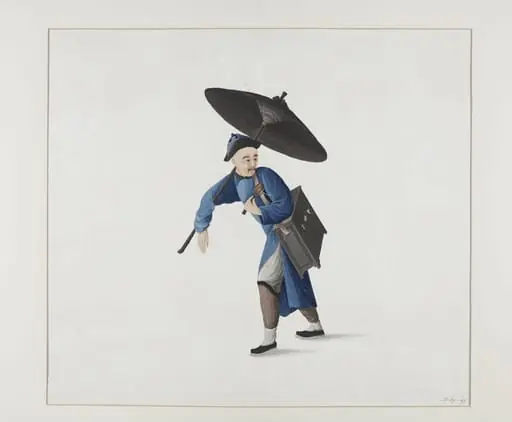
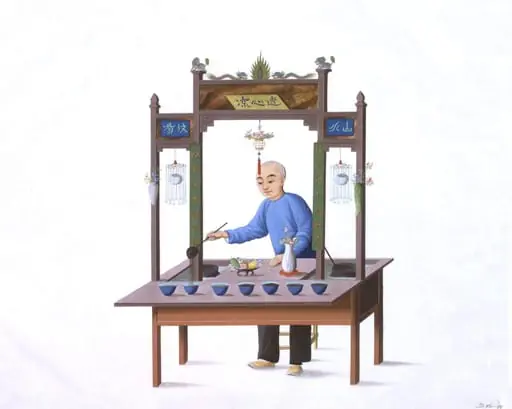
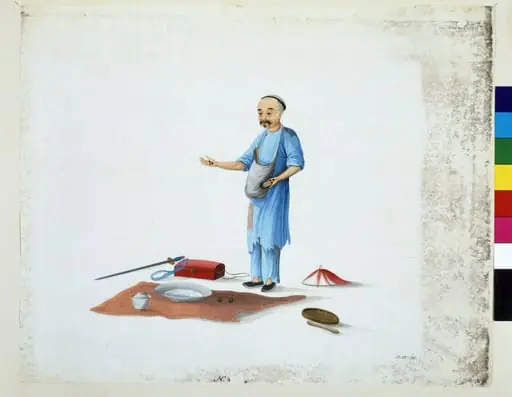
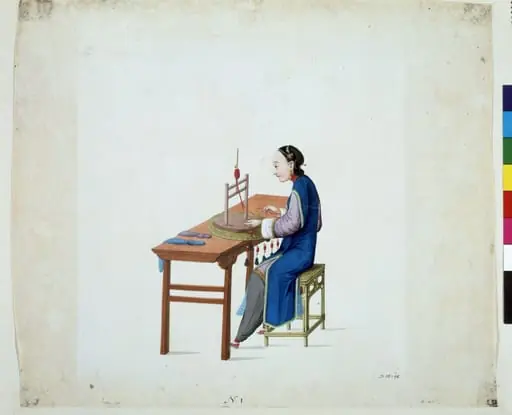
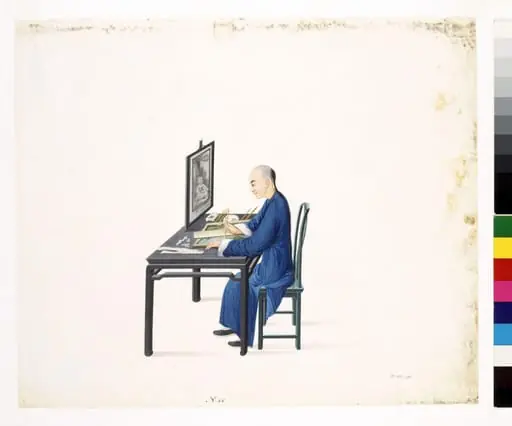
A Peep Show is a paint painting by the Patna School of Painting artist Puqua. It dates from 1790 and is held in the collection of the Victoria and Albert Museum. The work belongs to a series of one hundred paintings that document various occupations in the port city of Canton.
About this work
Overview
The work belongs to a series of one hundred paintings that document various occupations in the port city of Canton. In this particular image a man operates a small peep‑show booth, a portable wooden structure that functions as a miniature theater for spectators.
Subject & Meaning
The central figure is depicted managing the peep‑show, suggesting a glimpse into popular entertainment and everyday commerce in 19th‑century China. By focusing on this niche trade, the painting highlights the diversity of urban livelihoods beyond the more commonly recorded elite activities.
Technique & Style
Executed in a manner consistent with Romantic-era interest in exotic subjects, the composition combines detailed observation with a slightly idealised atmosphere. The brushwork renders the wooden booth and surrounding figures with clarity, while the colour palette balances muted earth tones with brighter accents to draw attention to the performer’s gestures.
History & Provenance
The series was commissioned for a European audience eager to acquire visual information about Chinese society. Produced for export, the paintings travelled to Western collections where they served as illustrative material for travelers, merchants and scholars seeking a pictorial account of Cantonese life.
Context
During the early 1800s, Canton functioned as a major hub of trade between China and Europe, prompting a surge of curiosity about local customs. This painting reflects that cross‑cultural exchange, providing a rare visual record of a specific entertainment practice that would otherwise have left few documentary traces.
Own this work as a print
Artist & collection