Subject
Easel
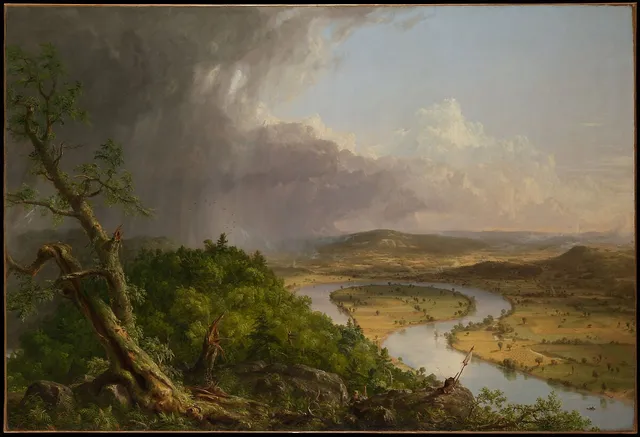
Easel is a subject in art. The gallery holds 95 works in this subject in art, including works by Thomas Cole, Edgar Degas and Matthew Pratt.
An easel is an upright support used for displaying and/or fixing something resting upon it, at an angle of about 20° to the vertical. In particular, painters traditionally use an easel to support a painting while they work on it, normally standing up; easels are also sometimes used to display finished paintings and prints.
Key artists

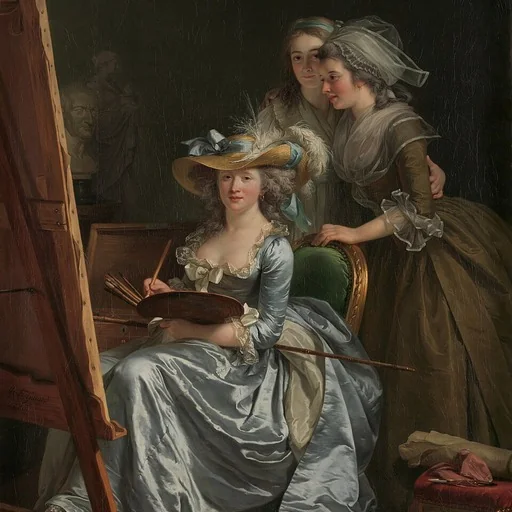
Overview
An easel is an upright support, typically set at an angle of about 20 degrees to the vertical, used to hold a canvas or panel while an artist works or to display a finished painting. The term derives from the old Germanic word for donkey, reflecting the apparatus's function as a beast of burden carrying the painter's support, a semantic equivalence preserved in languages like Dutch, where ezel denotes both the animal and the tool. Easels have been used since antiquity, with the Roman scholar Pliny the Elder referencing a large panel placed upon one in the first century. While ancient Egyptians knew of the device, it was not until the 13th century that easel painting became relatively common, eventually superseding mural and wall painting. The vertical orientation provided by the easel prevents the perspectival distortion that occurs when a work is laid flat on a table or floor, establishing it as a fundamental tool in the history of art.
Iconography & meaning
In visual art, the easel functions as a potent symbol of the artist's profession, creative intellect, and subjective viewpoint. Numerous painters have depicted themselves at the easel to assert their professional identity, while others inserted themselves into large commission works behind the apparatus to position themselves as subjective observers of the scene. Francisco Goya and Diego Velazquez notably employed this motif, with Velazquez representing himself behind his easel in Las Meninas. The motif extends to group dynamics, as seen when friends Camille Pissarro, Claude Monet, and Pierre-Auguste Renoir placed their easels side by side to paint the same motifs while maintaining their individual styles. In the luxury art market, the presence of an easel in a composition signifies the artist's dedication and the intimate relationship between creator and canvas, adding narrative depth and historical significance that enhances the work's value and prestige.
Across movements & periods
The treatment and design of the easel evolved significantly alongside artistic movements. During the Renaissance, the adoption of the easel replaced mural painting, establishing the studio picture as a distinct art form and elevating the painter to the status of an individual artist. By the 19th century, the Impressionists and their en plein air practices drove the demand for portable field easels with telescopic, collapsible legs and built-in compartments for art supplies, such as the French box easel. This shift from the stationary, heavy studio easel, which could support canvases over seven feet tall and weighing more than 200 pounds, to portable tripod designs allowed artists to leave the confines of the studio and capture natural light directly outdoors. This transition fundamentally altered the scale, subject matter, and stylistic execution of easel paintings, cementing the portable easel as an essential instrument for modern landscape and cityscape painting.
Notable depictions
Beyond Velazquez's Las Meninas, the easel has been a recurring motif in canonical depictions of the artist's studio. Rembrandt van Rijn's The Artist In His Studio and Alfred Stevens's In The Studio utilize the apparatus to define the creative workspace. Portraiture at the easel is a robust genre, seen in John Singer Sargent's An Artist At His Easel, Oda Krohg's Christian Krohg At The Easel, and Jeanna Bauck's The Danish Artist Bertha Wegmann Painting A Portrait. Claude Monet captured the practice outdoors in In The Woods At Giverny, Blanche Hoschede At Her Easel. Historically, specific easels have also gained prominence, such as the monumental, multi-functional easel of Frank Vincent DuMond, which featured a pivoting support, adjustable drafting table, and storage drawers, and the plein air easel and embellished paintbox of Thomas Cole, both of which were exhibited at the Florence Griswold Museum in 2014 alongside works by Ivan Olinsky, William Chadwick, and Will Howe Foote.
Legacy
The legacy of the easel extends beyond its physical utility into the very terminology and cultural perception of fine art. The term easel painting emerged to classify midsize works created on this portable support, distinguishing them from frescoes, large altarpieces, and miniatures. Culturally, the constellation Pictor, introduced by the French astronomer Nicolas Louis de Lacaille in 1752, was originally depicted on star maps as an easel with a brush, immortalizing the apparatus in the heavens. While modern materials like aluminum and steel have been introduced, the fundamental wooden designs have remained largely unchanged for centuries. The apparatus continues to serve as a symbol of artistic creation, appearing in diverse contemporary contexts from children's easels equipped with dry erase boards to darkroom easels that hold photographic paper flat during enlargement, demonstrating its enduring functional and symbolic versatility.
Works
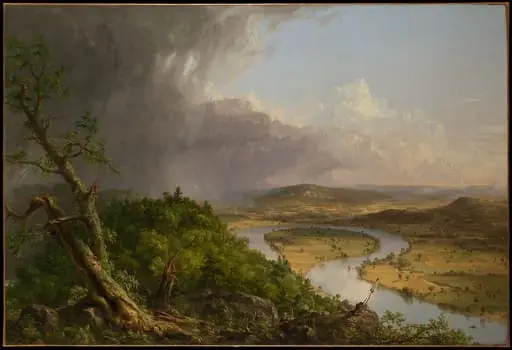 View from Mount Holyoke, Northampton, Massachusetts, after a Thunderstorm—The Oxbow
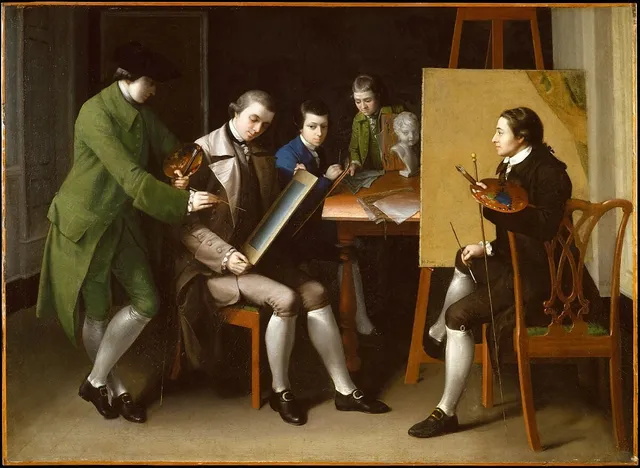
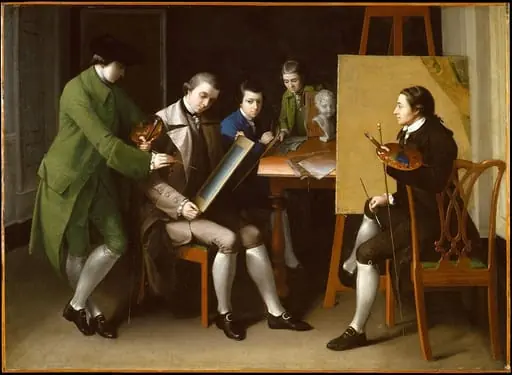 The American School
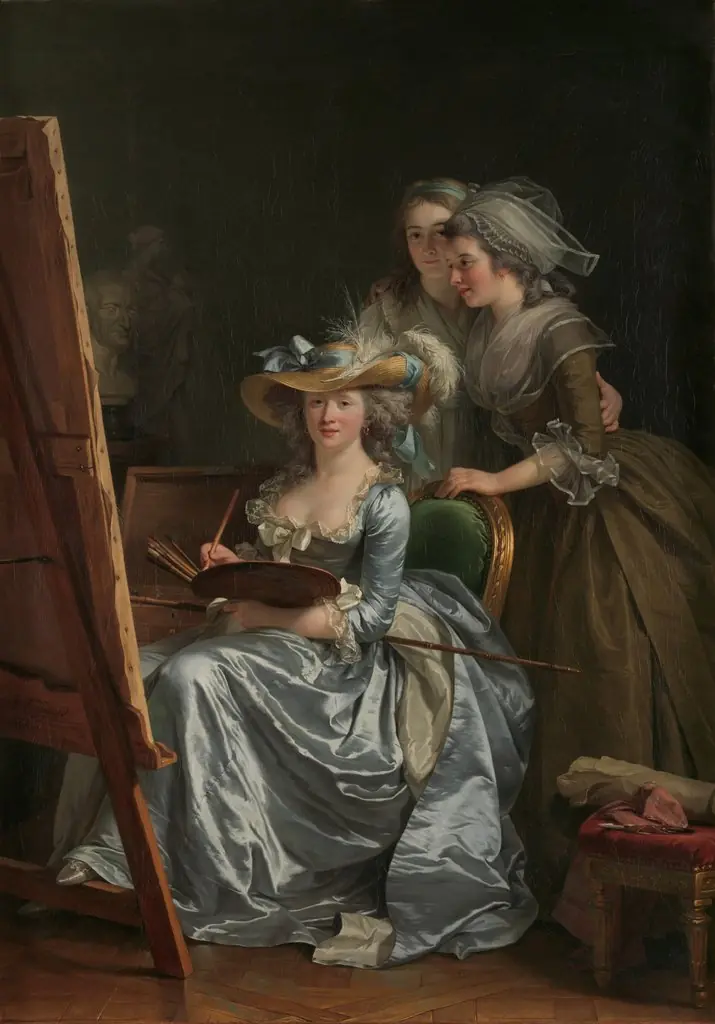 Self-Portrait with Two Pupils
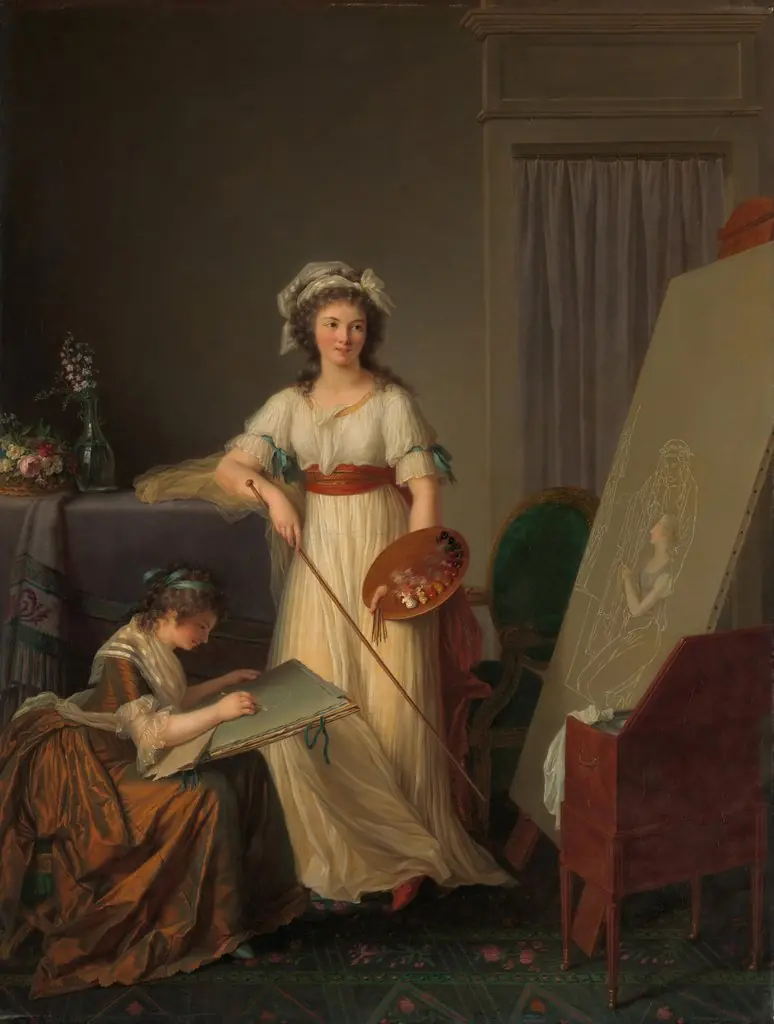 The Interior of an Atelier of a Woman Painter
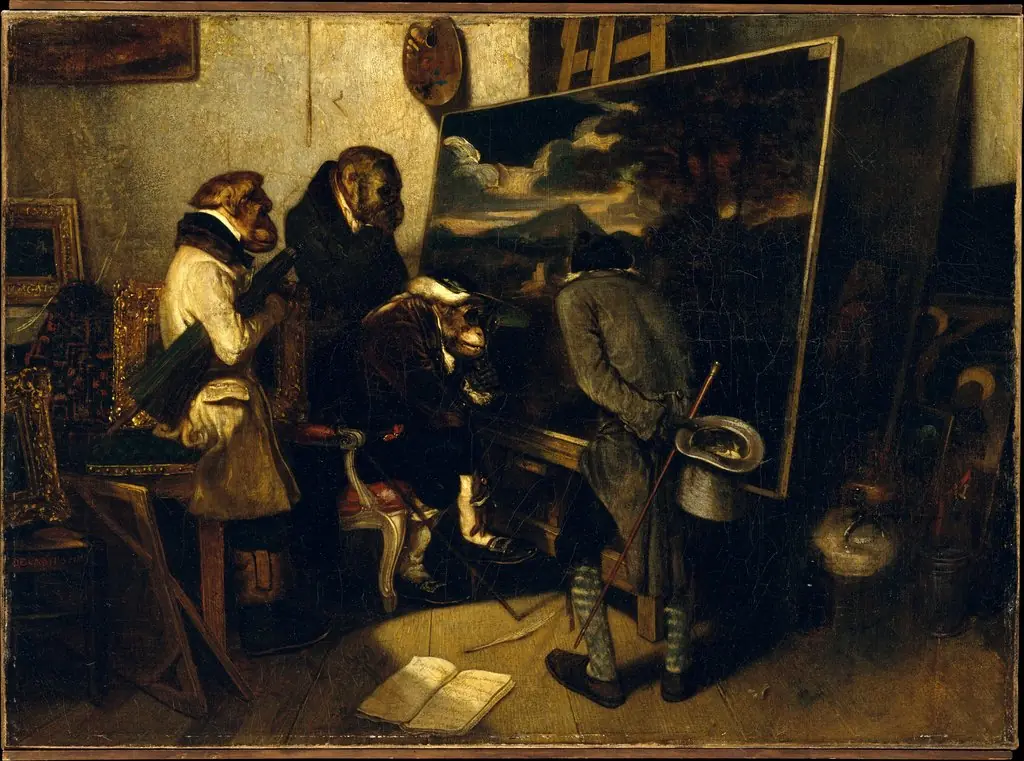 The Experts
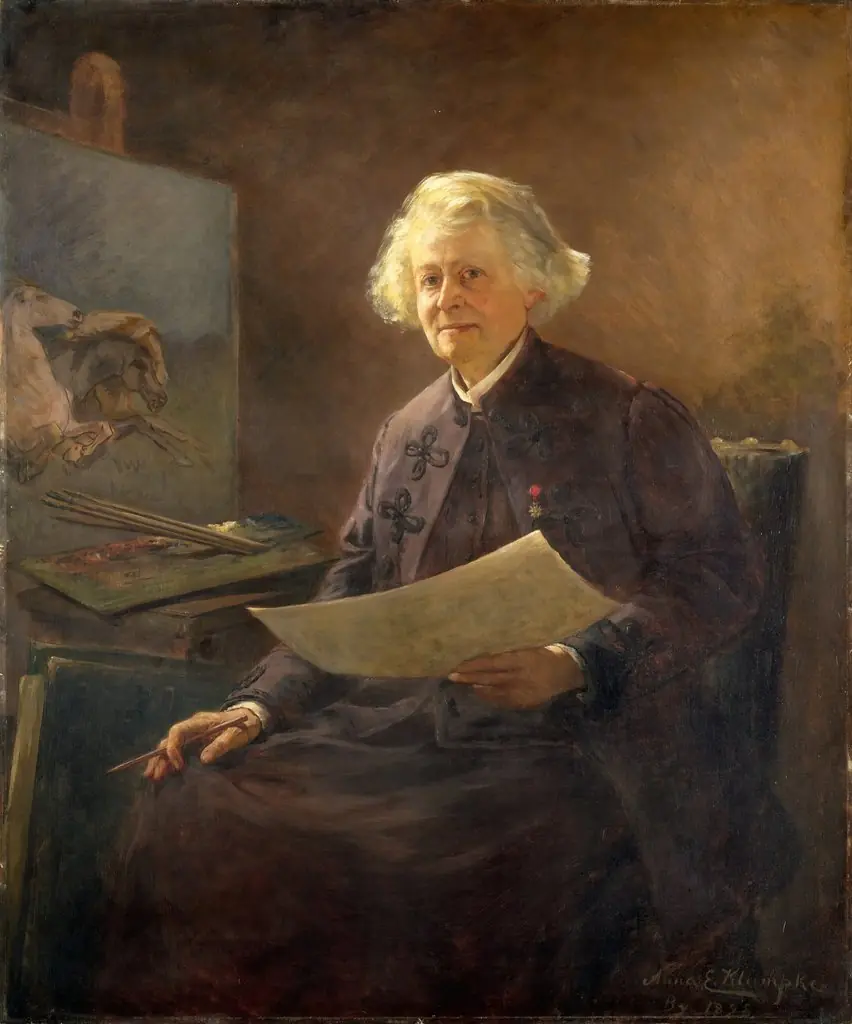 Rosa Bonheur
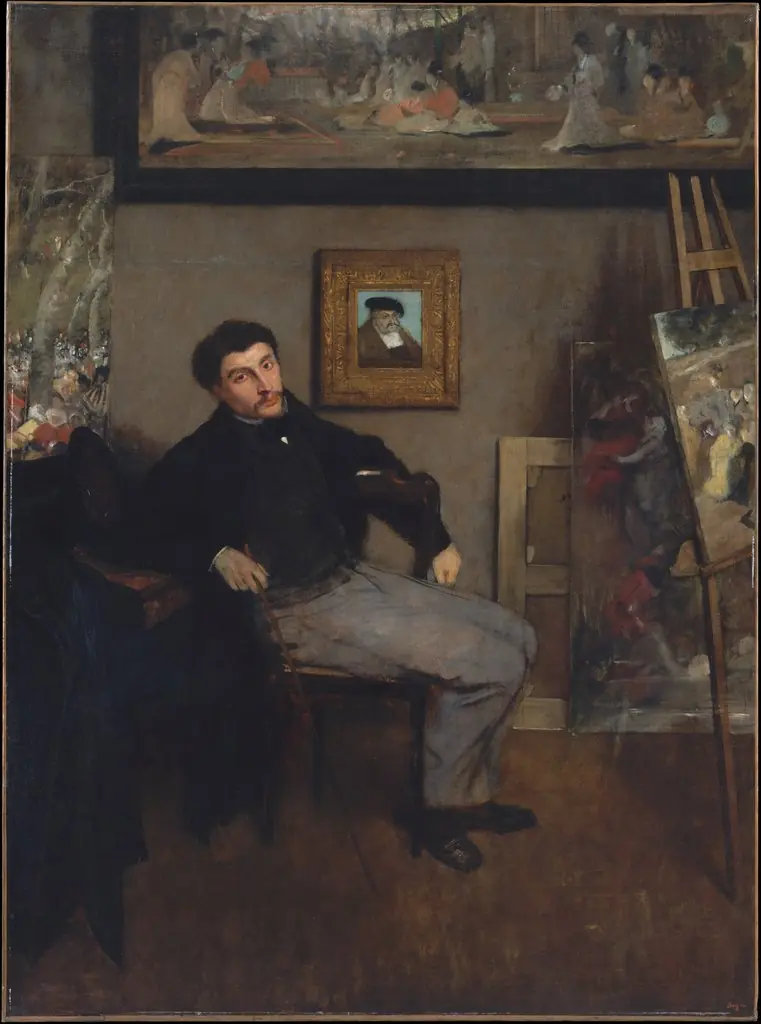 James-Jacques-Joseph Tissot (1836–1902)
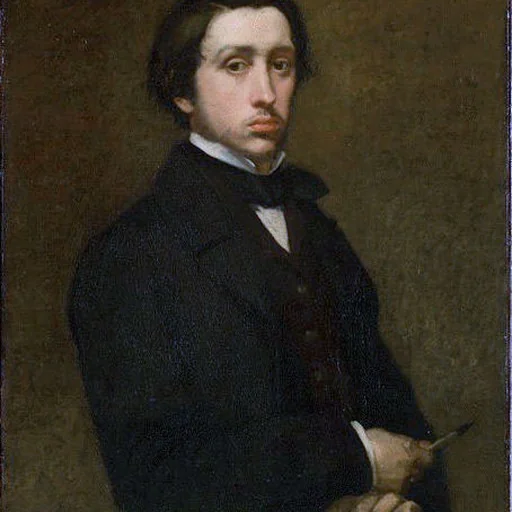
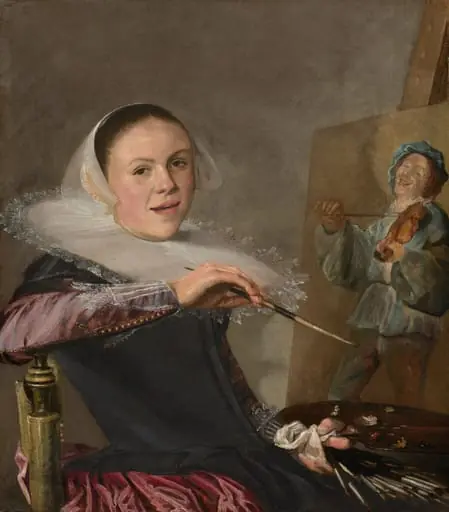 Self-Portrait
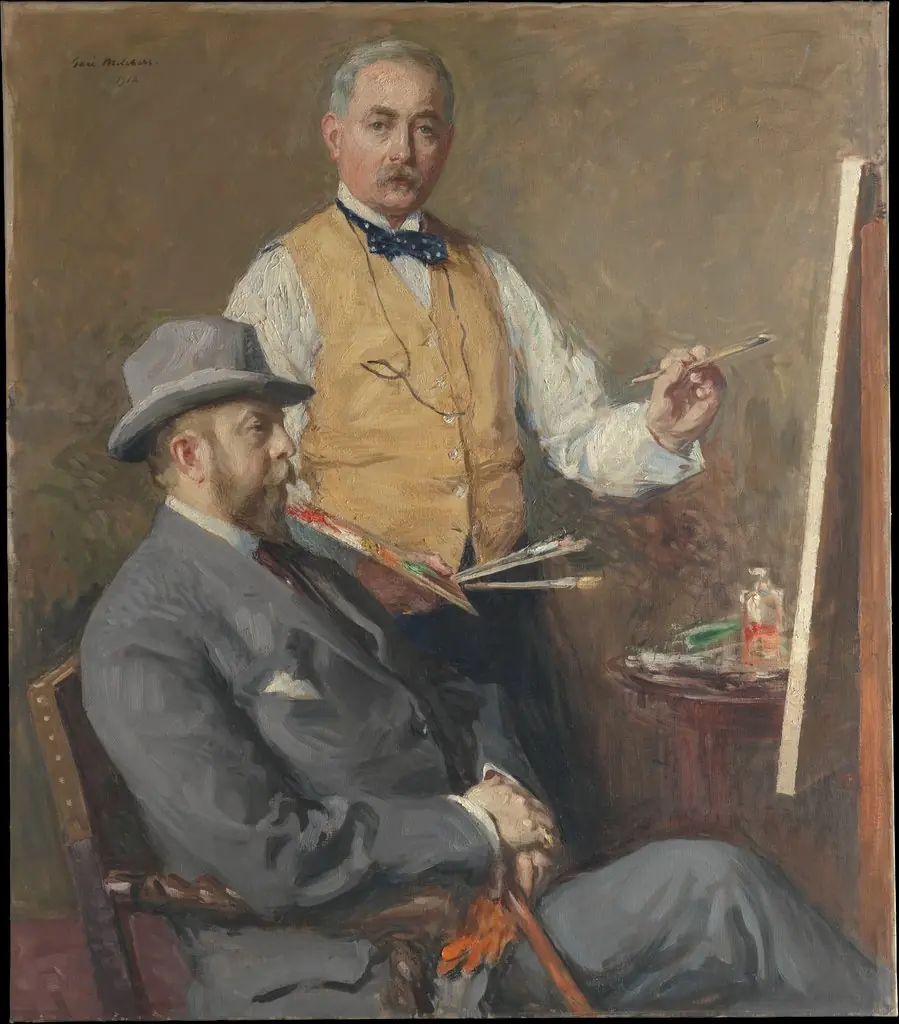 In the Studio (Gari Melchers and Hugo Reisinger)
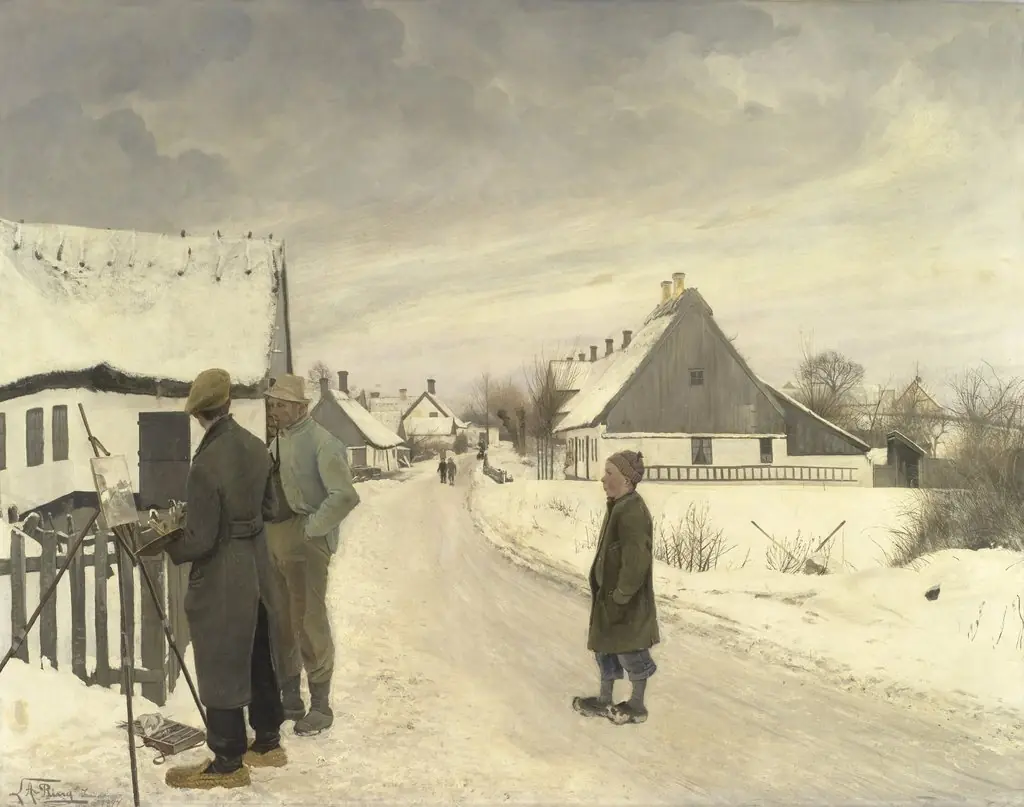 The Painter in the Village
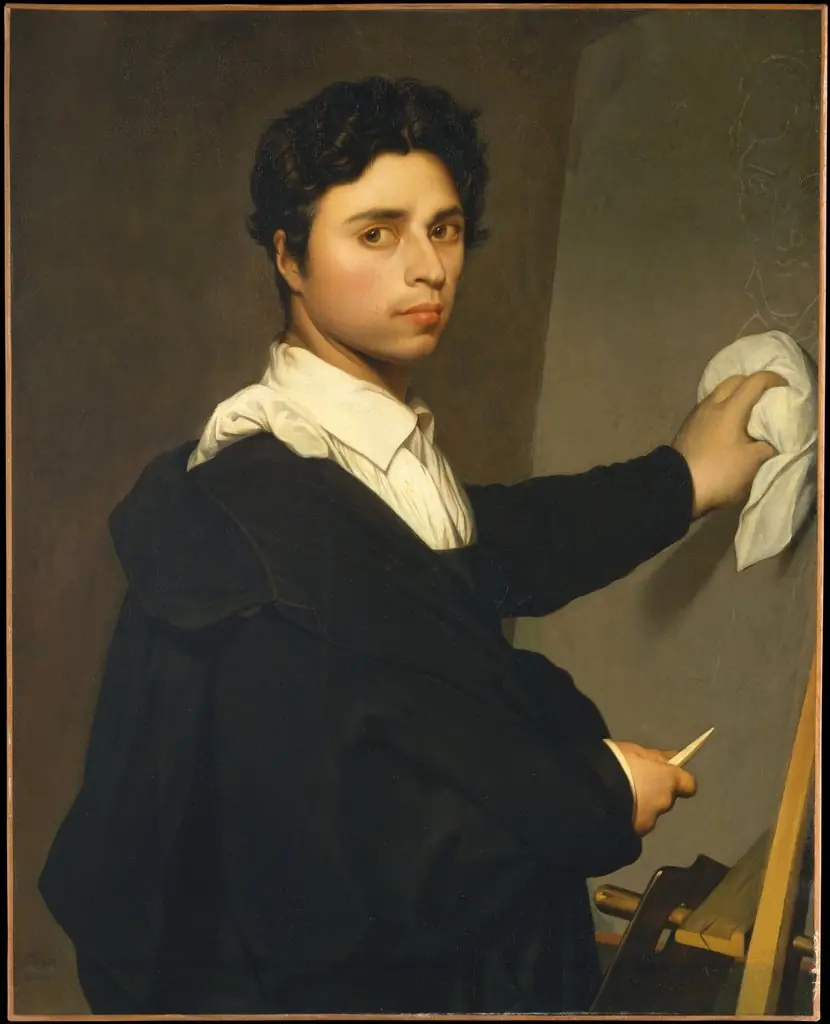 Ingres (1780–1867) as a Young Man
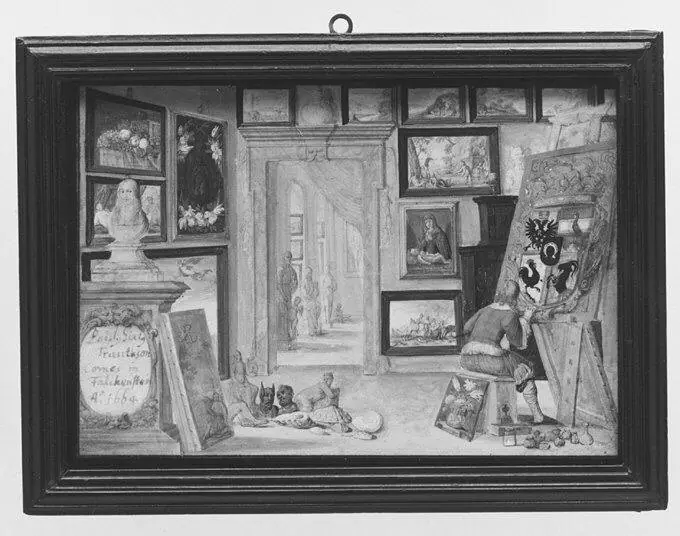 An Artist Painting a Heraldic Shield in a Cabinet of Curiosities
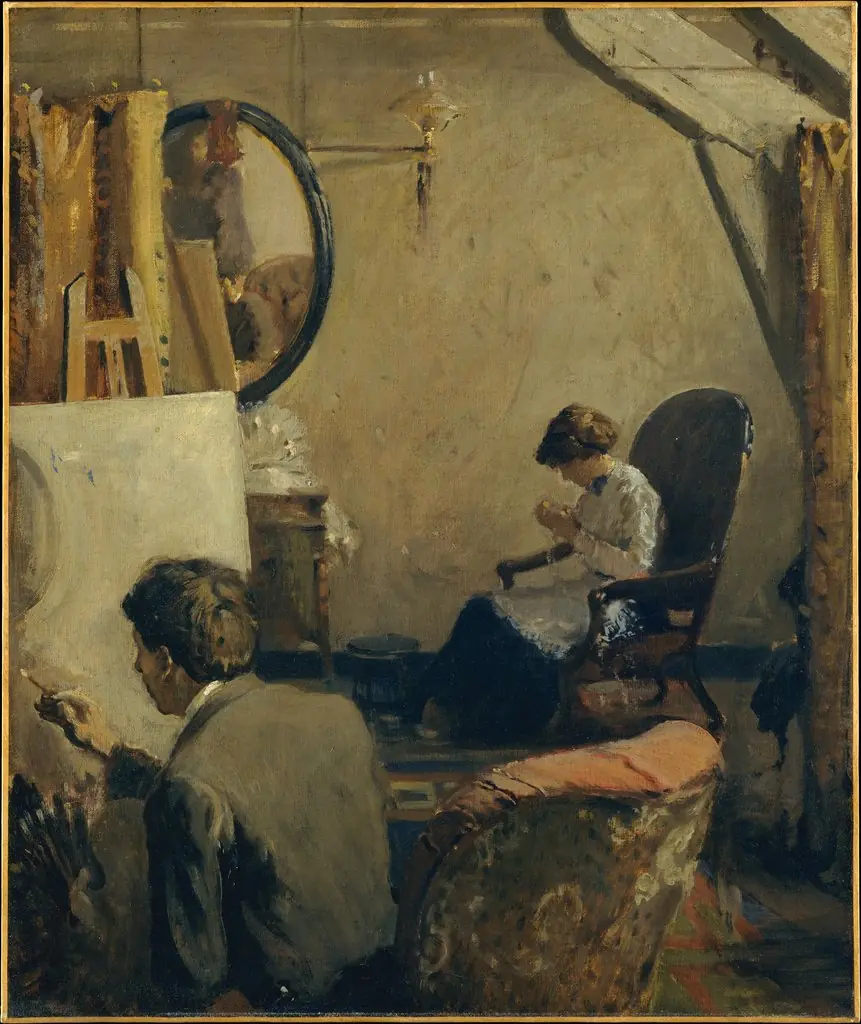 Louis Kronberg in His Studio in Copley Hall
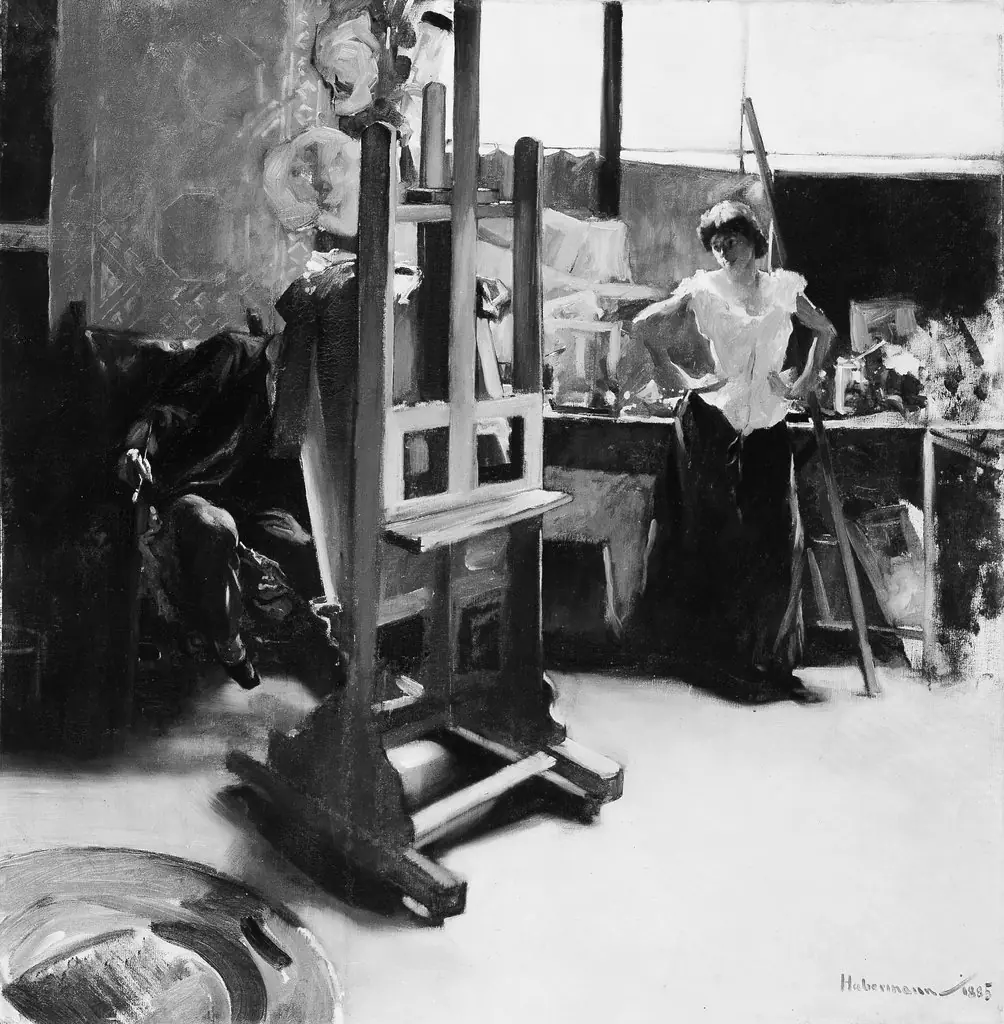 In the Studio
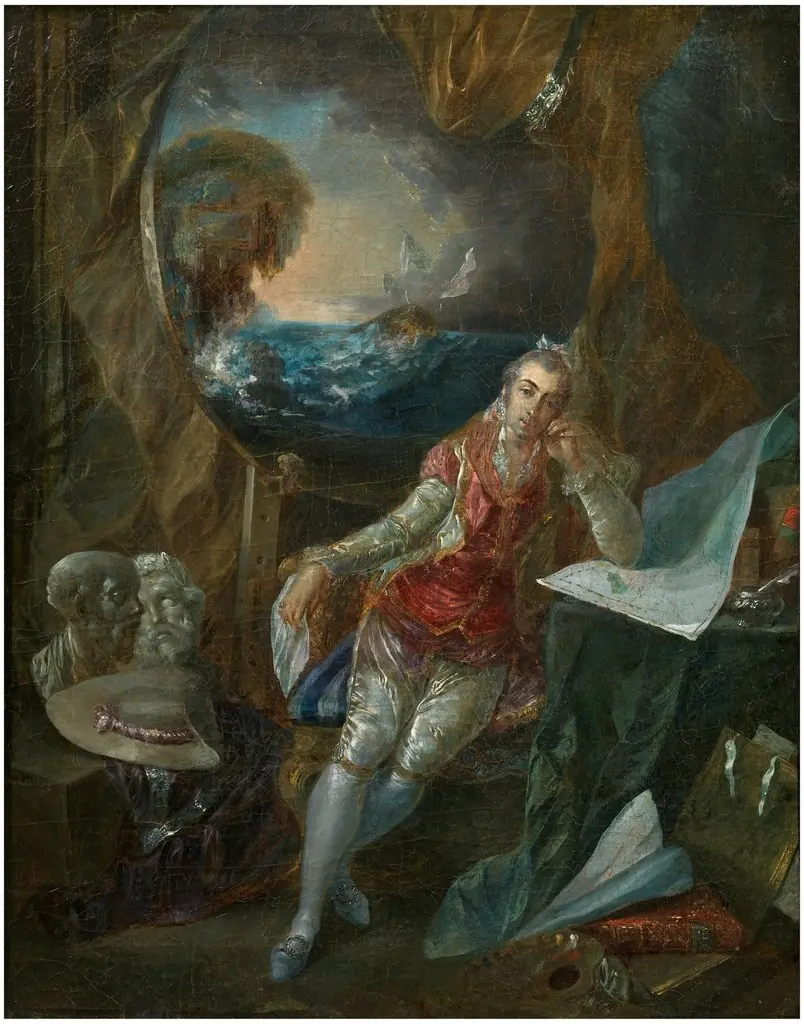 Self-portrait of the Artist in his Studio
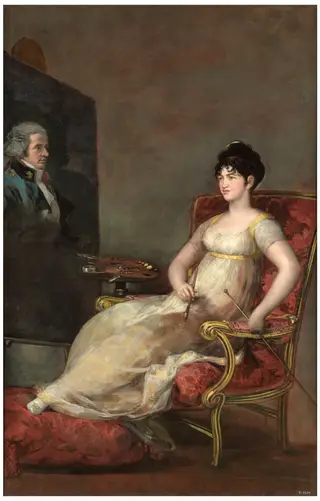 The Marchioness of Villafranca Painting her Husband
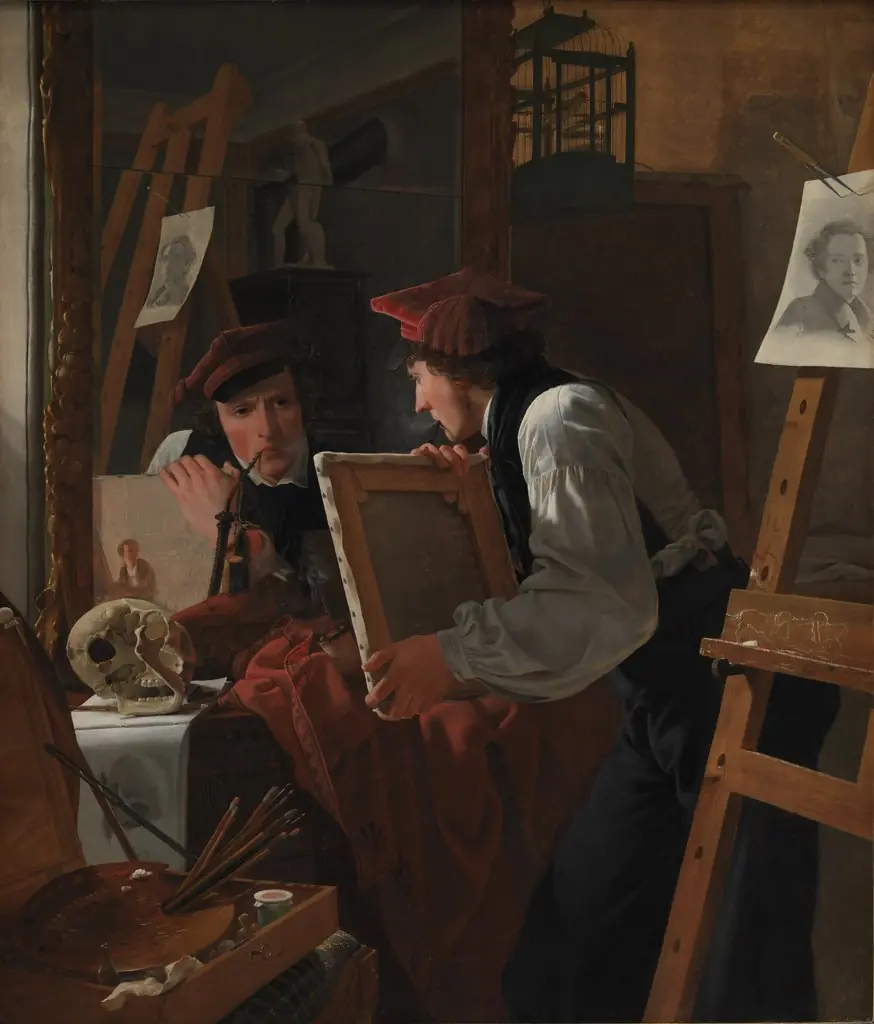 A Young Artist (Ditlev Blunck) Examining a Sketch in a Mirror
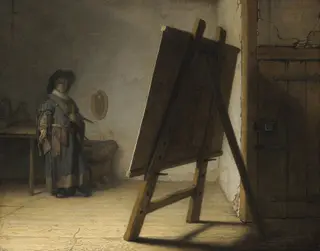 Artist in his studio
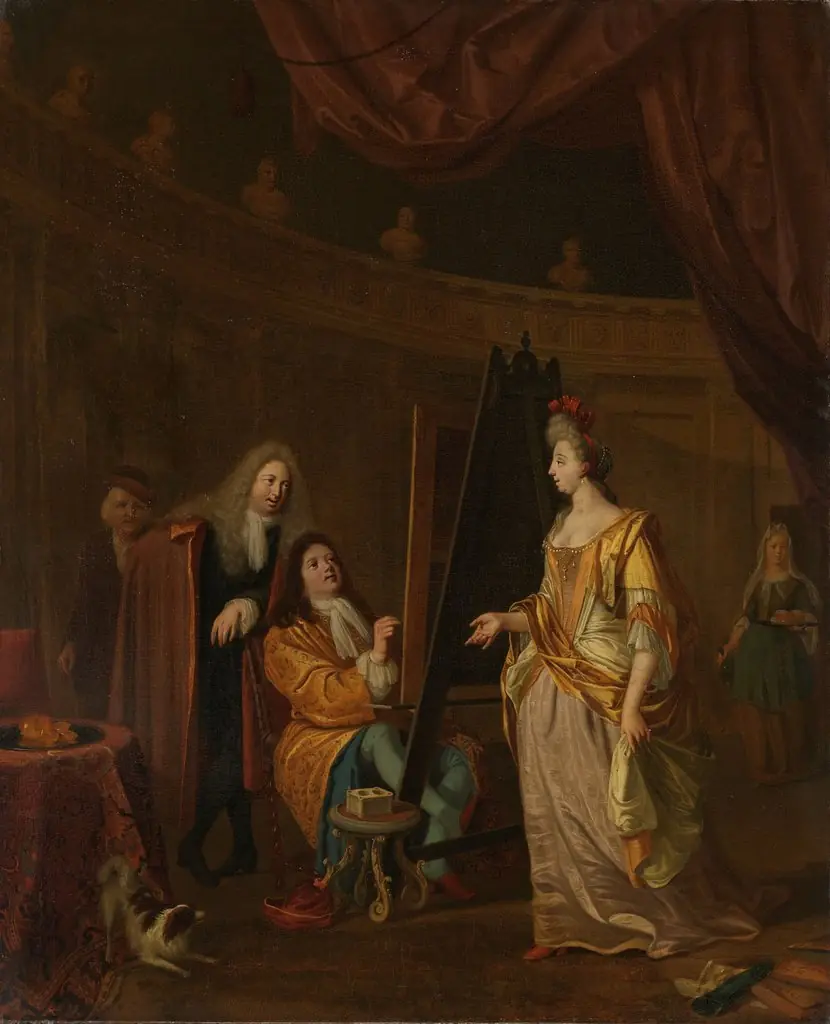 An artist in his studio, painting the portrait of a lady
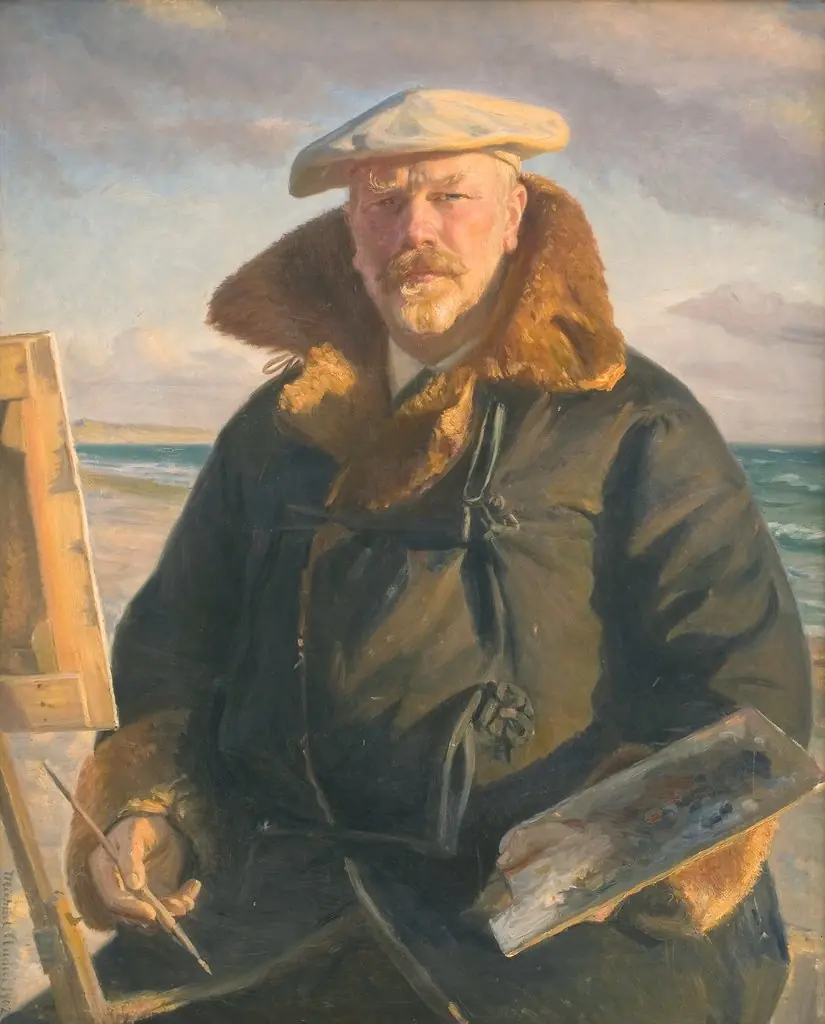 Self-Portrait
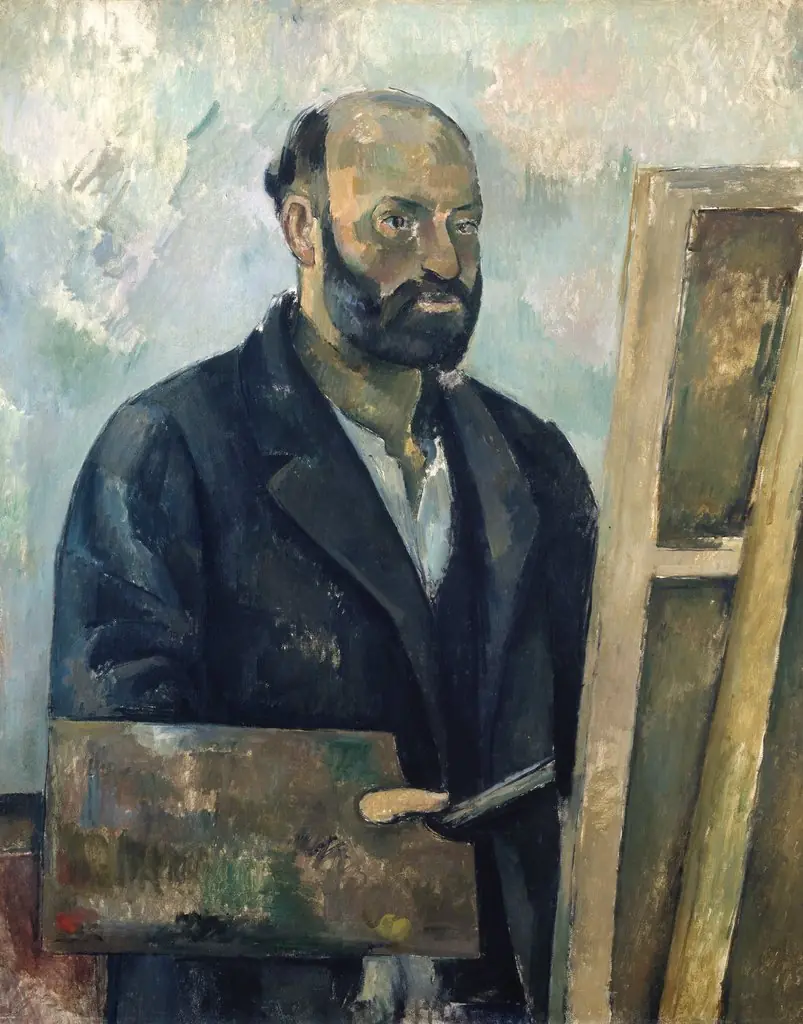 Self-Portrait with Palette
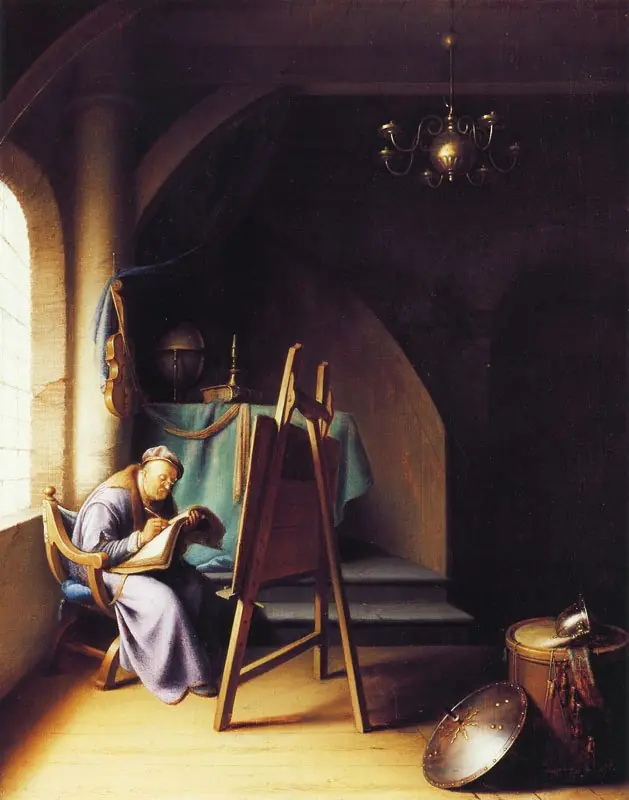 Man writing by an easel
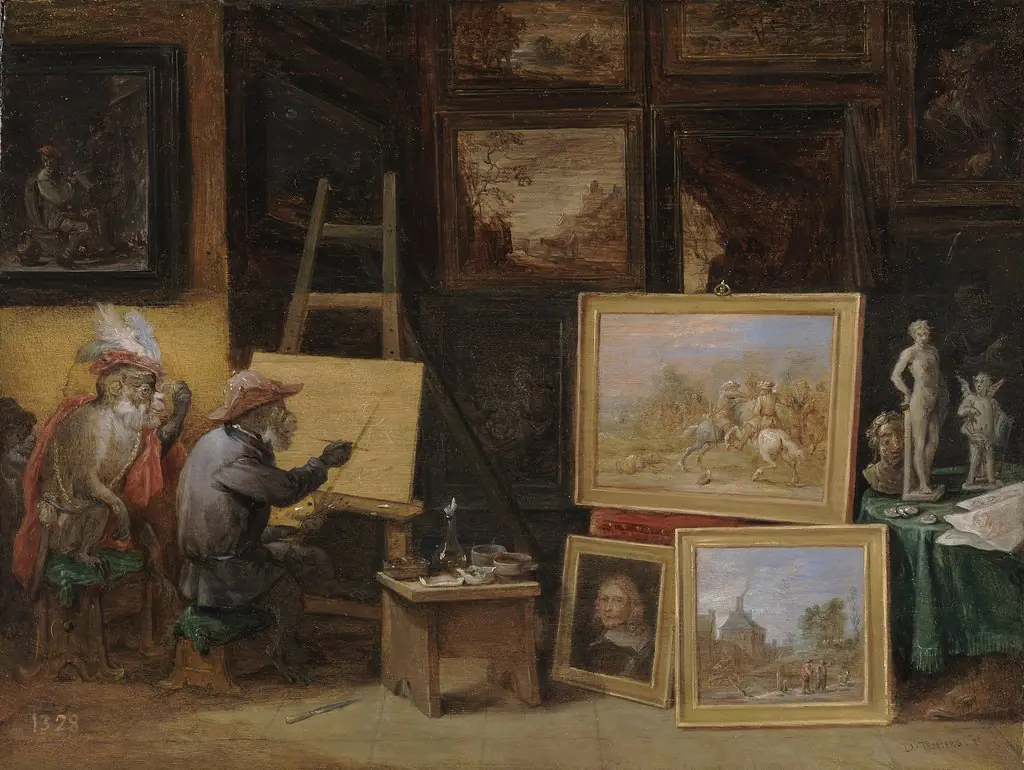 The Monkey Painter
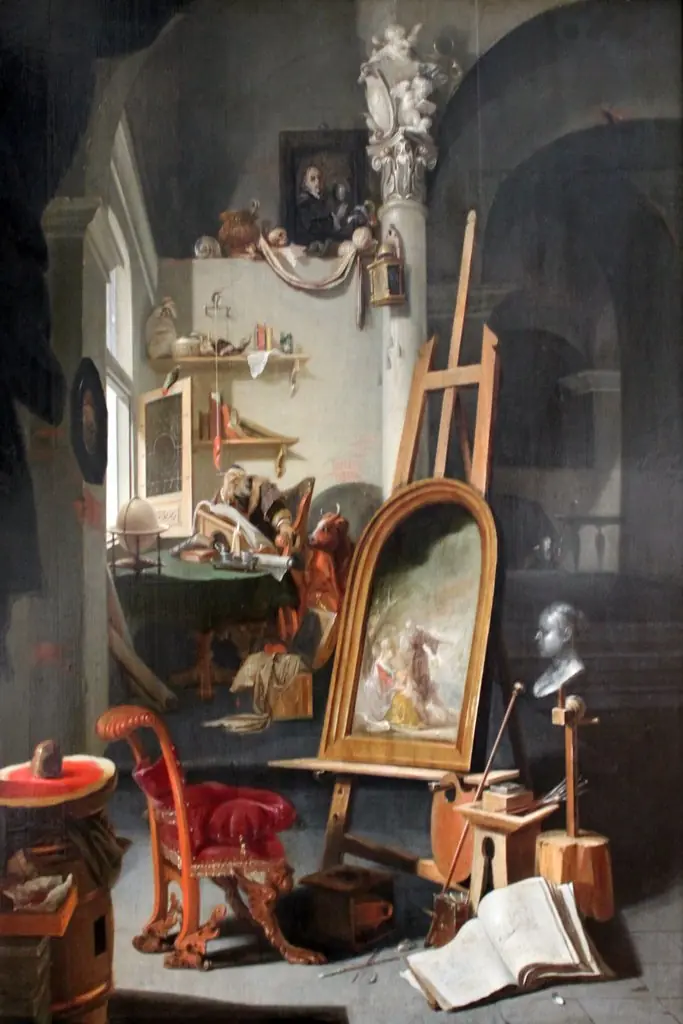 The Workshop of the Evangelist Luke
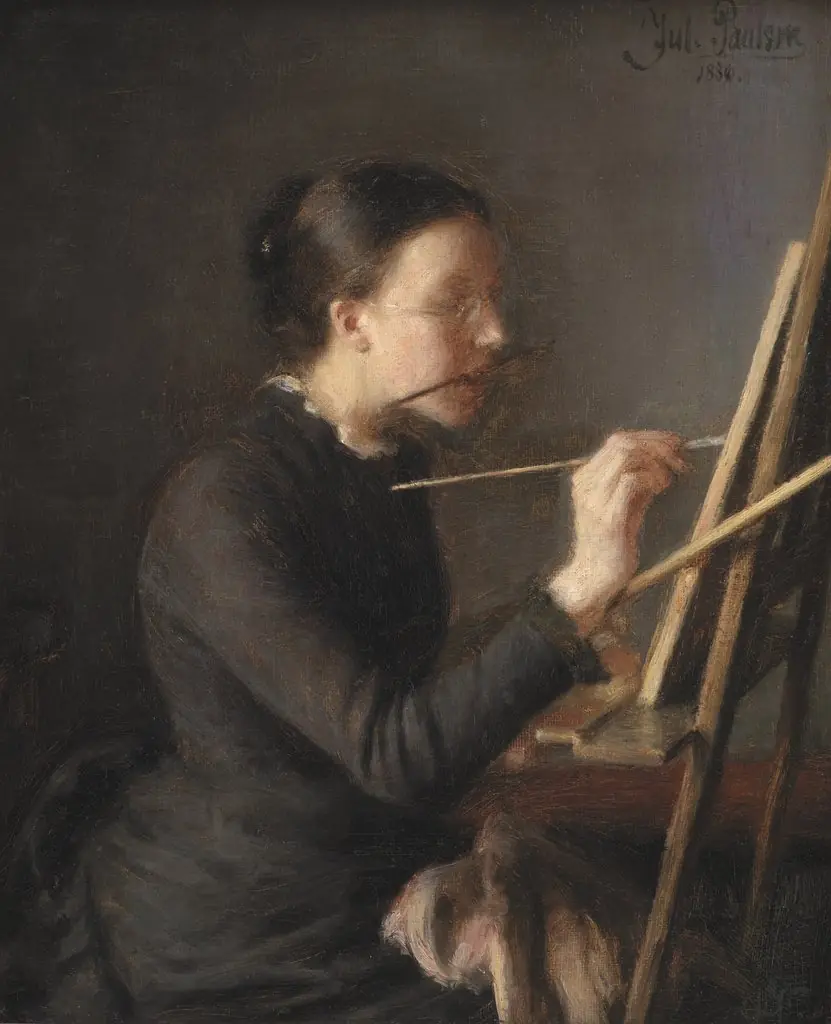 The Painter Agnes Paulsen, the Artist's Sister, at her Easel
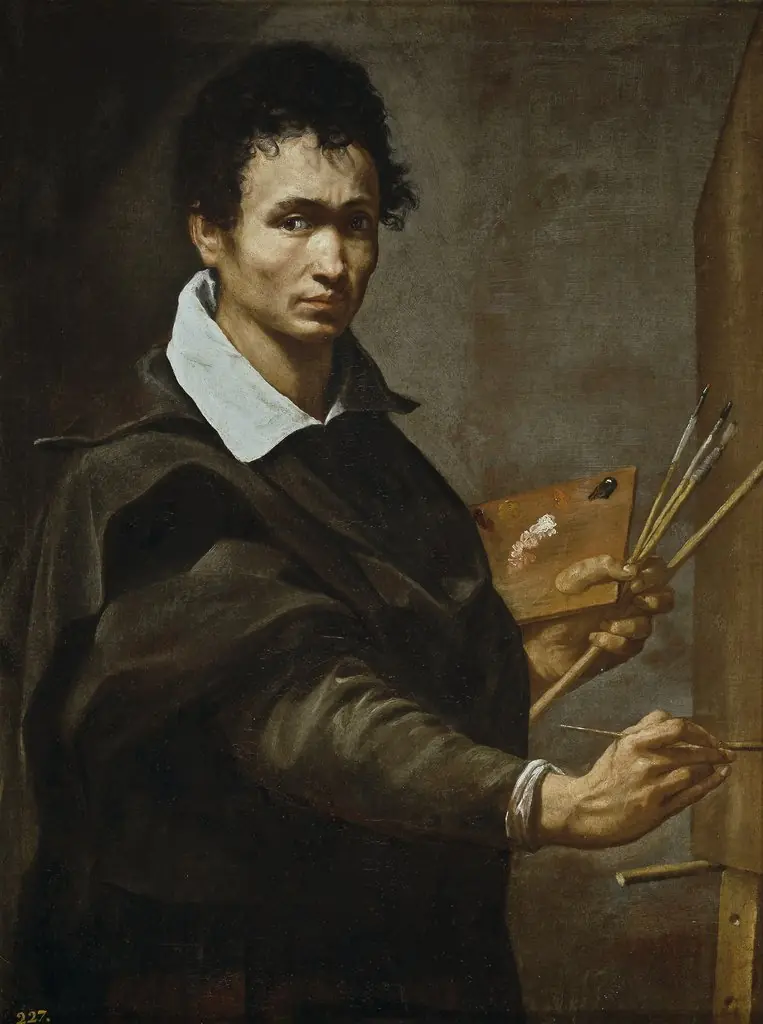 Self-Portrait (¿?)
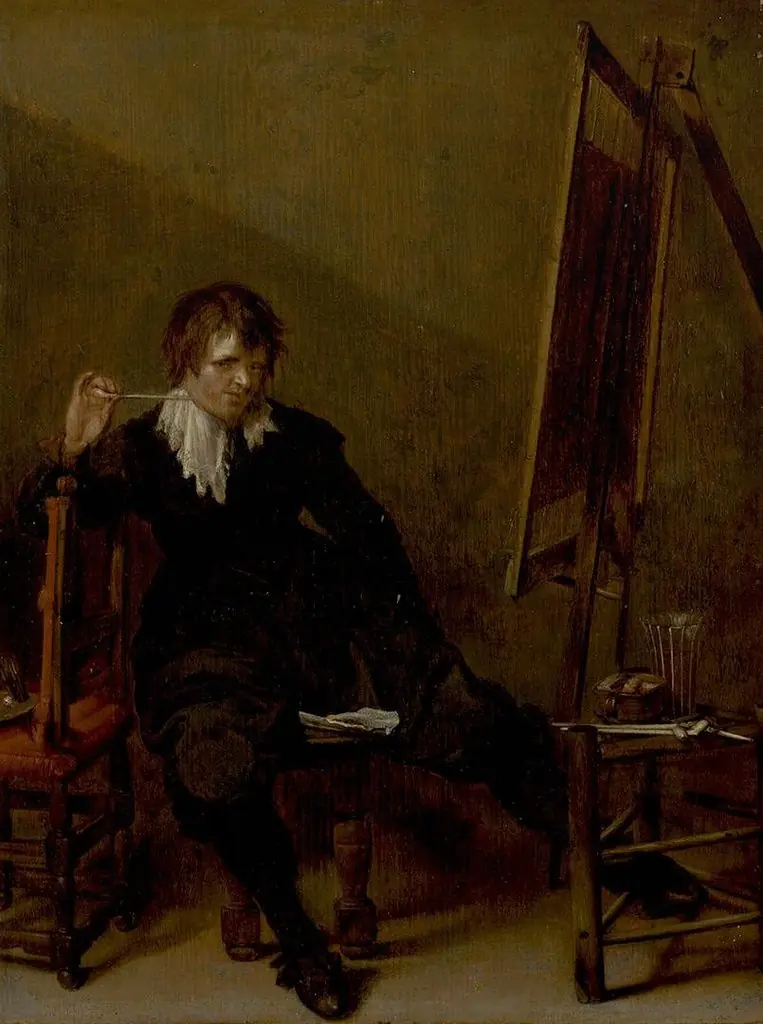 An Artist in Front of the Easel
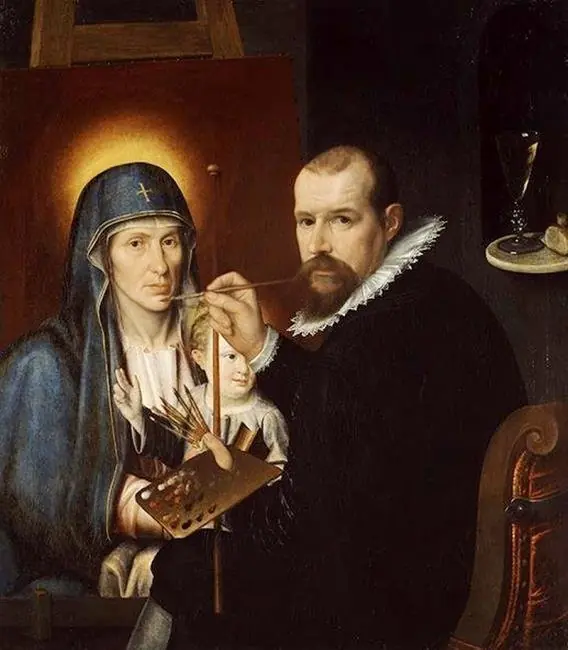 Self portrait at the easel
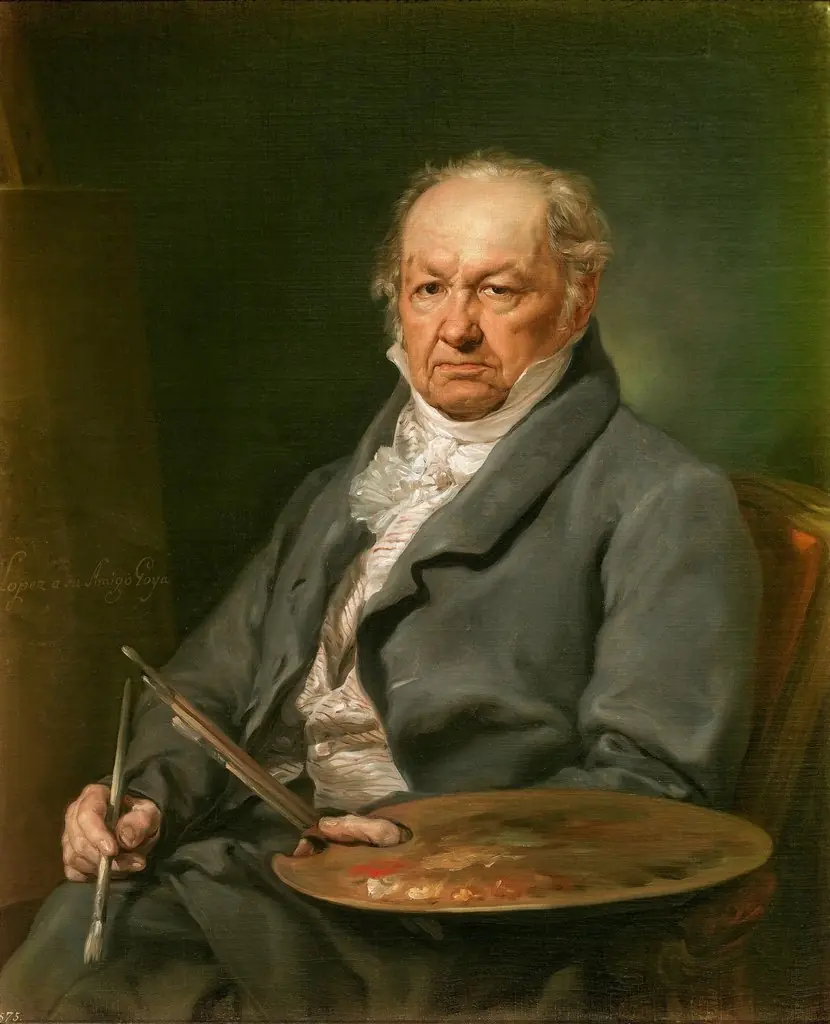 The Painter Francisco Goya
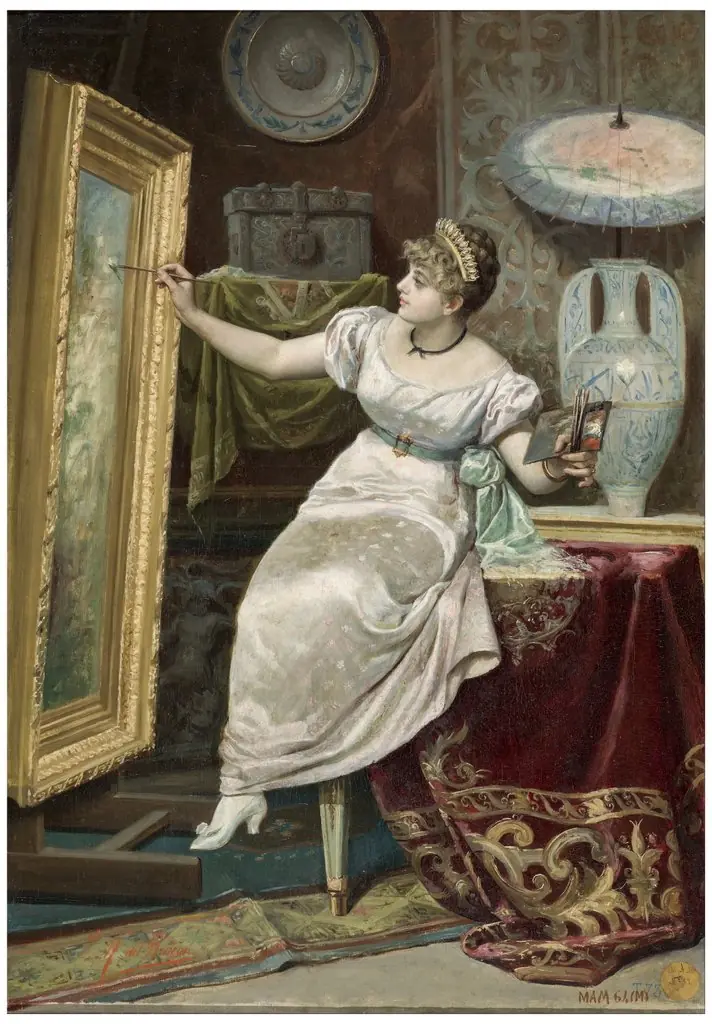 La artista
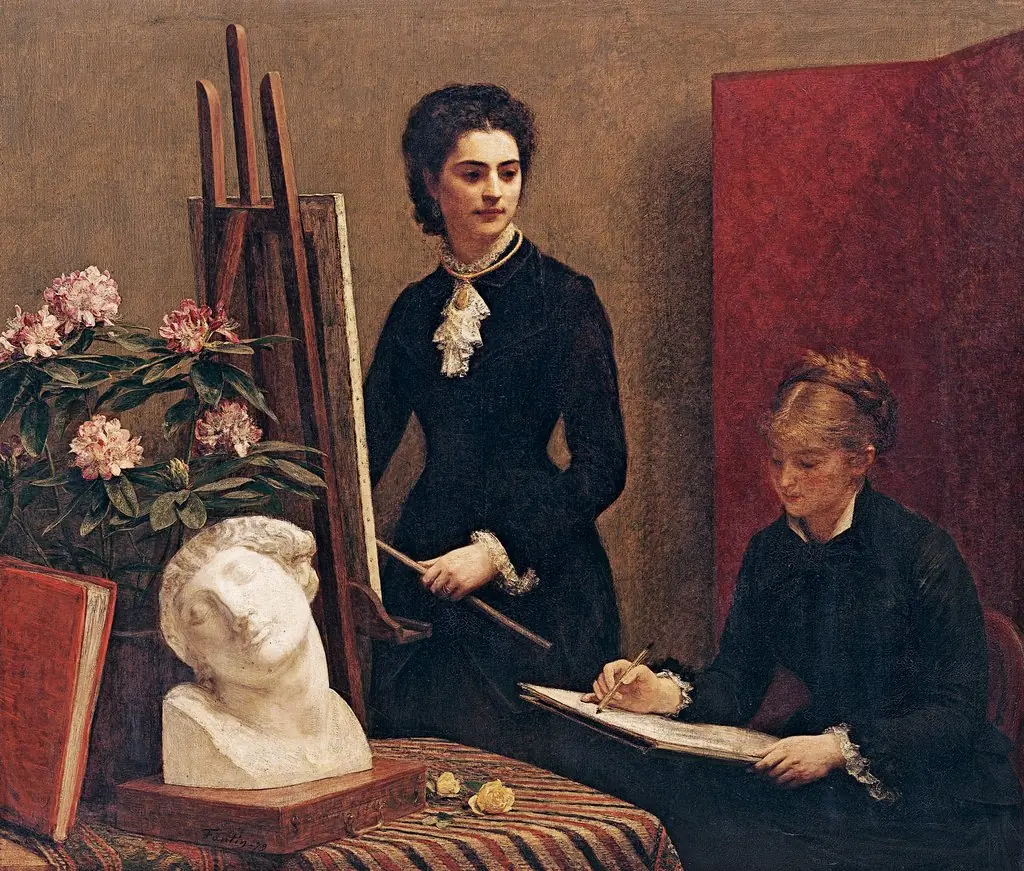 Drawing lesson in the workshop
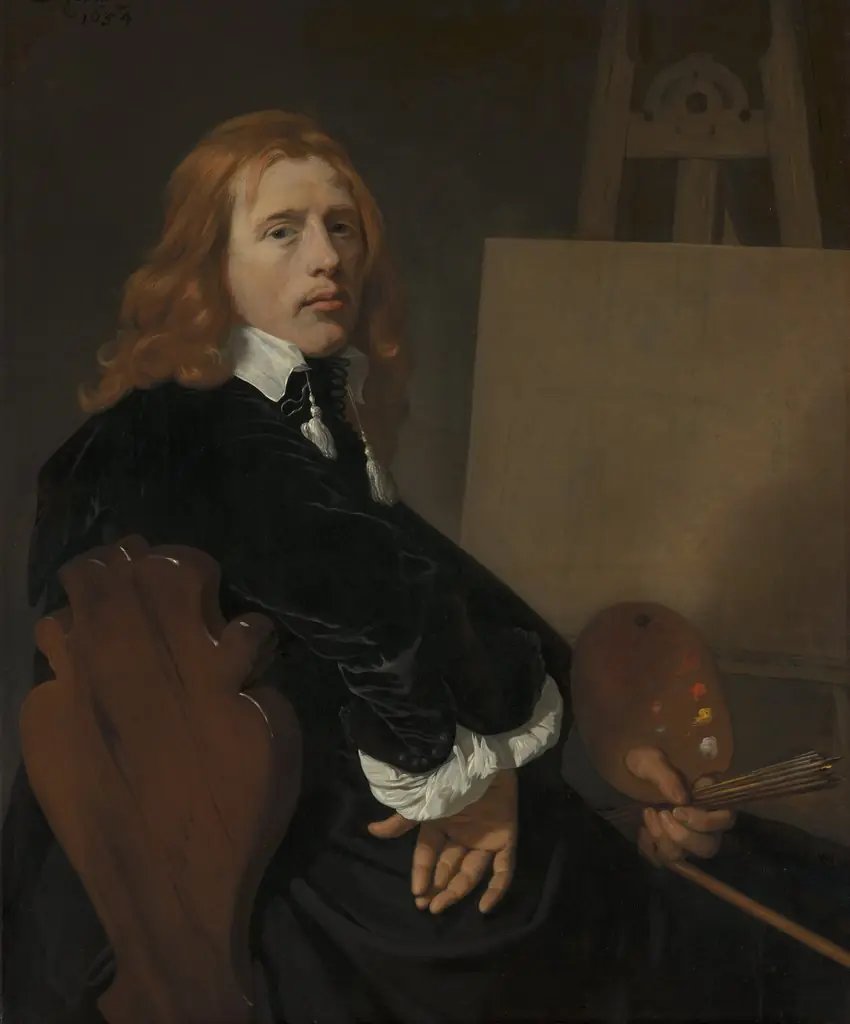 Portrait of Paulus Potter
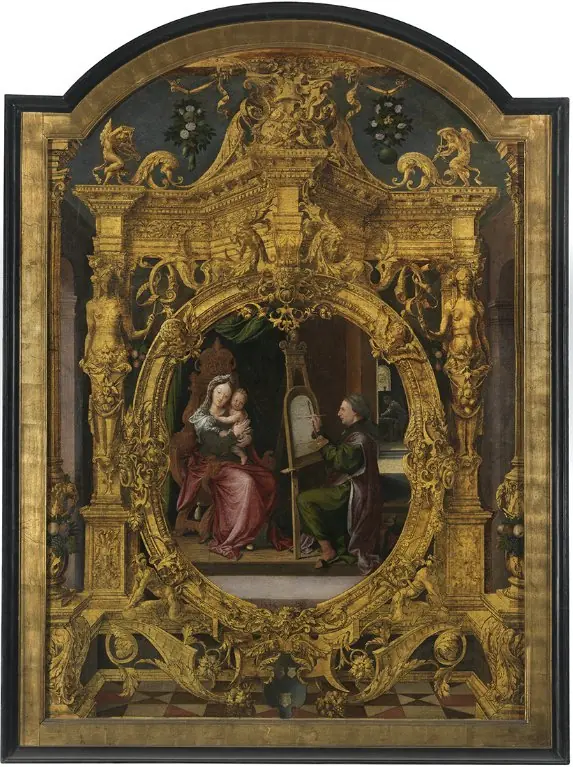 Saint Luke painting the Madonna
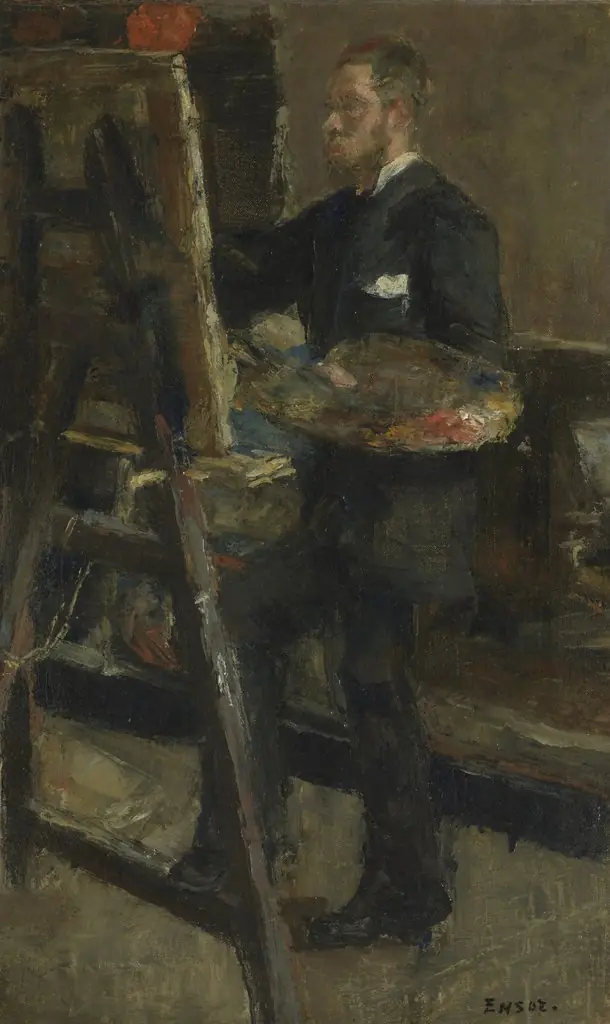 The Painter Alfred William Finch
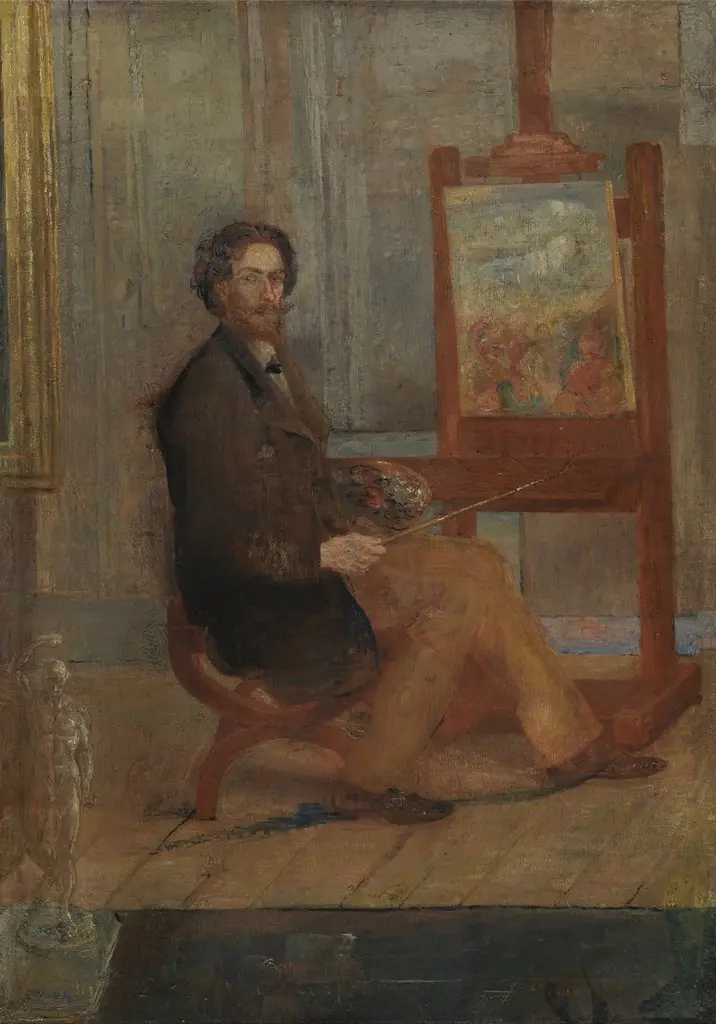 Ensor at his Easel
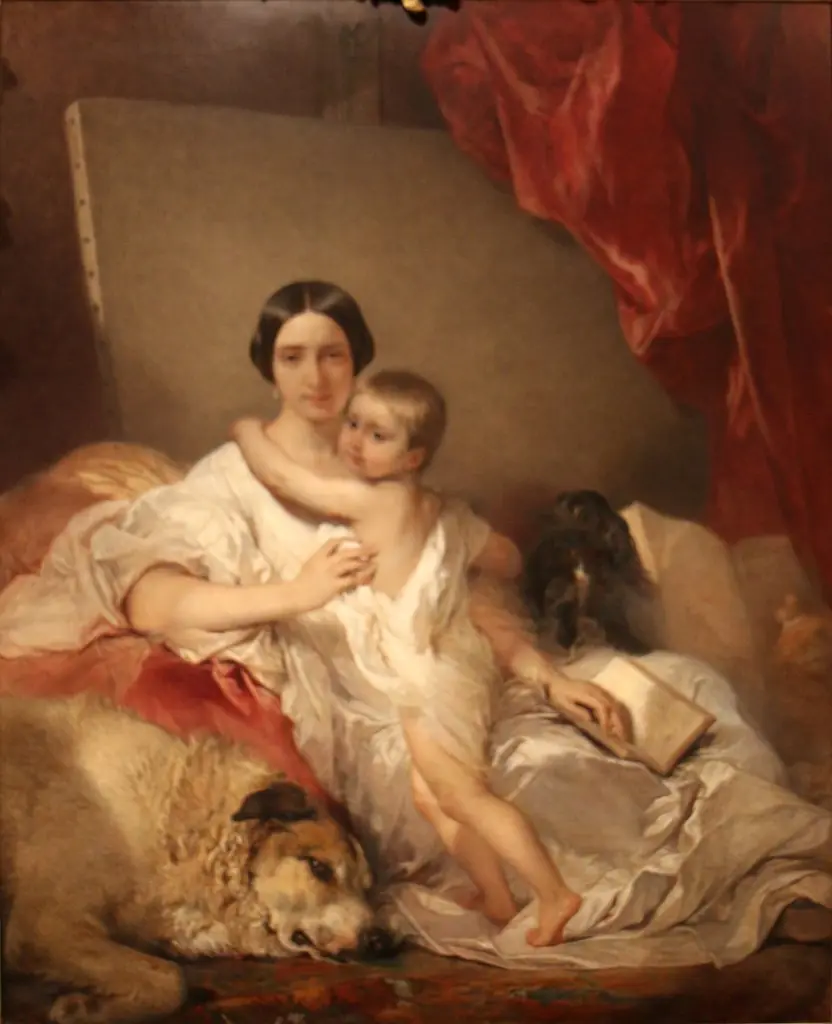 Portrait of Mrs Louis Gallait and her daughter
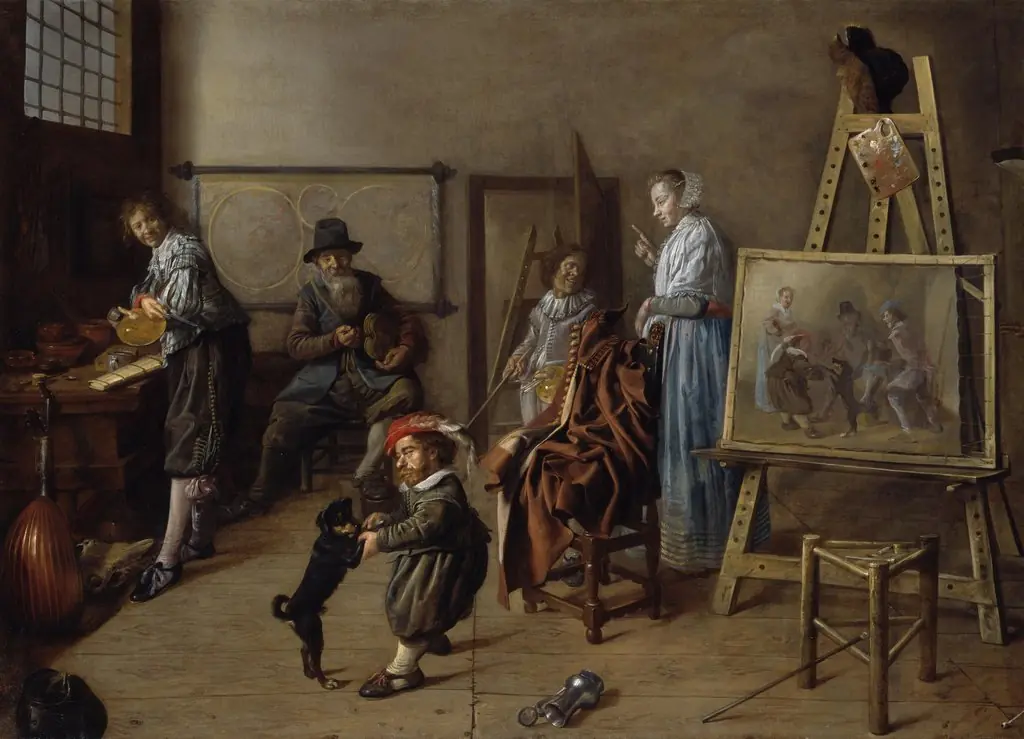 The Artist's Studio
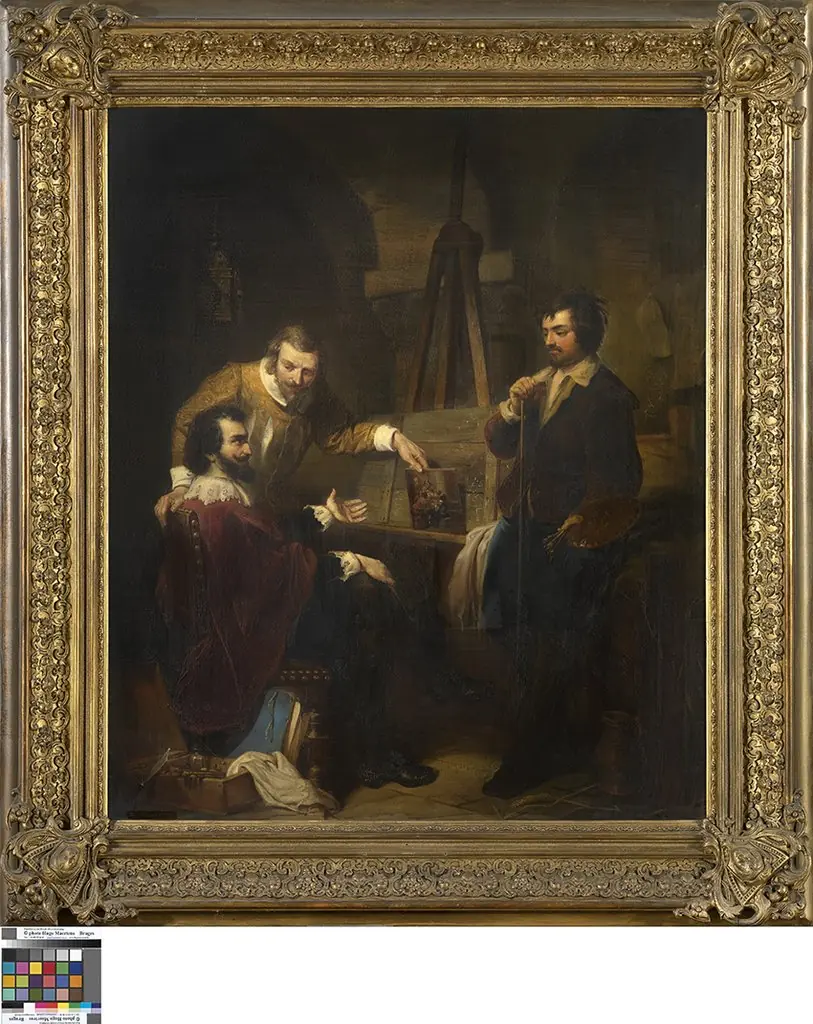 Peter Paul Rubens bezoekt Adriaen Brouwer in de Citadel van Antwerpen
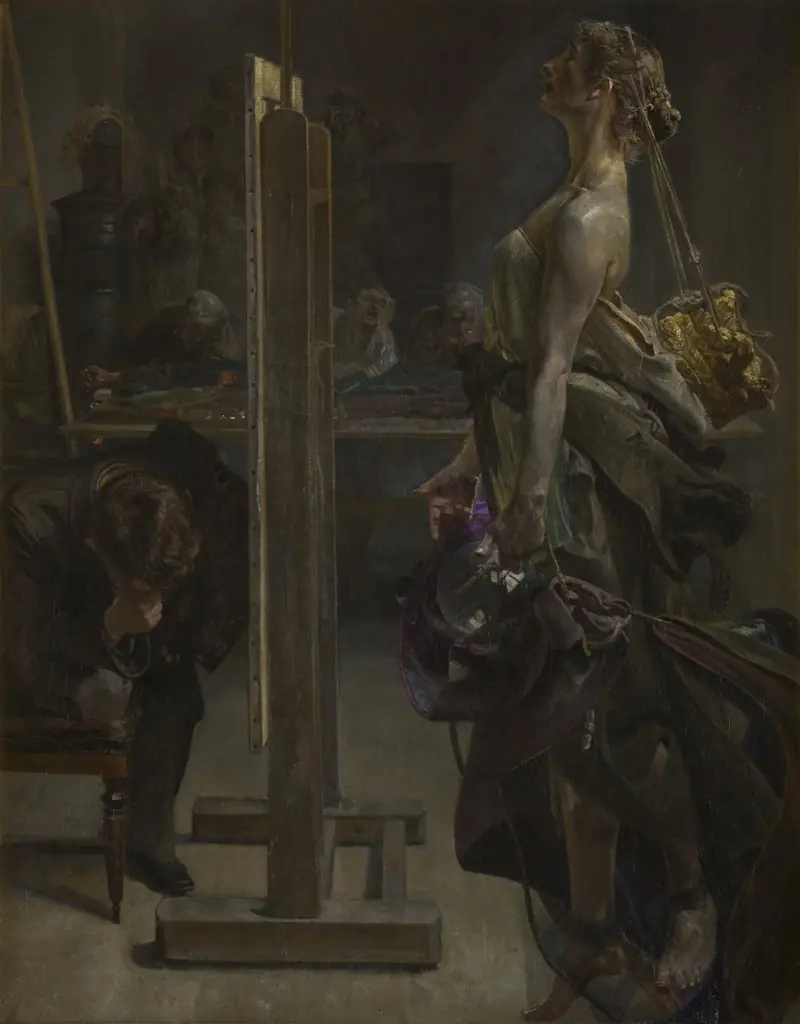 Painter's inspiration
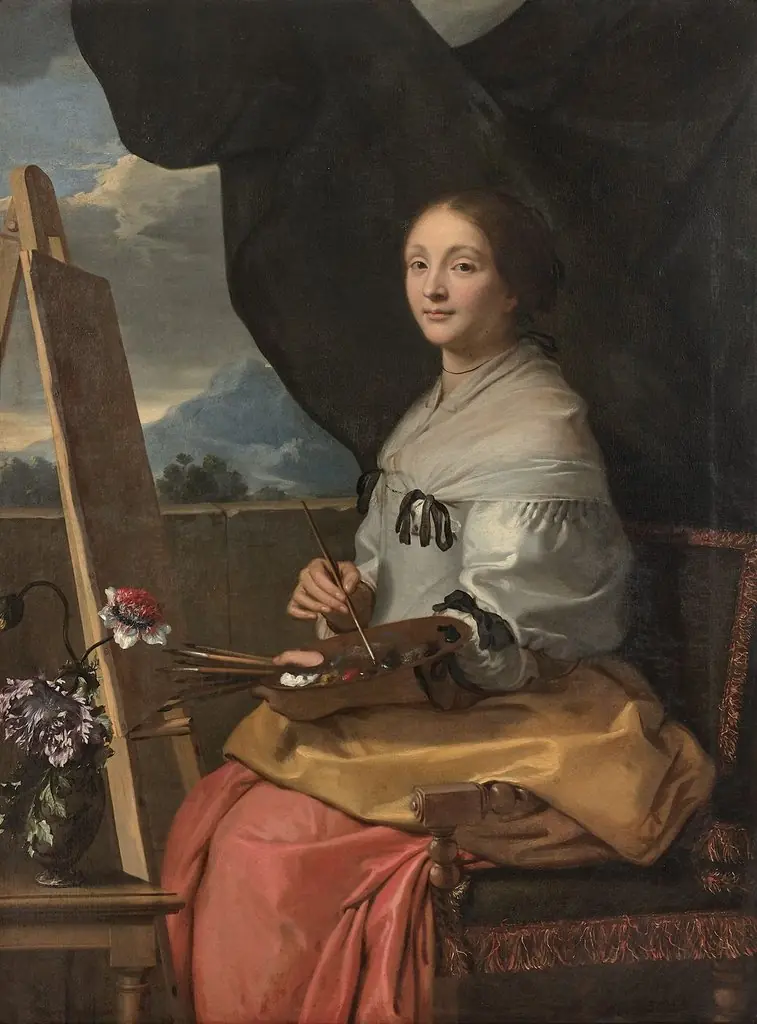 Portrait of Catherine Duchemin
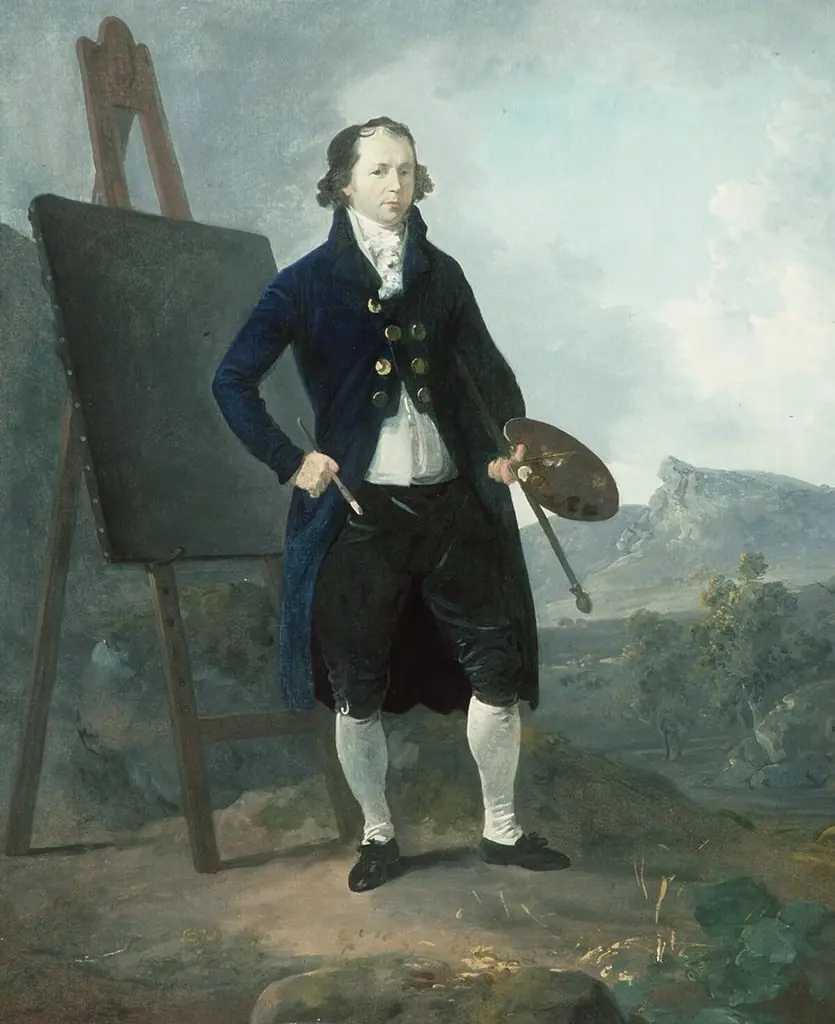 Self portrait of artist in landscape
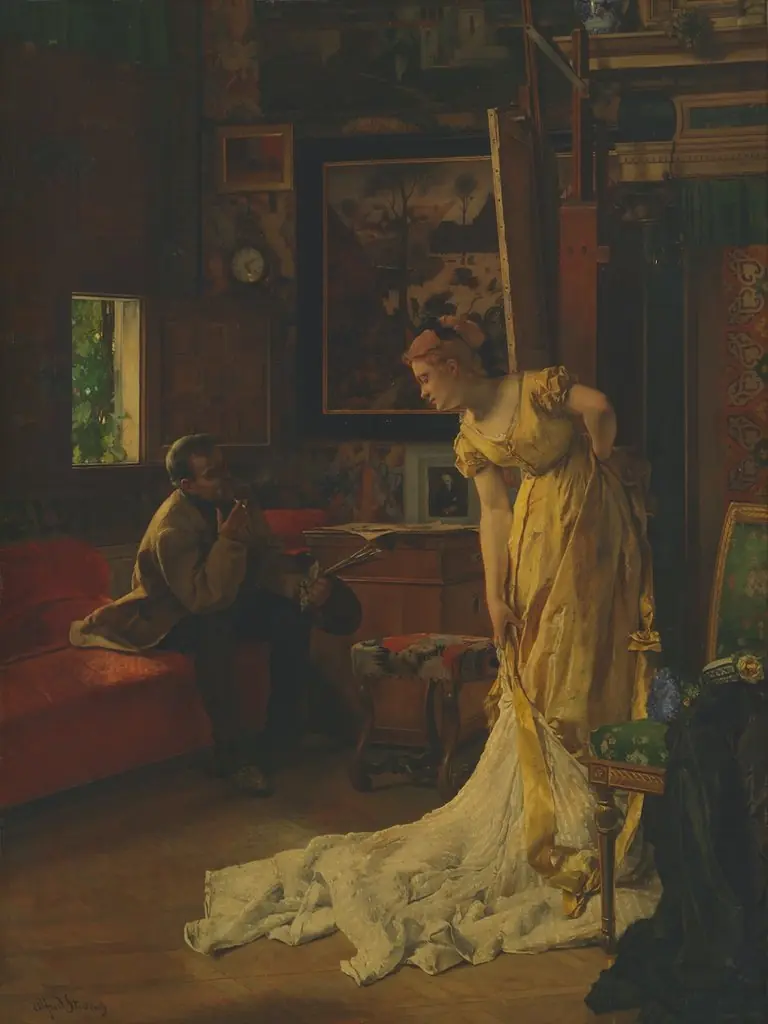 The Painter's Studio
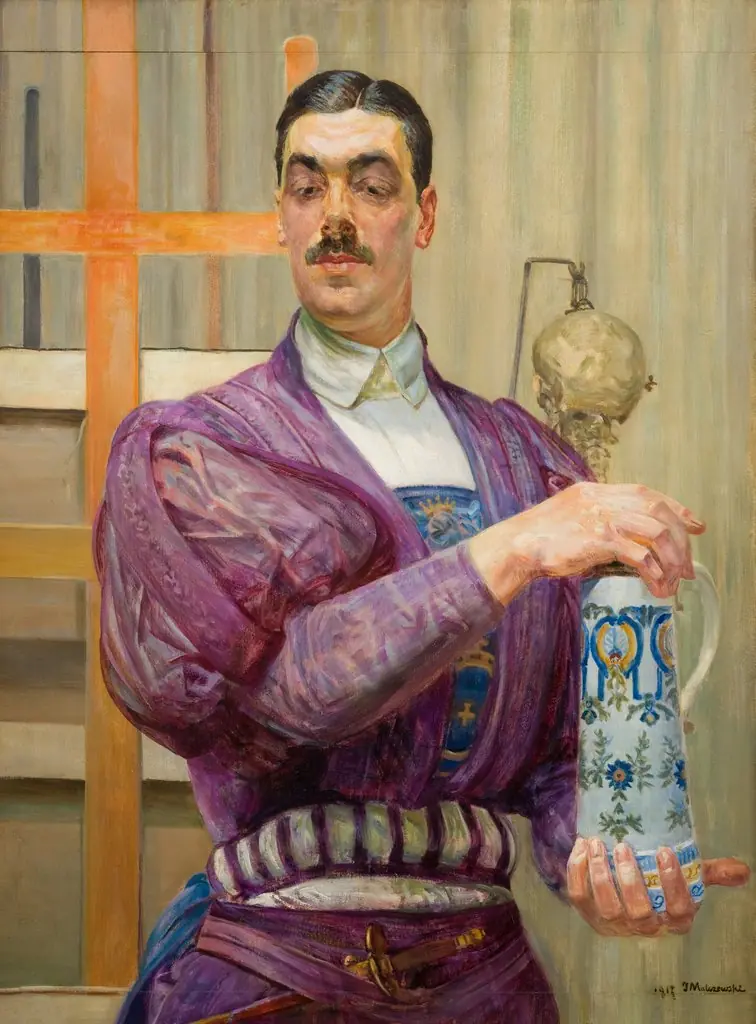 Young Poland
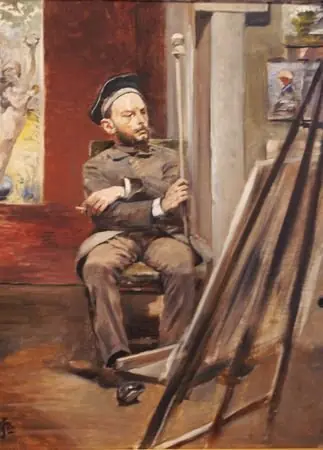 Portrait of Stanisław Tondos
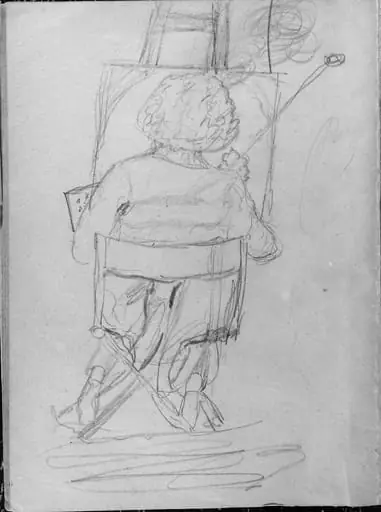 Seated Artist, Viewed from the Rear, Painting at an Easel (from Whistler Album)
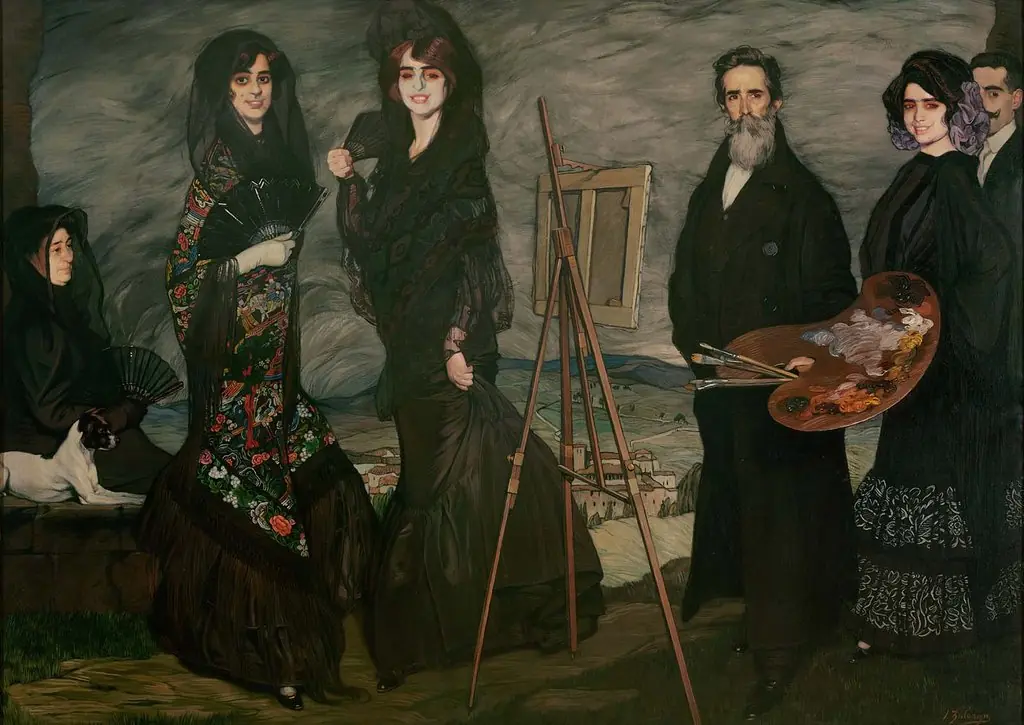 My Uncle Daniel and his Family
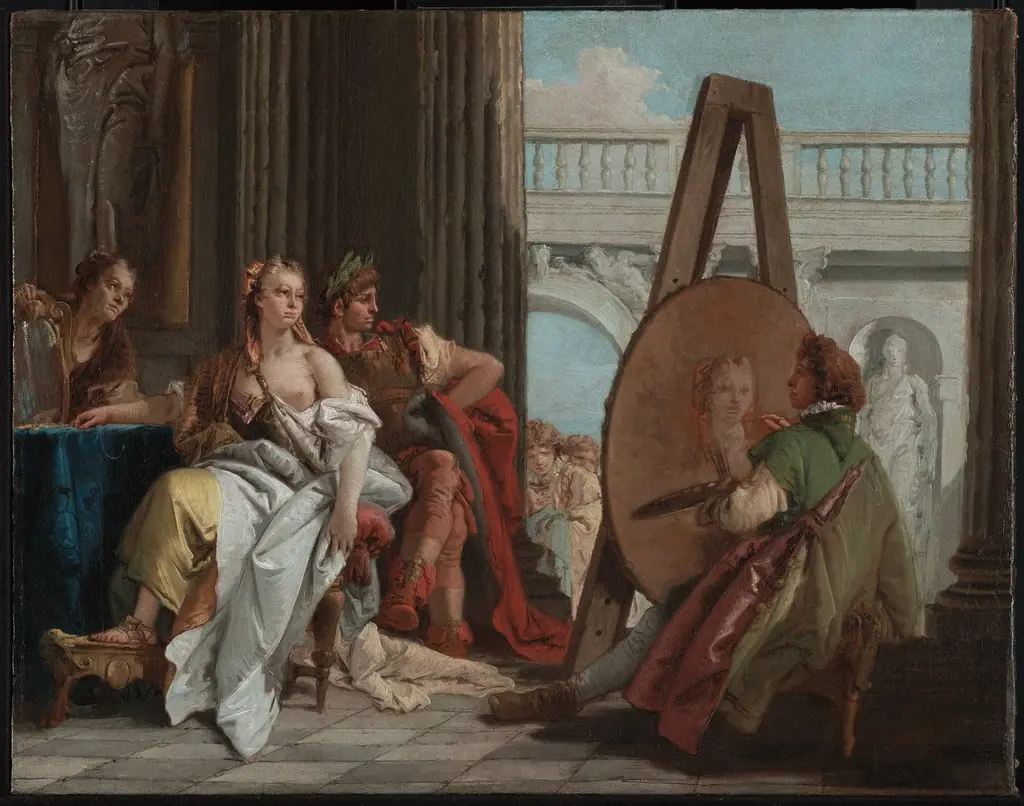 Alexander the Great and Campaspe in the Studio of Apelles
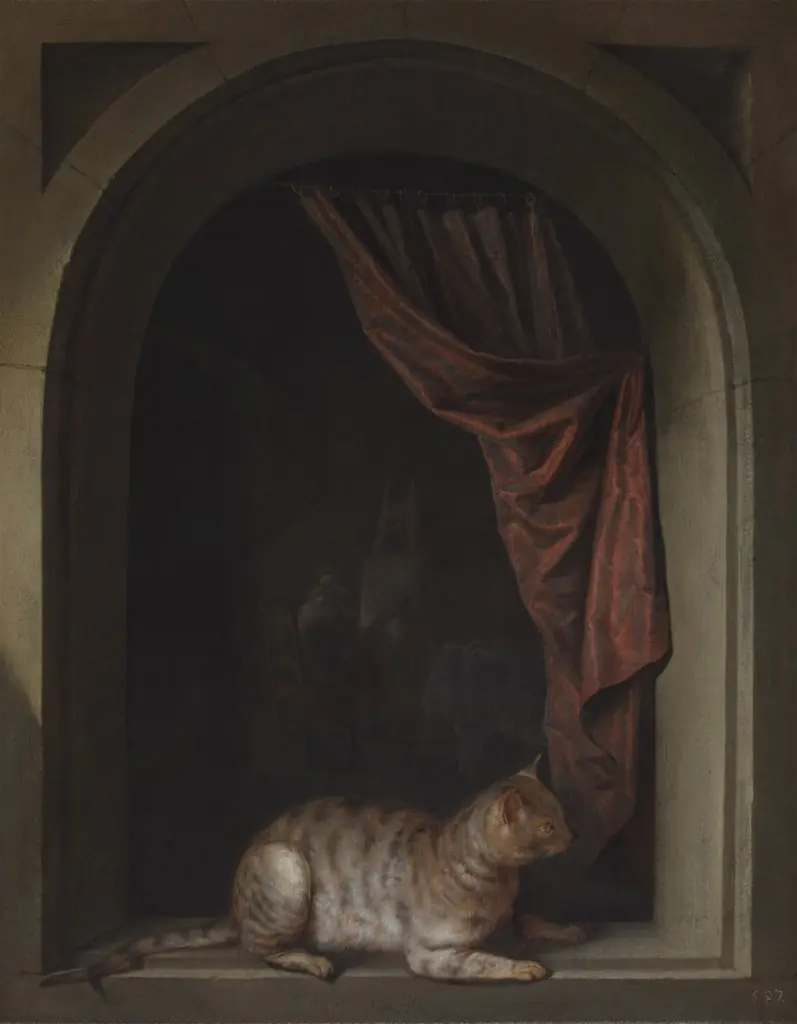 Cat on a Ledge
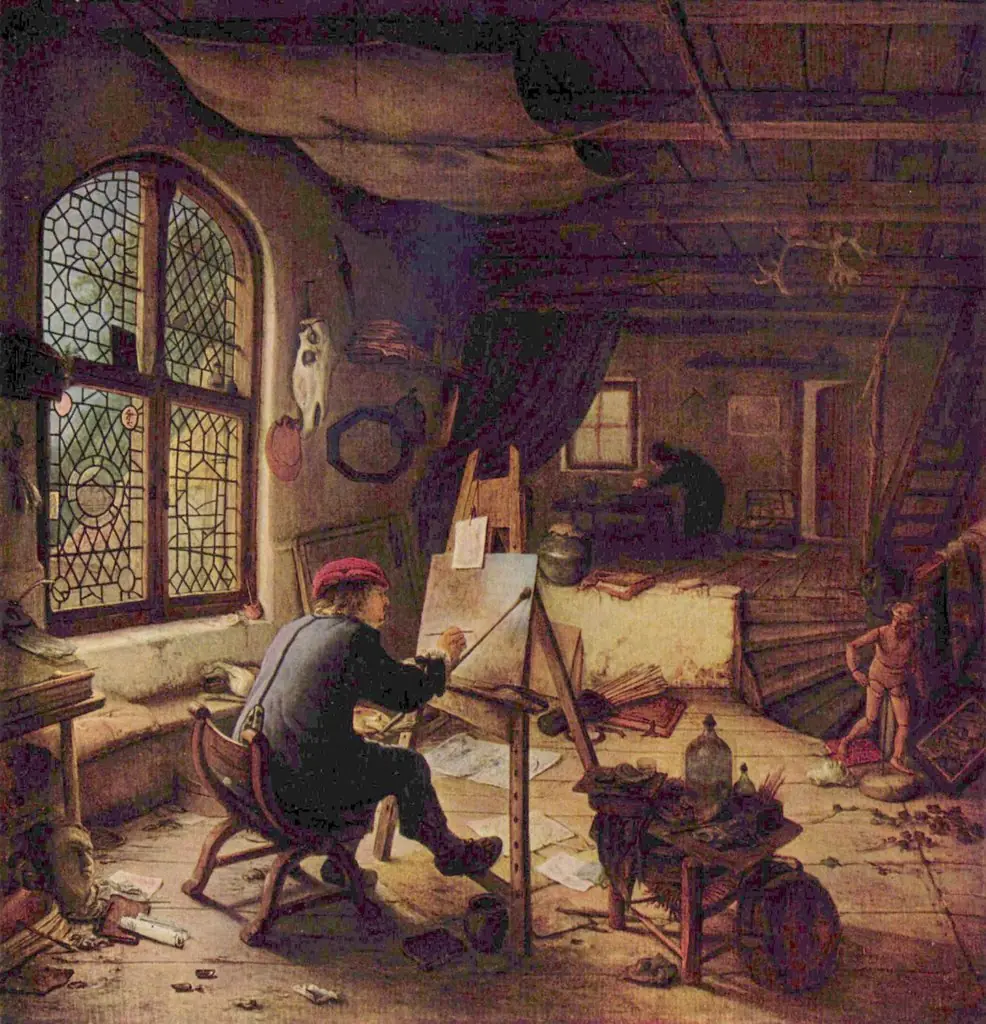 The painter in his studio
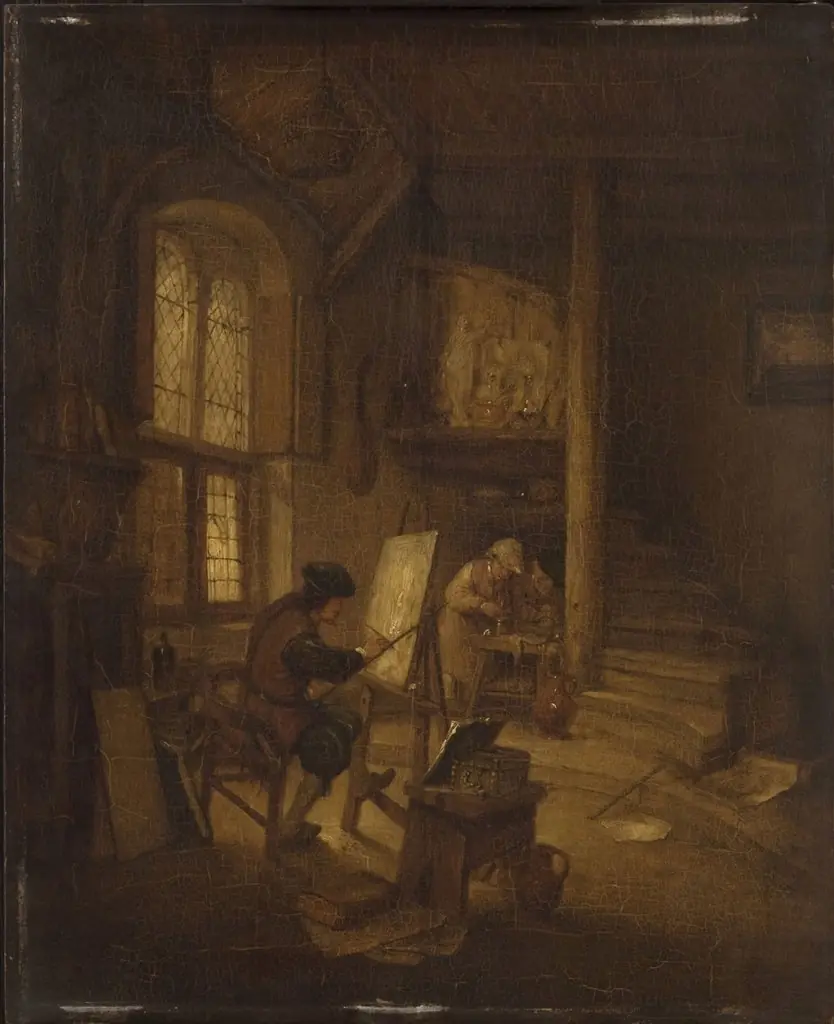 Painter in His Studio
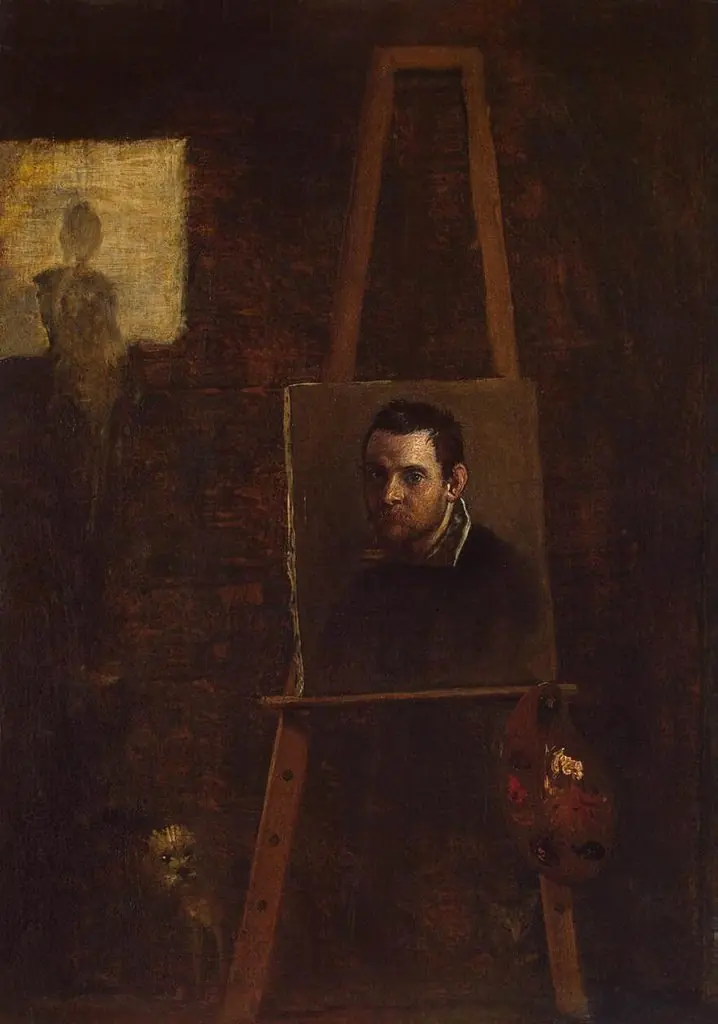 Self-portrait at the Easel
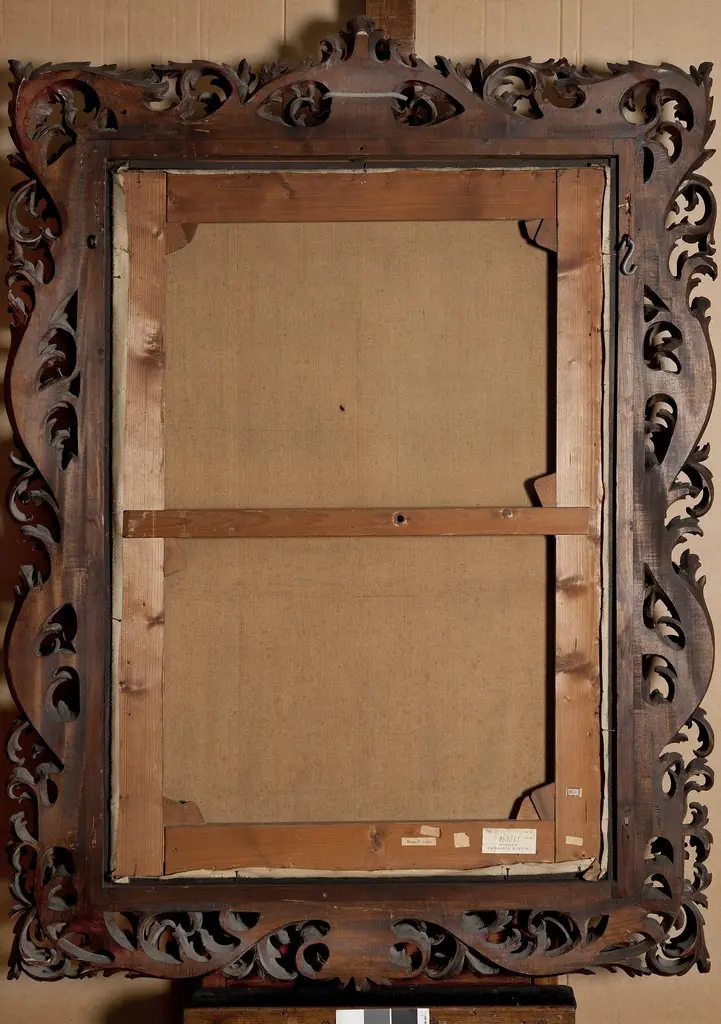 Portrait of Elżbieta de Vaux
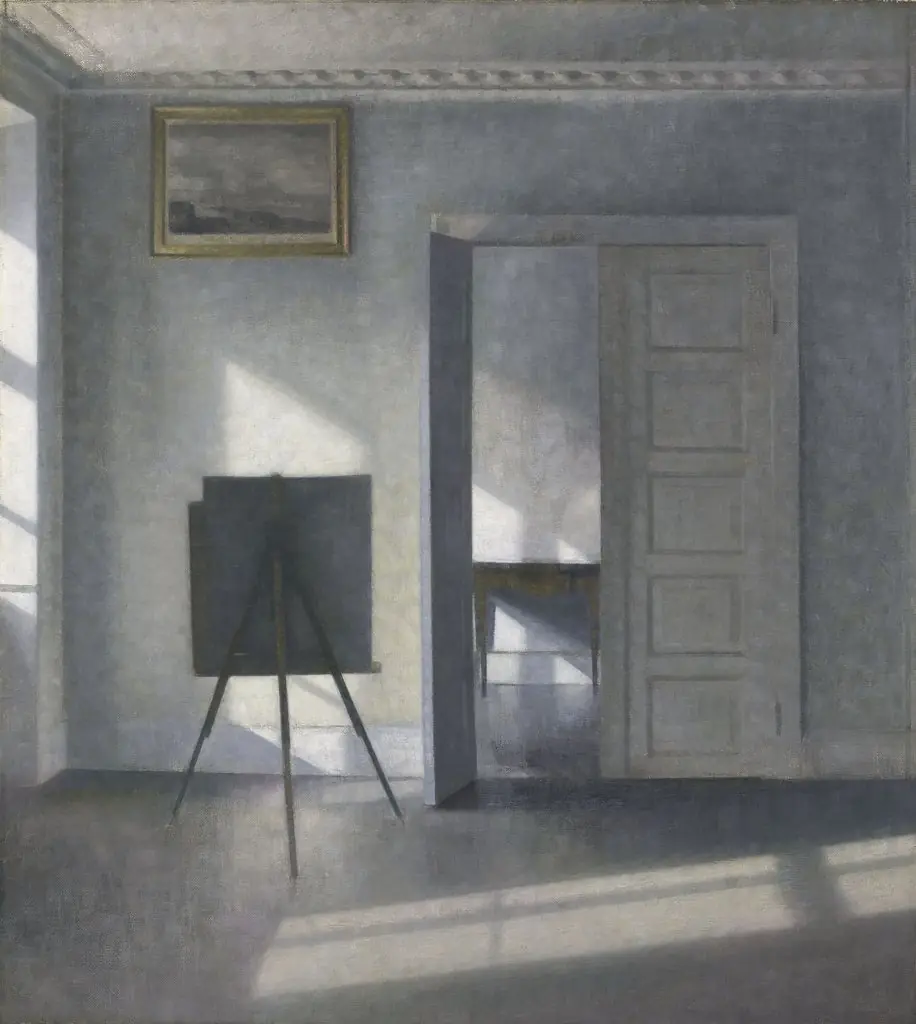 Interior with an Easel, Bredgade 25
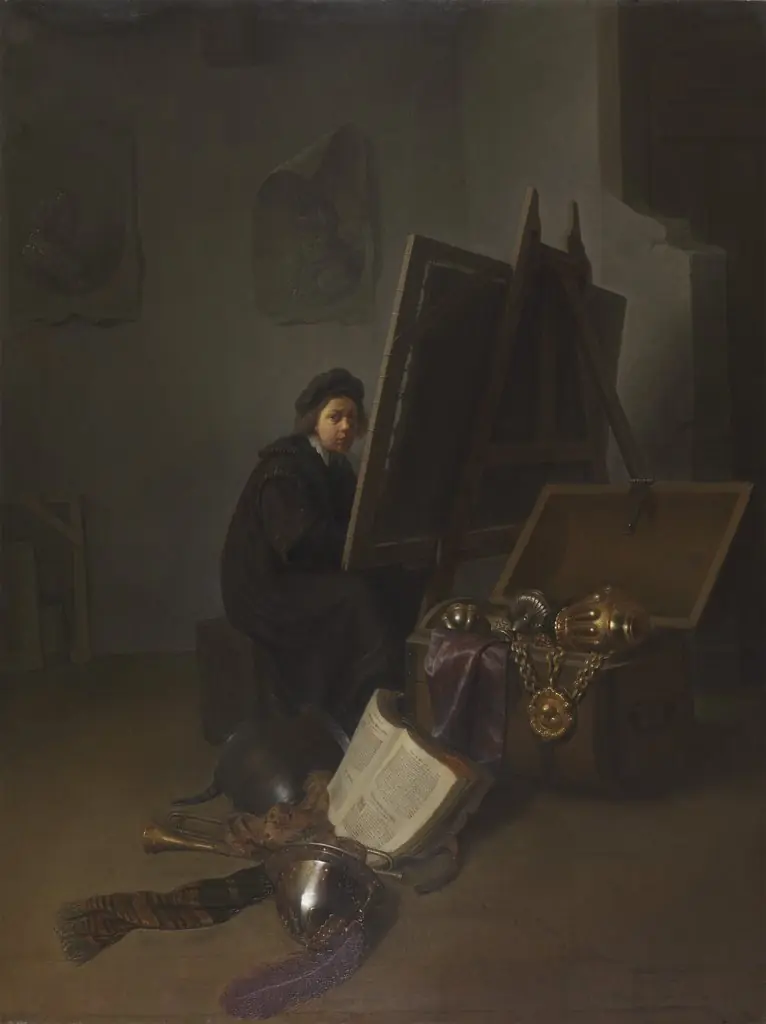 An Artist in his Studio (Self-portrait?)
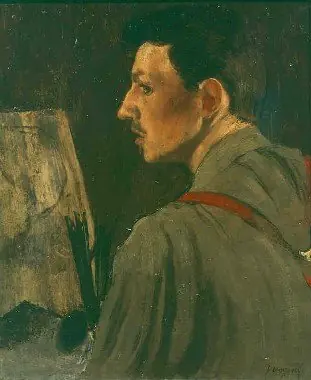 Portret van de kunstenaar met een schildersezel
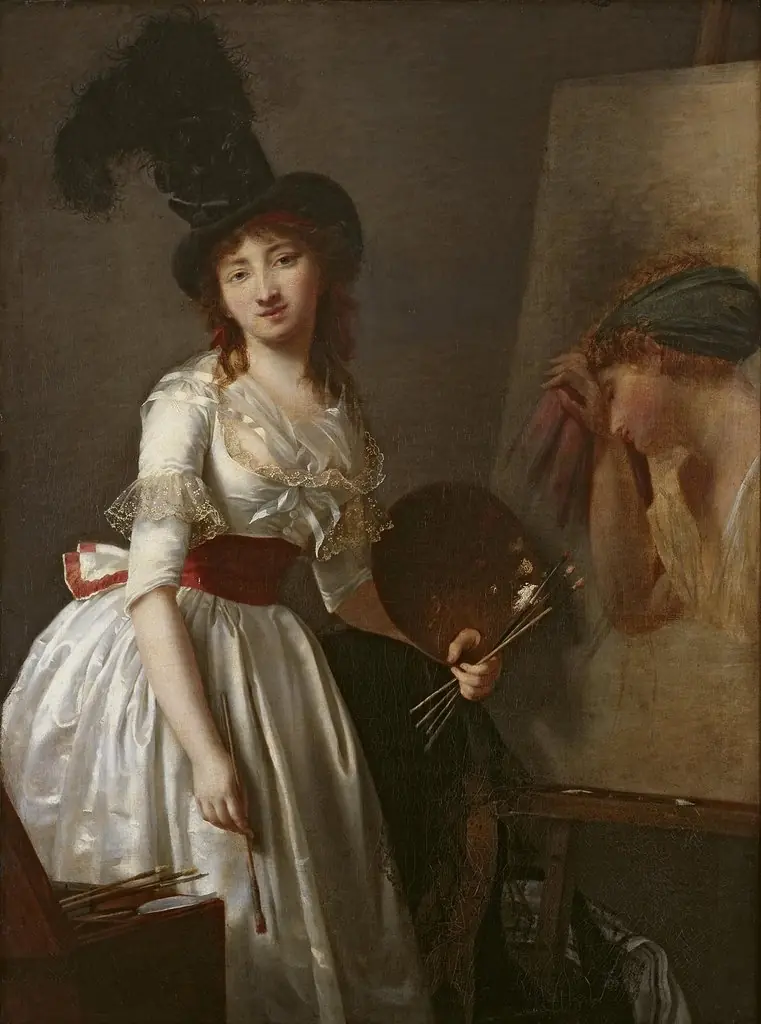 Portrait of a Female Painter, Pupil of David
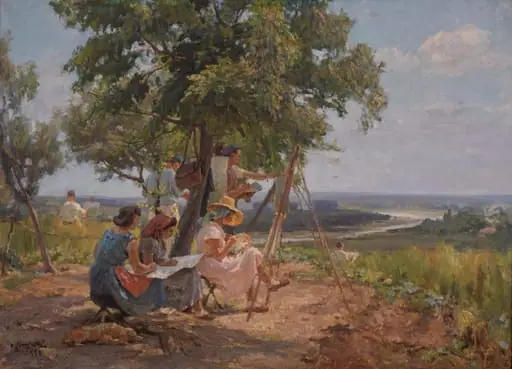 Studenți în practică
 Dealul
 Compoziție 10
 Captivii deltei
 Insulă la Tulcea
 Peisaj 1
 Din deltă
 Peisaj
 Insule la Calica
 Compoziție 8
 Compoziție cu trei ghivece
 Peisaj cu case
 Compoziție – rod
 Drum de țară
 Peisaj din Grecia
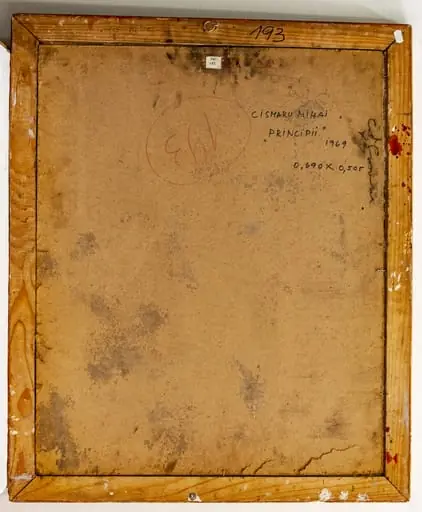 Principii
 Compoziție 5
 Drumuri
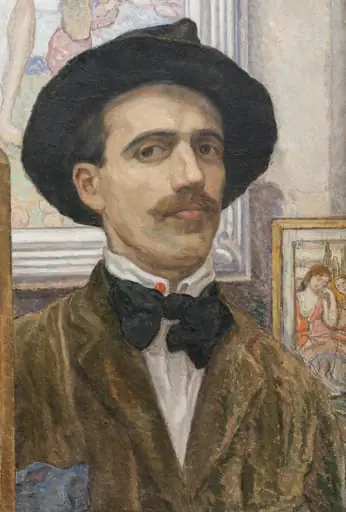 Autoportret
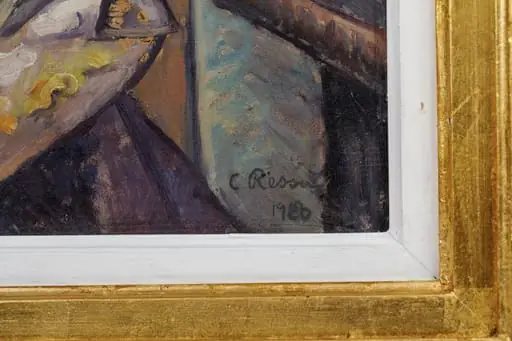 Autoportret
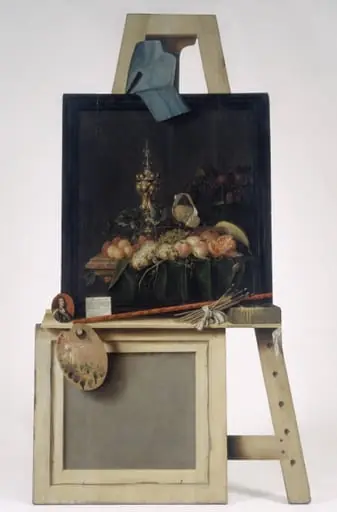 Cut-Out Trompe l'Oeil Easel with Fruit Piece
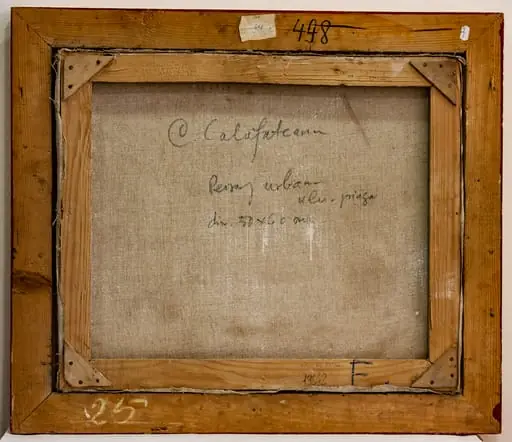 Peisaj urban
 Natură statică
 Peisaj
 Energie II
 Mere
Mere Peisaj 2
 Canal III
 Orfeu
Orfeu Insula Popina
 Curioșii
 Peisaj din Deltă
 Munți dobrogeni
 Peisaj din Balcic
 Peisaj
 Copaci
 Plantă exotică și păsări în vas galben
 Peisaj cu turn
 Peisaj dobrogean
Frequently asked questions
What is Easel?
Easel is a subject in art. An easel is an upright support used for displaying and/or fixing something resting upon it, at an angle of about 20° to the vertical.
How many Easel works does Artifact World Gallery have?
Artifact World Gallery holds 95 public-domain Easel works, all free to view and download.
Who are the key Easel artists?
Key Easel artists in the collection include Thomas Cole, Edgar Degas and Matthew Pratt.
Where can I see Easel works?
Easel works in the collection are held by Gavrila Simion Eco-Museum Research Institute Tulcea, Metropolitan Museum of Art and Museo del Prado.