Artwork
A Seller of Feather Dusters
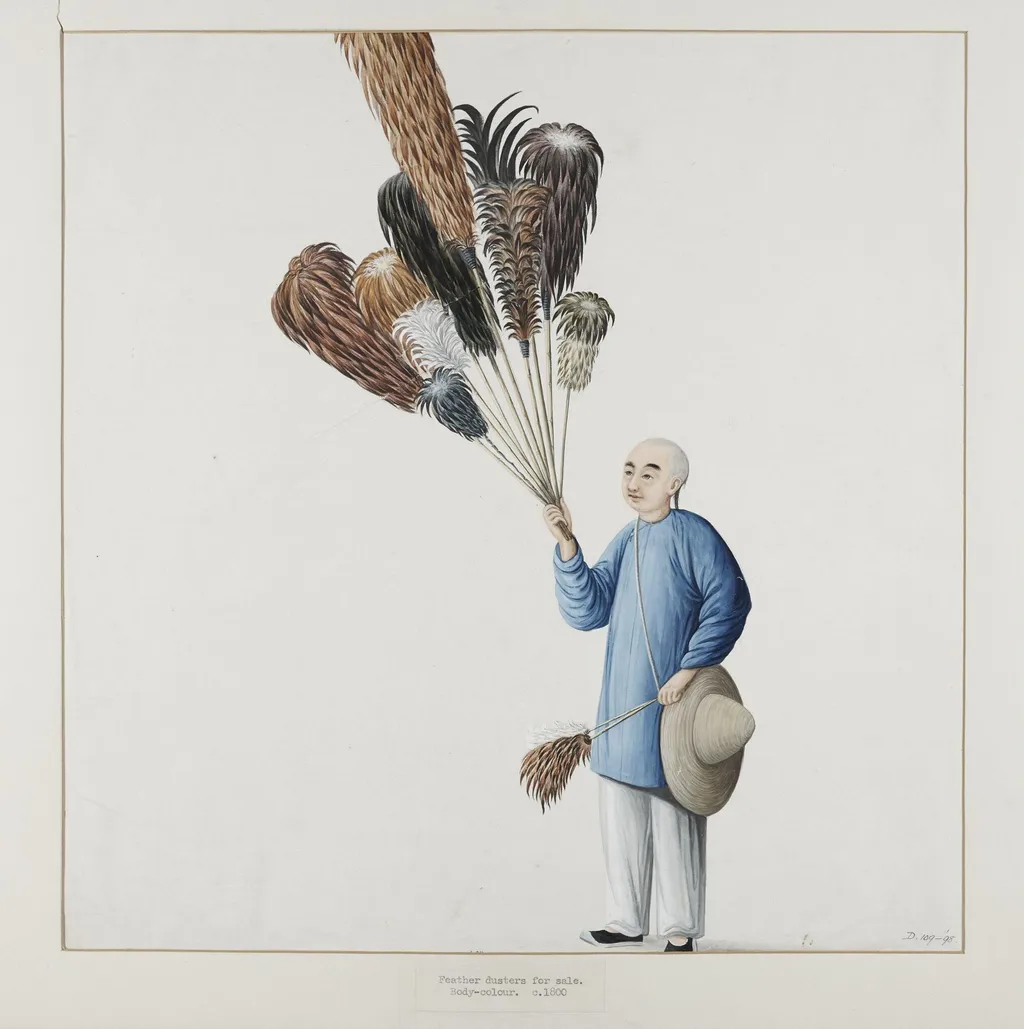
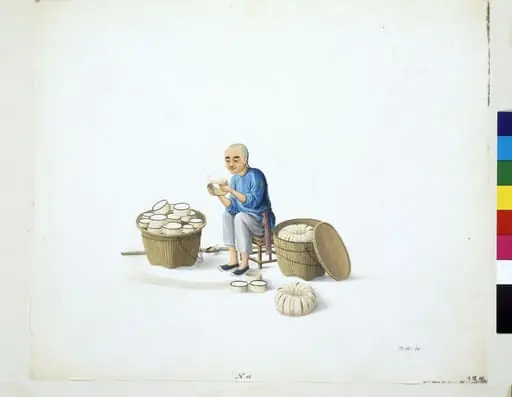
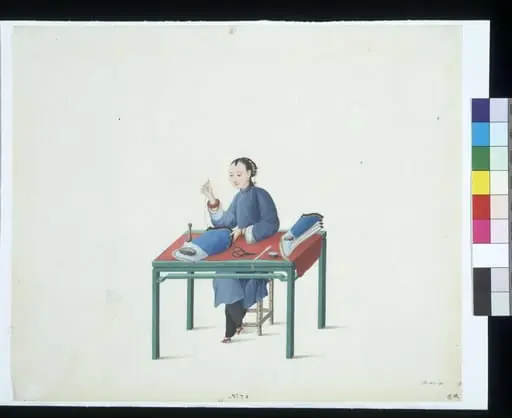
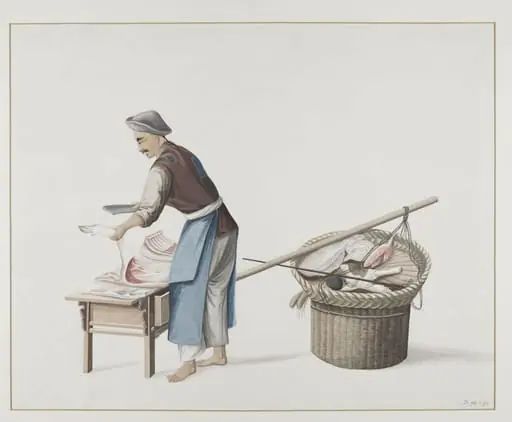
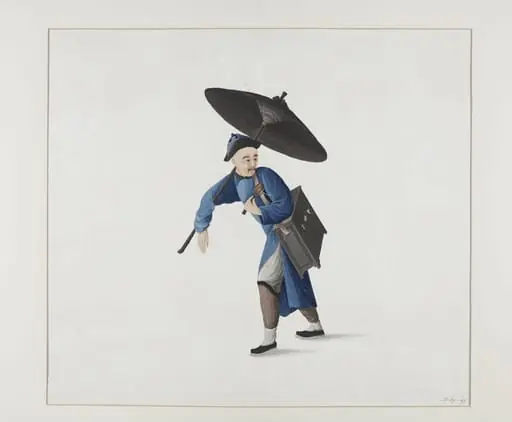
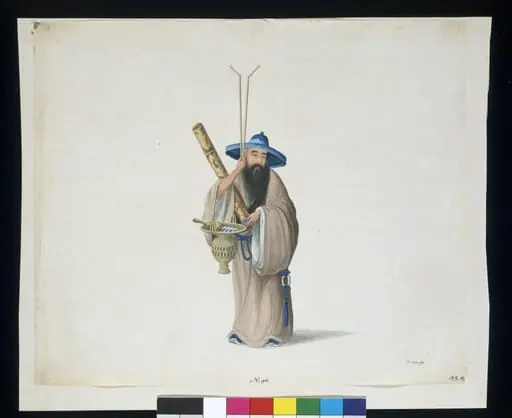
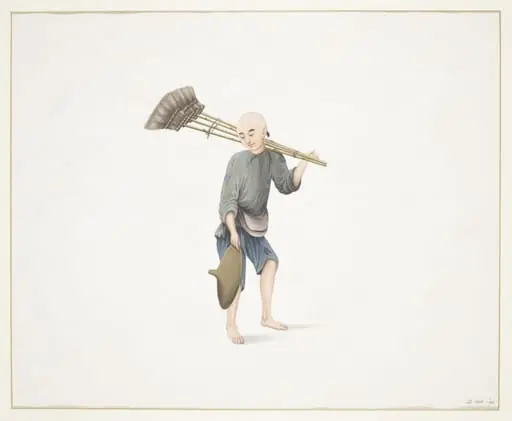
A Seller of Feather Dusters is a paint painting by the Patna School of Painting artist Puqua. It dates from 1790 and is held in the collection of the Victoria and Albert Museum. This watercolor painting, dated 1790, is one of a hundred works documenting occupational life in Canton during the late Qing period.
About this work
Overview
It was acquired by Parsons & Sons and entered the museum’s collection in 1898, following verification through 2022 provenance research.
This watercolor painting, dated 1790, is one of a hundred works documenting occupational life in Canton during the late Qing period. Executed by the artist Puqua, it portrays a street vendor engaged in the sale of feather dusters. The piece is rendered in modest pigments with clear outlines, reflecting a documentary rather than decorative intent.
It was acquired by Parsons & Sons and entered the museum’s collection in 1898, following verification through 2022 provenance research.
Subject & Meaning
The central figure is a vendor dressed in a simple blue robe, carrying a bundle of feather dusters over one shoulder. In his other hand, he holds a straw hat and a small broom, suggesting his dual role as both seller and cleaner. The inscription 'Feather dusters for sale' in careful script confirms the commercial context.
The image captures the quiet dignity of urban labor, presenting trade as an ordinary, visible part of daily life.
Technique & Style
Rendered in watercolor, the painting uses restrained tones and precise linear forms. The feathers are rendered in distinct clusters of black, brown, and white, their texture suggested through grouped strokes rather than detailed shading. The background is left largely empty, focusing attention on the vendor and his wares. The style is unadorned, prioritizing clarity and recognition over artistic flourish.
History & Provenance
The painting was part of a commissioned series illustrating Cantonese trades, likely produced for export or local documentation. It passed into the hands of Parsons & Sons before being formally accessioned into the museum’s collection in 1898. Its attribution and origin were confirmed in 2022 through archival research, which traced its entry into the Asia Department’s records and established its place within the broader set of occupational studies.
Context
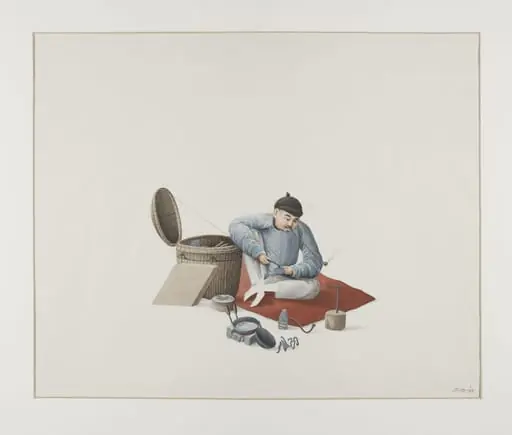
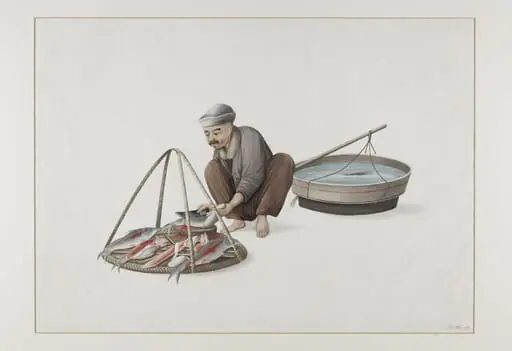
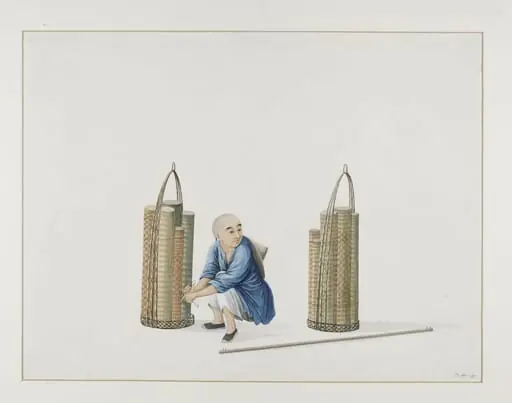
This work belongs to a larger group of one hundred paintings created to catalog the diverse trades of Canton, a major port city with active foreign trade. Such series were often compiled for Western collectors or officials interested in Chinese society. They reflect an early form of ethnographic documentation, capturing the material culture and labor practices of a bustling commercial hub during the late 18th century.
Legacy
The painting remains a quiet testament to the visibility of labor in pre-modern Chinese urban life. As part of a rare surviving set, it contributes to the study of economic history and visual representation in late Qing China. Its preservation allows ongoing examination of how trade and identity were visually encoded for both local and international audiences.
Own this work as a print
Artist & collection