Artwork
The provinces of Brabant, Hainaut and Flanders pay homage to the Virgin
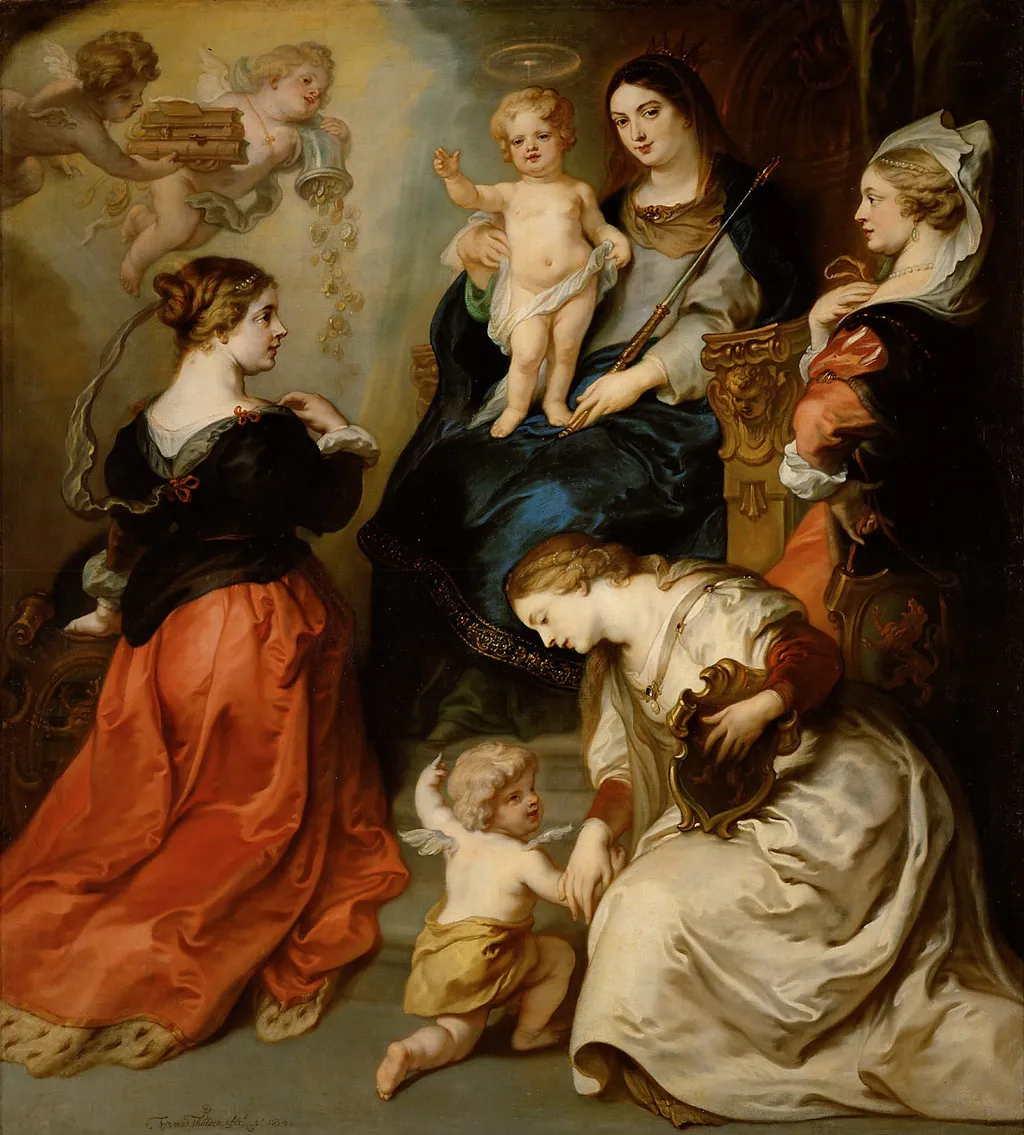
The provinces of Brabant, Hainaut and Flanders pay homage to the Virgin is an oil painting by Theodoor van Thulden. It dates from 1654 and is held in the collection of the Kunsthistorisches Museum.
About this work
Technique & Style
The canvas support and oil medium would have allowed for the layered glazing and refined modeling characteristic of his collaborative projects of this period.
The work is an oil painting executed on canvas, a standard support for mid-17th-century Flemish religious commissions. According to the catalogued record, the canvas measures 197 cm in height by 177 cm in width, indicating a large, vertically oriented format suited to an allegorical or devotional subject. The medium is identified as oil paint, and the work is classified as a painting within the religious genre.
Stylistically, it belongs to the Flemish Baroque tradition associated with Theodoor van Thulden, whose handling in such allegorical compositions typically combined classical figural arrangement with emblematic iconography. The canvas support and oil medium would have allowed for the layered glazing and refined modeling characteristic of his collaborative projects of this period.
History & Provenance
The painting was created in 1654 by Theodoor van Thulden, executed in oil paint on canvas. Its subject depicts the provinces of Brabant, Hainaut, and Flanders paying homage to the Virgin, with the Virgin Mary and Christ Child as the central figures.
The work has been held in the collection of the Kunsthistorisches Museum, where it remains located. No further details regarding its commission, intermediate ownership, or acquisition history are documented in the available sources.
Context
The painting titled The provinces of Brabant, Hainaut and Flanders pay homage to the Virgin was created in 1654 by Theodoor van Thulden. Executed in oil on canvas, it measures 197 cm in height and 177 cm in width, and depicts the Virgin Mary with the infant Christ Child. The work is housed in the collection of the Kunsthistorisches Museum, where it is classified as a religious painting.
Scholars have examined its iconographic program within the broader context of 17th-century Flemish devotional art, noting its significance as a tribute to the Virgin by the provinces of Brabant, Hainaut, and Flanders. The painting’s composition and execution reflect the stylistic conventions of the period while demonstrating van Thulden’s mastery of religious subject matter.
Legacy
The painting's influence is noted through its enduring presence in museum collections and scholarly discourse. Van Thulden's work remains part of major European art surveys, including exhibitions at the Kunsthistorisches Museum where it is housed. Its depiction of the Virgin Mary continues to attract attention in studies of 17th-century religious art, reflecting sustained academic interest.
Overview
This 17th-century oil painting, created by Theodoor van Thulden in 1654, portrays a devotional scene where the provinces of Brabant, Hainaut, and Flanders pay homage to the Virgin Mary and the Christ Child.
Subject & Meaning
At the painting's core is the Virgin Mary, centrally positioned and holding the Christ Child, surrounded by representatives from the three provinces, depicted as women in period attire, engaged in a scene of worship and celebration.
Artist & collection
Artist
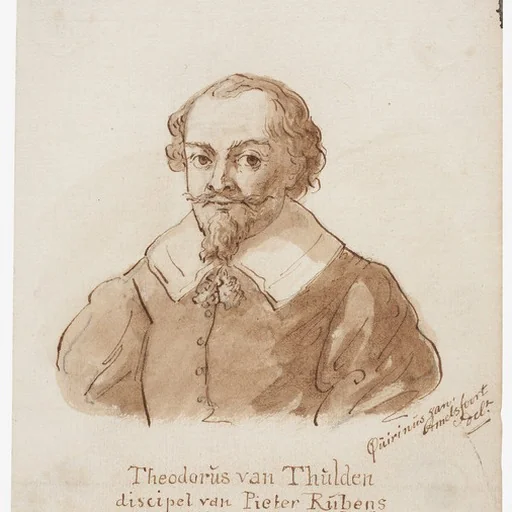
Theodoor van Thulden (9 August 1606 – 12 July 1669) was a Flemish painter, draughtsman and engraver born in 's-Hertogenbosch in the duchy of Brabant.

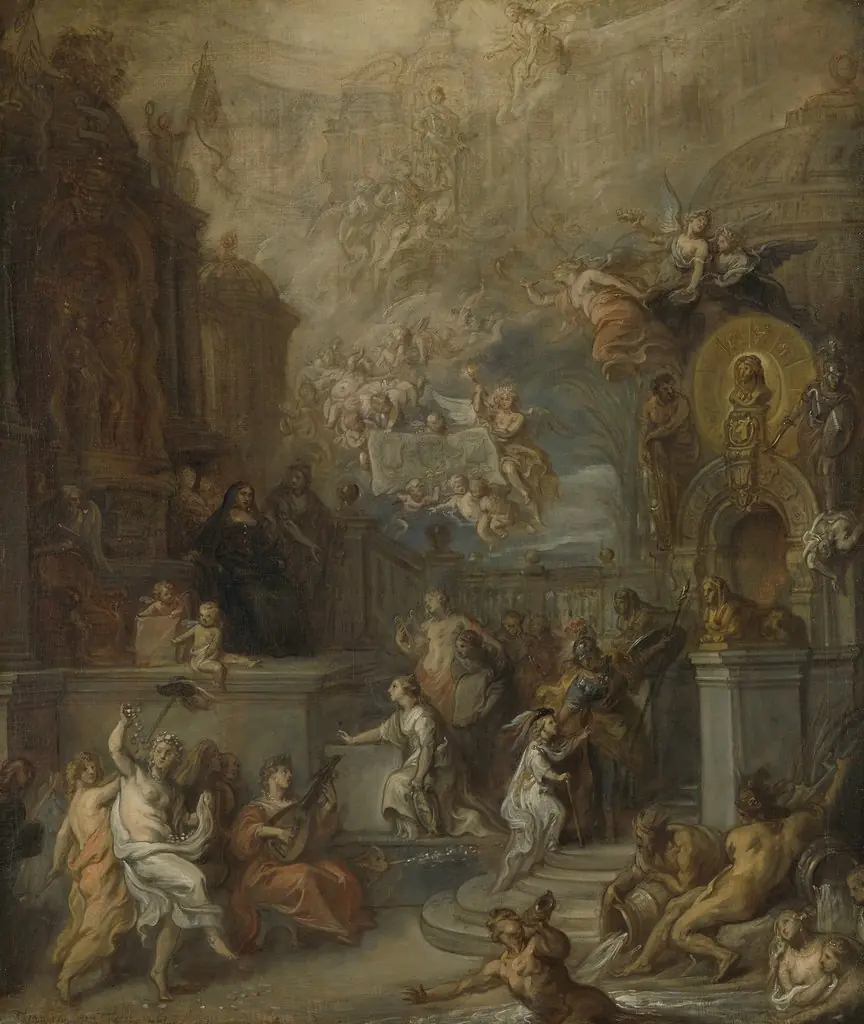 Allegory of William III's leavetaking from Alamia van Solms after the transferral of the regency to the statesgeneral
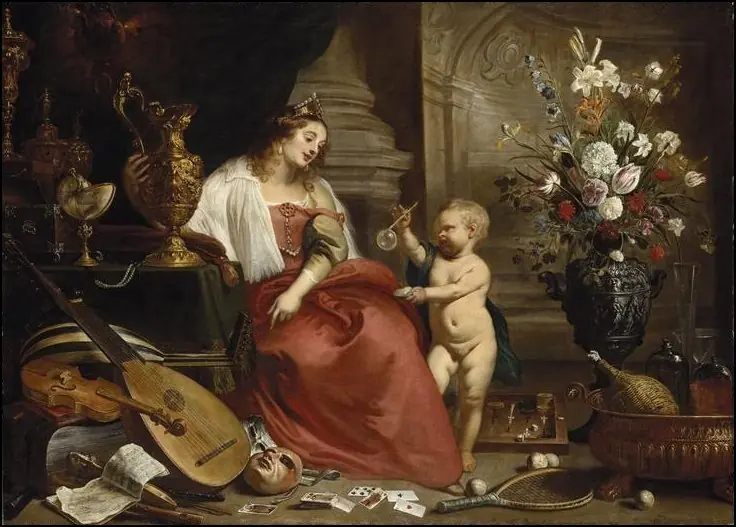 Allegory of Vanity
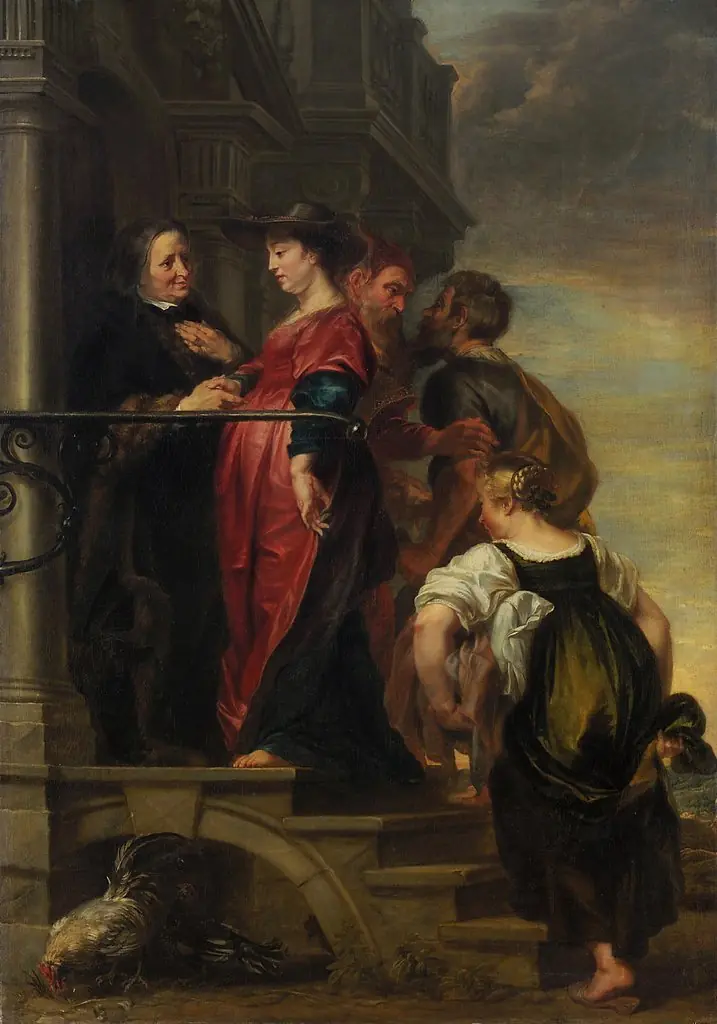 The Visitation
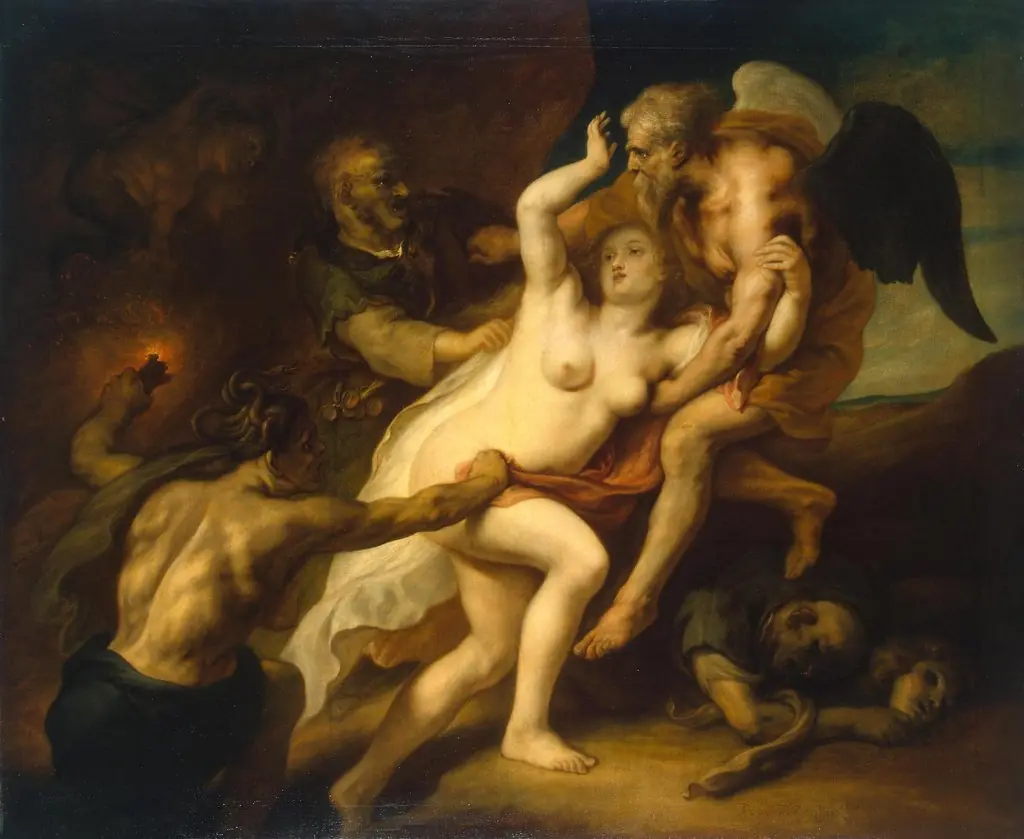 Time Reveals the Truth. The Allegory
 Allegory of the Farewell of William III from Amalia van Solms following the transfer of Regency to the States General
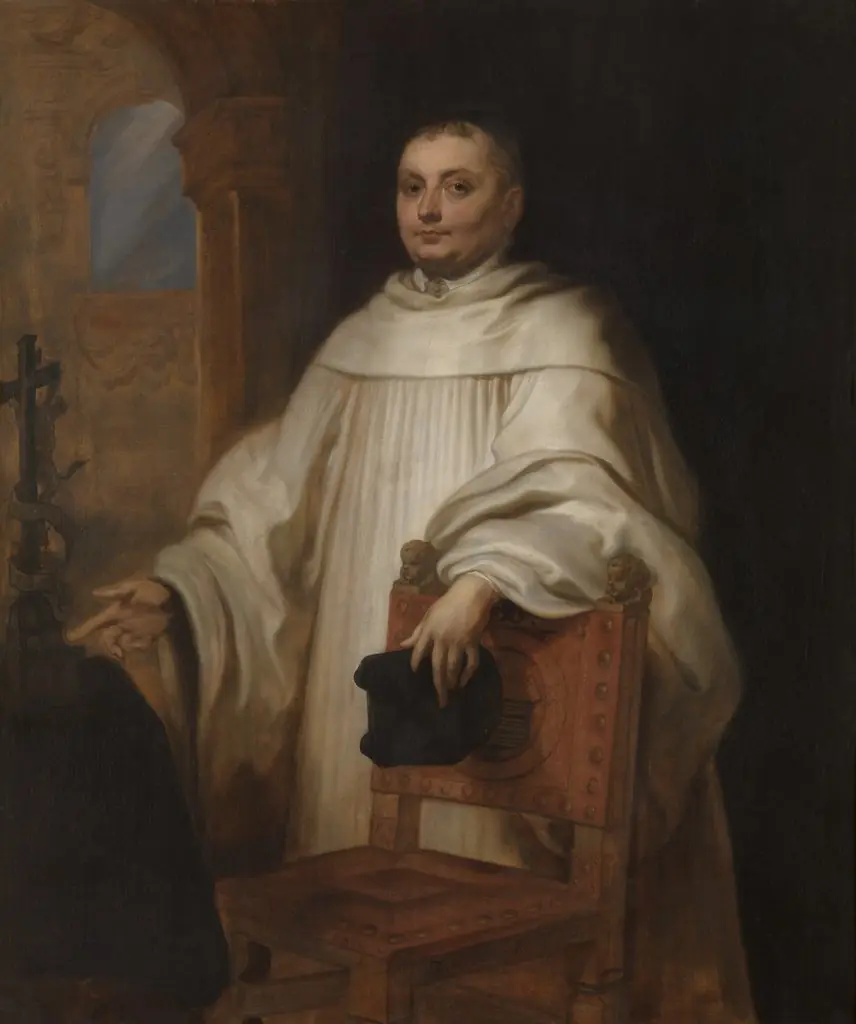 Benedictus van Thulden, prieur de l'abbé de Saint-Bernard
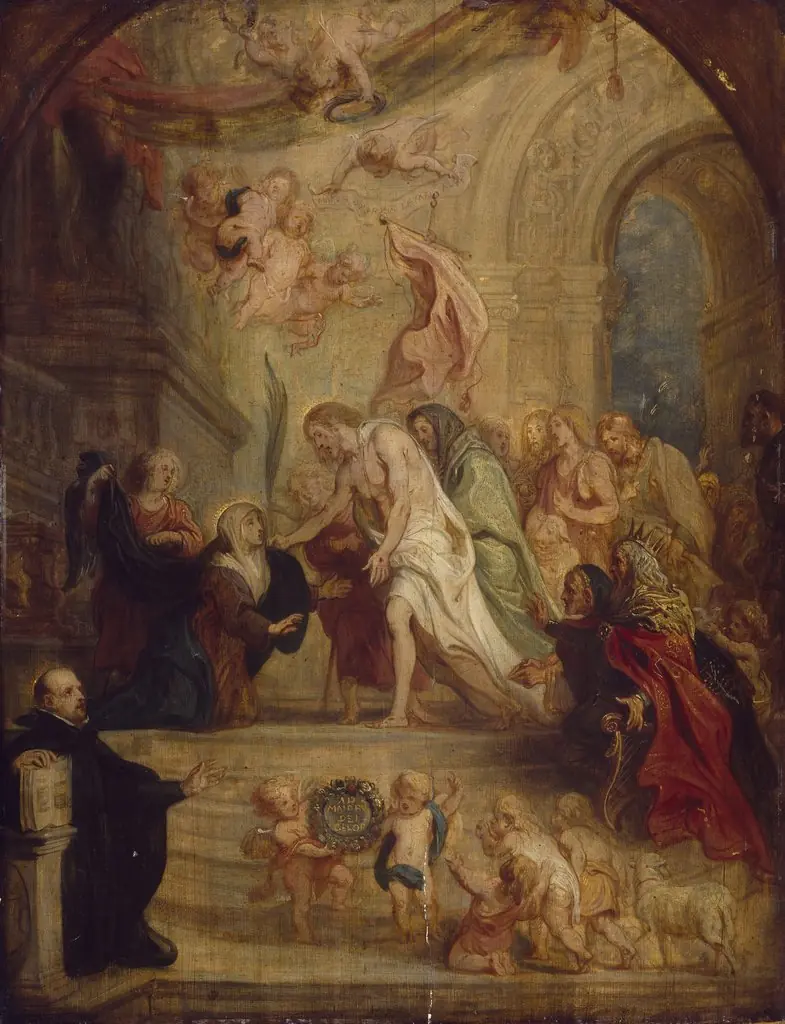 The Resurrected Christ Appearing to his Mother
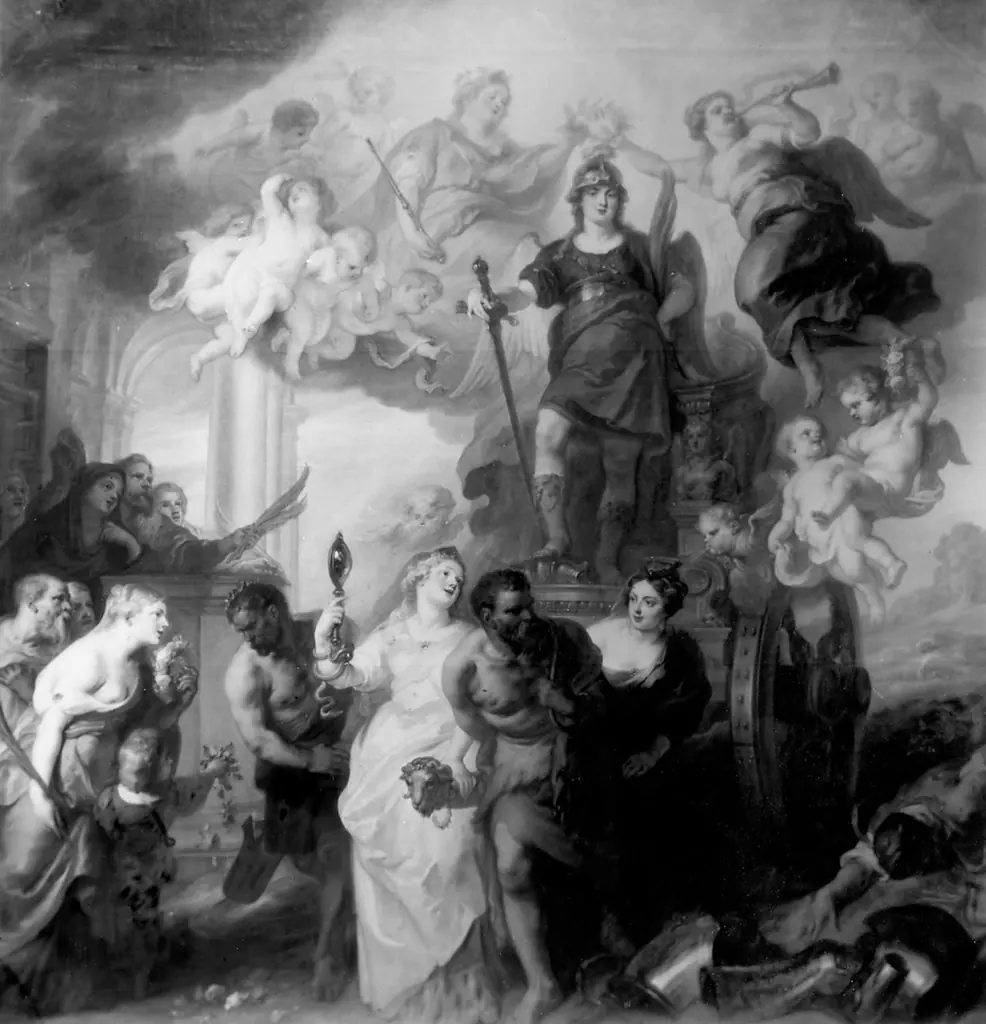 Rückkehr des Friedens
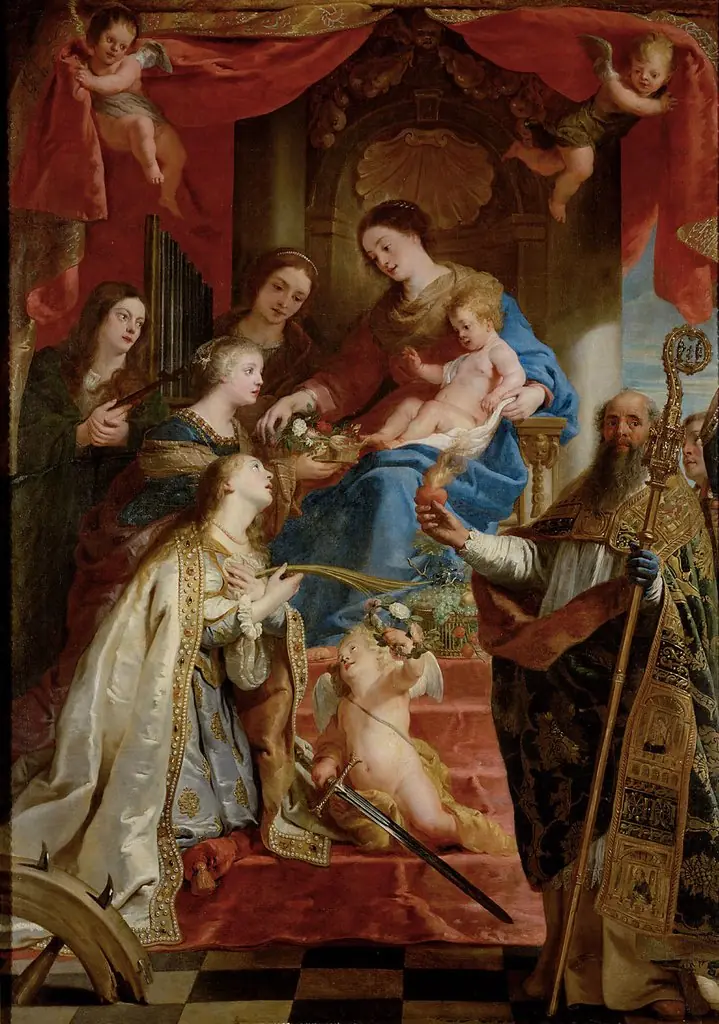
- Virgin with child and saints Maria Magdalen, Cecilia, Dorothea, Catharina and Augustine
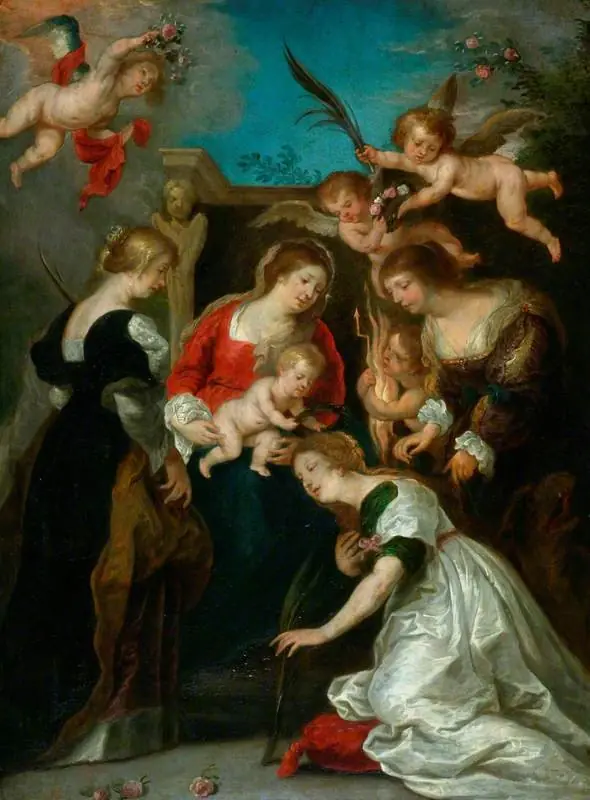 The Mystic Marriage of Saint Catherine
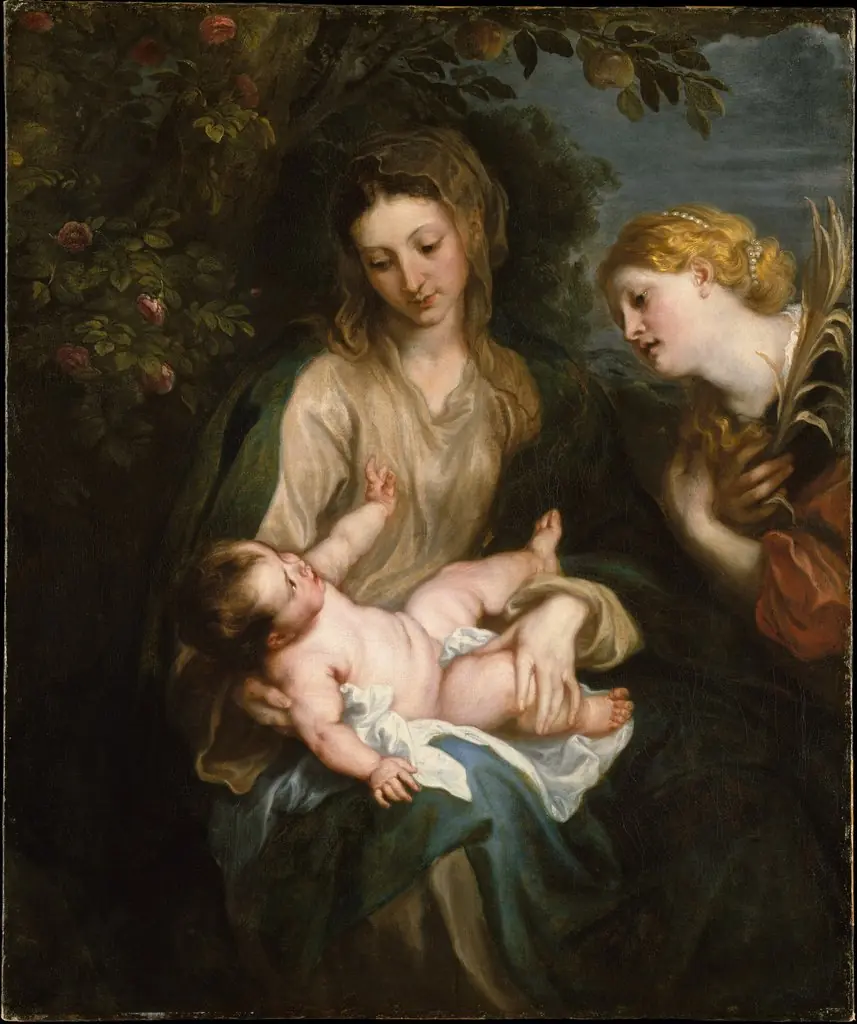 Virgin and Child with Saint Catherine of Alexandria
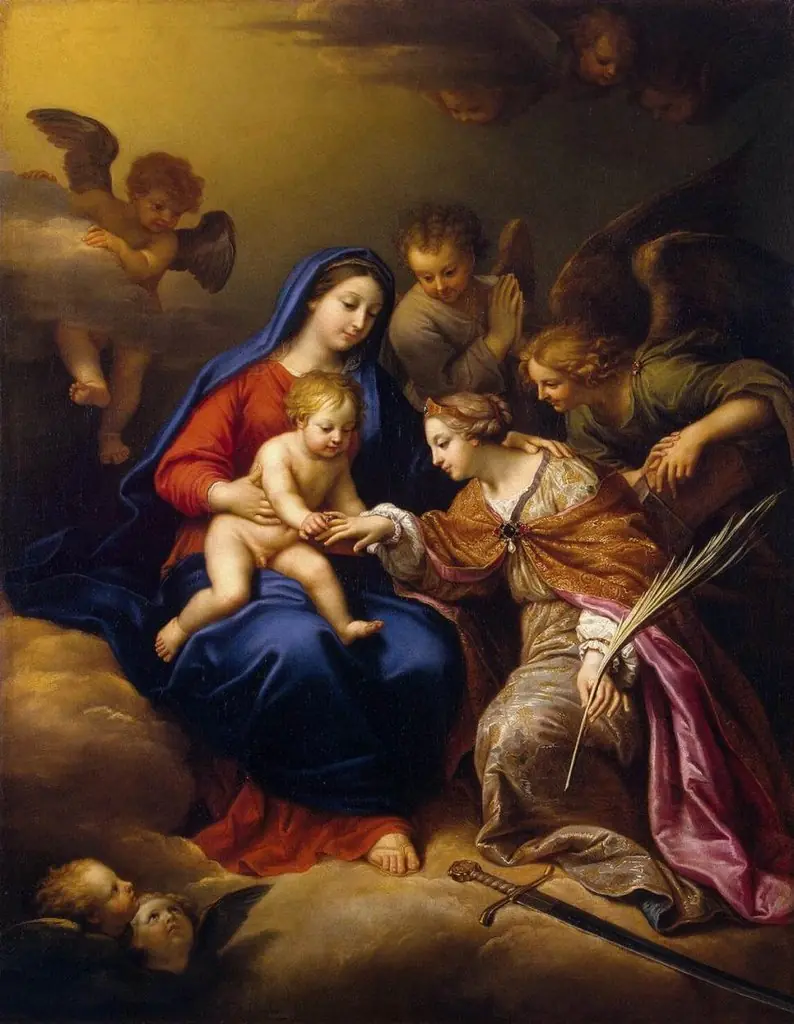 Le Mariage mystique de sainte Catherine (Mystic Marriage of St Catherine)
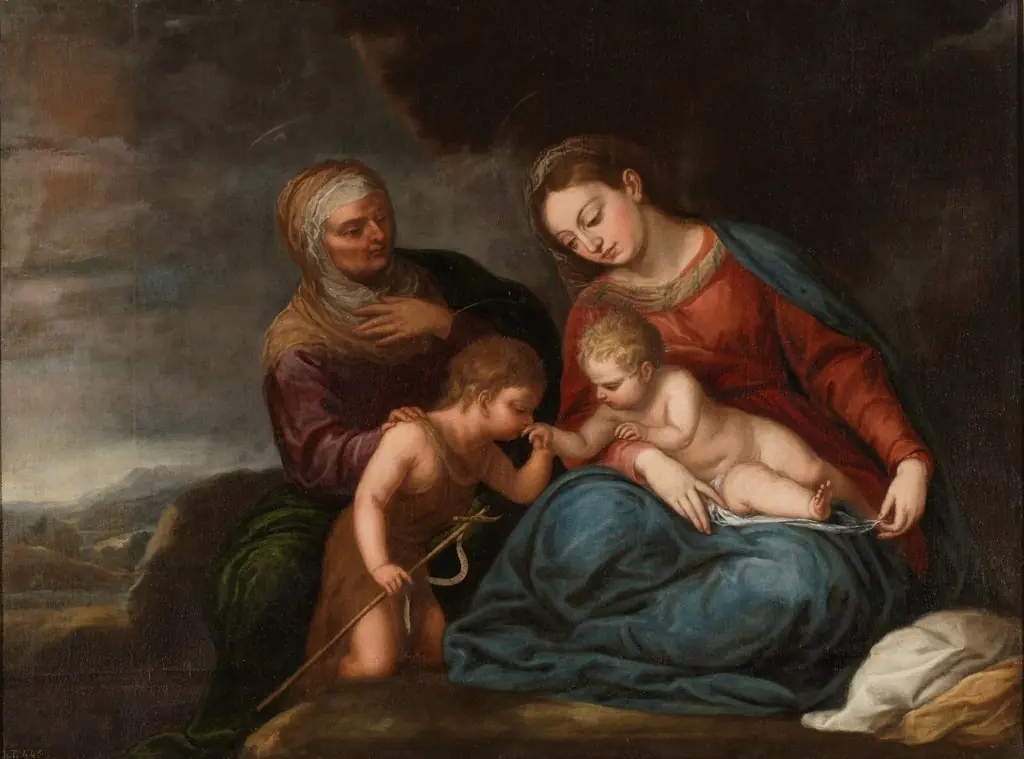 The Virgin and Child with Saints Elizabeth and John
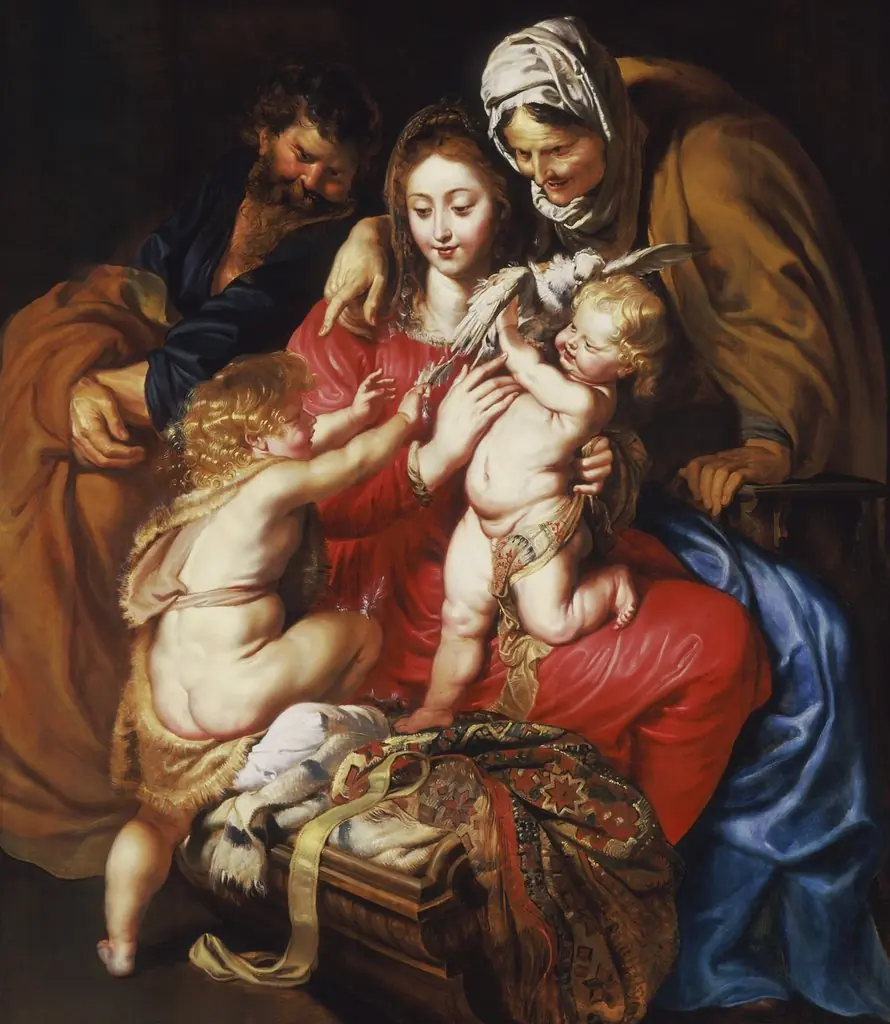 The Holy Family with St. Elizabeth, St. John, and a Dove
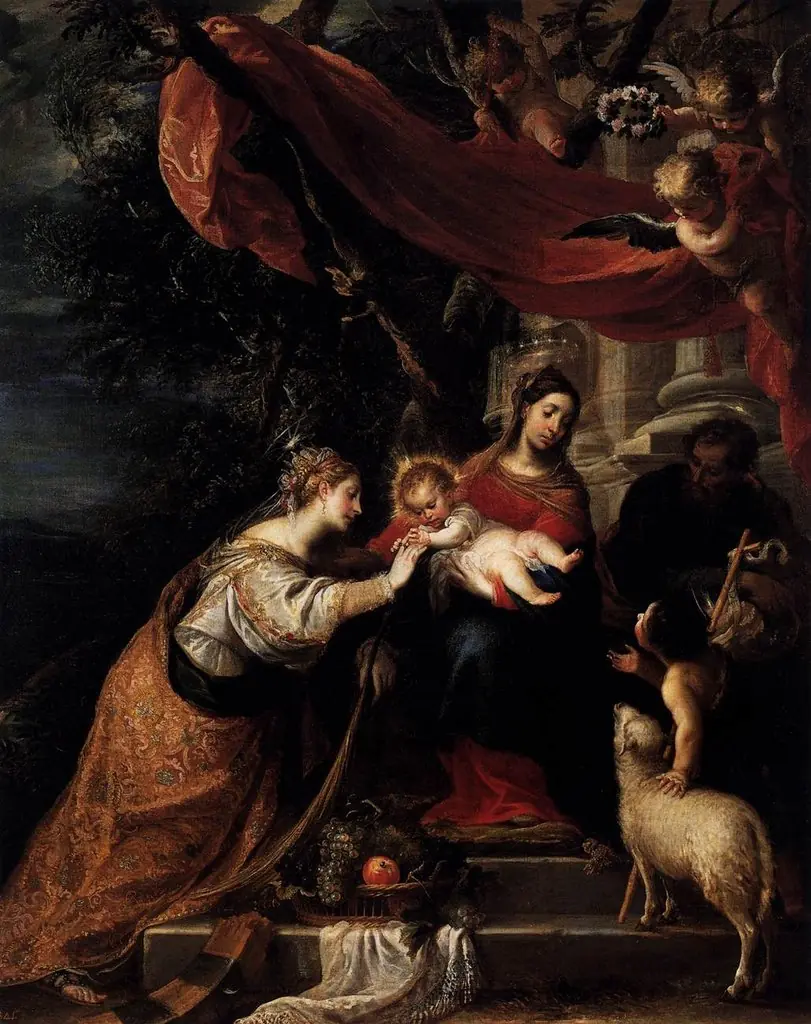 The Mystic Marriage of Saint Catherine
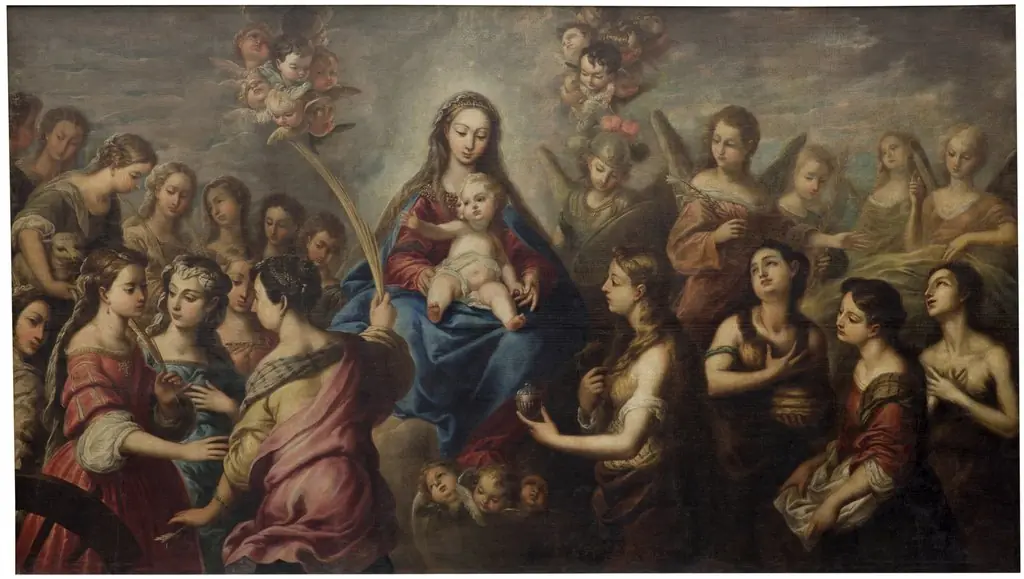 La Virgen con santos y ángeles
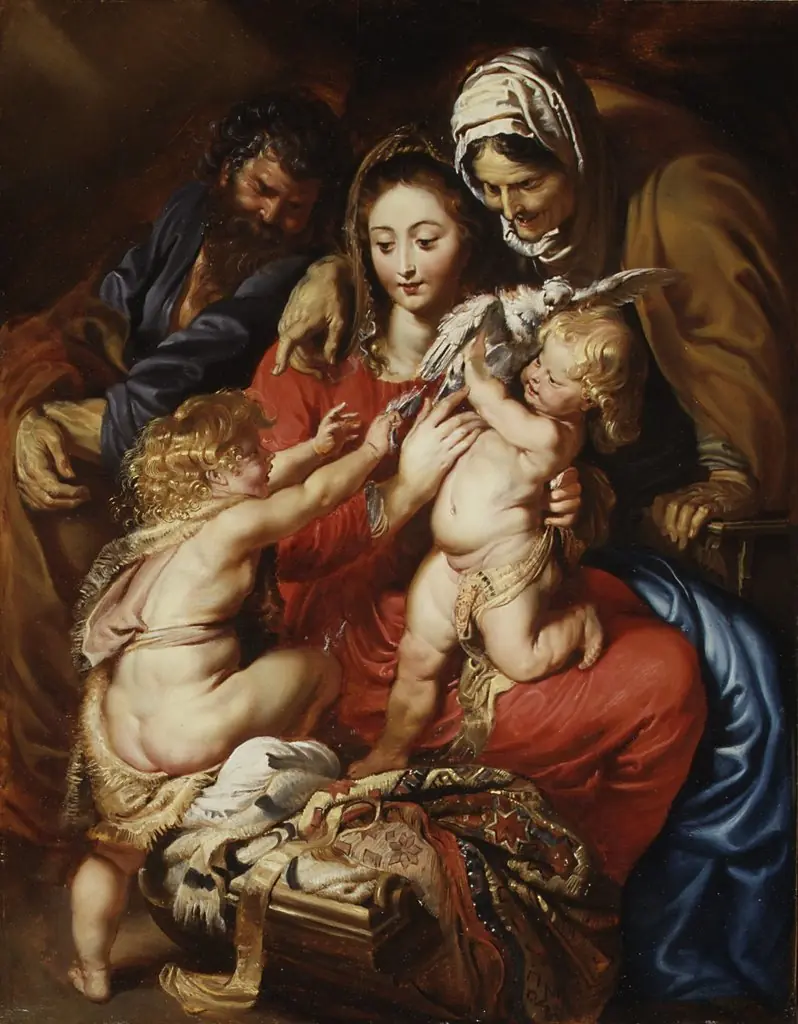 The Holy Family with Saint Elizabeth, Saint John, and a Dove
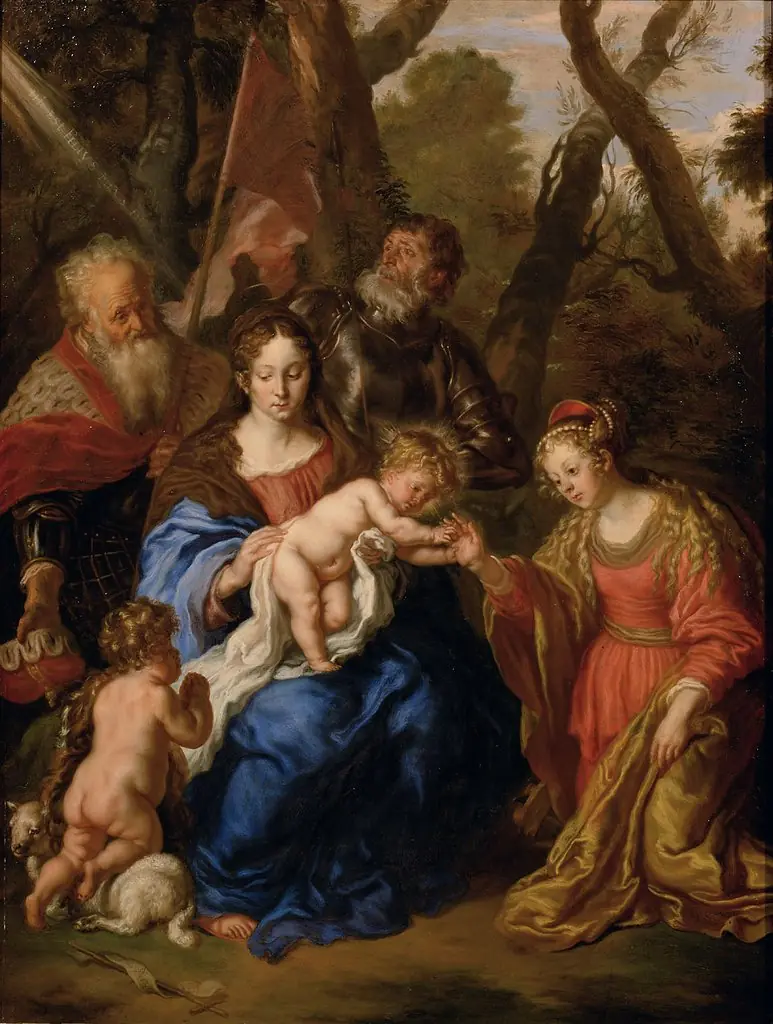 The Mystic Marriage of Saint Catherine of Alexandria with Saints Leopold and William
 Holy Family with Saint Little John and Elizabetg
 Coronation of Saint Rosalia