Artwork
The Virgin and Child with Saints Elizabeth and John
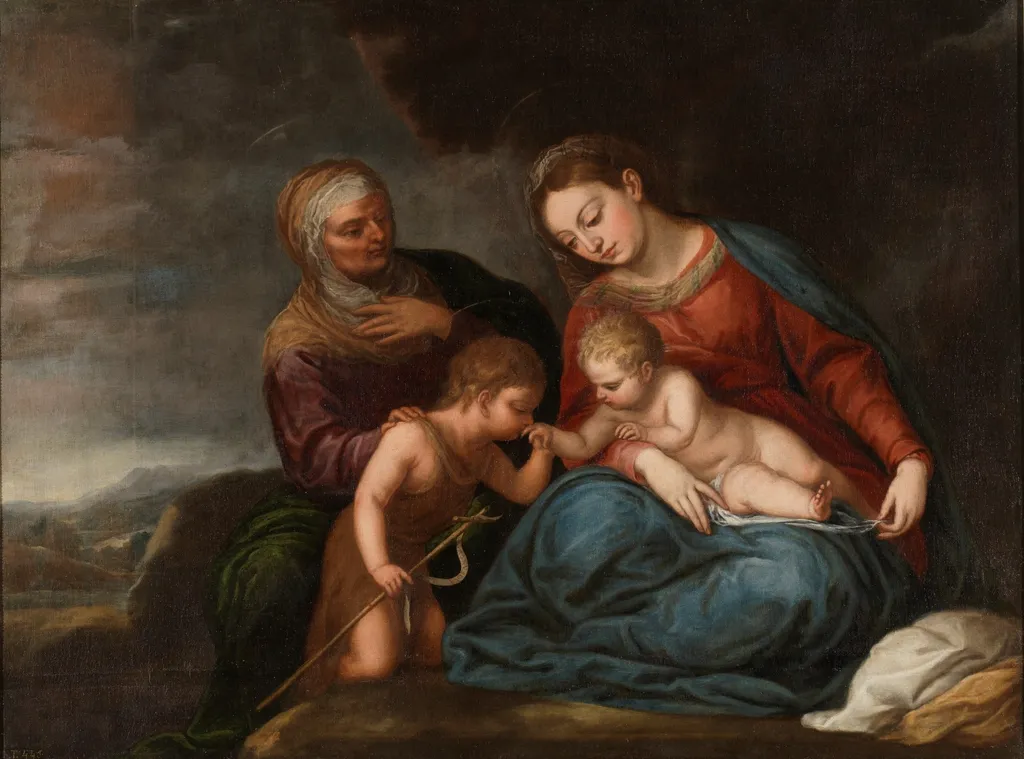
The Virgin and Child with Saints Elizabeth and John is an oil painting by the Early Baroque Italian artist Pedro Atanasio Bocanegra. It dates from 1651 and is held in the collection of the Museo del Prado.
About this work
Subject & Meaning
The inclusion of the cross emphasizes the theological link between childhood and sacrifice, a common motif in Counter-Reformation religious imagery.
The painting depicts the Virgin Mary holding the Christ Child, accompanied by Saints Elizabeth and John the Baptist. Elizabeth, the mother of John, gestures toward the Child, while John as a boy holds a slender cross, signaling Christ’s future Passion. Mary’s tender presentation of the Christ Child to her cousin Elizabeth underscores themes of maternal care and the Incarnation.
The inclusion of the cross emphasizes the theological link between childhood and sacrifice, a common motif in Counter-Reformation religious imagery.
The composition aligns with contemporary Spanish devotional practices, where familial tenderness and doctrinal clarity were emphasized to inspire piety among viewers.
Technique & Style
Executed in 1651 by Pedro Atanasio Bocanegra, this religious painting utilizes oil paint applied to a canvas support. The work measures 127 cm in height and 166 cm in width. Stylistically, the composition focuses on the depiction of the Virgin Mary and the Christ Child, accompanied by Saints Elizabeth and John, with the presence of a cross noted among the depicted elements.
The piece is classified as a painting within the religious genre and is held in the collection of the Museo del Prado.
History & Provenance
The Virgin and Child with Saints Elizabeth and John is dated 1651 by the artist Pedro Atanasio Bocanegra, as recorded in both the work’s internal documentation and its Wikidata entry.
By the late nineteenth century the painting had entered the collection of the Museo del Prado in Madrid, where it has remained in the museum’s holdings. The canvas measures 127 cm in height and 166 cm in width, consistent with the dimensions listed in the Prado’s records.
The Virgin and Child with Saints Elizabeth and John is held in the collection of the Museo del Prado in Madrid. The work, created by Pedro Atanasio Bocanegra in 1651, is cataloged within the museum's holdings as an oil painting on canvas. While the specific inventory or accession number is not provided in the available records, the piece remains part of the Prado's permanent religious art collection. There is no information in the provided sources regarding a specific exhibition history for this painting.
Context
Pedro Atanasio Bocanegra's 1651 work The Virgin and Child with Saints Elizabeth and John exemplifies Spanish Baroque religious painting, blending devotional intensity with intricate detail characteristic of 17th-century Spanish art. The composition situates the Virgin and Child within a sacred framework, reflecting Counter-Reformation emphases on Marian veneration and the cult of saints, particularly Elizabeth and John. Scholarship highlights Bocanegra's role within the Sevillian school, where his devotional imagery contributed to regional religious expression, though his work remains less studied than contemporaries like Murillo.
The painting's presence in the Museo del Prado's collection underscores its significance within institutional narratives of Spanish art history, where it is contextualized as part of a broader tradition of Iberian devotional works.
Overview
Pedro Atanasio Bocanegra’s 1651 oil on canvas, titled The Virgin and Child with Saints Elizabeth and John, is part of the Prado Museum’s collection. The composition centers on a seated Virgin in a red mantle cradling the infant Christ, accompanied by Saint Elizabeth and a youthful Saint John the Baptist. The figures rest on a rugged ledge beneath a somber sky, creating a compact, devotional grouping.
Own this work as a print
Artist & collection
Artist
Pedro Atanasio Bocanegra (1638–1689) was an artist, born in Granada.

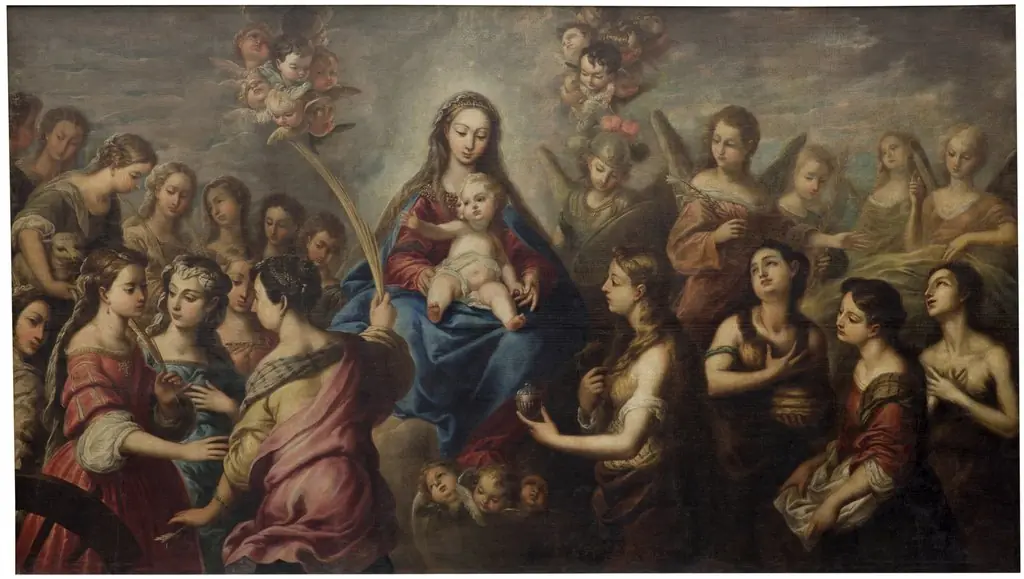
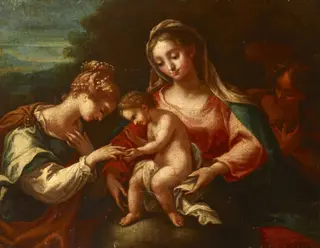 Mistic Marriage of Saint Catherine
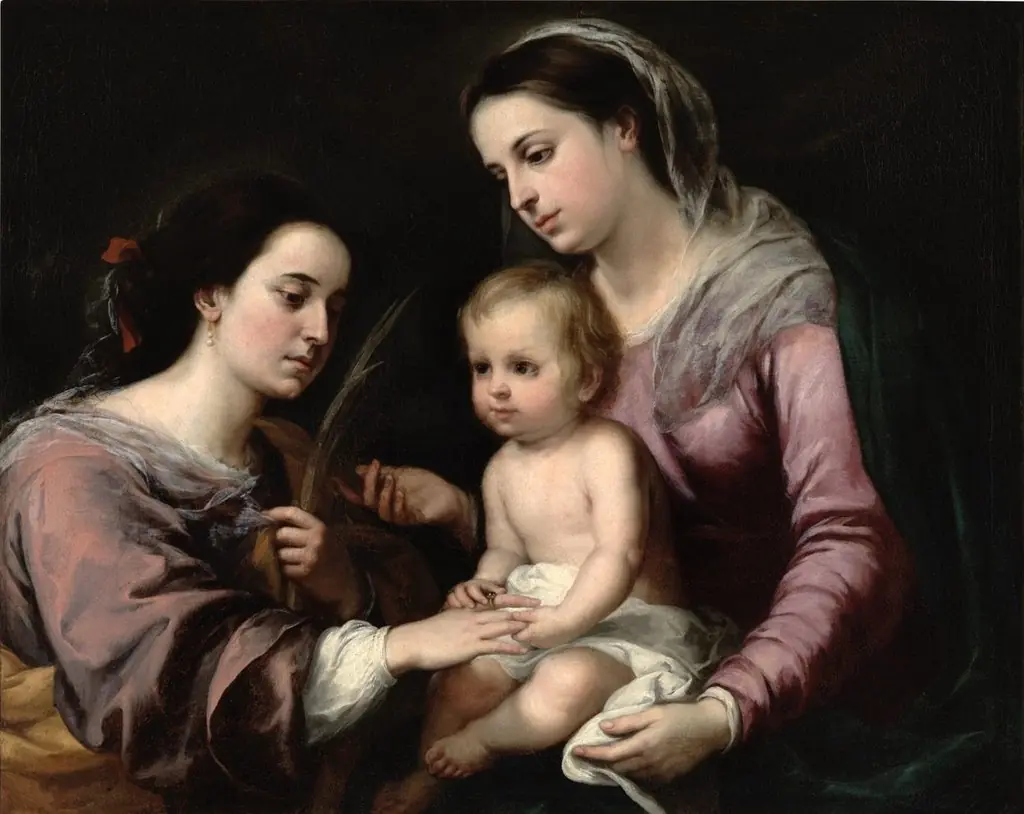 The Mystical Marriage of Saint Catherine
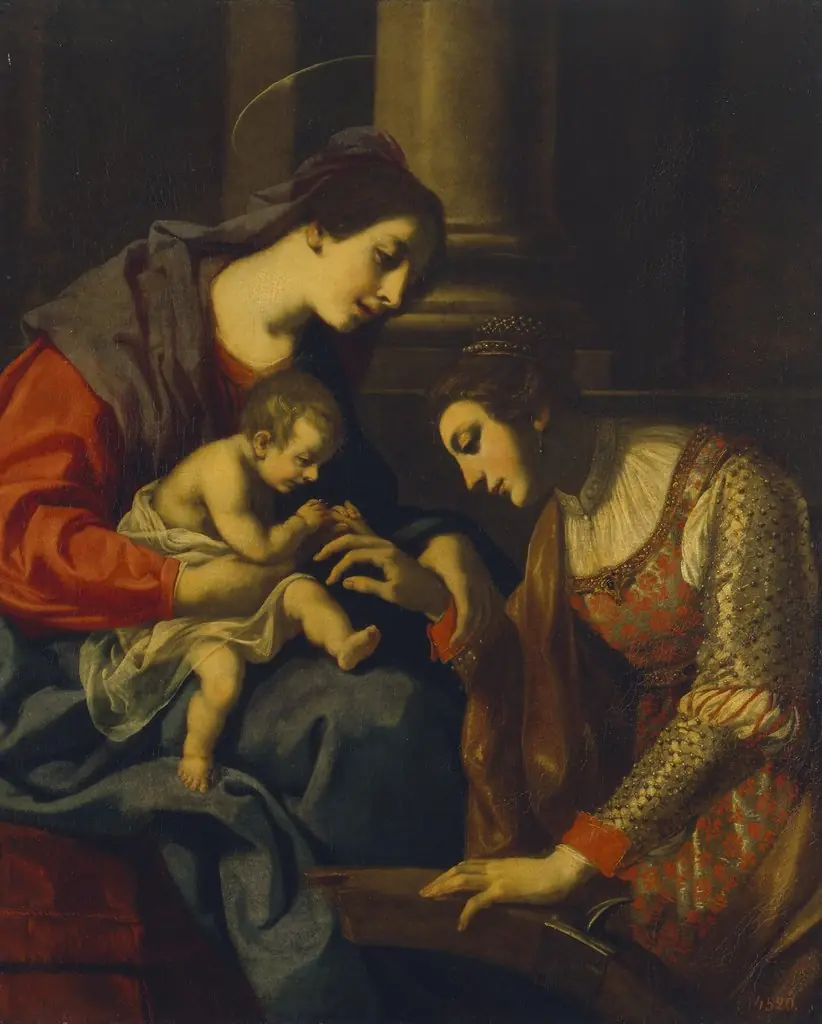 Mystic Marriage of St Catherine
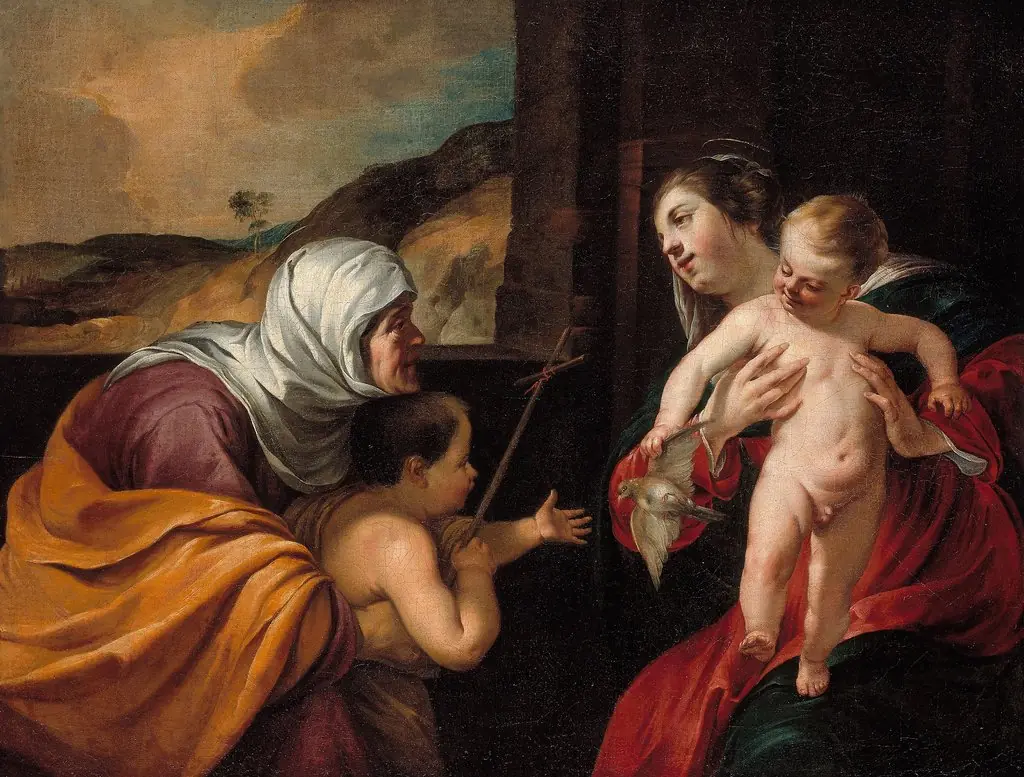
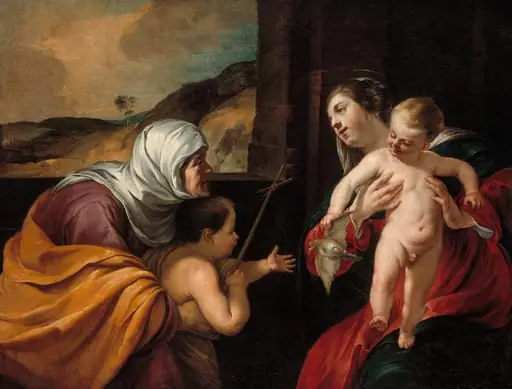 Virgin and Child with Saint Elizabeth and the Infant Saint John the Baptist
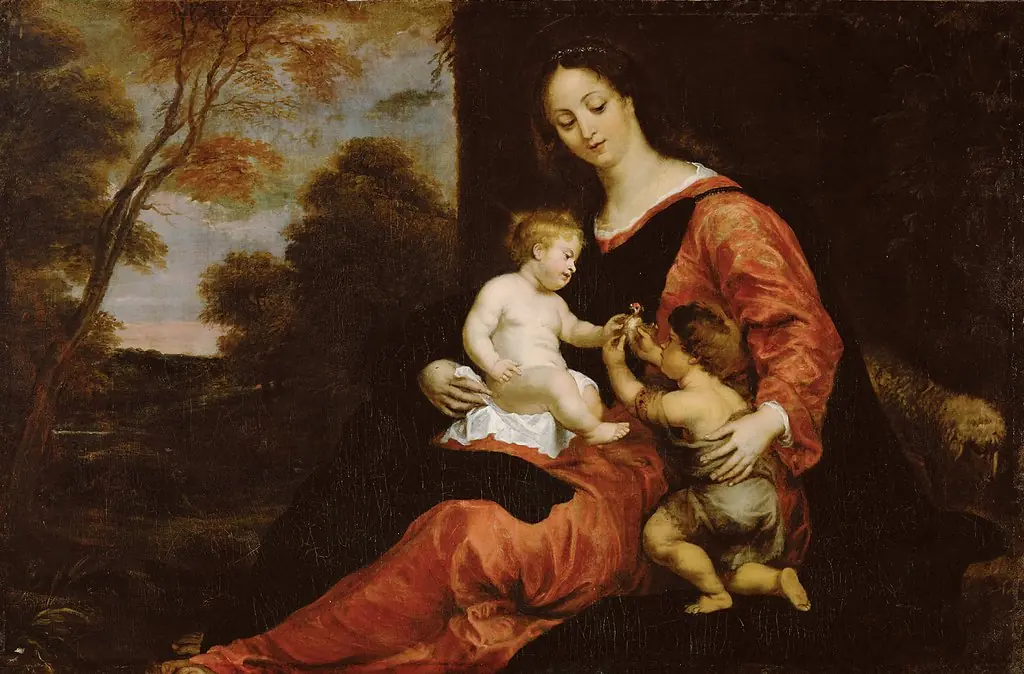 Mary and Child with John the Baptist
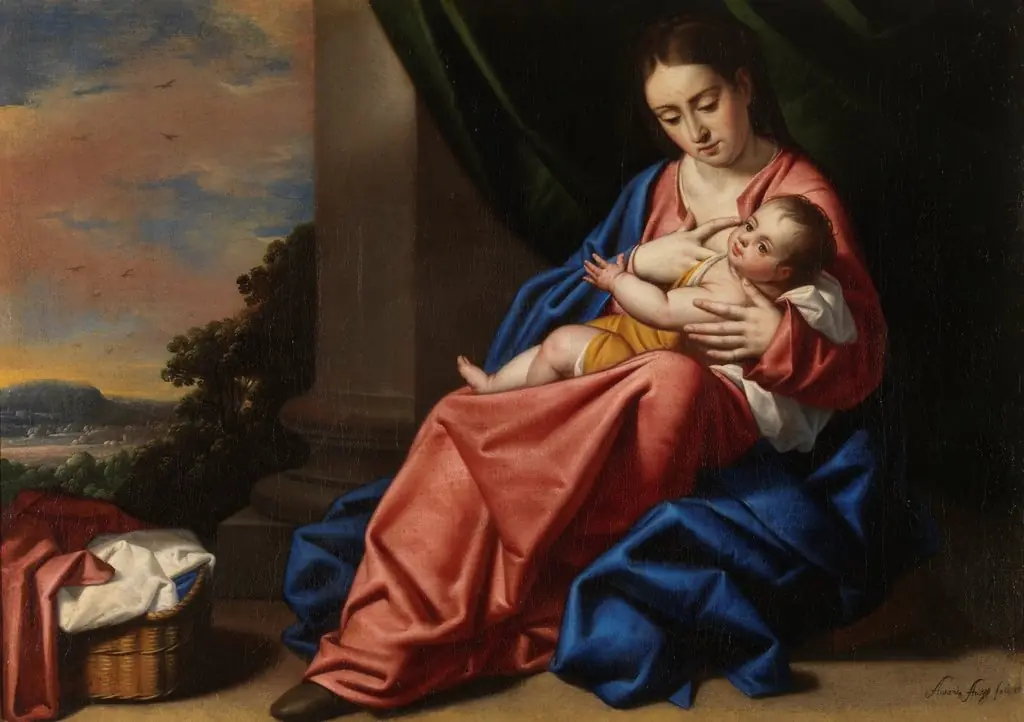 Virgin and Child
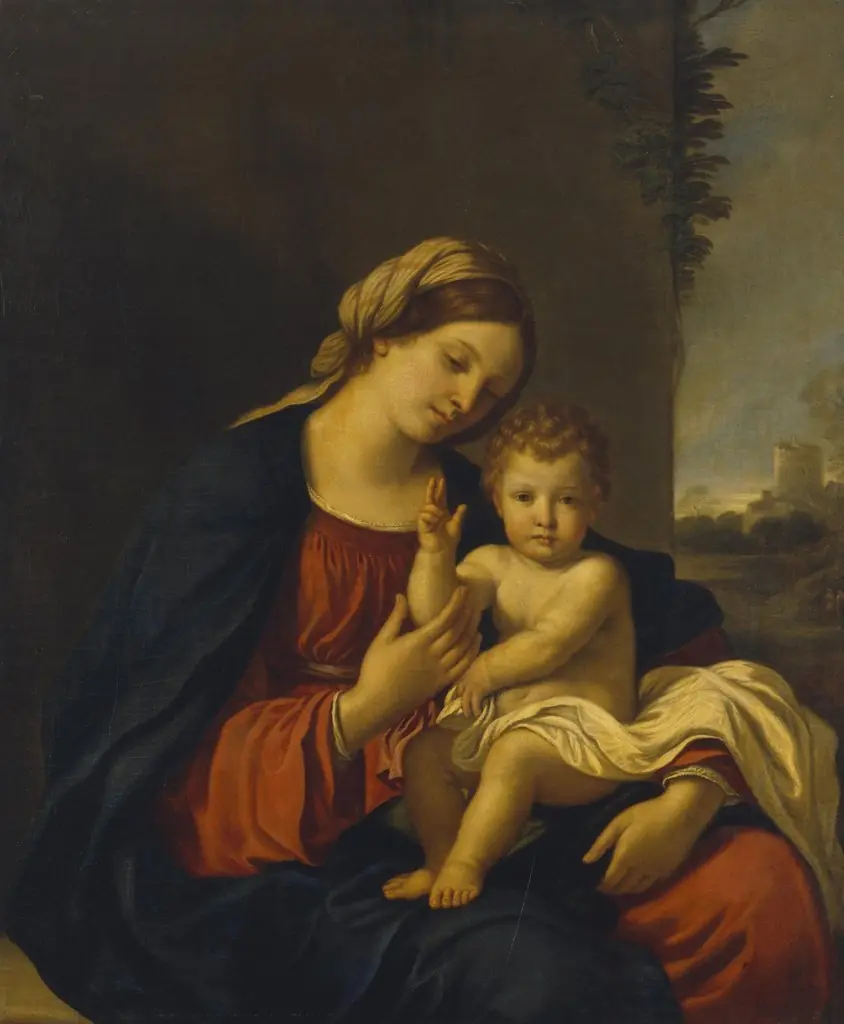 Madonna and Child
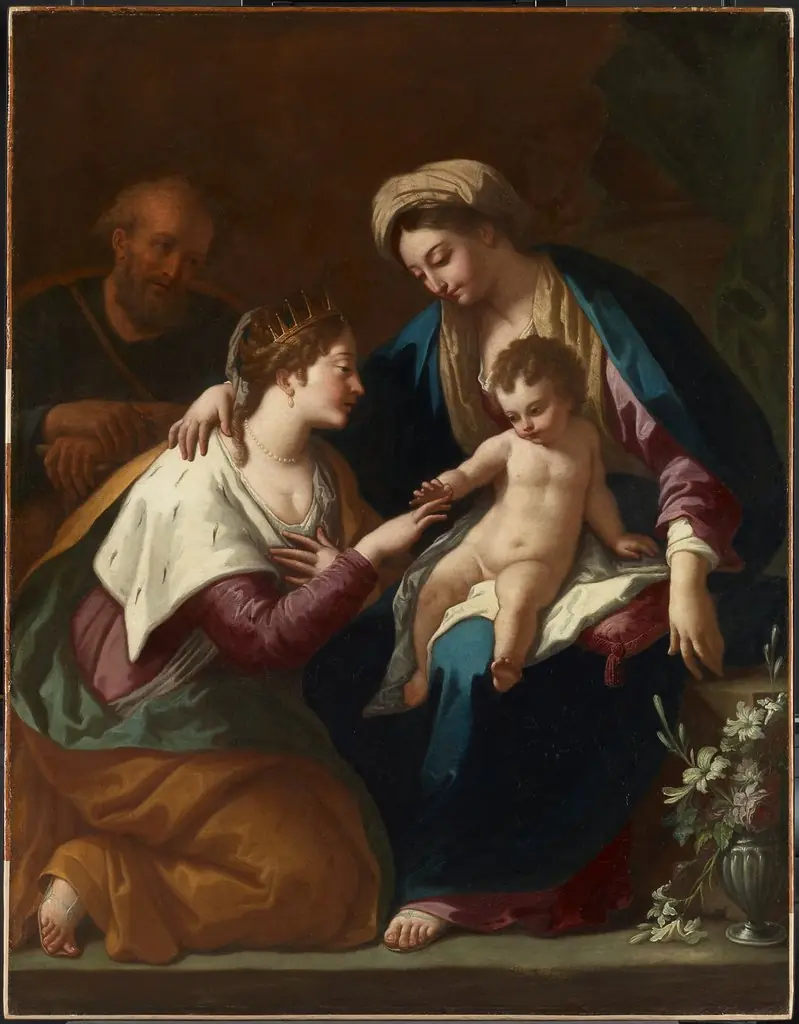 Mystical Marriage of St Catharine
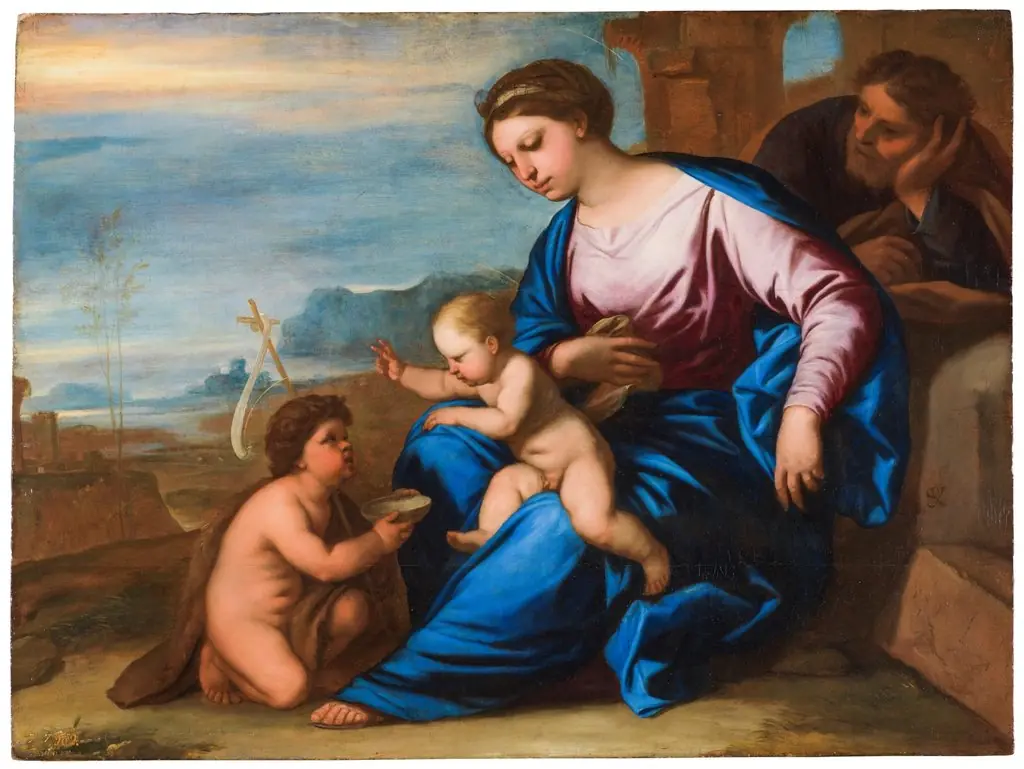 Sagrada Familia con San Juanito
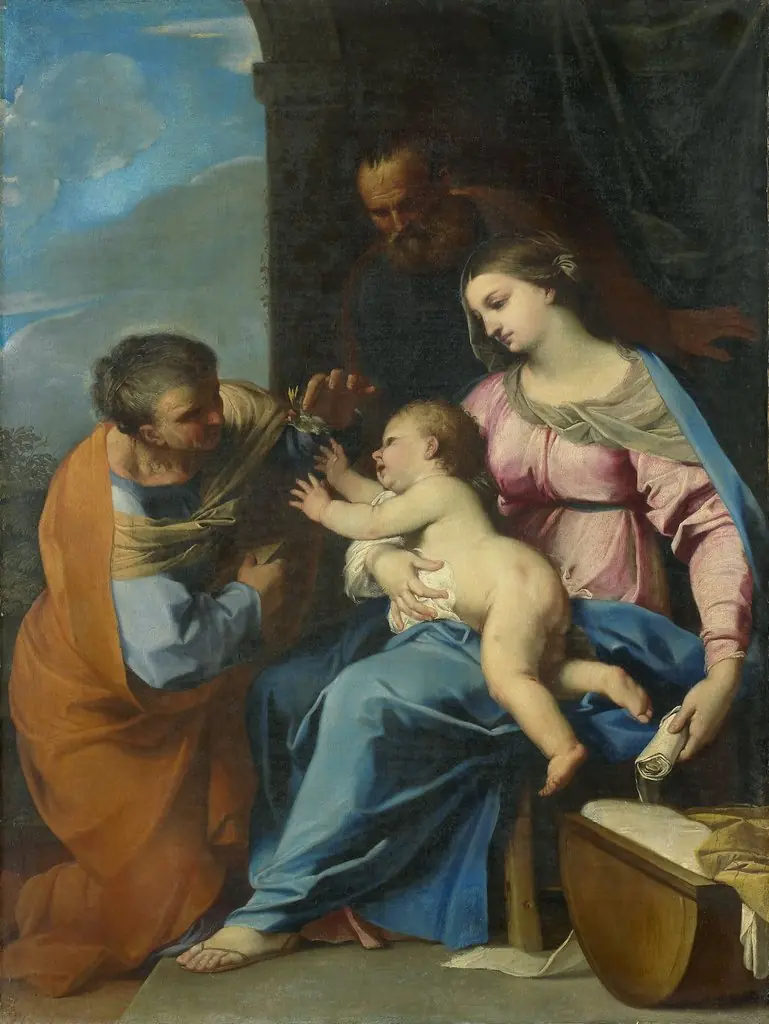 Holy Family
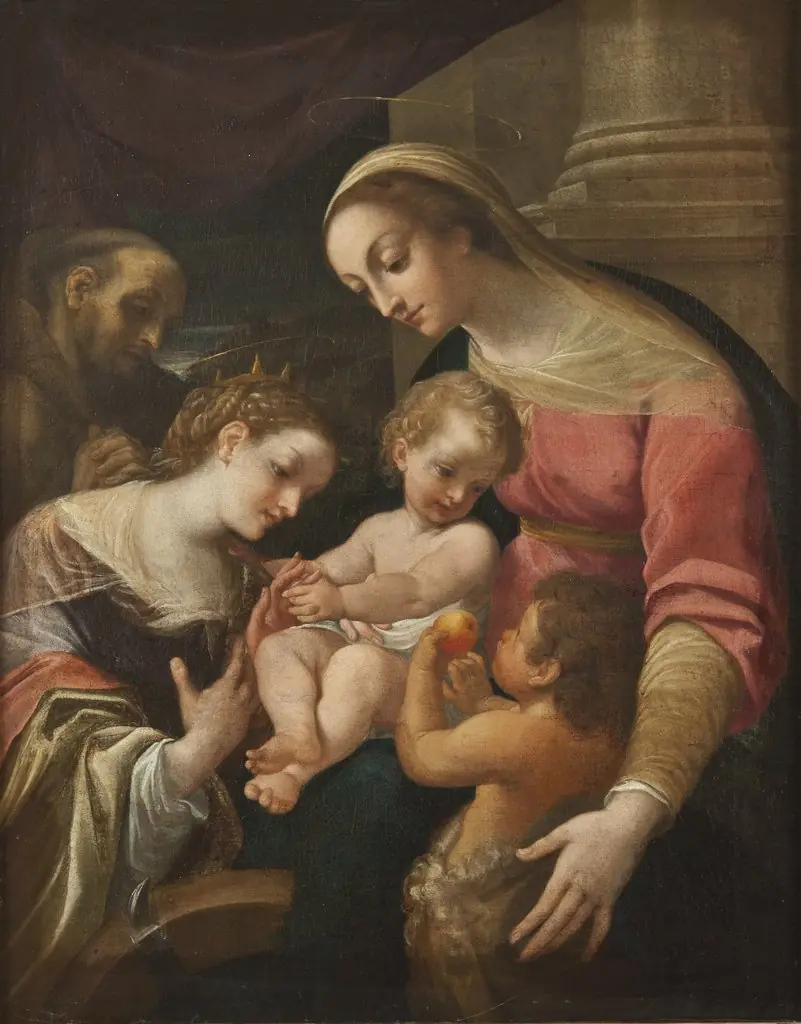 The Mystic Marriage of St Catherine
- Virgin and Child with Saint Elizabeth and the Infant Saint John the Baptist