Artwork
Coronation of Saint Rosalia
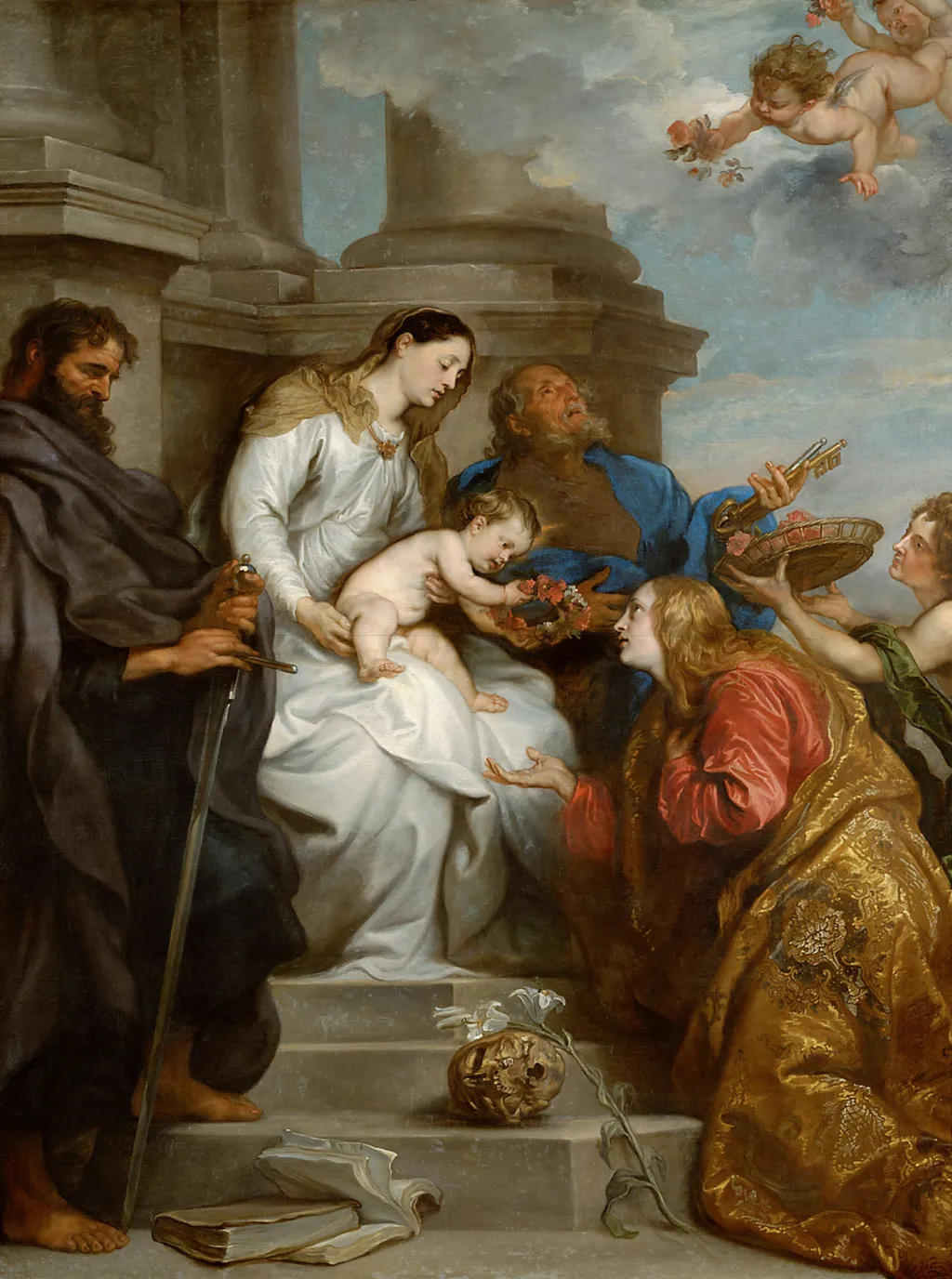
Coronation of Saint Rosalia is an oil painting by the Flemish Baroque painting artist Anthony van Dyck. It dates from 1629 and is held in the collection of the Kunsthistorisches Museum.
About this work
Subject & Meaning
The painting shows Rosalia in a richly brocaded mantle, a detail unusual in earlier Flemish depictions of the saint, who is typically shown in a simple habit.
The Coronation of Saint Rosalia depicts the Virgin Mary seated on a throne with the Christ Child crowning Saint Rosalia, who kneels before them. Saint Peter and Saint Paul stand at the sides, identifiable by their attributes of a sword and keys. The painting shows Rosalia in a richly brocaded mantle, a detail unusual in earlier Flemish depictions of the saint, who is typically shown in a simple habit.
This visual program emphasizes Rosalia’s role as a intercessor against plague and celebrates her coronation as a saintly patron. The composition draws on earlier prints after the 1627 hagiography of Rosalia by Giordano Cascini and reflects the influence of Italian artists such as Paolo Veronese, particularly in the bright lighting and diagonal arrangement of figures. The work was commissioned by the Jesuit Fraternity of the Sodality of the Bachelors in Antwerp’s Saint Ignatius Church and later acquired by Empress Maria Theresa, entering the Kunsthistorisches Museum in Vienna.
Technique & Style
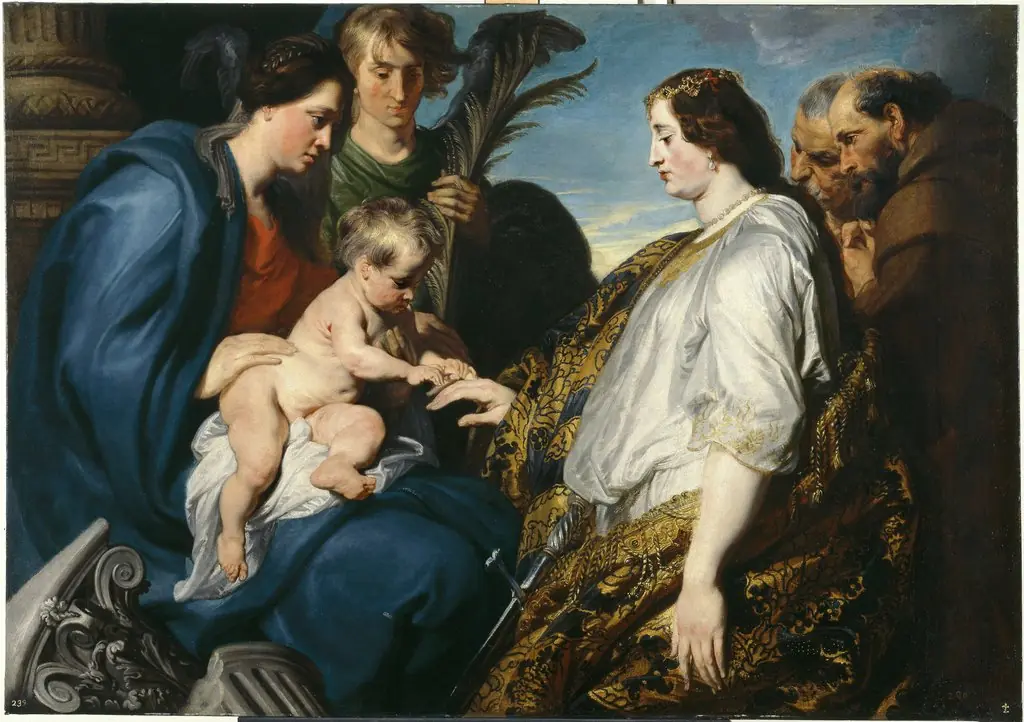
The Coronation of Saint Rosalia is an oil on canvas painting executed in 1629, with a vertical format measuring 275 by 210 cm. The composition shows the Virgin and Child enthroned between Saint Paul and Saint Peter, with the Christ Child crowning the kneeling Saint Rosalia. The brightly lit palette and the diagonal formed by the Madonna, Child, and Saint Rosalia reflect the Venetian influence Van Dyck absorbed during his Italian period, with Paolo Veronese's 1575 Mystic Marriage of Saint Catherine serving as the principal model.
Stylistically, the work departs from Sicilian models, which are thought to have contributed themes and details rather than overall composition. Rosalia's richly brocaded mantle is unprecedented in earlier Flemish depictions of the saint, which typically showed her alone in a plain Franciscan habit. Symbolic attributes include a skull, a lily, and roses woven into the crown, with additional roses carried in a basket by a figure at the far right, likely quoting Titian's c. 1550 Prado Salome, and held by cherubs in the upper right.
History & Provenance
Anthony van Dyck completed The Coronation of Saint Rosalia in 1629 as an oil on canvas for the chapel of the Fraternity of the Senior Bachelors within Antwerp's Jesuit church, then known as the Saint Ignatius Church. The commission was granted to Van Dyck due to his membership in the fraternity and his prior experience painting the saint during his stay in Palermo between 1624 and 1625. He accepted a relatively low fee for the work, which was intended to promote the cult of Saint Rosalia, whose relics had been brought to Antwerp to combat the plague of 1626.
The painting remained in its original location until 1776, when Empress Maria Theresa of Austria acquired it along with another work by the artist. She transported the canvas to Vienna, where it is currently held by the Kunsthistorisches Museum.
The Coronation of Saint Rosalia is held by the Kunsthistorisches Museum in Vienna, where it is recorded under the inventory number 2001:104. The work entered the museum's collection in 1776 when Empress Maria Theresa acquired it from the Jesuit church of St. Ignatius in Antwerp, where it had originally been painted for the chapel of the Fraternity of the senior bachelors. It was displayed there until the acquisition, after which it was moved to Vienna and has remained in the museum's collection ever since.
The painting was part of a pair with The Vision of the Blessed Hermann Joseph, both commissioned for the same chapel and both later purchased by the Austrian empress. It has been exhibited in the museum's permanent collection displays and was included in the 1976 exhibition "Van Dyck in Vienna," which highlighted the museum's holdings of Van Dyck's works acquired by the Habsburgs.
Context
The painting was created in 1629 for the chapel of the senior bachelors' fraternity in Antwerp's Jesuit church, then known as Saint Ignatius Church and later renamed Saint Charles Borromeo Church. It remained in that chapel until 1776, when Empress Maria Theresa acquired it and brought it to Vienna, where it now hangs in the Kunsthistorisches Museum. The work marks van Dyck's final depiction of Saint Rosalia and reflects a return to a subject he had painted five times earlier during the plague in Palermo in 1624–1625.
The commission was likely linked to van Dyck's membership in the Antwerp fraternity and his prior drawings for the 1629 publication of Cascini's hagiography of the saint, which influenced the iconography of the coronation. The composition draws on Venetian models, particularly Veronese's Mystic Marriage of Saint Catherine, and incorporates elements such as the brocaded mantle of Saint Rosalia, unprecedented in earlier Flemish depictions of the saint.
Legacy
Van Dyck's Coronation of Saint Rosalia established an influential iconographic model for later depictions of the saint. The painting introduced a distinctive royal brocade mantle for Rosalia and the motif of the Christ Child crowning her, elements that appeared in subsequent works across Europe. Its composition, blending Venetian coloristic brilliance with Antwerp devotional context, informed later altarpieces including the 1630 Vision of the Blessed Hermann Joseph created for the same chapel.
The work's journey from Antwerp's Jesuit church to Vienna's Kunsthistorisches Museum through Empress Maria Theresa's acquisition cemented its role in shaping the saint's visual legacy, influencing both contemporary religious art and later scholarly interpretations of van Dyck's contribution to Counter-Reformation imagery.
Overview
Anthony van Dyck’s 1629 oil on canvas, known as the Coronation of Saint Rosalia, portrays a devotional scene that combines the Madonna and Child with the saints Peter, Paul and the eponymous Rosalia. The work was created for the chapel of the senior bachelors’ fraternity within Antwerp’s Jesuit church, then called Saint Ignatius and later renamed Saint Charles Borromeo.
Own this work as a print
Artist & collection
Artist
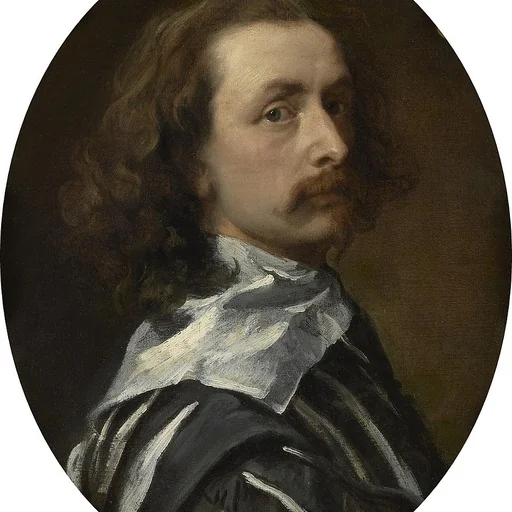
Sir Anthony van Dyck (; Dutch: Antoon van Dijck; 22 March 1599 – 9 December 1641) was a Flemish Baroque artist, who became the leading court painter in England after success in the Spanish Netherlands and Italy.

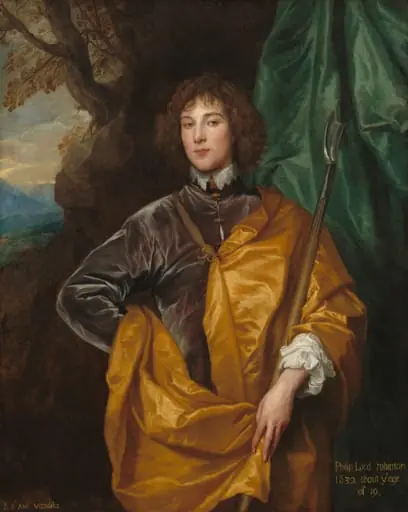
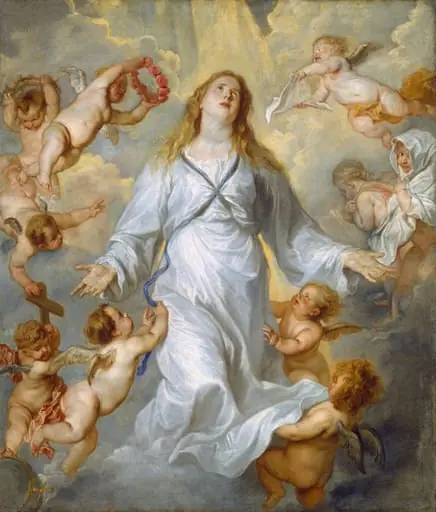
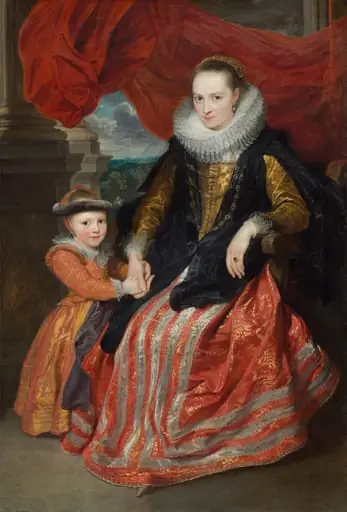
- The Mystic Marriage of Saint Catherine
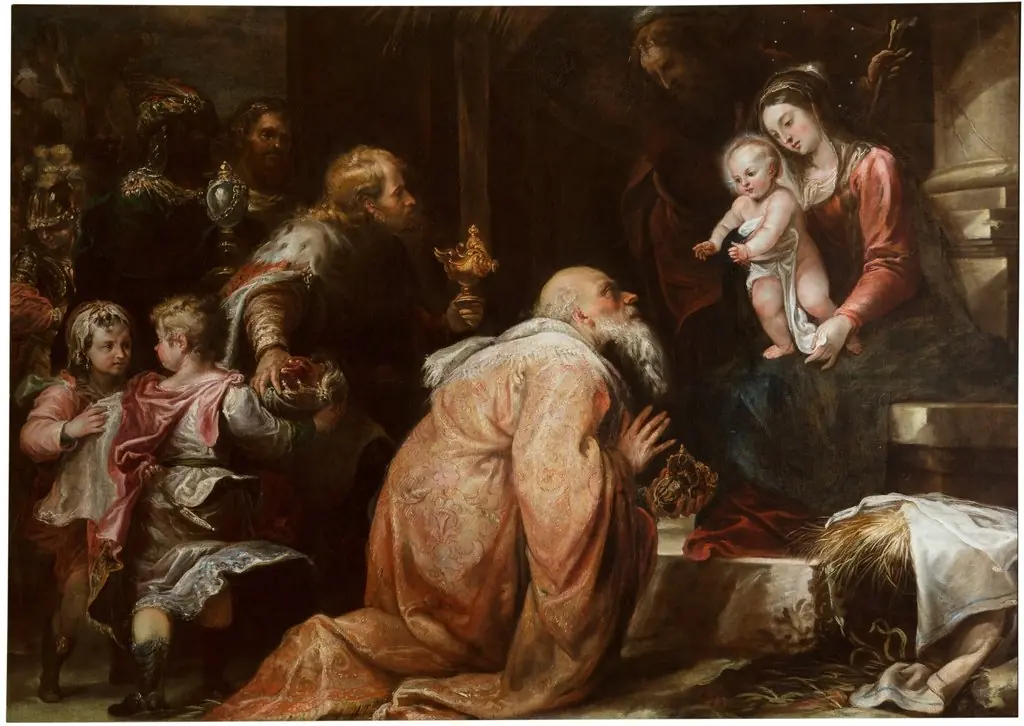 Adoración de los Reyes Magos
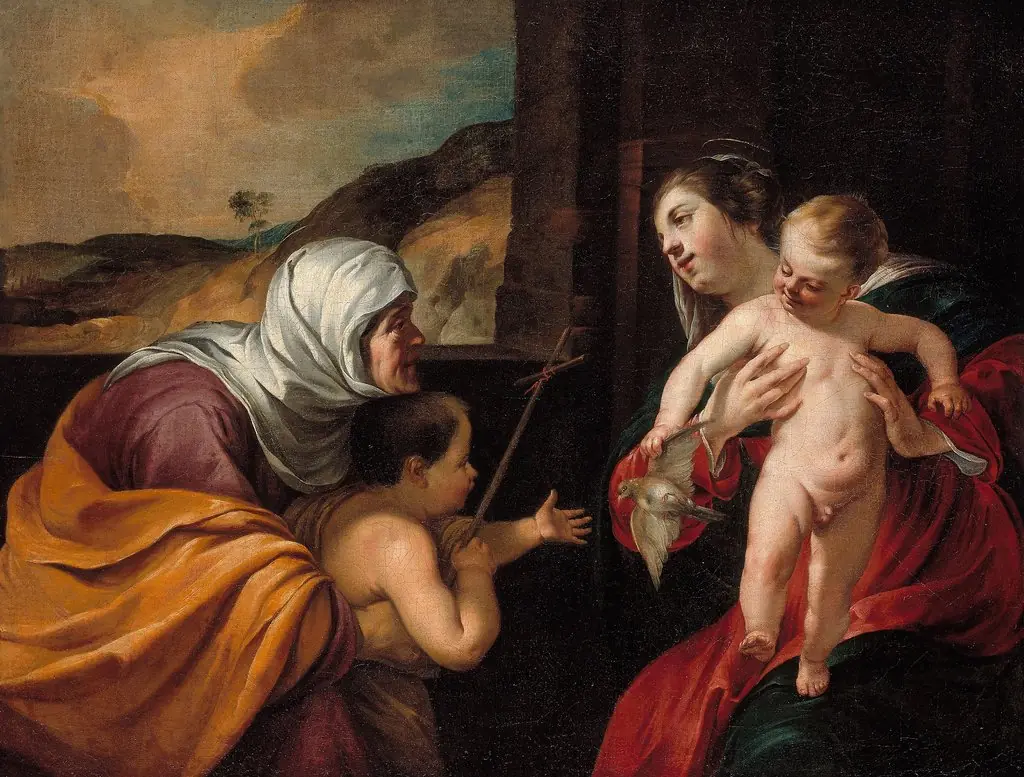 Virgin and Child with Saint Elizabeth and the Infant Saint John the Baptist
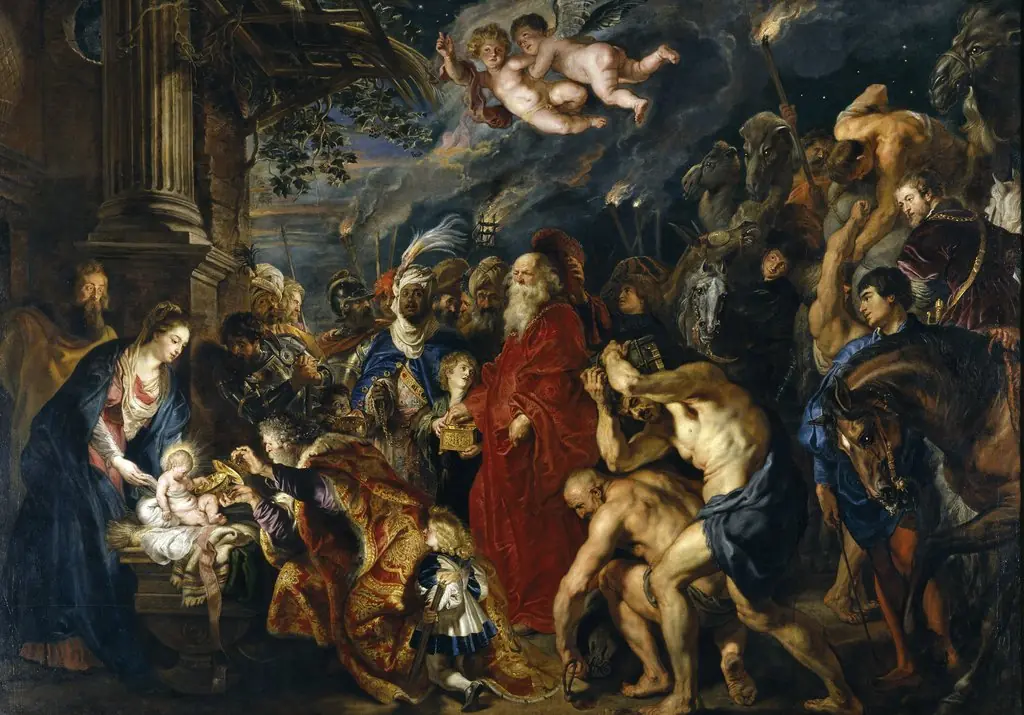 Adoration of the Magi
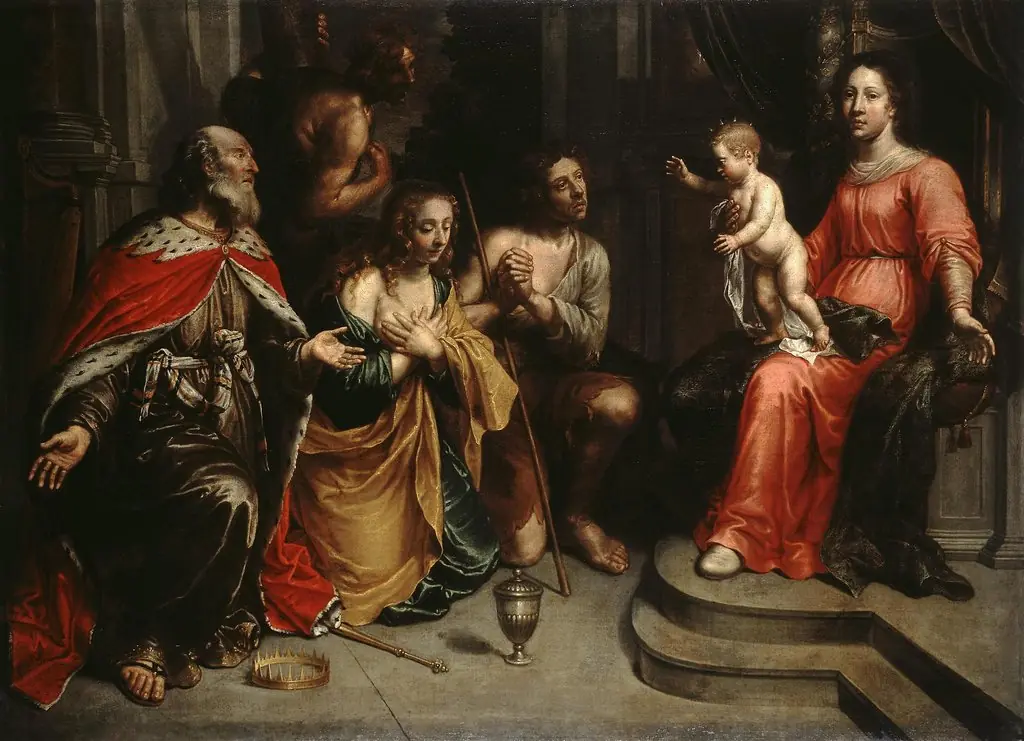 Repentant Sinners in front of the Virgin and Child
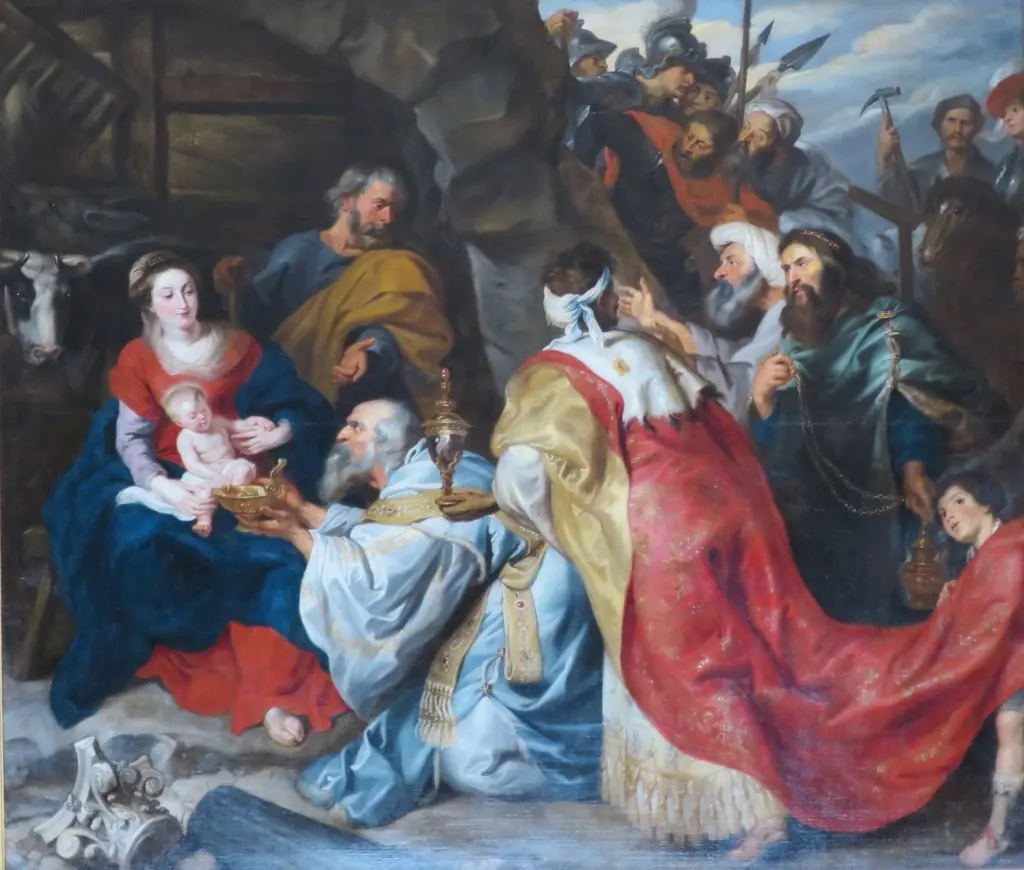 Adoration of the Magi
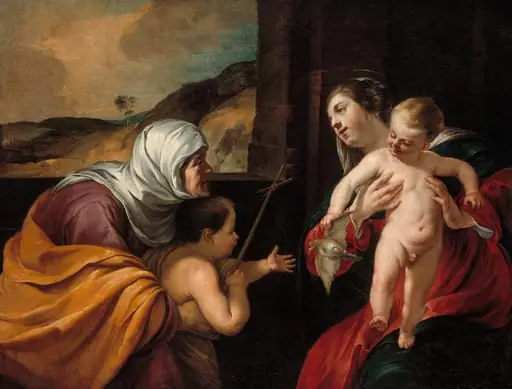 Virgin and Child with Saint Elizabeth and the Infant Saint John the Baptist
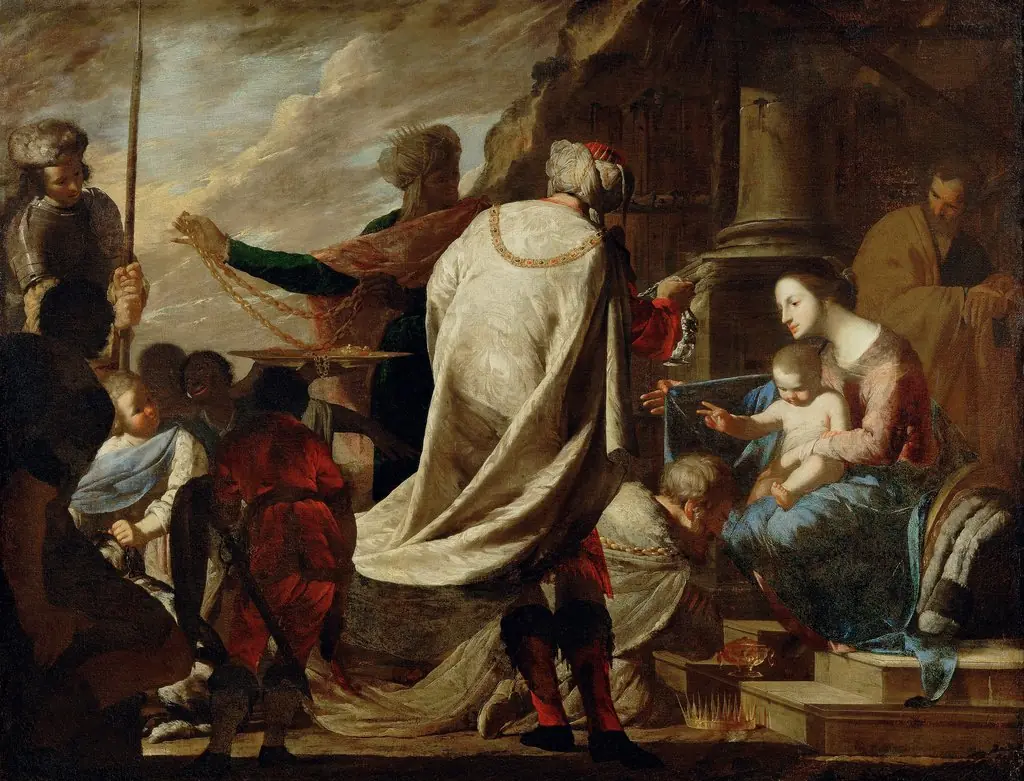 Adoration of the Magi
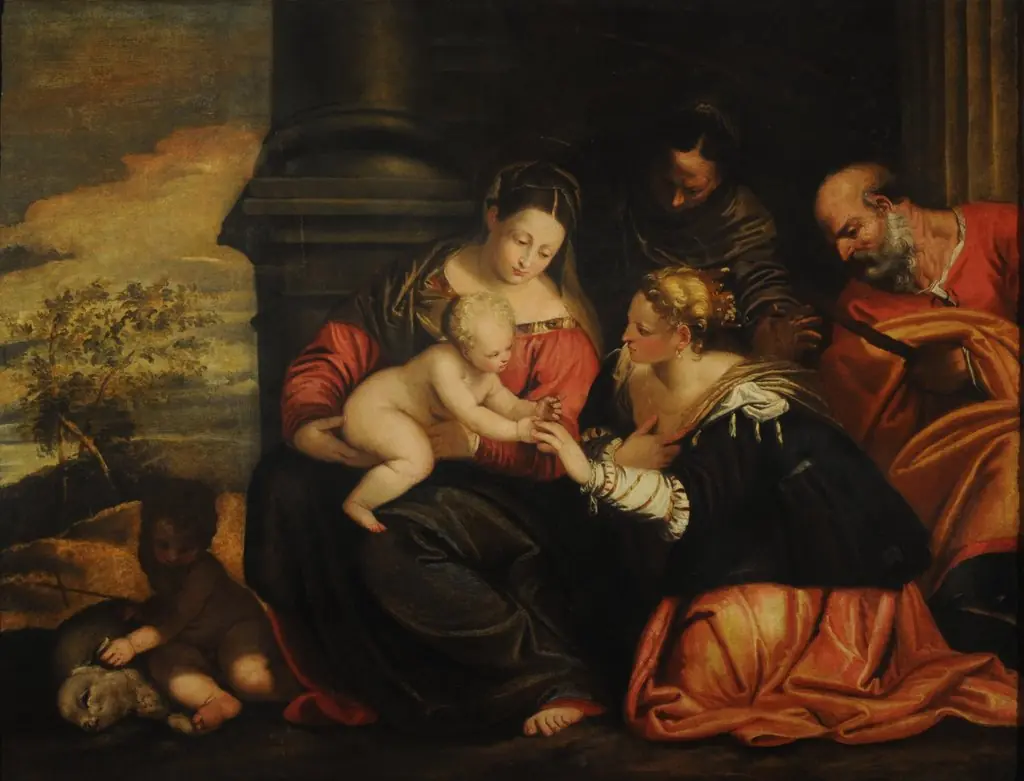 Mystic marriage of Saint Catherine of Alexandria
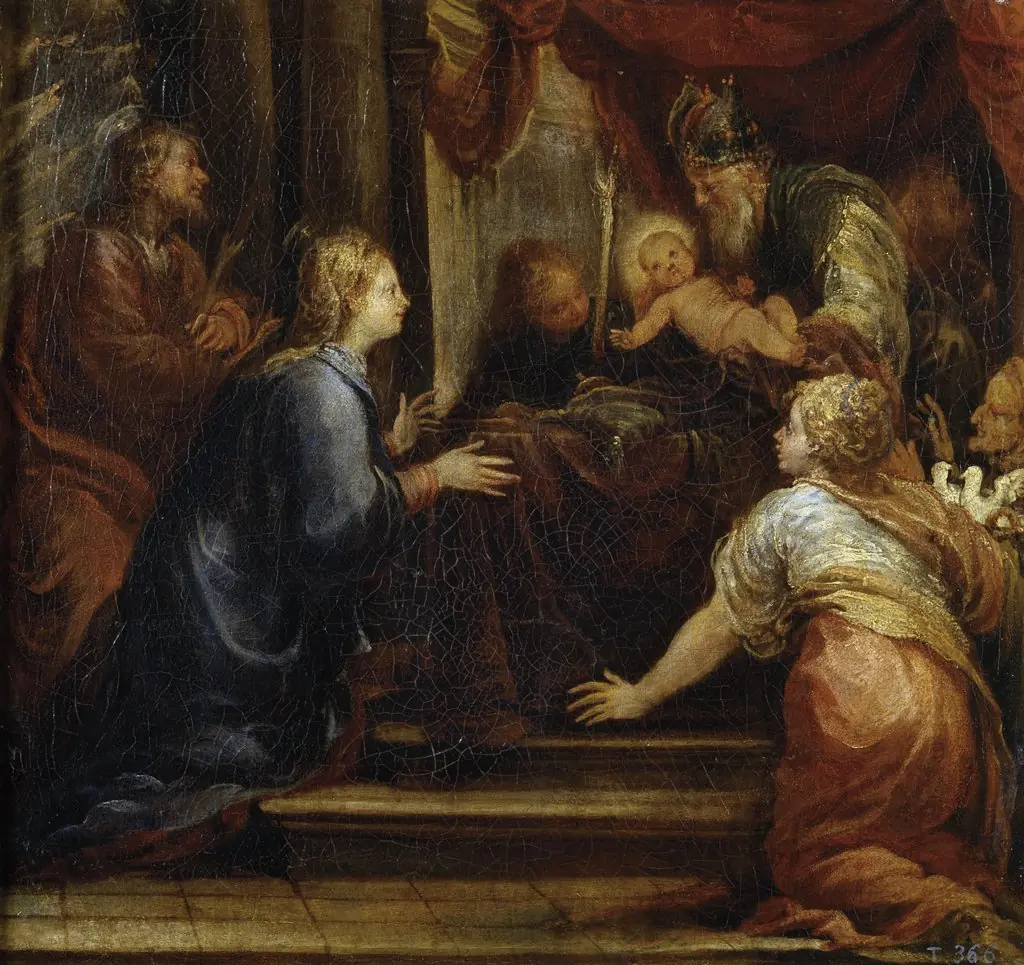 The Presentation of Jesus in the Temple
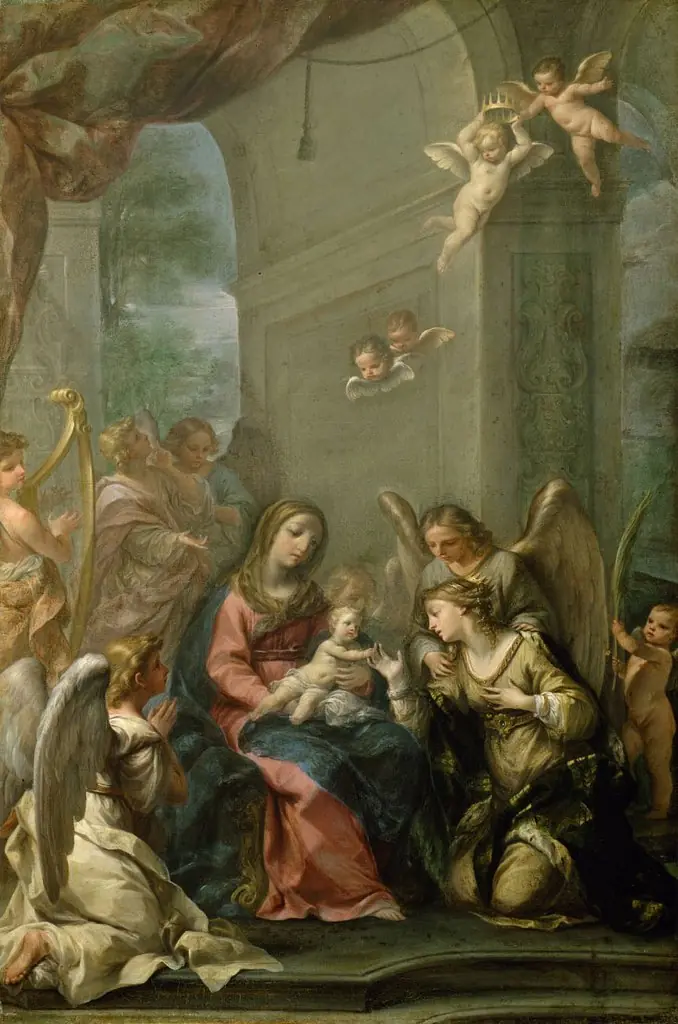 Mystische Verlobung der Hl. Katharina
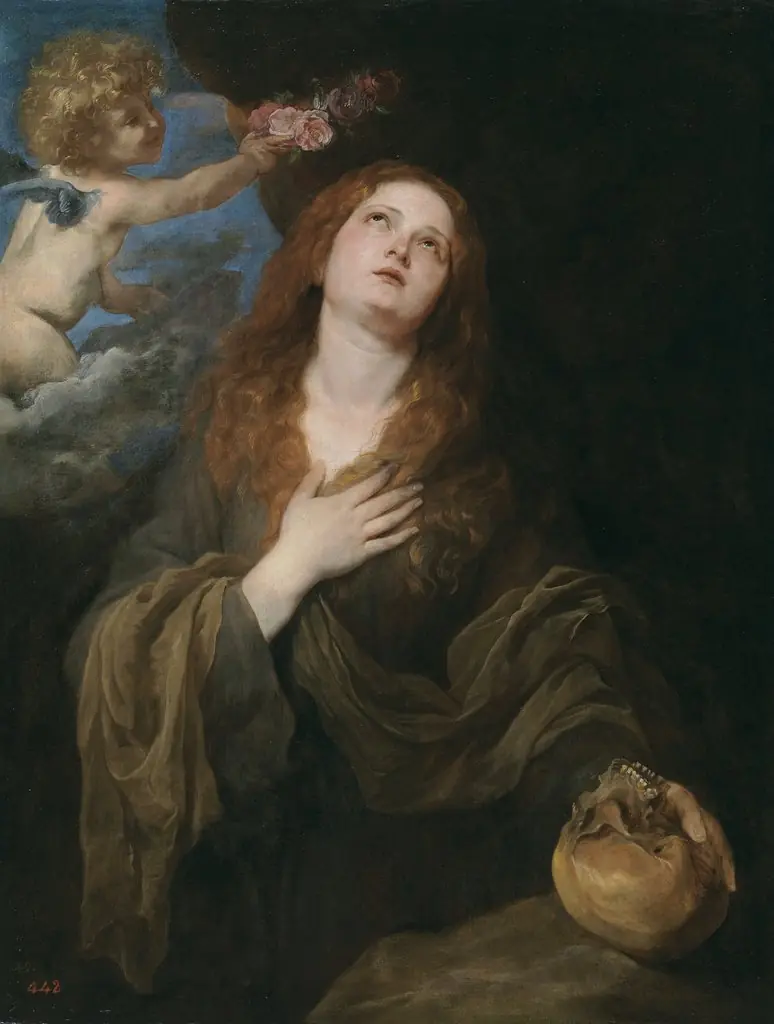 Saint Rosalia