Artwork
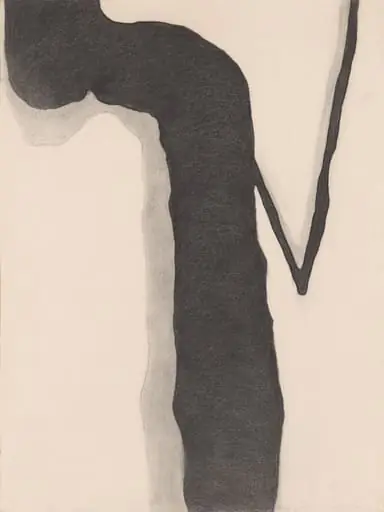
Drawing XIII
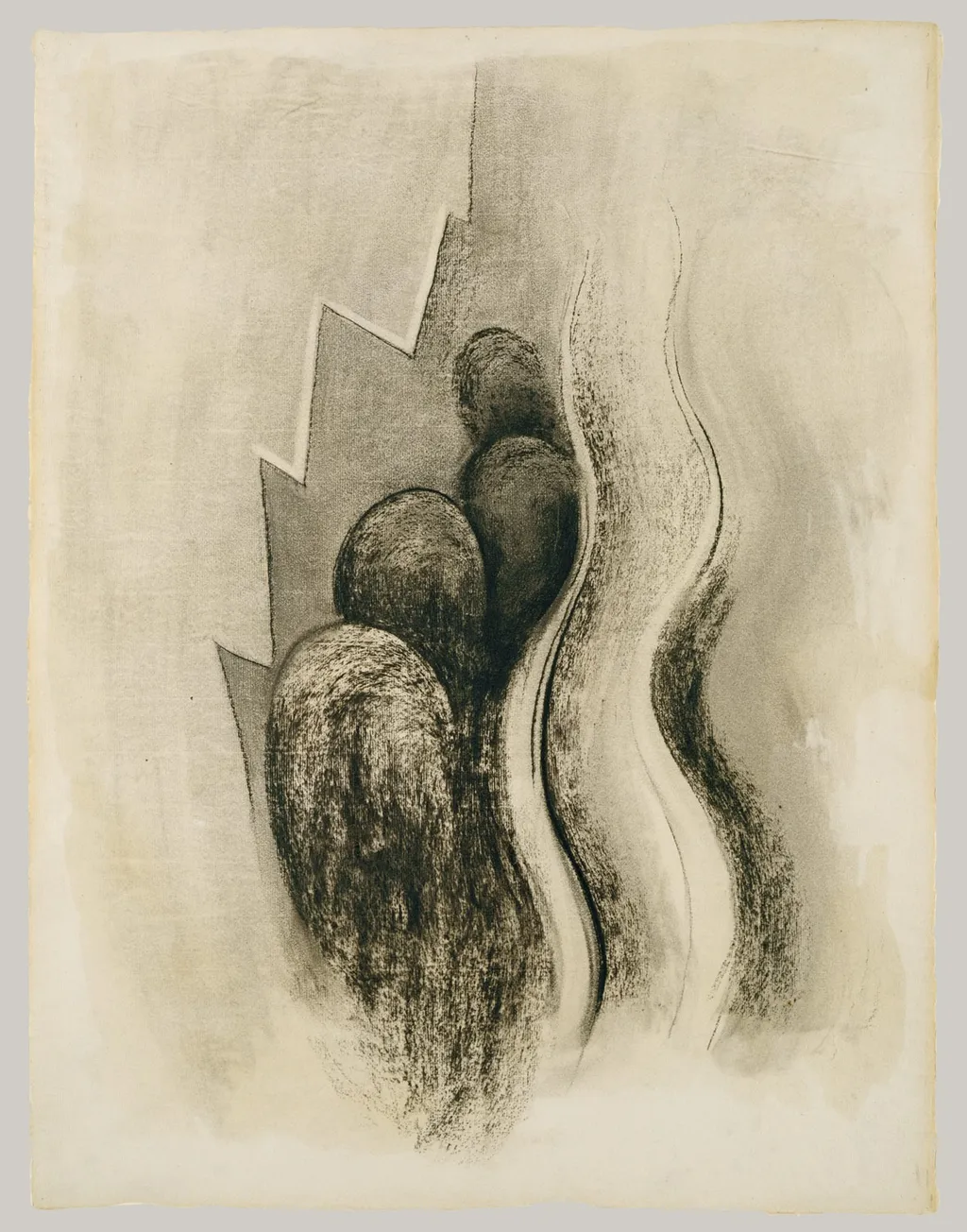
Drawing XIII is an unspecified painting by the Synthetist artist Georgia O'Keeffe. It dates from 1915 and is held in the collection of the Metropolitan Museum of Art.
About this work
The drawings came after three summers studying Arthur Wesley Dow’s design ideas at the University of Virginia.
Drawing XIII is a work by Q46408, dated 1915. The piece is listed with an unknown medium.
It belongs to a series of charcoal drawings that marked O'Keeffe's first major foray into abstract art. The drawings came after three summers studying Arthur Wesley Dow’s design ideas at the University of Virginia. Alfred Stieglitz showed some of them at his 291 gallery the next year.
For a next step, explore abstraction.
Subject & Meaning
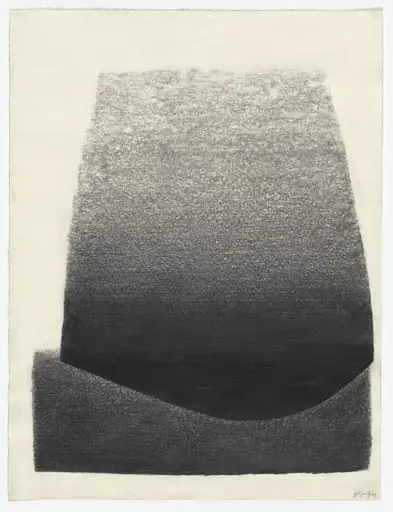
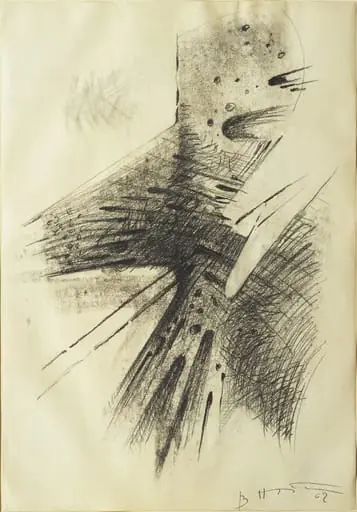
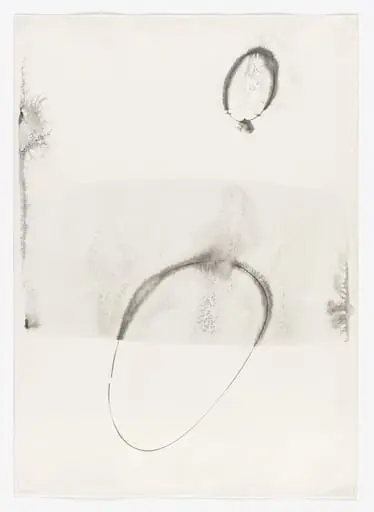
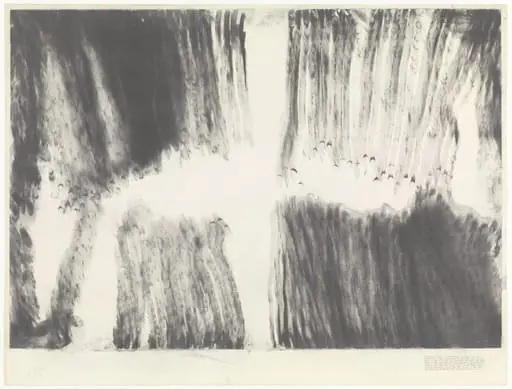
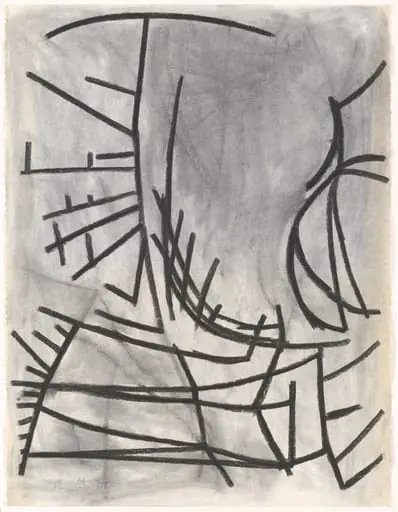
Drawing XIII functions as an abstract composition where O'Keeffe utilized natural rhythms and shapes to express subconscious feelings she termed the "unknown." The work features a curved line on the right side suggesting a rising flame or flowing river, contrasted by a jagged line on the left that evokes a lightning strike or mountains. Between these dynamic elements, four rounded forms appear to represent trees or a rolling hillside.
This approach marked a departure from the Cubist shapes used by other early abstract artists, as O'Keeffe sought to conceptualize her internal visions through radical simplification. The drawing exemplifies her development of a unique design philosophy influenced by Arthur Wesley Dow, focusing on total abstraction derived from personal emotion rather than direct observation.
Technique & Style
Created in 1915, Drawing XIII is a charcoal work on paper that exemplifies Georgia O'Keeffe's radical approach to abstraction. Executed with minimal lines, the piece reflects the influence of Arthur Wesley Dow's design philosophies, emphasizing rhythm and form over representational detail. The composition features a distinct curved line on the right suggesting a rising flame or flowing river, contrasted by a jagged line on the left evoking a lightning strike or mountain range.
Between these elements, four rounded forms appear to depict trees or a rolling hillside. This series marked O'Keeffe's first major exploration of abstract art, utilizing natural rhythms to express subconscious feelings rather than adhering to Cubist shapes. The work is currently held in the collection of the Metropolitan Museum of Art.
History & Provenance
Georgia O'Keeffe created Drawing XIII in 1915 while teaching at Columbia College in South Carolina. This work emerged from a series of innovative charcoal abstractions developed after three summers of instruction at the University of Virginia, where she studied Arthur Wesley Dow's design philosophies. Rather than utilizing Cubist shapes common among early abstract artists, O'Keeffe employed rhythms and forms found in nature to express subconscious feelings.
Early in 1916, O'Keeffe mailed these drawings to her friend and former classmate, Anita Pollitzer. Pollitzer subsequently presented the works to photographer and art dealer Alfred Stieglitz at his 291 gallery. Impressed by the pieces, Stieglitz exhibited ten of the drawings, including this work, at the gallery in April 1916 without prior communication with the artist. The piece is currently held in the collection of the Metropolitan Museum of Art.
Drawing XIII is part of the Metropolitan Museum of Art's collection, where it is catalogued under the museum's inventory of Georgia O'Keeffe works; the precise accession number is not specified in the available sources. The drawing was created in 1915 and was first shown publicly in April 1916 at Alfred Stieglitz's 291 gallery, where ten of O'Keeffe's charcoal abstractions were displayed following their mailing to Stieglitz by O'Keeffe's friend Anita Pollitzer.
Context
Drawing XIII belongs to Georgia O'Keeffe's pivotal 1915 charcoal series that established her leadership in early American abstraction. The work crystallizes her rejection of Cubist-derived geometry in favor of organic rhythms drawn from nature, a stance she framed as translating the "unknown" into visual form. Alfred Stieglitz's immediate acclaim upon seeing these drawings, he called them the "purest, finest, sincerest things" to enter his 291 gallery, helped launch O'Keeffe's public career, with ten of the drawings exhibited in April 1916.
The series emerged after three summers studying Arthur Wesley Dow's design principles at the University of Virginia, which emphasized intuitive composition over mimetic accuracy, aligning with O'Keeffe's later insistence on feeling over observed detail.
Overview
Drawing XIII, created by Georgia O'Keeffe in 1915, represents a pivotal moment in the artist's career. This charcoal drawing is part of a series that marked her initial significant foray into abstract art. Through these works, O'Keeffe began to articulate her inner perceptions and emotions visually, moving away from representational forms. This period laid foundational groundwork for her subsequent explorations in non-objective imagery.
Artist & collection

Artist
Georgia Totto O'Keeffe (November 15, 1887 – March 6, 1986) was an American modernist painter and draftswoman whose career spanned seven decades and whose work remained largely independent of major art movements.