Artist
Georgia O'Keeffe

United States
Georgia O'Keeffe is an United States Modernism artist. 18 works are cataloged here, principally at Museum of Modern Art.
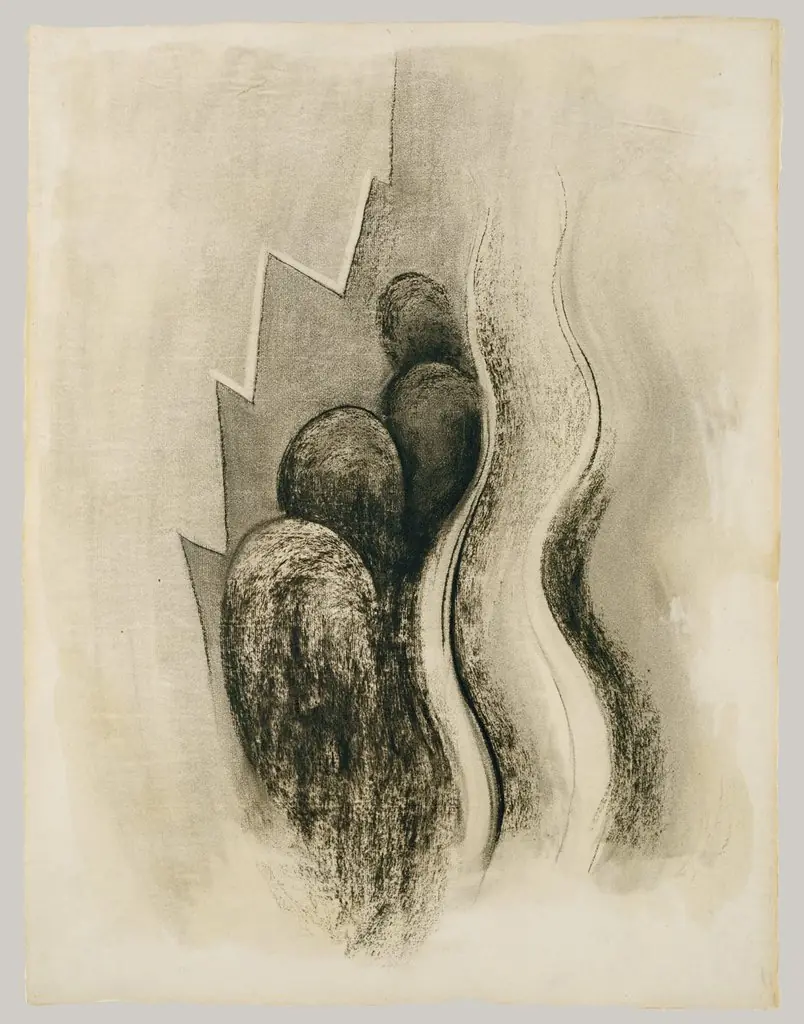
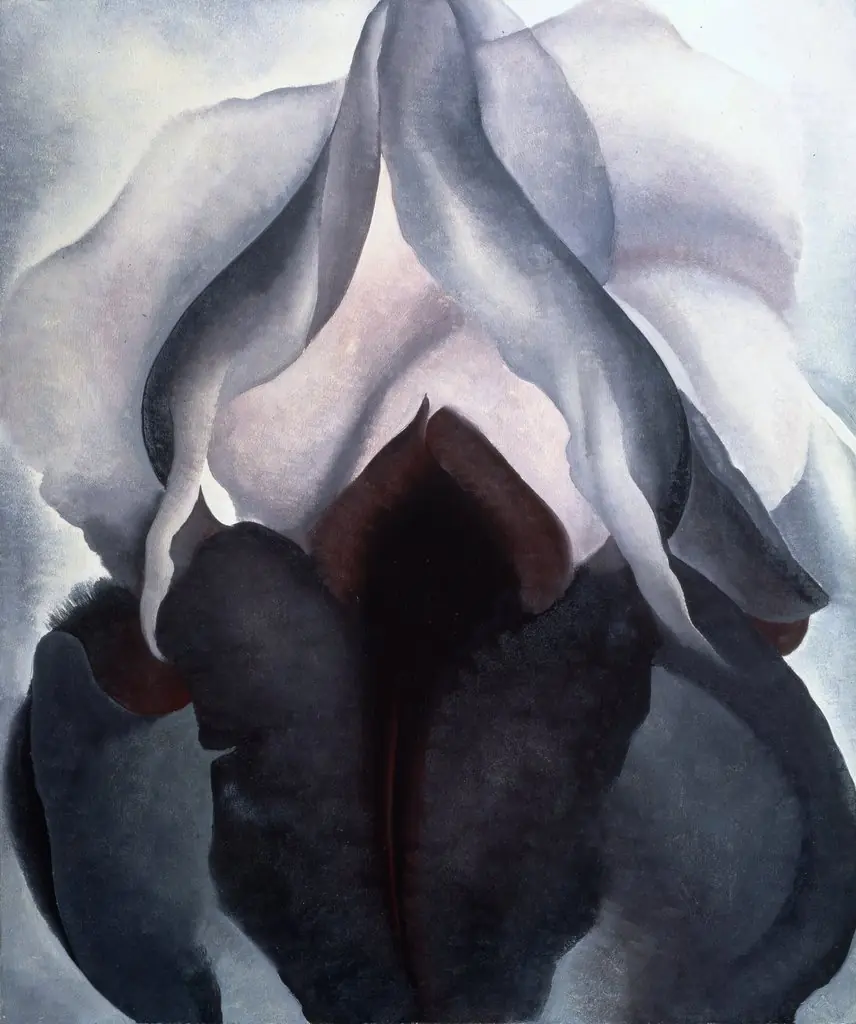
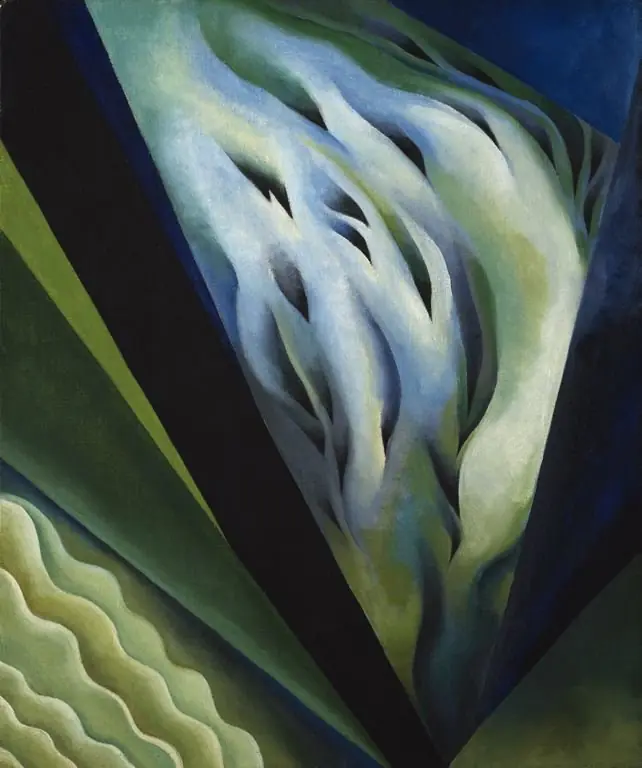
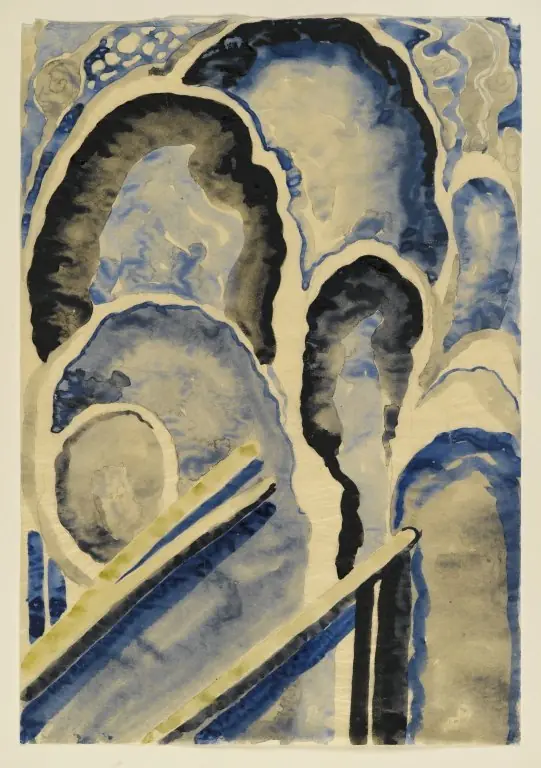
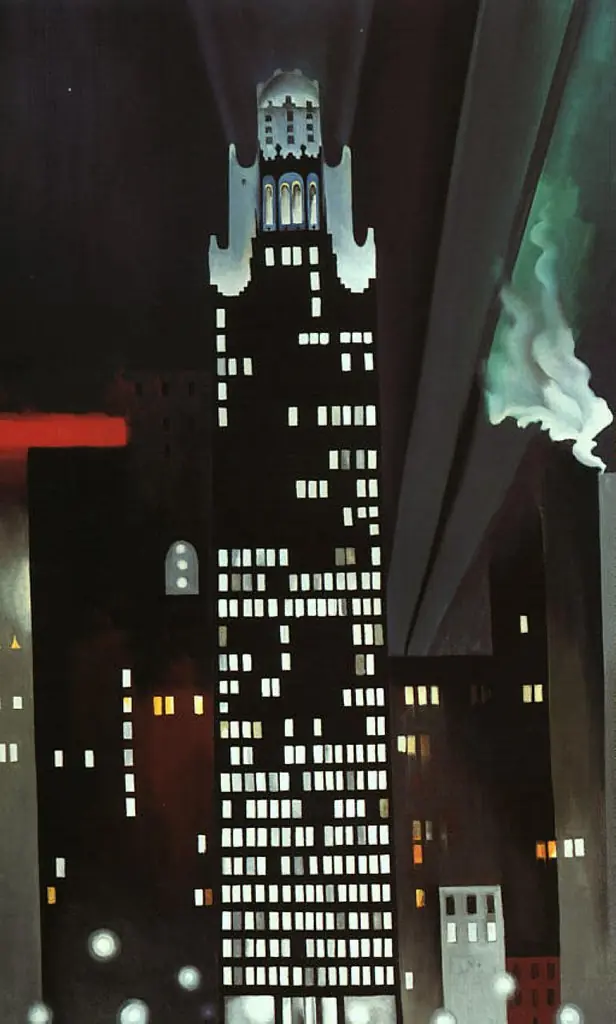
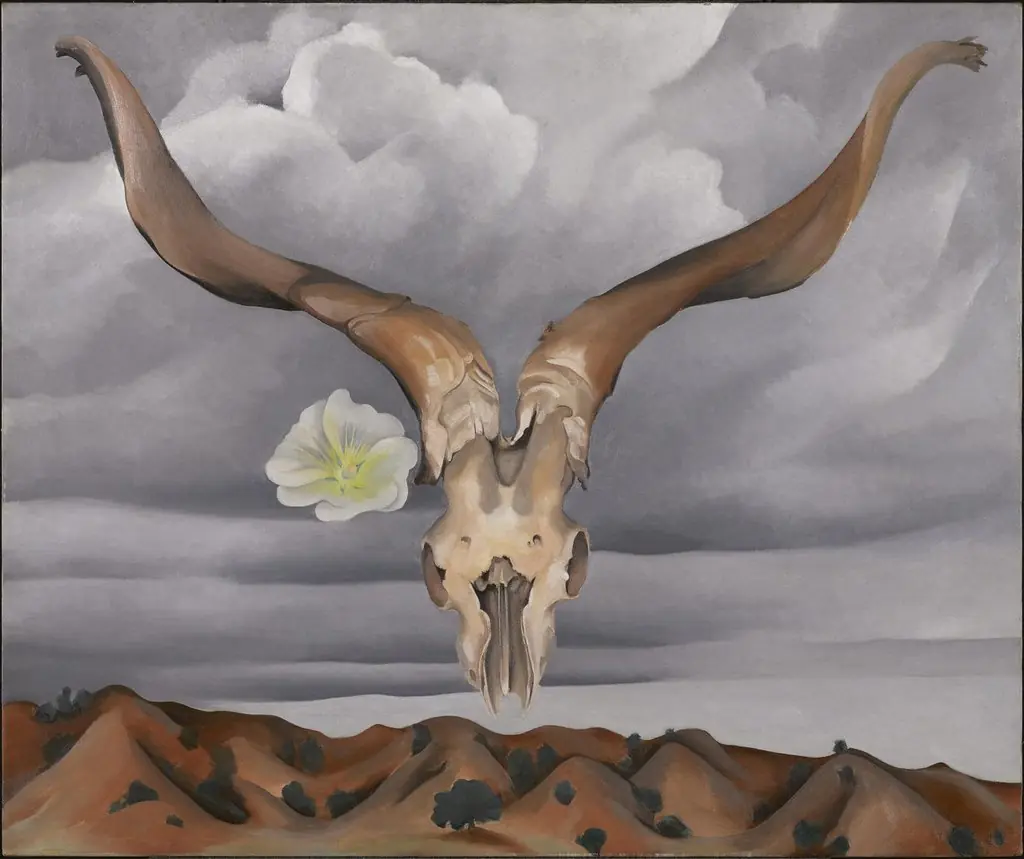
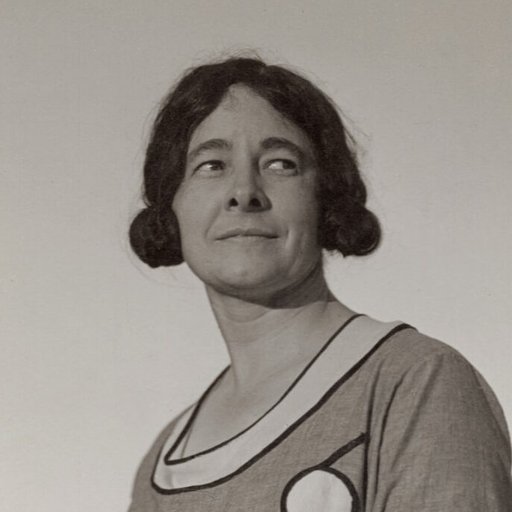
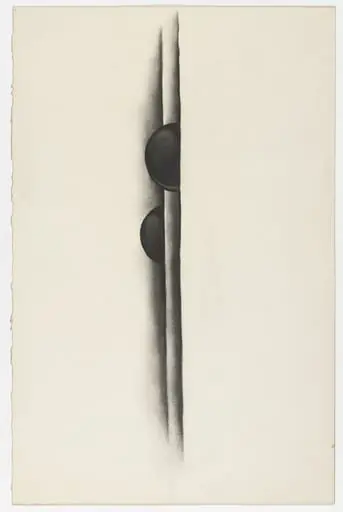
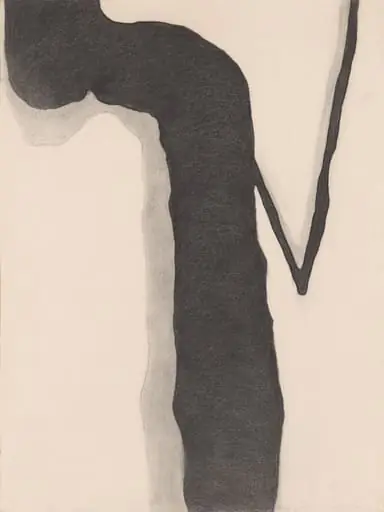
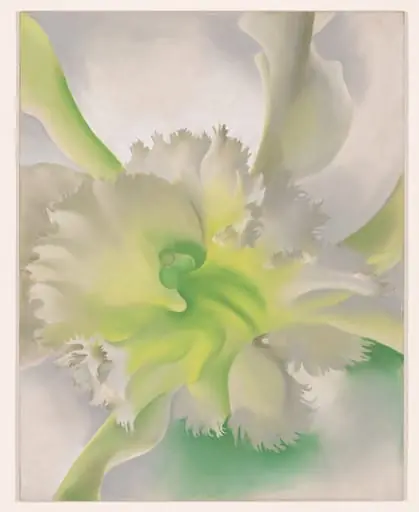
Georgia Totto O'Keeffe (November 15, 1887 – March 6, 1986) was an American modernist painter and draftswoman whose career spanned seven decades and whose work remained largely independent of major art movements. Called the "Mother of American modernism", O'Keeffe gained international recognition for her paintings of natural forms, particularly flowers, hills and desert-inspired landscapes, which were often drawn from and related to places and environments in which she lived. Although she was a figure associated with interpretations regarding feminism, she did not want to be seen as a "woman artist", she wanted to be seen as an artist. From 1905, when O'Keeffe began her studies at the School of the Art Institute of Chicago, until about 1920, she studied art or earned money as a commercial illustrator or teacher to pay for further education. Influenced by Arthur Wesley Dow, she began to develop her unique style through her watercolors during her studies at the University of Virginia and, more dramatically, through the charcoal drawings she produced in 1915 that marked her move toward abstraction. Alfred Stieglitz, an art dealer and photographer, held an exhibit of her works in 1916. Over the next couple of years, she taught and continued her studies at the Teachers College, Columbia University. In June of 1918 O’Keeffe was invited by Stieglitz to live and work in New York City and accepted this invitation as well as his offer to underwrite her year of painting in the city. She resigned from teaching at West Texas State to do so. Stieglitz and O'Keefe developed a professional and personal relationship that led to their marriage on December 11, 1924. In New York, O’Keefe created many reflections of her perception of the city through oil paint, charcoal, pastel, and watercolor. She looked back fondly at her pieces from this time, calling them ‘My New Yorks’. O'Keeffe created many forms of abstract art besides those of the city, including close-ups of flowers, such as the popular Red Canna paintings. O'Keeffe and Stieglitz lived together in New York until 1929, when O'Keeffe began spending part of the year in the Southwest, which served as inspiration for her paintings of New Mexico landscapes and images of animal skulls, such as Cow's Skull: Red, White, and Blue (1931) and Summer Days (1936). She moved to New Mexico in 1949, three years after Stieglitz's death in 1946, where she lived for the next 40 years at her home and studio or Ghost Ranch summer home in Abiquiú, and in the last years of her life, in Santa Fe. In 2014, O'Keeffe's 1932 painting Jimson Weed/White Flower No. 1 sold for $44,405,000—at the time, by far the largest price paid for any painting by a female artist. Her works are in the collections of several museums, and following her death, the Georgia O'Keeffe Museum was established in Santa Fe.
Overview
Georgia Totto O'Keeffe (November 15, 1887, March 6, 1986) was an American modernist painter and draftswoman whose career spanned seven decades. Often called the "Mother of American modernism," she gained international recognition for paintings of natural forms, particularly flowers, hills, and desert-inspired landscapes drawn from the environments in which she lived. Her work occupied a pioneering position at the boundary between figuration and abstraction, and she remained largely independent of major art movements despite her central role in American modernism. Though later associated with feminist interpretations, O'Keeffe resisted being categorized as a "woman artist," insisting on being judged simply as an artist. Her works command significant market value, with her 1932 painting Jimson Weed/White Flower No. 1 selling for $44,405,000 in 2014, at that time the highest price paid for any painting by a female artist.
Biography & dates
O'Keeffe was born on November 15, 1887, in Sun Prairie, Wisconsin, the second of seven children of dairy farmers Francis Calyxtus O'Keeffe and Ida (Totto) O'Keeffe. Her father was of Irish descent; her maternal grandfather, Hungarian count George Victor Totto, inspired her given name. She decided to become an artist by age ten and received early instruction from local watercolorist Sara Mann. After attending high school at Chatham Episcopal Institute in Virginia, graduating in 1905, she enrolled at the School of the Art Institute of Chicago, studying with John Vanderpoel. Illness forced a year's interruption, after which she attended the Art Students League in New York City from 1907 to 1908, studying under William Merritt Chase, Kenyon Cox, and F. Luis Mora. She won the League's William Merritt Chase still-life prize for her oil painting Dead Rabbit with Copper Pot, earning a scholarship to the summer school at Lake George, New York. Financial difficulties caused by her father's bankruptcy and her mother's tuberculosis forced her to abandon formal study in 1908. She worked as a commercial artist and later as a teacher, which supported further education. In 1912, at a summer course at the University of Virginia, she encountered Arthur Wesley Dow's compositional theories, which offered her first access to abstract art. She studied with Dow at Columbia Teachers College from 1914 to 1915. A creative crisis in 1915 led her to destroy most of her previous work and work exclusively in charcoal. Her friend Anita Pollitzer brought these drawings to Alfred Stieglitz's Gallery 291, and Stieglitz included them in a group exhibition in 1916, launching her career. He arranged her first solo exhibition in 1917. In June 1918, Stieglitz invited her to live and work in New York City, underwriting her year of painting there; she resigned from teaching at West Texas State to accept. Their professional and personal relationship led to marriage on December 11, 1924. In New York, she created city views in oil, charcoal, pastel, and watercolor, works she later called "My New Yorks." Beginning in 1929, she spent part of each year in the Southwest, which became essential subject matter. She moved permanently to New Mexico in 1949, three years after Stieglitz's death in 1946, living at Ghost Ranch and Abiquiú, and in her final years in Santa Fe. She received the Presidential Medal of Freedom from President Gerald Ford on January 13, 1977, and the National Medal of Arts in 1985. Vision problems from 1972 limited her painting, though she continued working in pencil and charcoal until 1984. She died on March 6, 1986, at age 98.
Style & movement
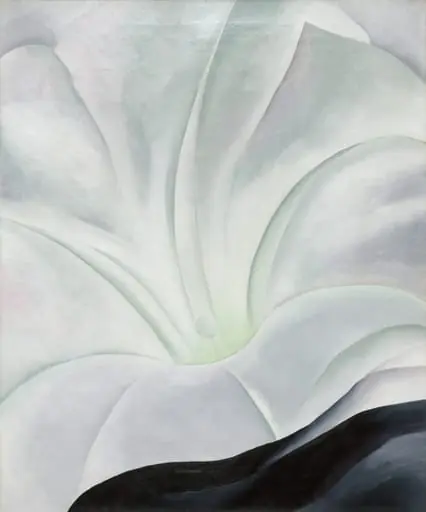
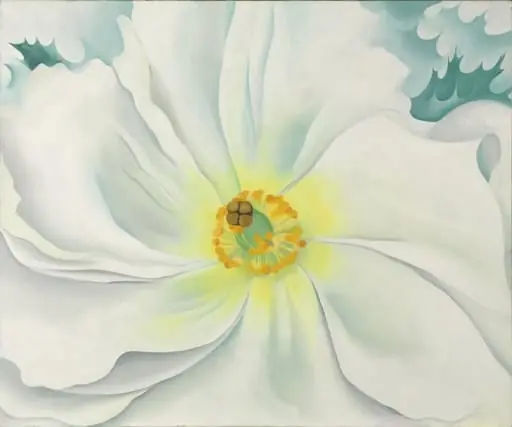
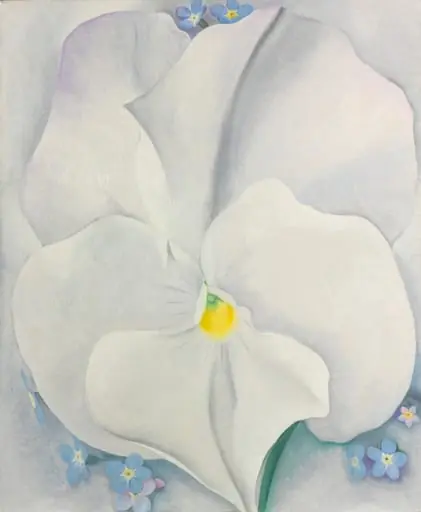
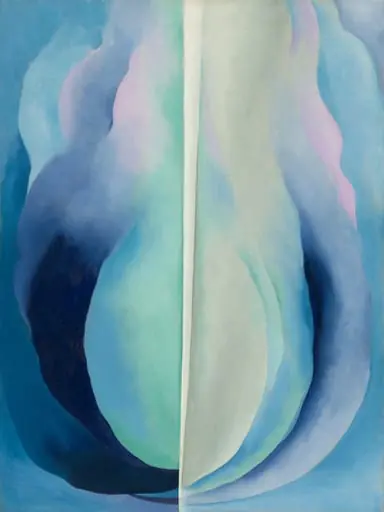
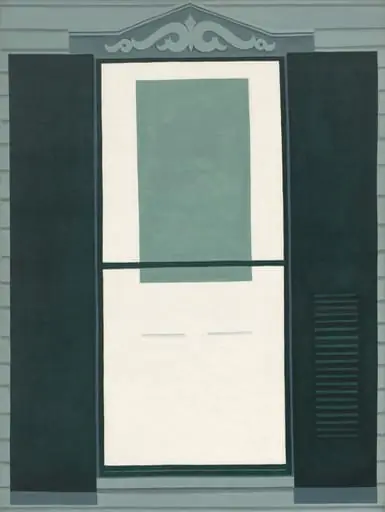
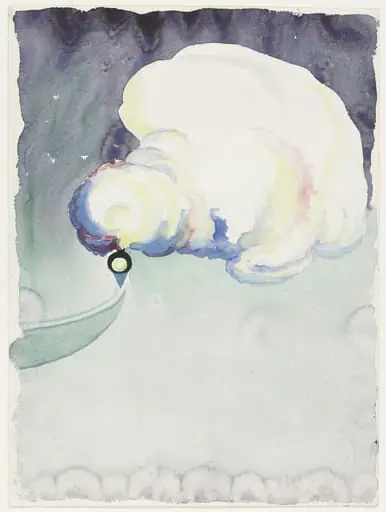
O'Keeffe's artistic development was shaped by Dow's emphasis on line, color, and harmonious shading rather than mimetic representation. Her 1915 charcoal drawings marked a decisive turn toward abstraction. Working at the intersection of figuration and abstraction, she became associated with American modernism and precisionism. Her subjects included flowers treated at close range to the point of near-abstraction, cityscapes and skyscrapers, and later the desert landscapes, bones, and rocks of New Mexico. Her monumental flower paintings of the 1920s, interpreted through the lens of Sigmund Freud's writings, elicited strongly sexualized readings that became a persistent feature of her critical reception. Her paintings frequently presented abstracted contours and forms with subtle tonal variations, transforming subjects into powerful, nearly abstract images. In 1929, Lake George, Window anticipated later American minimalist investigations. From approximately 1930, New Mexico provided her primary inspiration, yielding what critics described as fantastic and visionary landscape imagery. In the 1970s, she began working in clay, and in her late period she painted large cloud formations observed from airplane windows.
Major works
Among O'Keeffe's most celebrated works are her Red Canna paintings, close-up flower studies that became popular in the 1920s. Her New York period produced numerous urban views including skyscrapers and cityscapes. In the Southwest, she painted Cow's Skull: Red, White, and Blue (1931) and Summer Days (1936), the latter among her most renowned works. The Lawrence Tree, inspired by D. H. Lawrence's ranch, emerged from her 1929 trip to Taos. Her 1932 painting Jimson Weed/White Flower No. 1 achieved the record auction price for a female artist in 2014. Her works are held in major collections including the Museum of Modern Art in New York, the Metropolitan Museum of Art, the Whitney Museum of American Art, the Milwaukee Art Museum, the Museo Thyssen-Bornemisza in Madrid, and the Georgia O'Keeffe Museum in Santa Fe, which was established following her death.
Influences & students
Arthur Wesley Dow was the most significant theoretical influence on O'Keeffe's early development; his compositional methods, encountered through her teacher Alon Bement at the University of Virginia and directly at Columbia Teachers College, provided her framework for moving beyond academic realism. Alfred Stieglitz was pivotal to her career as promoter, dealer, and husband; his Gallery 291 was the only venue in New York showing modern art, and his 1916 exhibition of her charcoals established her professionally. Through Stieglitz's circle, she closely encountered modernists including Charles Demuth, Arthur Dove, Marsden Hartley, John Marin, Paul Strand, and Edward Steichen. Stieglitz made more than 350 photographic portraits of her, and their artistic relationship was mutually sustaining. She was a member of the National Woman's Party for over three decades. There is no record of pupils or formal teaching relationship after her early career; her influence operated through exhibition and example rather than pedagogy.
Legacy
O'Keeffe's posthumous institutional presence is anchored by the Georgia O'Keeffe Museum in Santa Fe. Her market significance was confirmed by the 2014 sale of Jimson Weed/White Flower No. 1 for $44,405,000. She received major retrospectives during her lifetime at the Brooklyn Museum (1927), the Art Institute of Chicago (1943), and the Museum of Modern Art (1943), the latter being the first retrospective MoMA had accorded a female artist. The Whitney Museum of American Art organized a significant 1970 retrospective that restored her visibility after her work had been somewhat eclipsed by developments of the 1960s. Posthumous exhibitions include shows at the Whitney Museum of American Art (2009), Kunsthalle der Hypo-Kulturstiftung in Munich (2012), and the Centre Pompidou in Paris (2021). Her cultural afterlife includes two dramatized television films: A Marriage: Georgia O'Keeffe and Alfred Stieglitz (1991), with Jane Alexander, and Georgia O'Keeffe (2009), with Joan Allen. She was elected to the American Academy of Arts and Letters in 1962 and the American Academy of Arts and Sciences in 1966.
Works by Georgia O'Keeffe

Collections represented


Artists in a similar vein