Artwork
北宋 傳屈鼎 夏山圖 卷|Summer Mountains
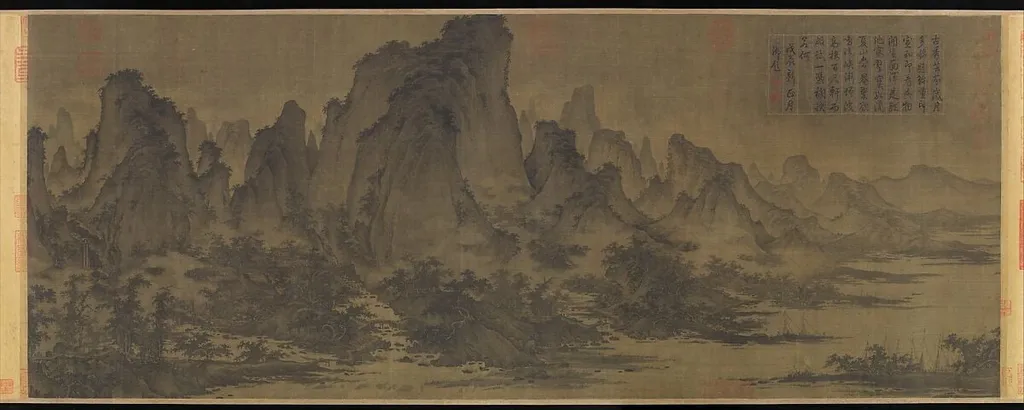
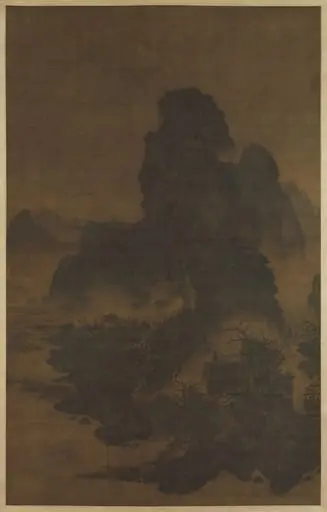
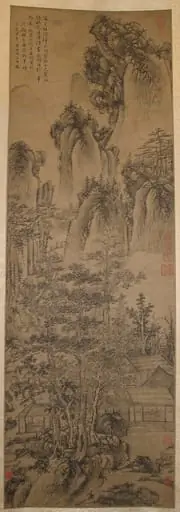
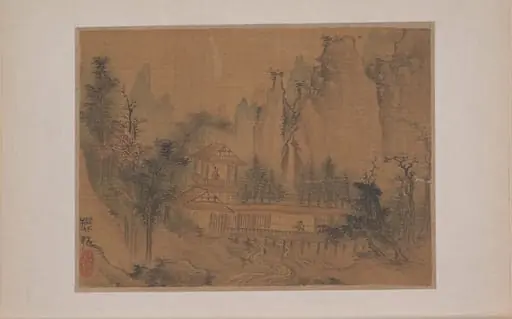
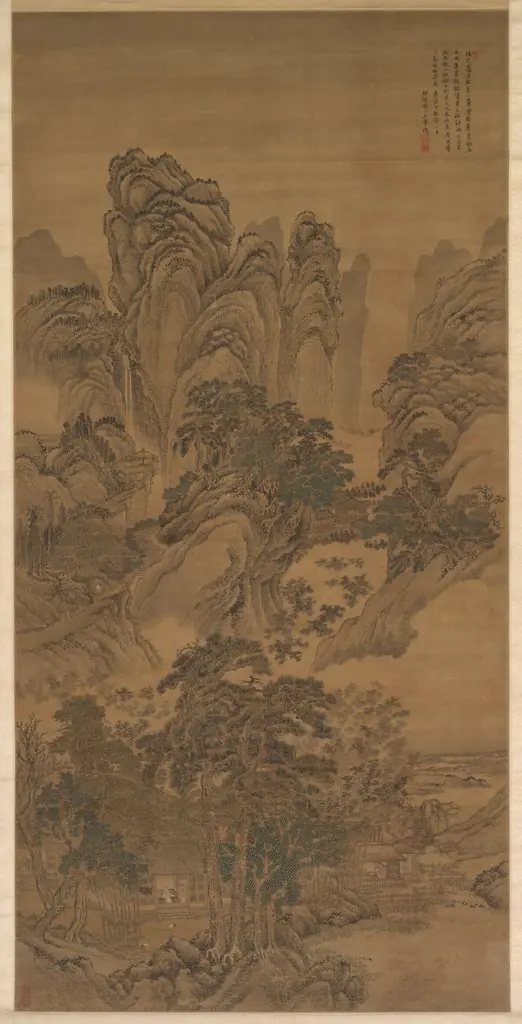
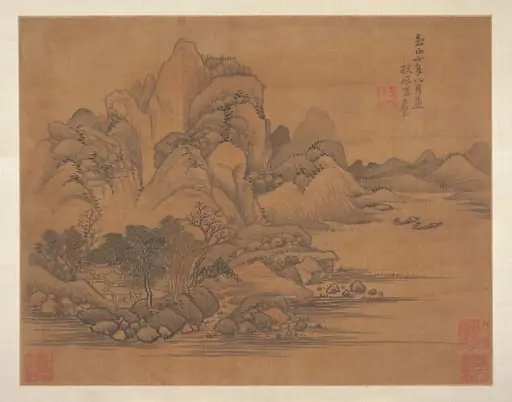
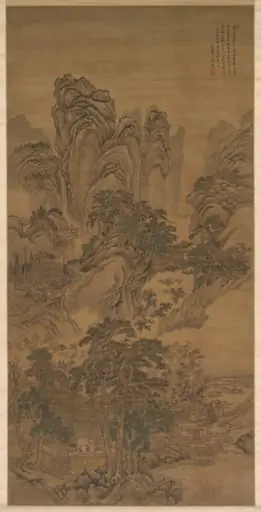
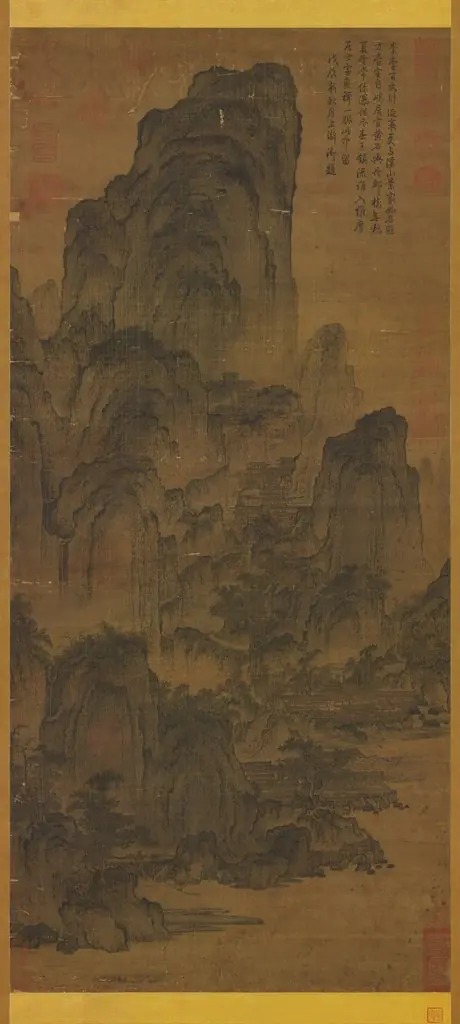
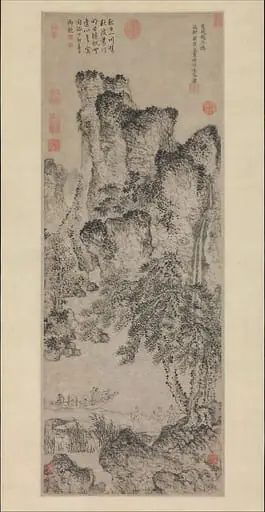
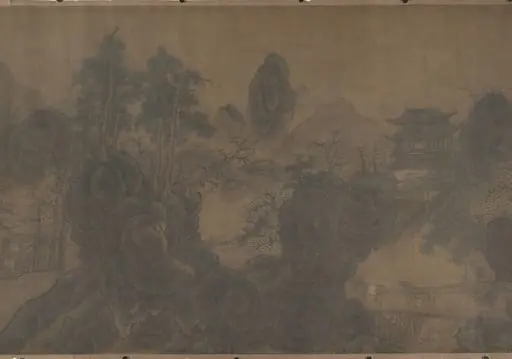
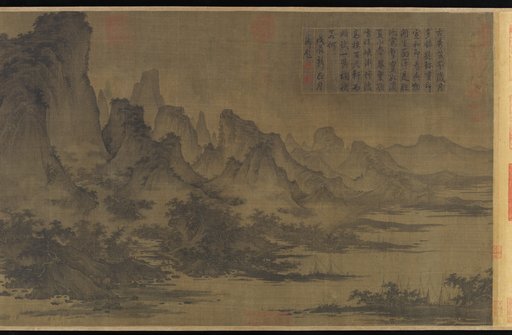
北宋 傳屈鼎 夏山圖 卷|Summer Mountains is an ink painting by the Song dynasty landscape artist Qu Ding. It dates from 1050 and is held in the collection of the Metropolitan Museum of Art.
- Accession no.
- 1973.120.1
- Credit line
- Ex coll.: C. C. Wang Family, Gift of The Dillon Fund, 1973
About this work
Subject & Meaning
Attributed to the Northern Song artist Qu Ding and dated to 1050, this handscroll depicts a continuous landscape dominated by mountainous terrain.
Attributed to the Northern Song artist Qu Ding and dated to 1050, this handscroll depicts a continuous landscape dominated by mountainous terrain. Executed in ink and color on silk, the work functions as a representative example of the landscape painting genre from this period. The visual subject matter focuses entirely on natural topography, presenting a summery vista of peaks and valleys without explicit narrative figures or symbolic allegories detailed in the available records.
As a monumental scroll housed in the Metropolitan Museum of Art, the piece embodies the Northern Song aesthetic pursuit of capturing the grandeur and structural complexity of the natural world. The composition serves primarily as a depiction of the physical environment, reflecting the era's artistic priority on observing and rendering the vastness of mountains and the atmospheric conditions of the season.
Technique & Style
The work is executed as an ink-and-color handscroll on silk, a format and support consistent with Northern Song courtly landscape practices. The pigments and ink are applied in layered, modulated washes to model the layered contours of the towering, jagged peaks, while fine brush lines articulate rocky outcrops and pine foliage. The handling favors recession through stacked, volumetric forms rather than linear perspective, producing a rhythmic alternation of solid mass and negative void.
The scroll’s dimensions, approximately 45.4 cm in height and 115.3 cm in length, allow for a compact yet expansive composition that unfolds rhythmically across the silk support.
History & Provenance
The handscroll Summer Mountains is attributed to the Northern Song artist Qu Ding and is dated to approximately 1050. Executed in ink and color on silk, the work depicts a mountainous landscape. Current records indicate the scroll is held in the collection of the Metropolitan Museum of Art in New York.
While the specific commissioning patron and the detailed chain of ownership prior to its arrival at the museum are not detailed in the provided sources, the work remains a significant example of Northern Song landscape painting from the mid-eleventh century.
Overview
Created around 1050, Summer Mountains is a handscroll attributed to the Song dynasty artist Qu Ding. Rendered in ink and light color on silk, this painting presents an expansive landscape of mountains and rivers. It stands as a notable example of the period's landscape tradition and is one of the few works confidently associated with the painter.
Artist & collection
Artist
Qu Ding (ca. 1023–ca. 1056) (Chinese: 屈鼎) was a Chinese painter of the Song dynasty. He learned the art of painting from Yan Wengui, a master artist of that time period. His work, Summer Mountains, currently held at the…