Artwork
The Tinker (Le retameur)
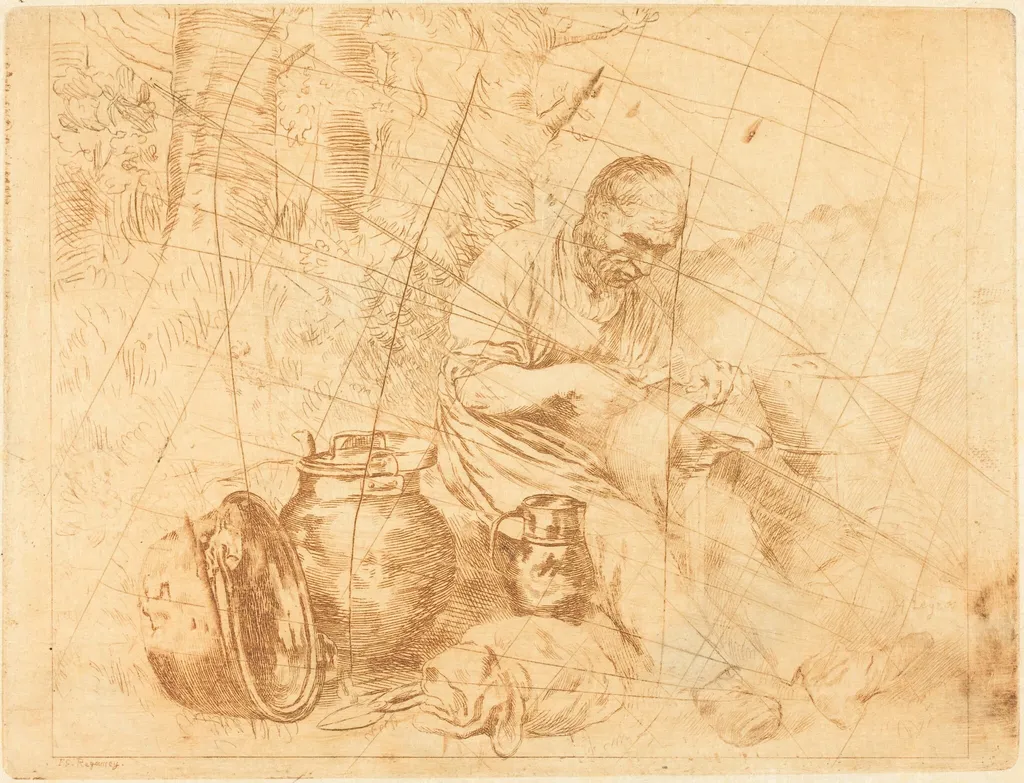
The Tinker (Le retameur) is an ink print by the Romanticist artist Felix Régamey. It dates from 1876 and is held in the collection of the National Gallery of Art.
About this work
Overview
Created in 1876, The Tinker (Le retameur) is a brown‑toned etching by French artist Félix Régamey. Executed as a cancellation proof, the work presents a solitary figure engaged in metalwork, rendered in fine, pen‑like lines that emphasize texture over colour.
Subject & Meaning
The composition centers on a hunched laborer bent over a pot, manipulating a tool with focused hands. A small cup and a larger vessel lie nearby, suggesting a workshop setting. The surrounding wavy strokes evoke steam or water, while faint botanical sketches in the corners hint at a modest, perhaps rural, environment.
Technique & Style
Régamey employed the etching process, working on a copper plate and using acid to incise the image. The brown cancellation proof highlights the artist’s attention to line work, allowing the texture of the figure’s clothing and the movement of his hands to emerge with a pen‑like clarity. The limited palette reinforces the drawing quality of the print.
History & Provenance
The piece originates from Régamey’s late nineteenth‑century output, a period when he explored everyday subjects through printmaking. As a cancellation proof, it likely served as a test print before the final edition, offering insight into the artist’s preparatory stages.
Context
During the 1870s, French printmakers often turned to scenes of manual labor to reflect social realities. Régamey’s focus on a tinker aligns with this trend, presenting a dignified portrayal of a craftsman amidst the industrial changes of the era.
Own this work as a print
Artist & collection


- Desert Landscape with a Hermit (verso)
 Youth Sitting on a Wall in Conversation with Two Men
 Democritus Meditating
 Holy Family
 Landscape with a Boy Fishing
 The Kneeling Hermit Facing Left
 Le Scélérat Damiens
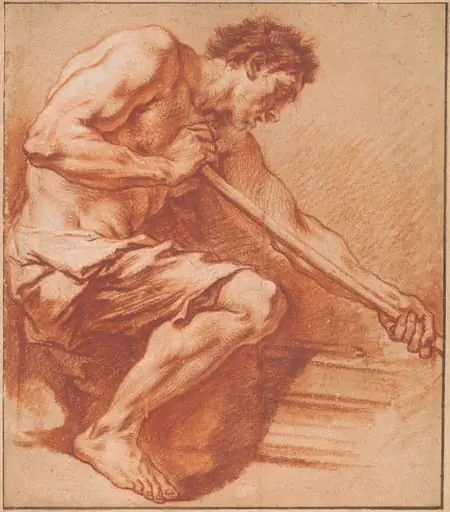 Worker at a Forge
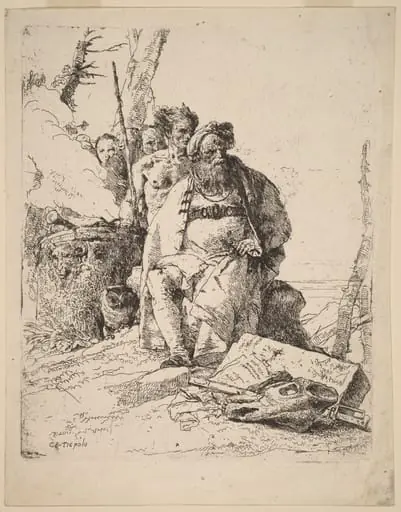 Seated Magician with Other Figures beside an Altar
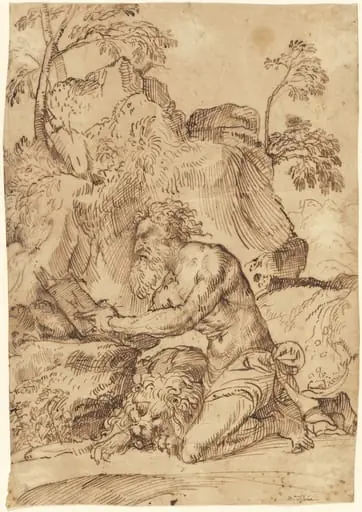 Saint Jerome Reading in the Wilderness
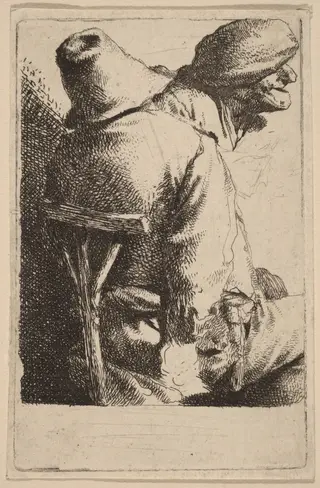 The Seated Peasant and His Wife
 A Bearded Man with a Staff