Artwork
Untitled
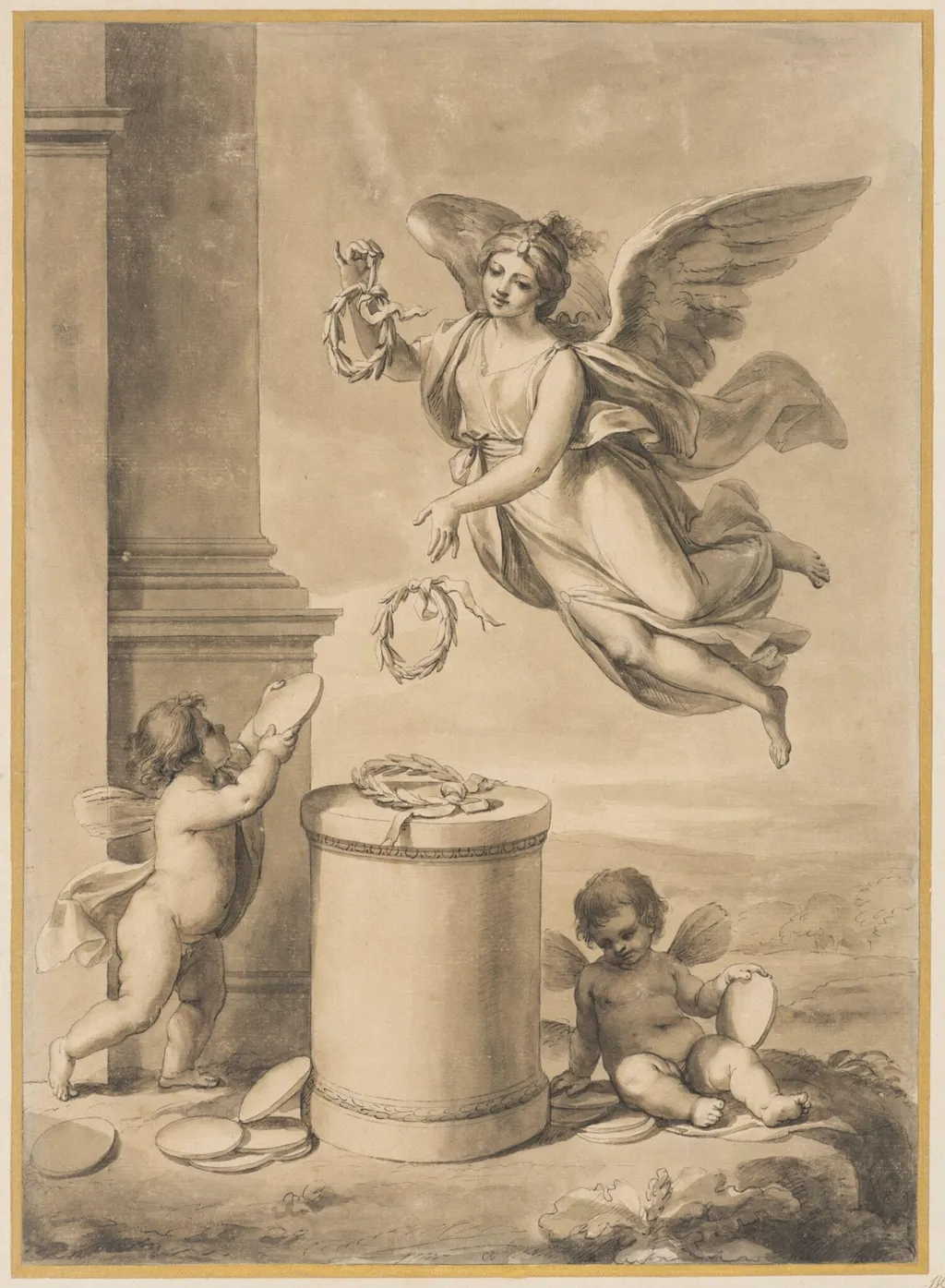
Untitled is a drawing by the Romanticist artist Biagio Rebecca. It dates from 1772 and is held in the collection of the Victoria and Albert Museum.
About this work
Overview
This drawing likely served as a preparatory study for an engraved award, possibly issued by a learned or artistic society such as the Society of Arts.
This drawing likely served as a preparatory study for an engraved award, possibly issued by a learned or artistic society such as the Society of Arts. Its purpose was functional rather than purely decorative, intended for reproduction as a printed token of recognition. The paper mount bears the mark of William Esdaile, a known 19th-century collector, and later passed into the hands of Charles Rogers, indicating its value as a preserved artifact of institutional culture.
Subject & Meaning
The image depicts a classical female figure, likely representing an allegory of artistic achievement or civic virtue. Rendered in a restrained neoclassical idiom, the figure embodies the ideals promoted by prize-giving institutions of the period: order, refinement, and intellectual merit. The composition was designed not for display alone but to be transformed into a reproducible emblem, linking individual accomplishment to institutional authority.
Technique & Style
Executed in pencil or ink with careful linework, the drawing reflects a disciplined approach typical of preparatory studies for engraving. The forms are simplified yet precise, emphasizing clarity over expressive detail. The figure’s pose and drapery follow neoclassical conventions, drawing from ancient sculpture while adapting to the demands of reproductive printmaking. The absence of color underscores its role as a working model.
History & Provenance
The drawing was once owned by William Esdaile, a noted collector of prints and drawings, whose distinctive mount and collector’s stamp confirm its early provenance. It later entered the collection of Charles Rogers, another prominent figure in 19th-century British print culture. Its survival as a standalone sheet suggests it was valued beyond its original function, preserved as a relic of institutional practice.
Context
In early 19th-century England, societies like the Society of Arts awarded engraved certificates to recognize excellence in design, manufacturing, or the arts. Artists such as Biagio Rebecca were commissioned to create designs for these tokens, as well as for admission tickets and promotional prints. This drawing is one of many such works in the V&A’s holdings, illustrating how fine art and civic ritual intersected in public life.
Legacy
Though created for temporary use, the drawing endures as evidence of a broader system in which art served institutional goals. Its preservation by collectors highlights a shift in perception, from functional object to historical document. Rebecca’s role as a designer of printed awards underscores the quiet but vital contributions of artists who shaped public recognition through reproducible imagery.
Own this work as a print
Artist & collection
Artist

- Allegorical Portrait of Pierre Buirette de Belloy
 Louise Albertine de Brandt, Baroness von Grapendorf
 Fleuron for the Title Pages
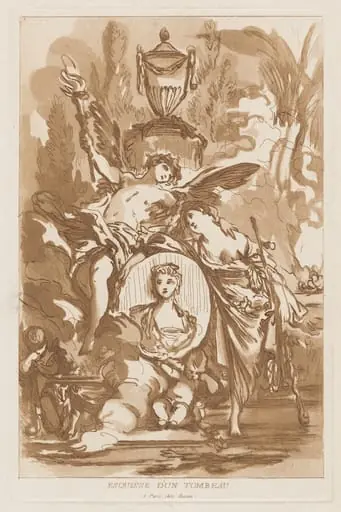 Esquisse d’un tombeau (Sketch for a Tomb)
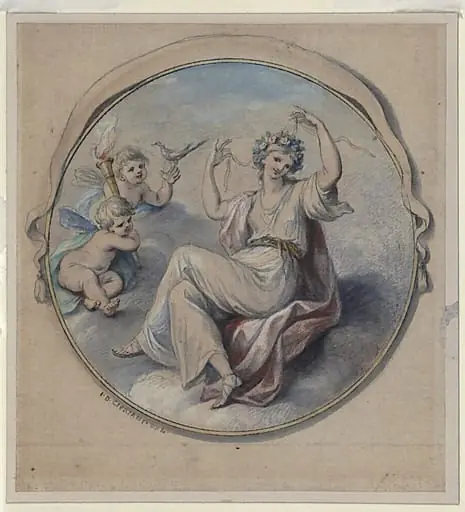 Venus binding her hair with a garland, attended by Cupids
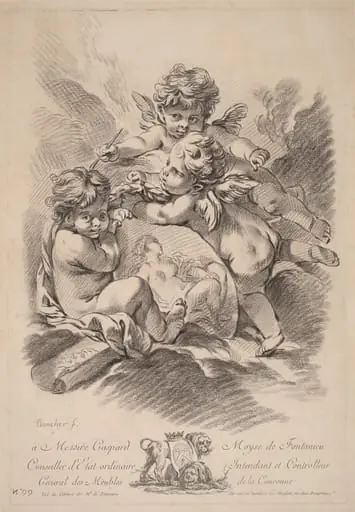 Allegory of Painting with Three Cherubs (99)
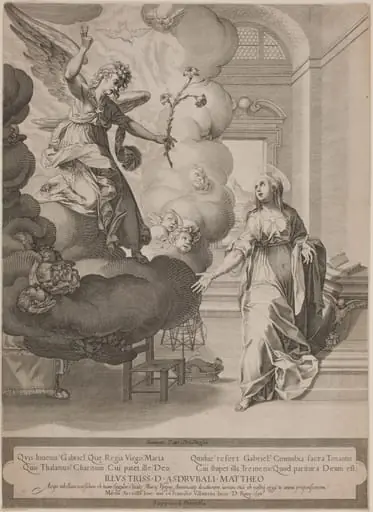 The Annunciation
 Clytie Repulsing Cupid
 Alegoría de la Primavera
 Tragedy
 Allegorical Scene: Couple before a Statue
 Book of Fountains: No. 7