Artwork
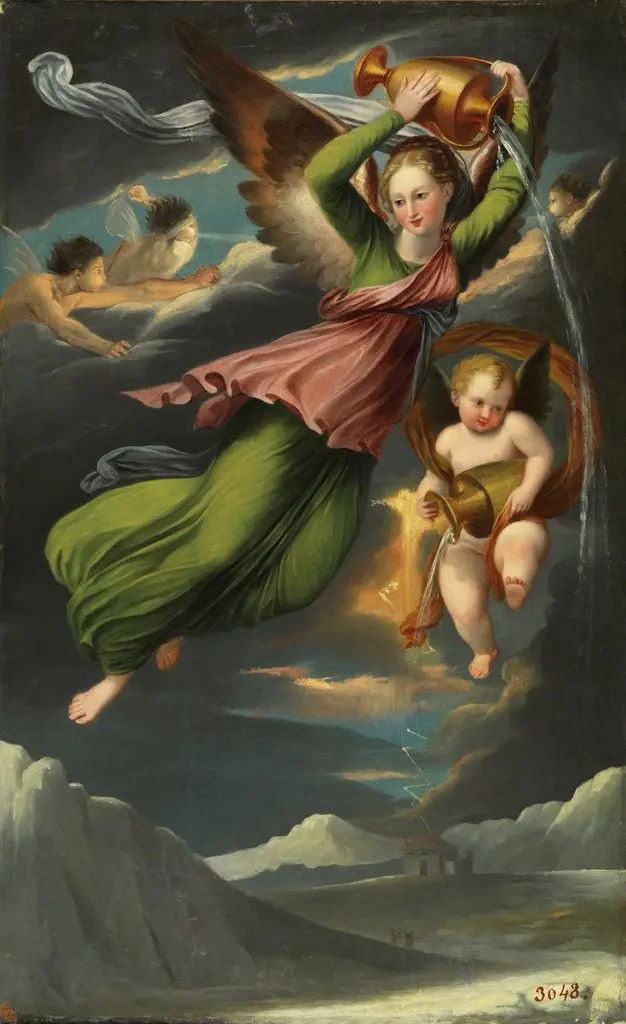
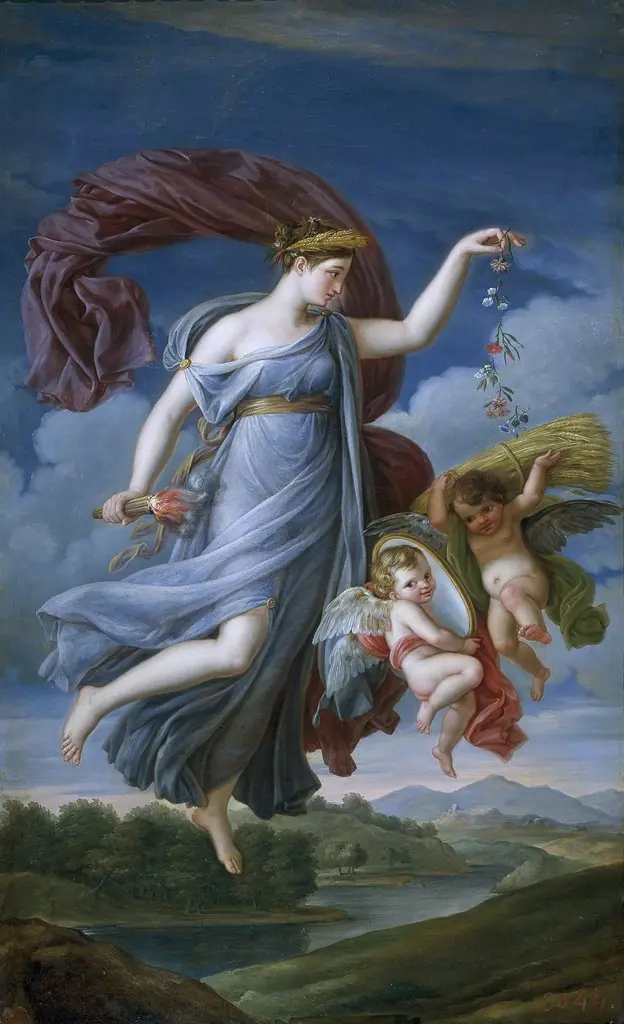
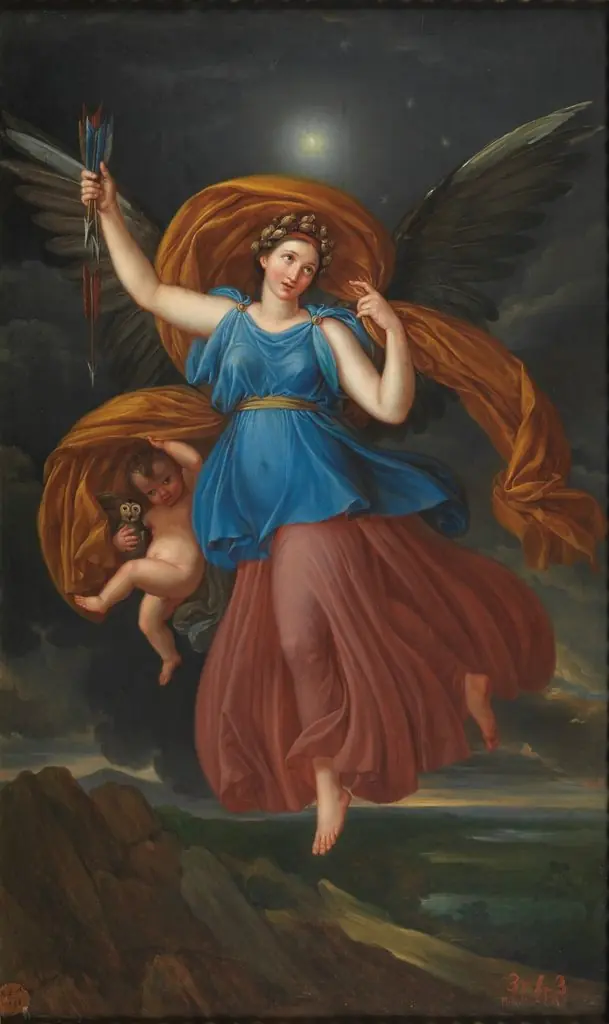
Alegoría de la Primavera
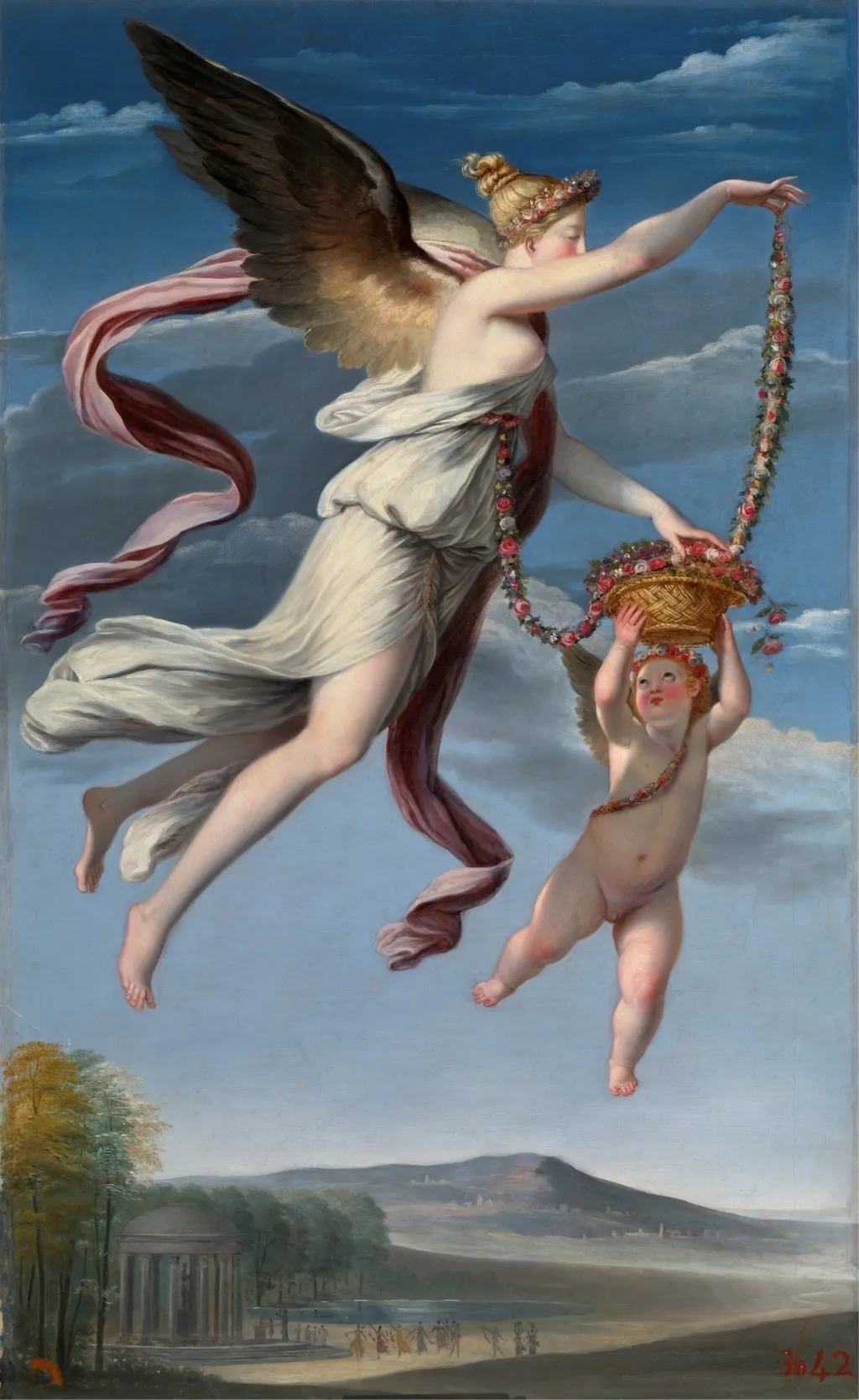
Alegoría de la Primavera is an oil painting by the Spanish Baroque Tenebrist artist José de Madrazo y Agudo. It dates from 1819 and is held in the collection of the Museo del Prado.
About this work
Overview
Alegoría de la Primavera is a 1819 oil painting by José de Madrazo y Agudo, a Spanish artist known for introducing Neoclassicism to Spain. The work is part of the Museo del Prado's collection.
Subject & Meaning
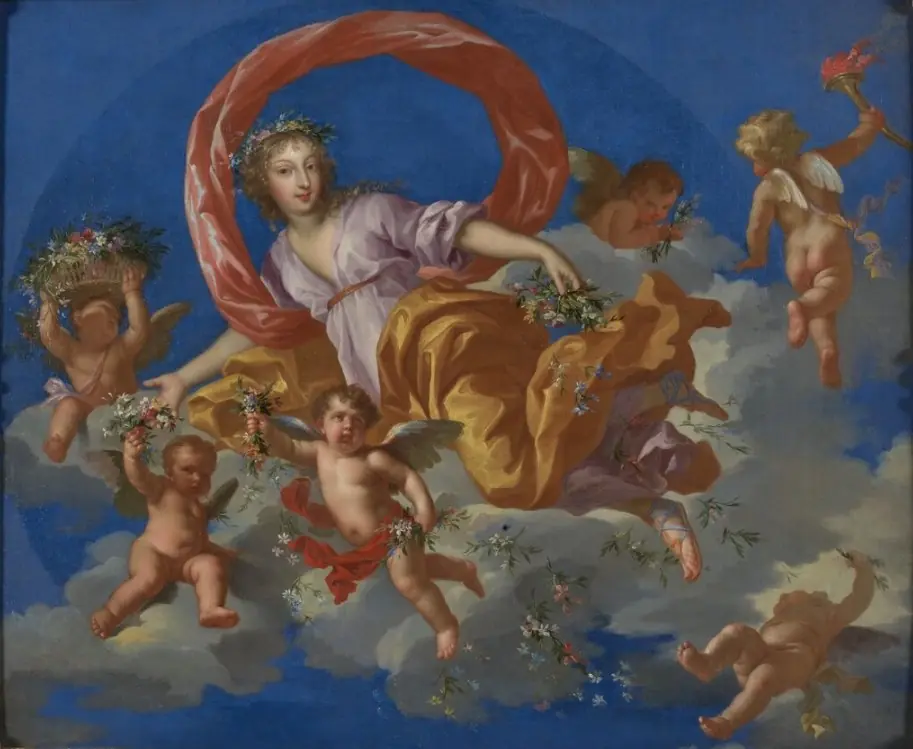
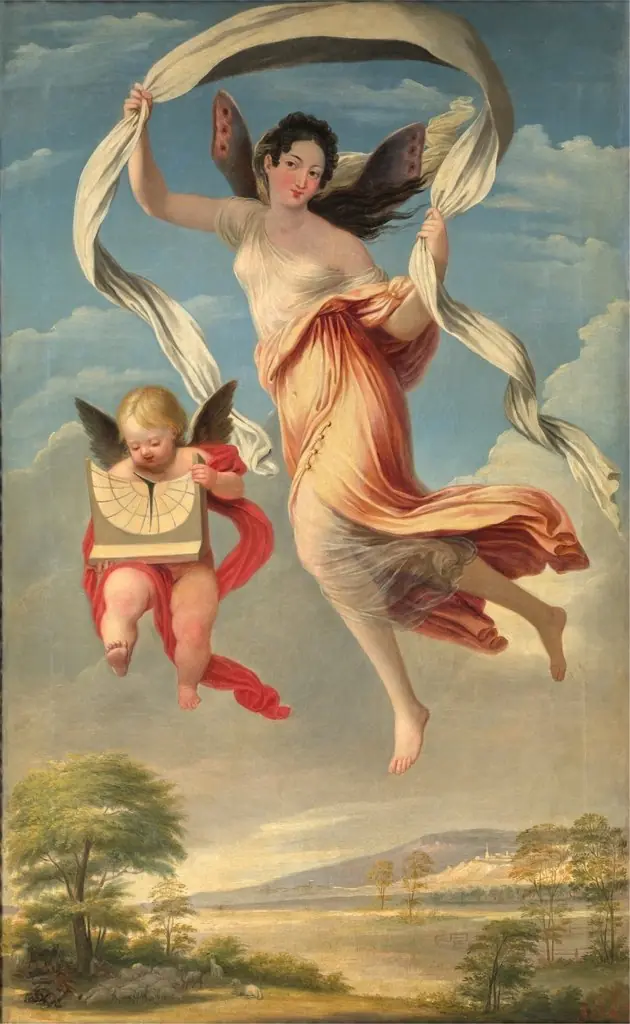
The painting depicts a winged woman in a white dress with red trim, floating above a landscape with a basket of flowers. A smaller winged child floats below her, reaching upwards. The scene is an allegory, with the woman likely representing Spring.
Technique & Style
The painting combines elements of Neoclassicism, associated with Madrazo, and the Spanish Baroque tenebrist style, characterized by strong chiaroscuro contrasts. The figures are rendered in glowing tones against a bright blue sky with soft clouds.
History & Provenance
Created in 1819, Alegoría de la Primavera is held in the Museo del Prado, a prominent Spanish art museum. Madrazo was the patriarch of an influential artistic family and played a significant role in shaping Spanish art during his time.
Artist & collection

Artist
José de Madrazo y Agudo (22 April 1781 – 8 May 1859) was a Spanish painter and engraver; one of the primary exponents of the Neoclassical style in Spain.