Artwork
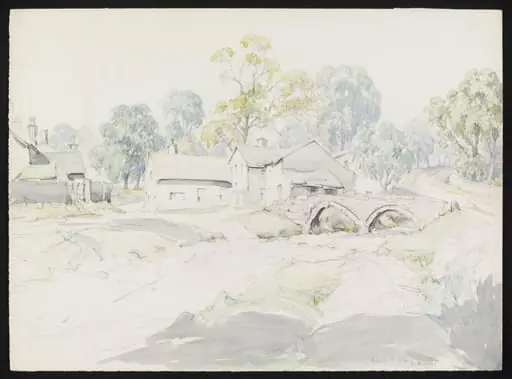
Red House Farm, Sproughton, near Ipswich
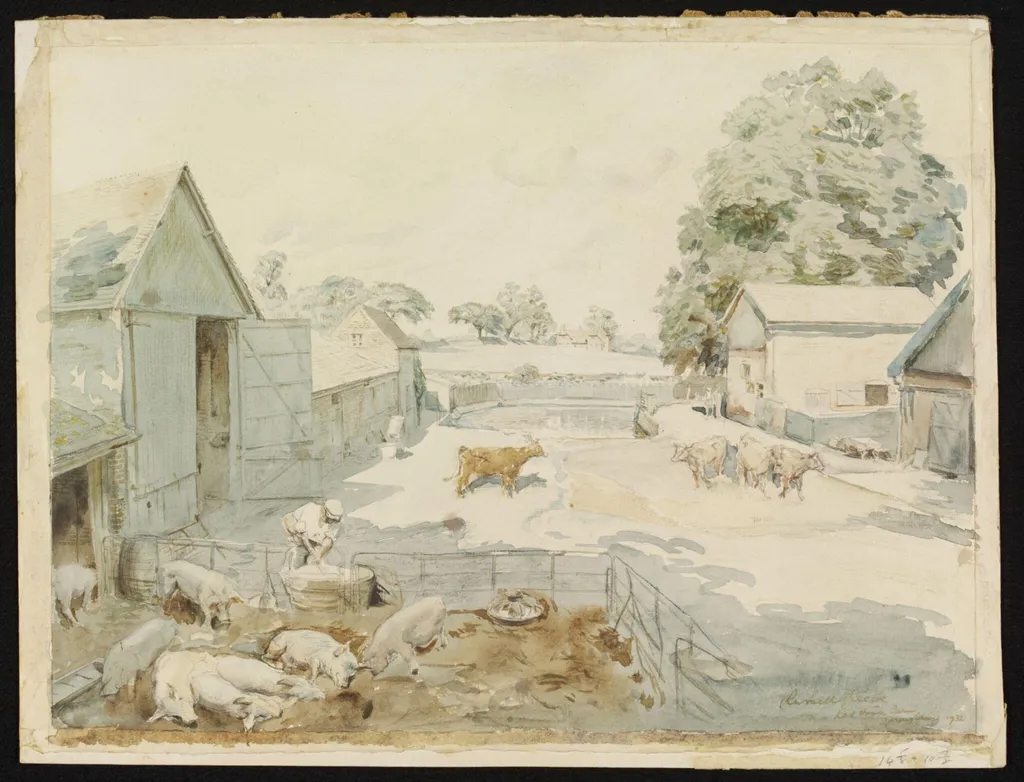
Red House Farm, Sproughton, near Ipswich is a watercolor work on paper by the Social Realist artist W. Russell Reeve. It dates from 1932 and is held in the collection of the Victoria and Albert Museum. Created in 1932 by watercolourist W.
About this work
In 1932, W. Russell Reeve painted Red House Farm near Ipswich. It’s a watercolour done early in a project to record spots at risk from spreading towns.
The artist wrote on the back that the farm looked like this in 1932, but soon it would be sold and turned into a housing estate.
Look up the artist who made it: Reeve, W. Russell.
Overview
Created in 1932 by watercolourist W. Russell Reeve, this painting depicts Red House Farm on the outskirts of Ipswich. Executed for the Recording Britain initiative, the work serves as a visual record of a rural site that was soon to be altered by urban development. The image captures the farm as it stood before its sale and subsequent conversion into a housing estate.
Subject & Meaning
The composition presents the farmstead and its surrounding fields, emphasizing the tranquil character of the countryside that faced imminent change. By documenting the farm’s appearance, the artist underscores the tension between traditional agrarian landscapes and the pressures of expanding municipal boundaries.
Technique & Style
Reeve employs a delicate watercolour technique, using transparent washes to render sky, foliage, and architectural details with subtle tonal variation. The handling of light and shadow conveys a sense of atmosphere, while the precise line work ensures an accurate representation of structural elements, aligning with the project’s documentary intent.
History & Provenance
The painting was produced as one of the earliest contributions to the Recording Britain scheme, which initially focused on sites threatened by urban encroachment. Reeve noted on the reverse that the farm was sold shortly after the work’s completion and that the adjoining land was earmarked for a council housing development, marking a rapid shift in land use.
Context
During the early 1930s, Britain experienced significant suburban growth, prompting initiatives like Recording Britain to preserve visual evidence of disappearing rural settings. Red House Farm exemplifies the type of landscape the scheme aimed to safeguard, offering insight into the socioeconomic forces reshaping the English countryside at that time.
Artist & collection
Artist
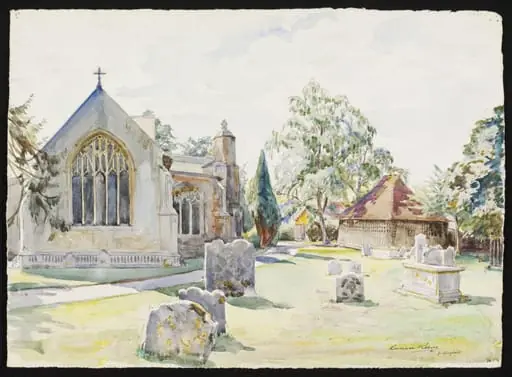
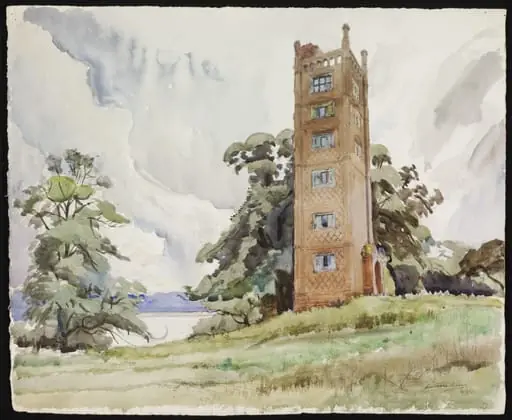
W. Russell Reeve painted quiet English landscapes in watercolor, often capturing Suffolk landmarks like East Bergholt Church and Freston Tower. In 1932 he recorded Red House Farm near Ipswich, and in 1941 he returned to…

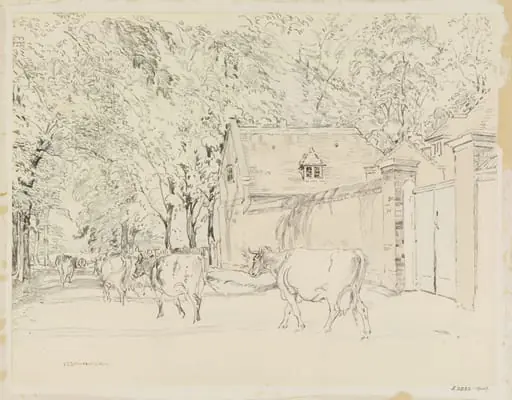 Ham Street, Cows from Manor Farm passing Ham House stables
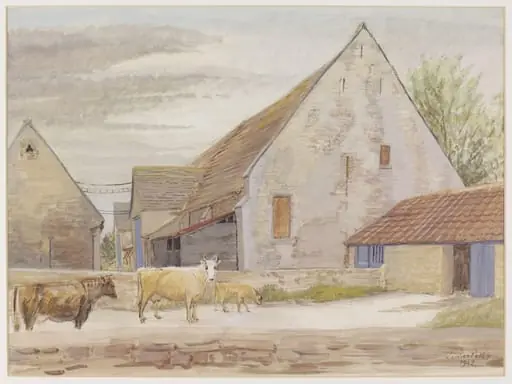 Barns at Frocester Court, Near Stonehouse
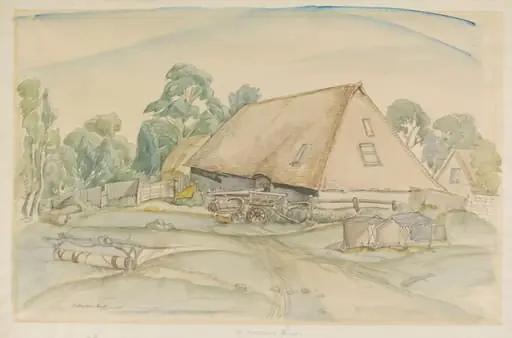 Madams Farm, West Sussex
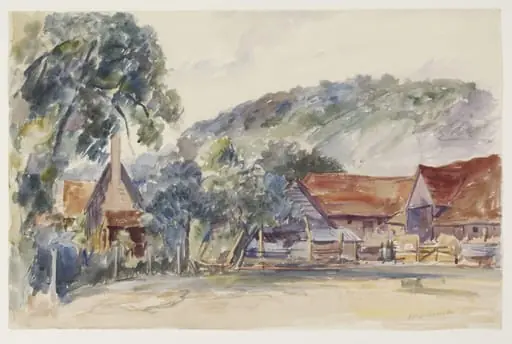 Turville from the Churchyard
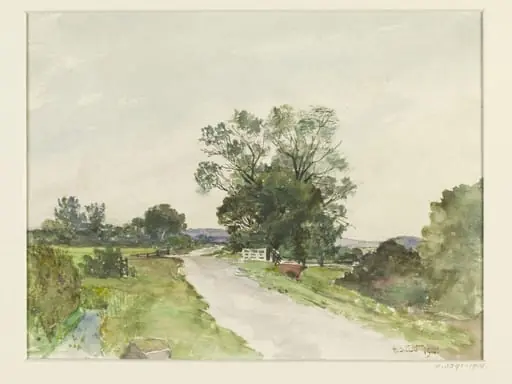 Landscape with road in flat country
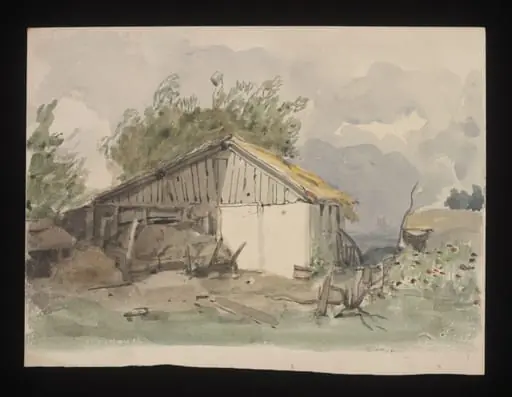 Watercolour drawing by the Grieve family, probably by Thomas Grieve, showing a hut at Margate
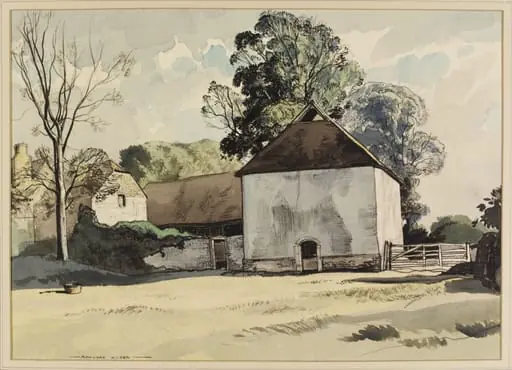 Saxon Dovecote, Lullington, near Alfriston, Cuckmere Valley
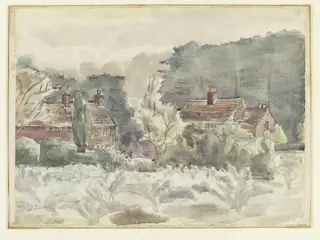 Cottages at Norton, No.5
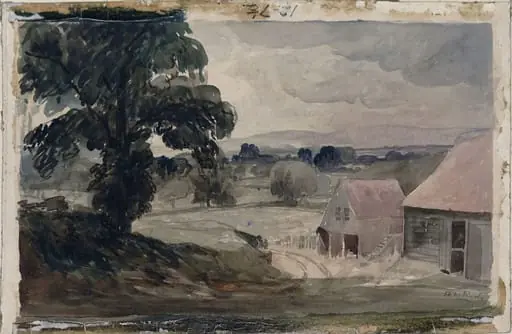 In Danny Park, near Hassocks, Sussex
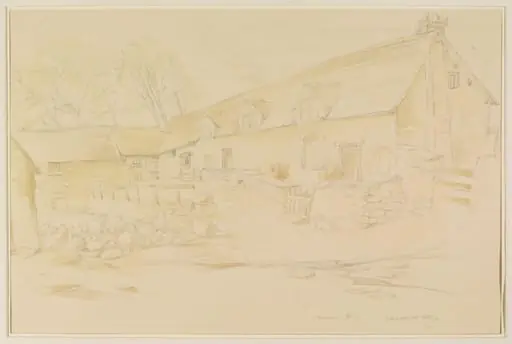 Berwyn Farm, Swch Cae Rhiw, Denbighshire
 Wycoller Village
- Columbarian, South Stoke