Artwork
Hoyshaleshvara Temple Sculpture, Halebidu (Halebeedu)
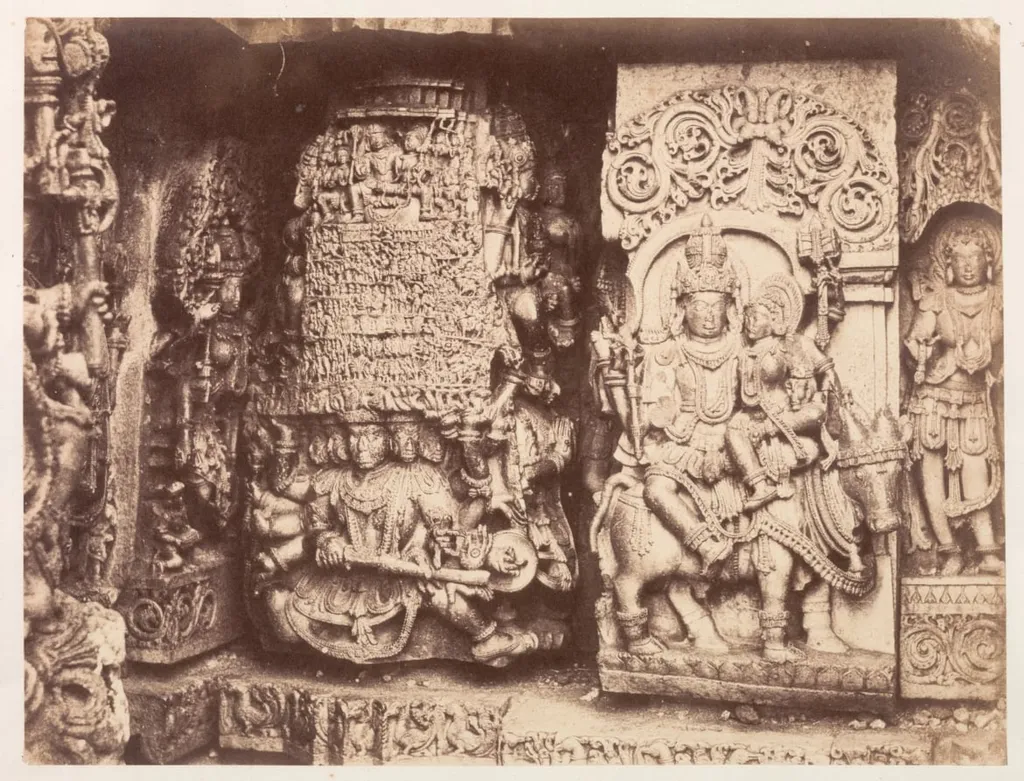
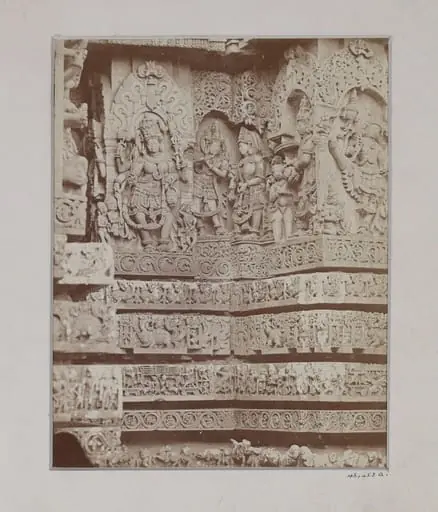
Hoyshaleshvara Temple Sculpture, Halebidu (Halebeedu) is a photography by the Impressionist artist Richard Banner Oakeley. It dates from 1856 and is held in the collection of the Cleveland Museum of Art. This photograph captures a section of the Hoyshaleshvara Temple wall in Halebidu, India, showcasing its intricate carvings.
- Accession no.
- 2001.152
- Credit line
- John L. Severance Fund
About this work
Overview
This photograph captures a section of the Hoyshaleshvara Temple wall in Halebidu, India, showcasing its intricate carvings.
Subject & Meaning
The image depicts a stone temple wall adorned with detailed sculptures of Hindu deities, including Shiva and Parvati, as well as animals and patterns. The carvings illustrate scenes from Hindu mythology, such as Shiva and Parvati seated on Mount Kailasha being attacked by a multiarmed demon.
Technique & Style
The photographer framed the scene to convey the density and vibrancy of the temple's sculptures, creating a sense of movement and life.
History & Provenance
The photographer traveled for 20 days to reach the temple, indicating its remote location. The image was likely created to document and share the beauty of the temple's carvings.
Artist & collection

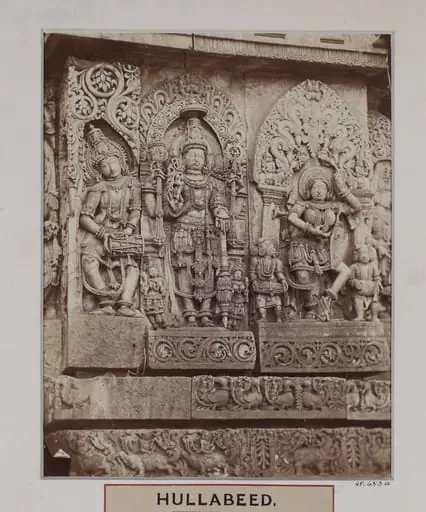 Relief sculpture of the great temple at Halebid
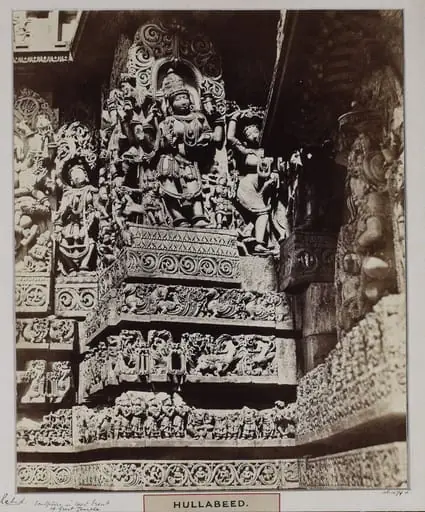
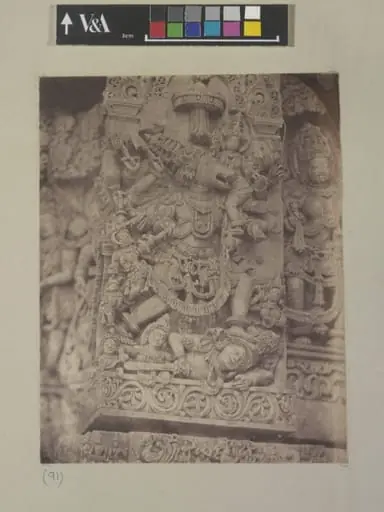 Hindoo Temple Sculptures, Southern India, Hullabeed
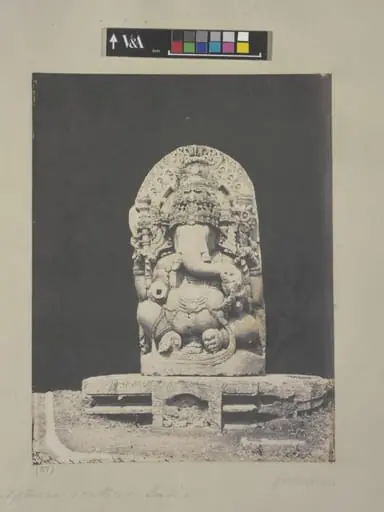 Hindoo Temple Sculptures, Southern India, Hullabeed
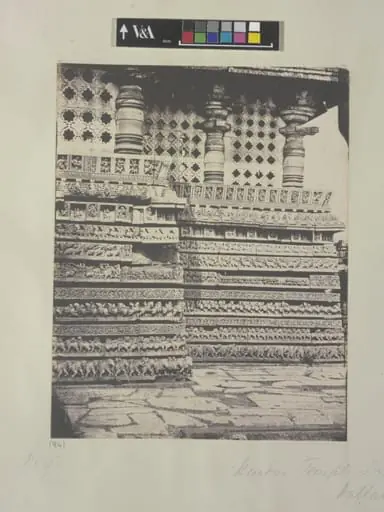 Hindoo Temple Sculpture, Southern India, Hullabeed
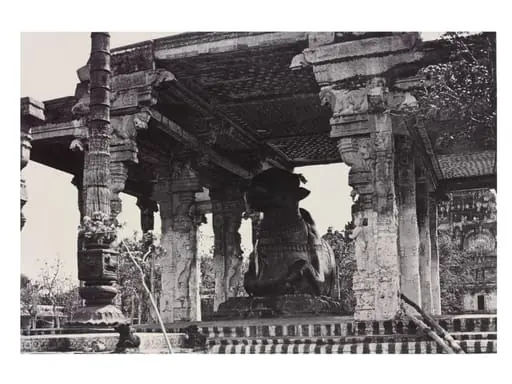 The Great Bull
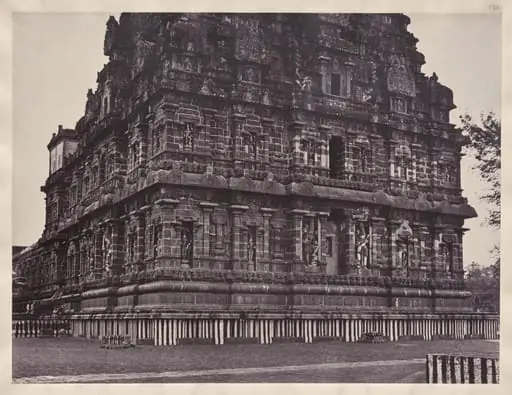
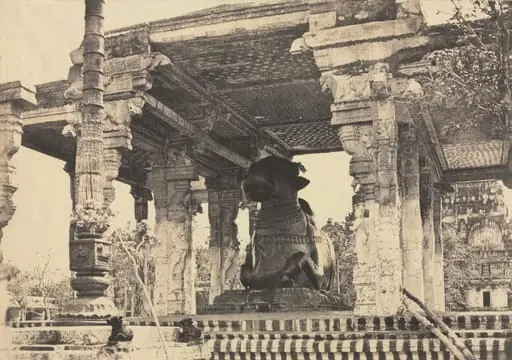 Great Pagoda, Great Bull, Front View, Tanjore, India (Rajarajeshvara Temple), plate 12 from Photographic Views of Tanjore and Trivady (Madras: Madras Presidency)
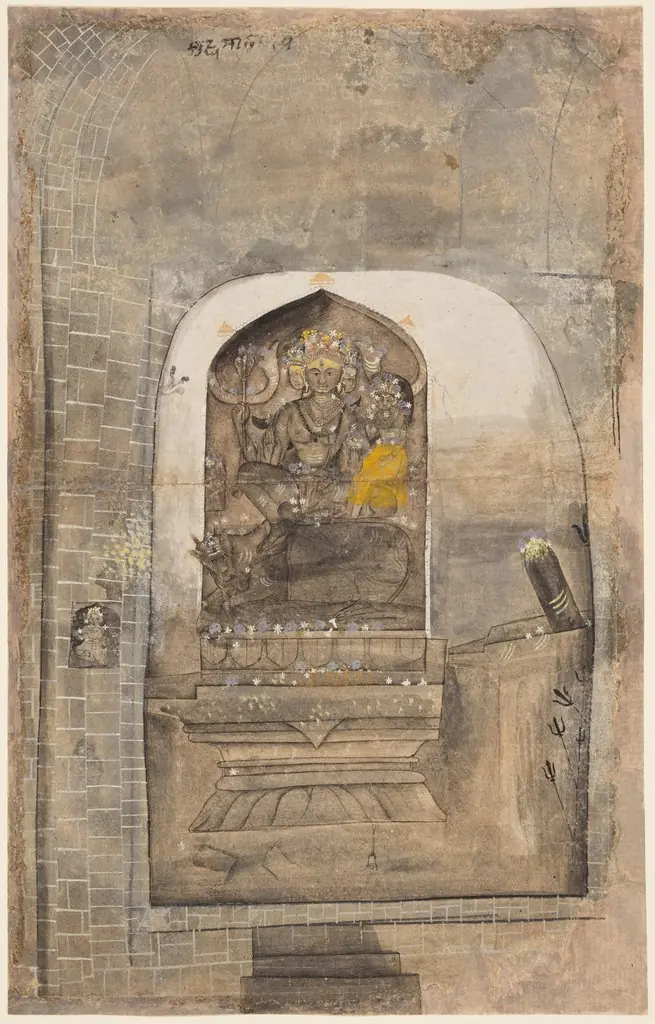 Worship of Stone Image of Shiva and Parvati within a Shrine