Artwork
Ophelia Weaving Her Garlands (from William Shakespeare's 'Hamlet')
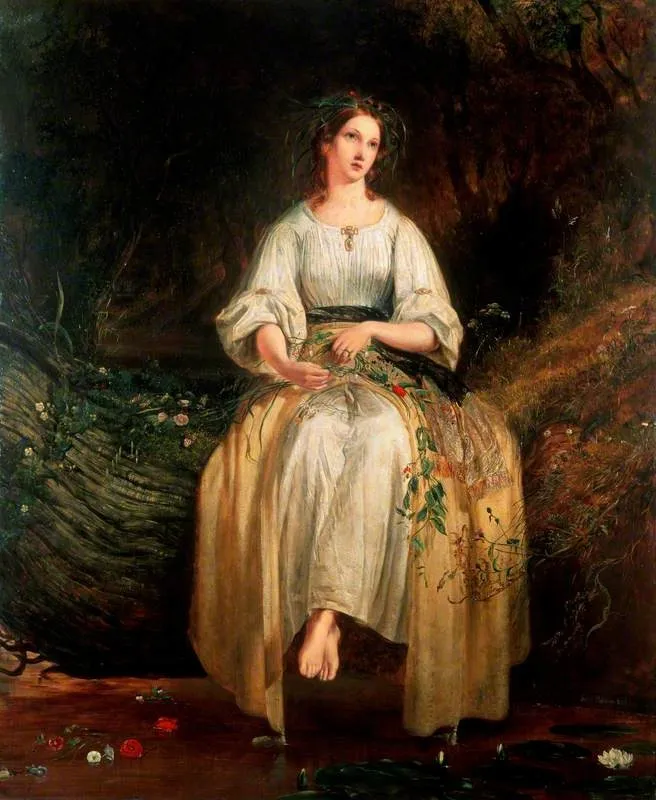
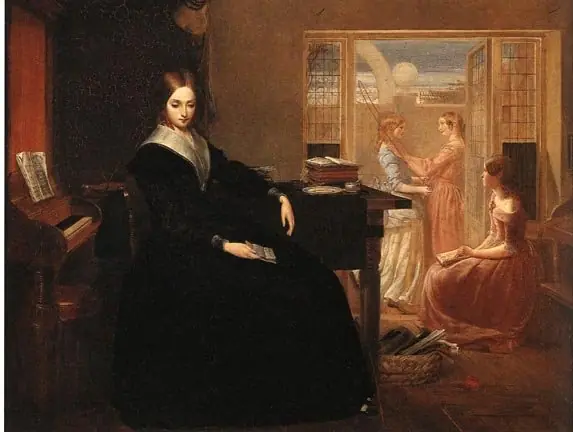
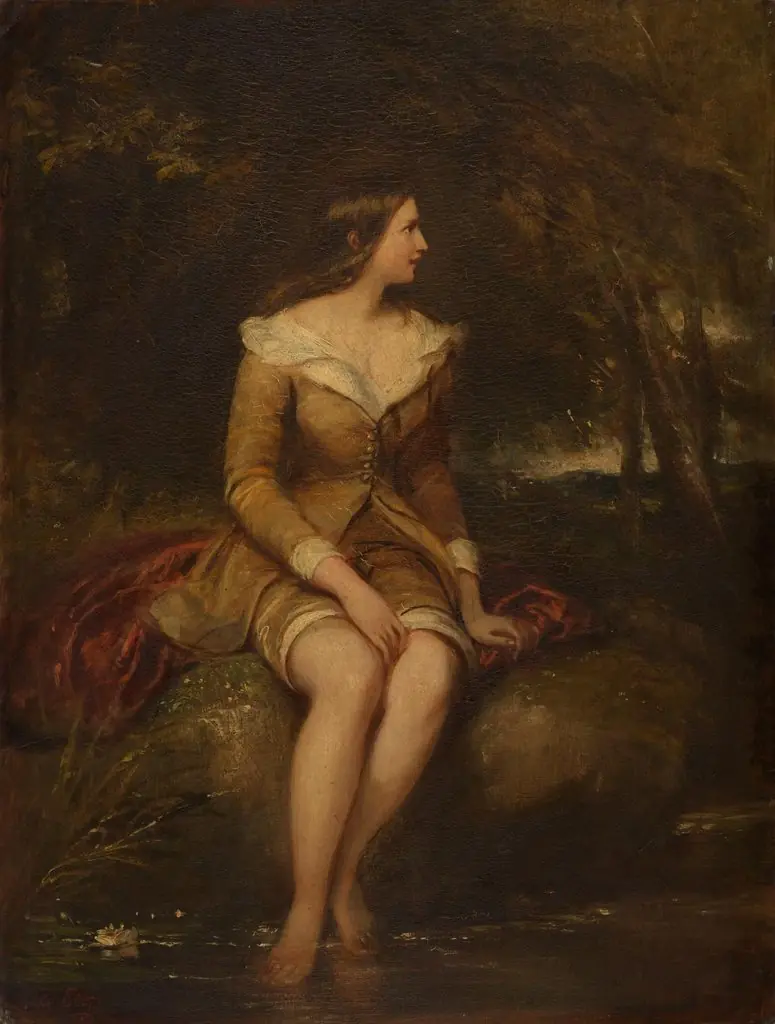
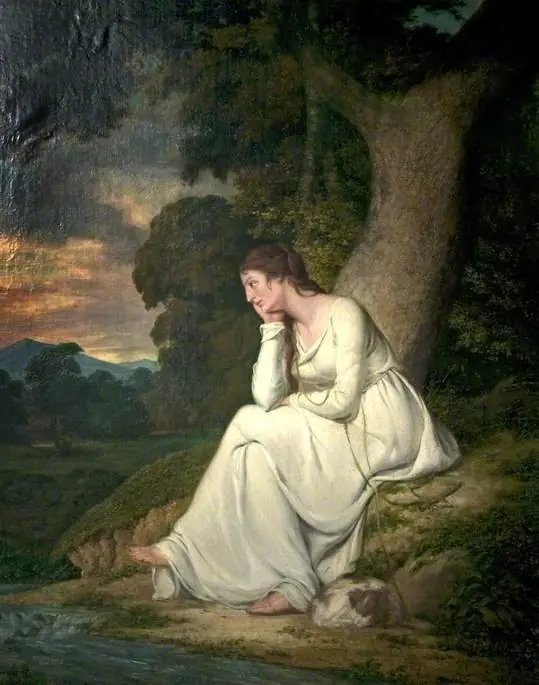
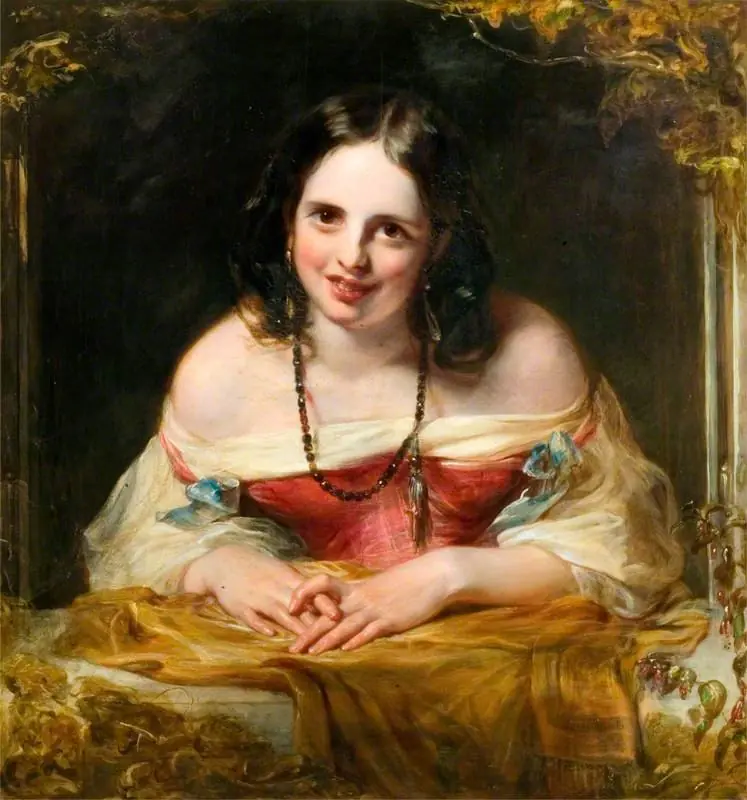
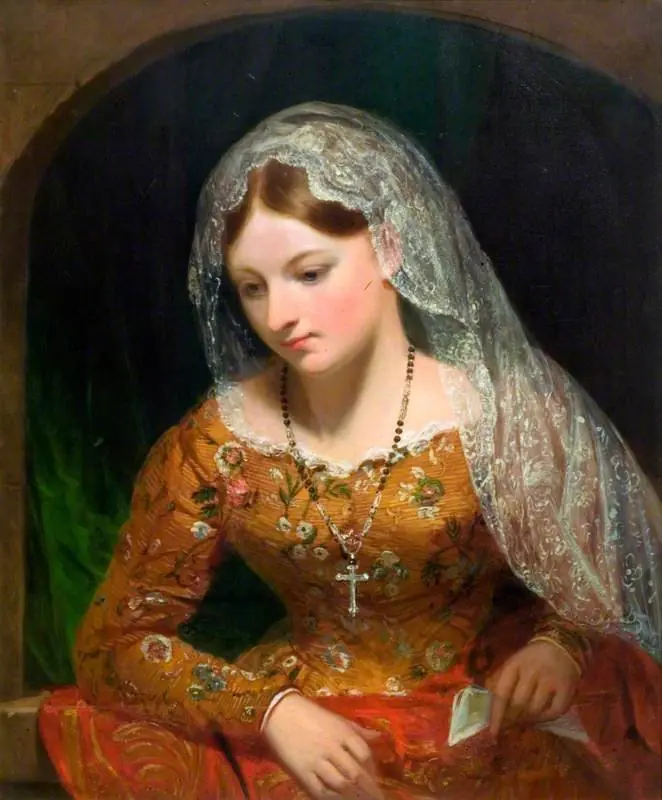
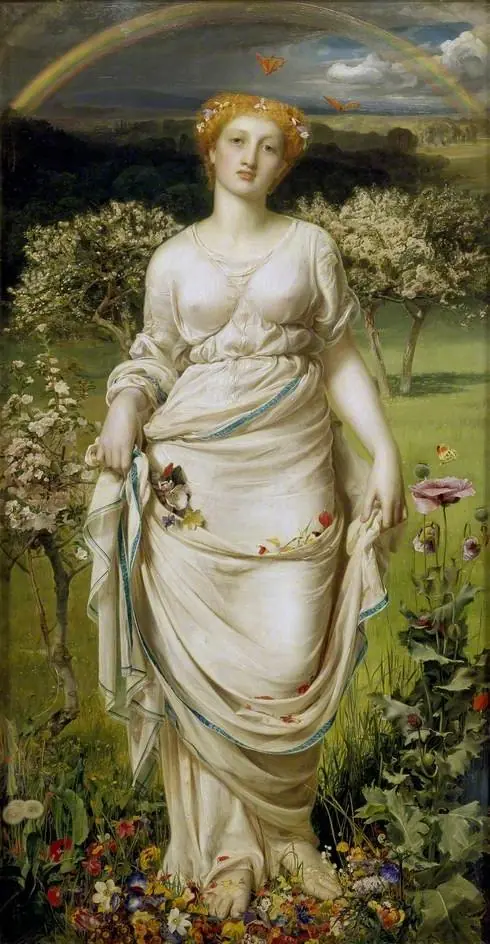
Ophelia Weaving Her Garlands (from William Shakespeare's 'Hamlet') is an oil painting by the Pre-Raphaelite artist Richard Redgrave. It dates from 1842 and is held in the collection of the Victoria and Albert Museum.
About this work
Overview
Ophelia Weaving Her Garlands is an oil painting created by Richard Redgrave in 1842, illustrating a scene from William Shakespeare's Hamlet.
Subject & Meaning
The painting depicts Ophelia, overcome with madness, sitting amidst lush greenery, creating a garland with over thirty different types of flowers, symbolizing her tragic state.
Technique & Style
Redgrave's use of chiaroscuro creates a sense of depth, drawing attention to Ophelia's serene face, while the dark background enhances the intimacy of the scene.
History & Provenance
First displayed at the 1842 Royal Academy Exhibition, the painting is now part of the Victoria and Albert Museum's collection, gifted by John Sheepshanks in 1857 as part of the Sheepshanks Gift.
Artist & collection
Artist
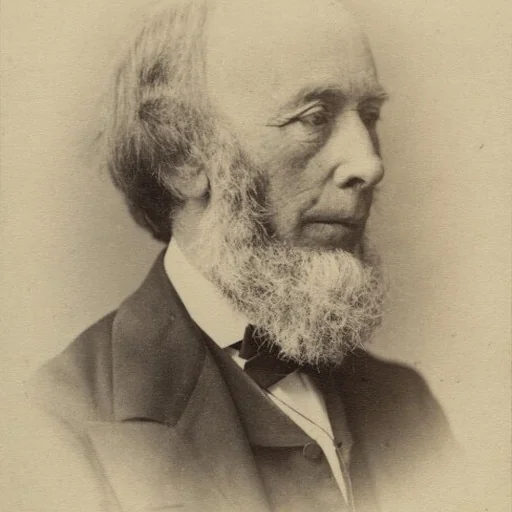
Richard Redgrave was an English landscape artist, genre painter, author, and administrator.