Artwork
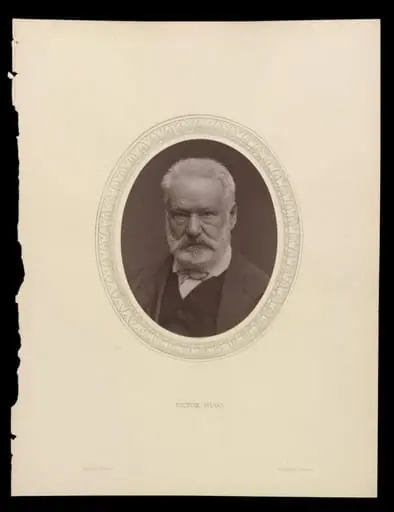
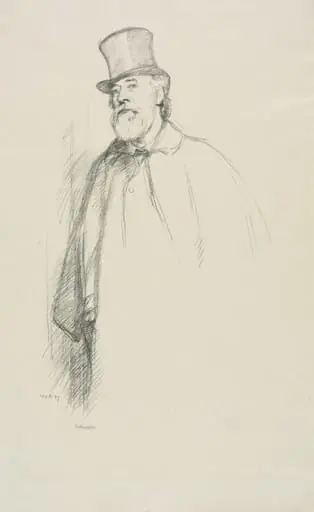
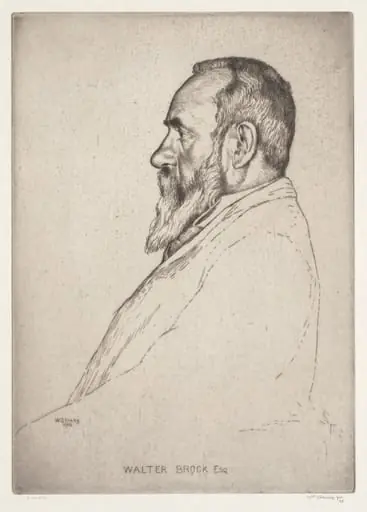
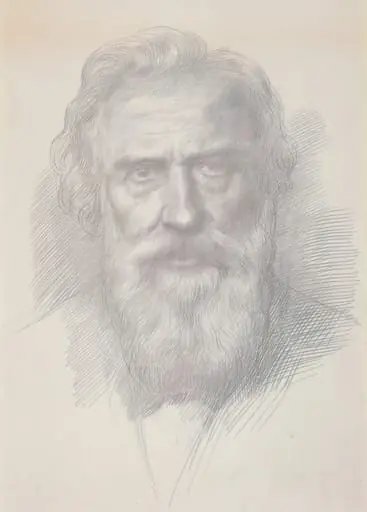
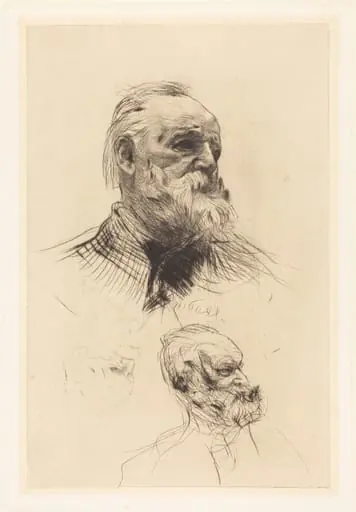
Victor Hugo, De Trois Quarts
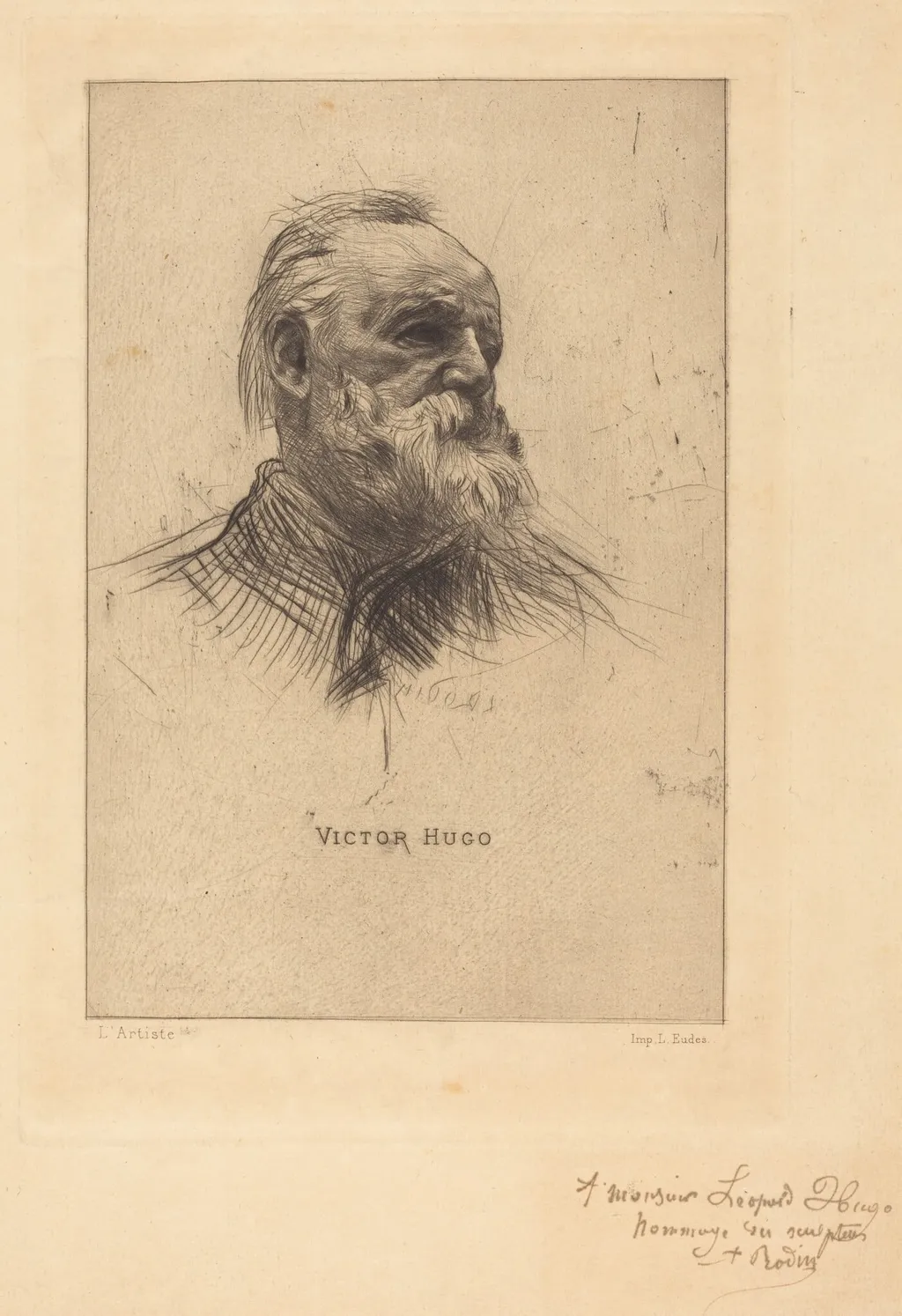
Victor Hugo, De Trois Quarts is an ink print by the Impressionist artist Auguste Rodin. It dates from 1884 and is held in the collection of the National Gallery of Art.
About this work
Overview
Victor Hugo, De Trois Quarts is a drypoint print executed in 1884 by the French sculptor Auguste Rodin. The work presents a profile view of the celebrated writer, rendered with loose, gestural lines that emphasize the texture of his hair and beard. A plain background isolates the figure, directing attention to the expressive rendering of Hugo’s face and neck.
Subject & Meaning
The image captures Victor Hugo in a contemplative pose, his gaze directed away from the viewer. The sketch‑like quality of the lines suggests a study rather than a finished portrait, highlighting Rodin’s interest in conveying the writer’s intellectual presence through minimal yet evocative detail.
Technique & Style
Rodin employed drypoint, a printmaking method that incises lines directly onto a metal plate, producing rich, velvety strokes. The wavy, rapid marks that form the hair and beard illustrate his characteristic emphasis on texture, while the overall looseness reflects his experimental approach to drawing and modeling.
History & Provenance
Signed "Victor Hugo" beneath the image and marked with the artist’s monogram "L'Artiste" alongside the printer’s imprint "Imp. L. Eudes," the print bears the hallmarks of Rodin’s workshop. Created during a period when his unconventional methods attracted criticism, the work demonstrates his willingness to apply sculptural sensibilities to two‑dimensional media.
Context
At the time of its creation, Rodin was redefining French sculpture, moving away from academic conventions toward more expressive, tactile forms. This portrait aligns with his broader practice of exploring human character through bold surface treatment, bridging the gap between drawing, printmaking, and sculpture.
Own this work as a print
Artist & collection
Artist
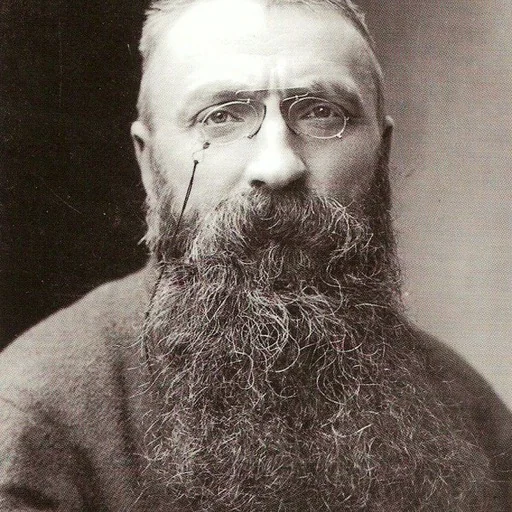
François Auguste René Rodin (; French:; 12 November 1840 – 17 November 1917) was a French sculptor generally considered the founder of modern sculpture.