Artwork
Mountainous landscape with waterfall
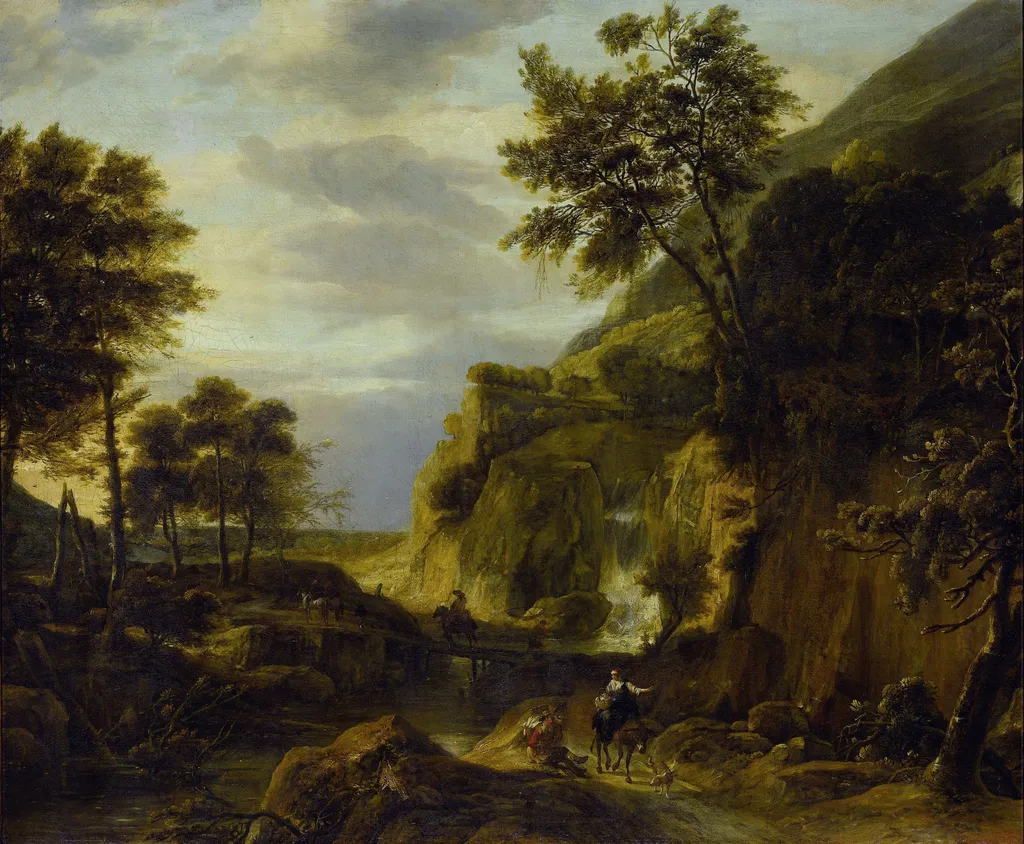
Mountainous landscape with waterfall is an oil painting by the Dutch Golden Age artist Roelant Roghman. It dates from 1650 and is held in the collection of the Rijksmuseum.
About this work
Subject & Meaning
The painting depicts a natural landscape scene characterized by mountains and a waterfall, consistent with the Dutch landscape genre of the mid-17th century.
The painting depicts a natural landscape scene characterized by mountains and a waterfall, consistent with the Dutch landscape genre of the mid-17th century. Specific visual elements include trees integrated into the rugged terrain, as noted in the work's description. While the composition emphasizes the grandeur of the natural world, the provided sources do not elaborate on specific iconographic programs, symbolic meanings, or allegorical interpretations associated with the waterfall or mountainous setting.
The work stands primarily as a representation of the physical environment rather than a vehicle for explicit narrative symbolism based on available documentation.
Technique & Style
Mountainous landscape with waterfall is an oil painting executed on canvas by Roelant Roghman in 1650. The work is classified as a landscape painting within the Rijksmuseum collection, where it is held. Its dimensions, 123 cm in height and 151 cm in width, indicate a sizable horizontal canvas suited to expansive scenery.
Stylistically, the painting belongs to the seventeenth-century Dutch landscape tradition, depicting natural features including trees and a waterfall set within mountainous terrain. The oil medium on canvas is consistent with standard practice for Dutch landscape painters of Roghman's generation, allowing for layered tonal work and atmospheric depth typical of the period.
History & Provenance
Mountainous landscape with waterfall is an oil painting on canvas attributed to Dutch artist Roelant Roghman, created in 1650. The work measures 123 cm in height and 151 cm in width. It is part of the Rijksmuseum's collection in Amsterdam, where it has remained since its acquisition. The painting exemplifies 17th-century Dutch landscape genre and features a prominent tree motif within its composition.
Context
Roelant Roghman's 1650 oil painting Mountainous landscape with waterfall, housed in the Rijksmuseum, exemplifies Dutch Golden Age landscape painting through its dramatic topography and meticulous rendering of natural elements. Art historical scholarship situates the work within Roghman's broader oeuvre of etchings and paintings that engage with contemporary Dutch environmental consciousness, though specific critical reception during his lifetime remains sparsely documented. The painting's compositional emphasis on cascading water and dense foliage reflects wider 17th-century Dutch artistic interests in landscape as both topographical record and spiritual meditation, distinct from the more commercially driven marine scenes of contemporaries like Willem van de Velde.
Its presence in a state collection underscores evolving 19th-century appreciation for Dutch Baroque works beyond their traditional role as decorative wall hangings.
Overview
Created around 1650, this oil painting by Roelant Roghman portrays a mountainous landscape featuring a modest waterfall. The composition is anchored by a winding path that leads the eye through a forested slope, while two riders on horseback traverse the foreground. A solitary figure stands near the cascade, adding a human element to the natural setting.
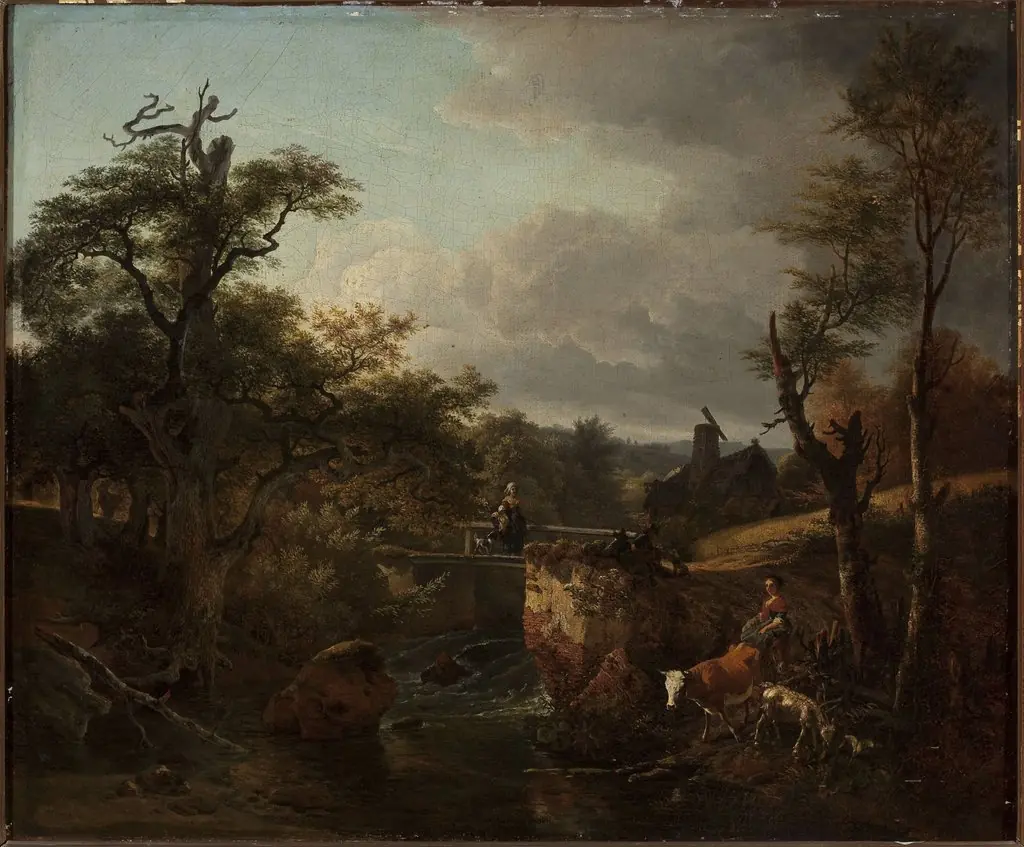
Own this work as a print
Artist & collection


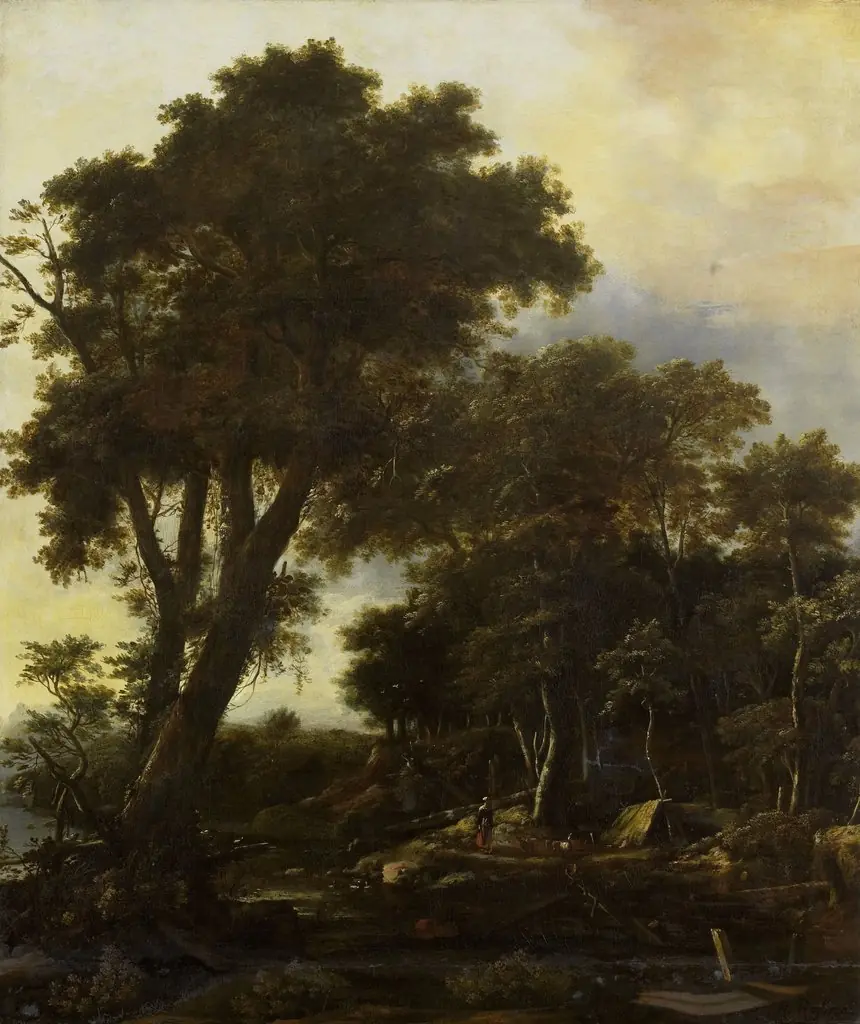
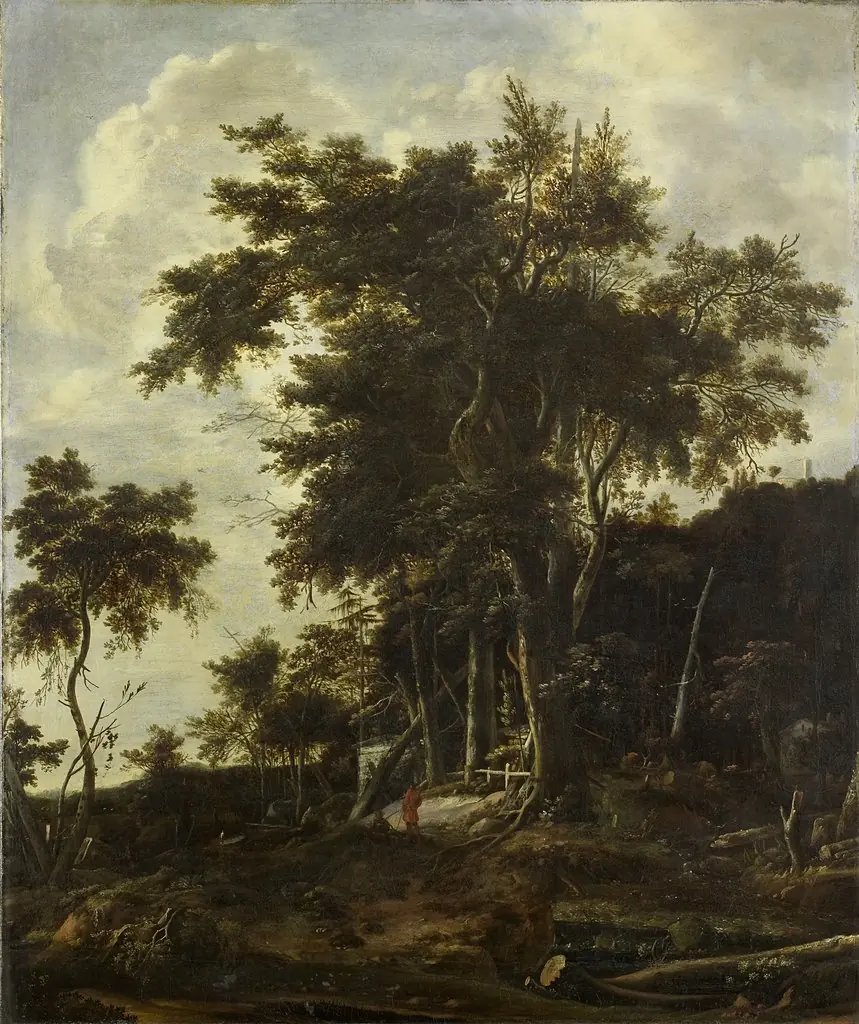
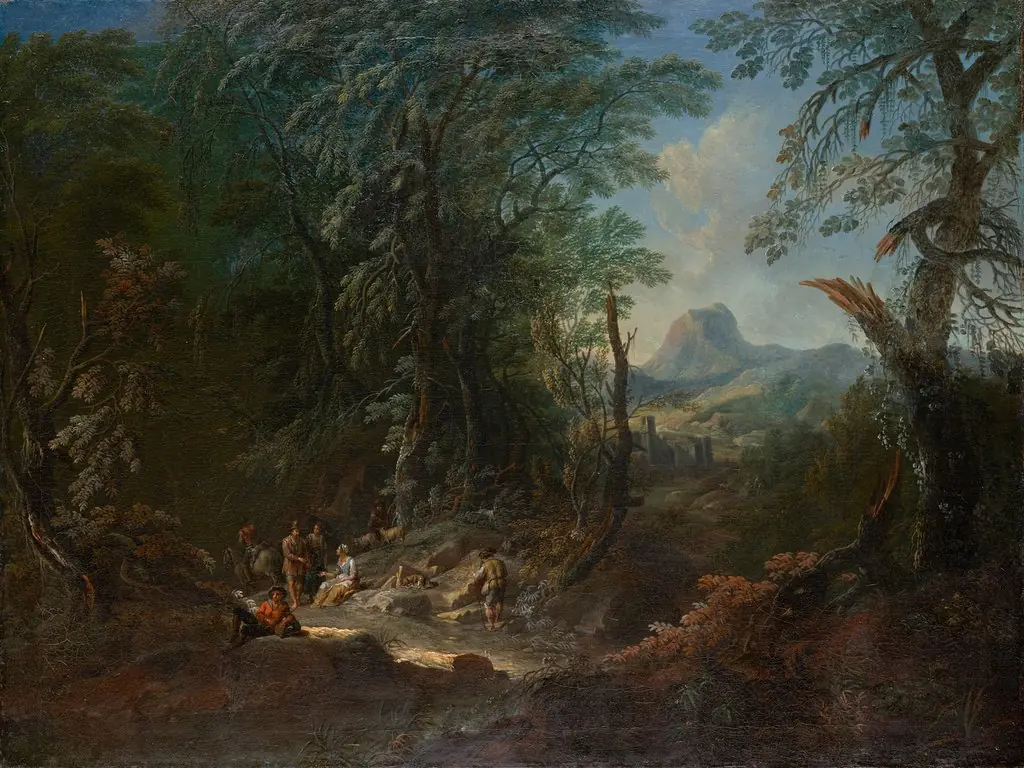 Forest Landscape "Morning"
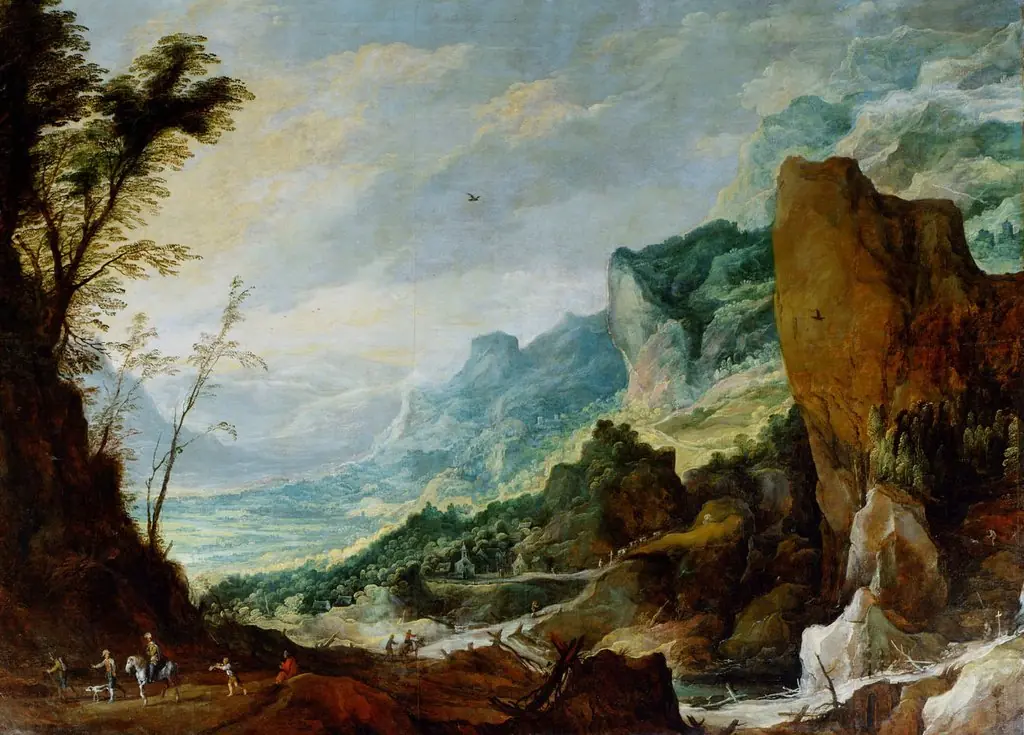 Mountain Landscape
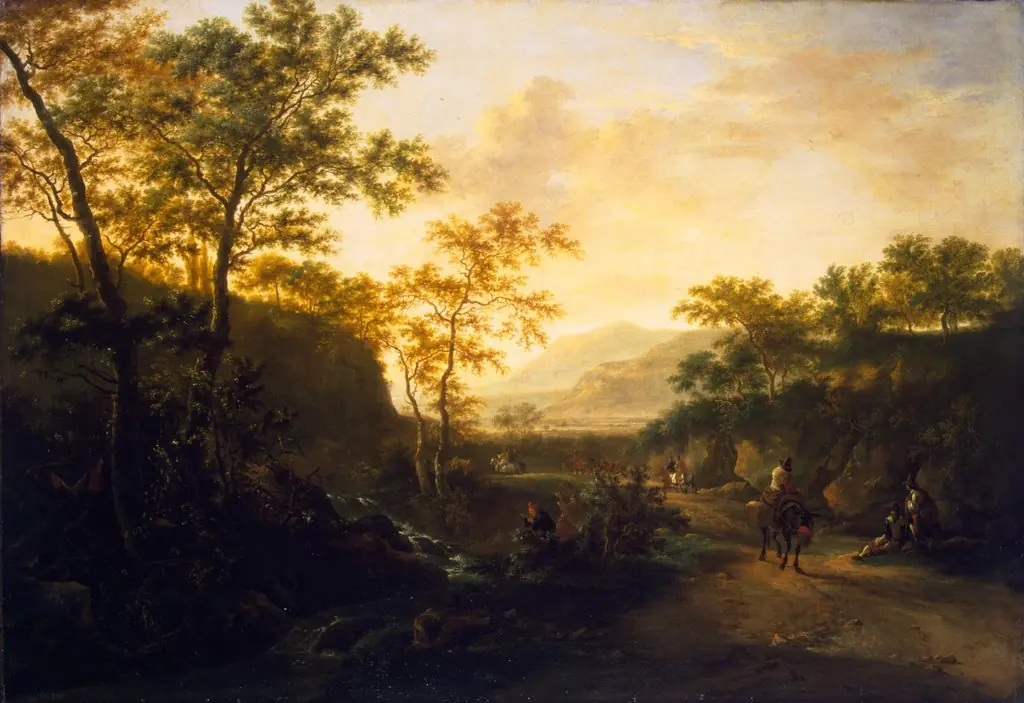 Italian Landscape with a Path
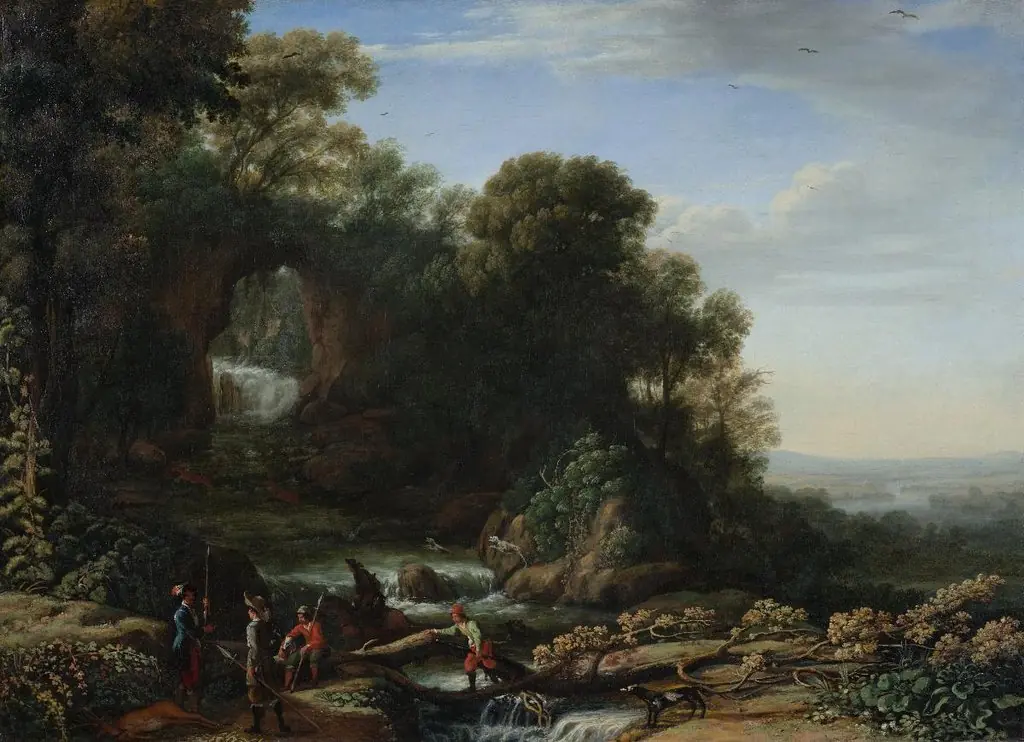 Paysage avec chute d’eau et chasseurs
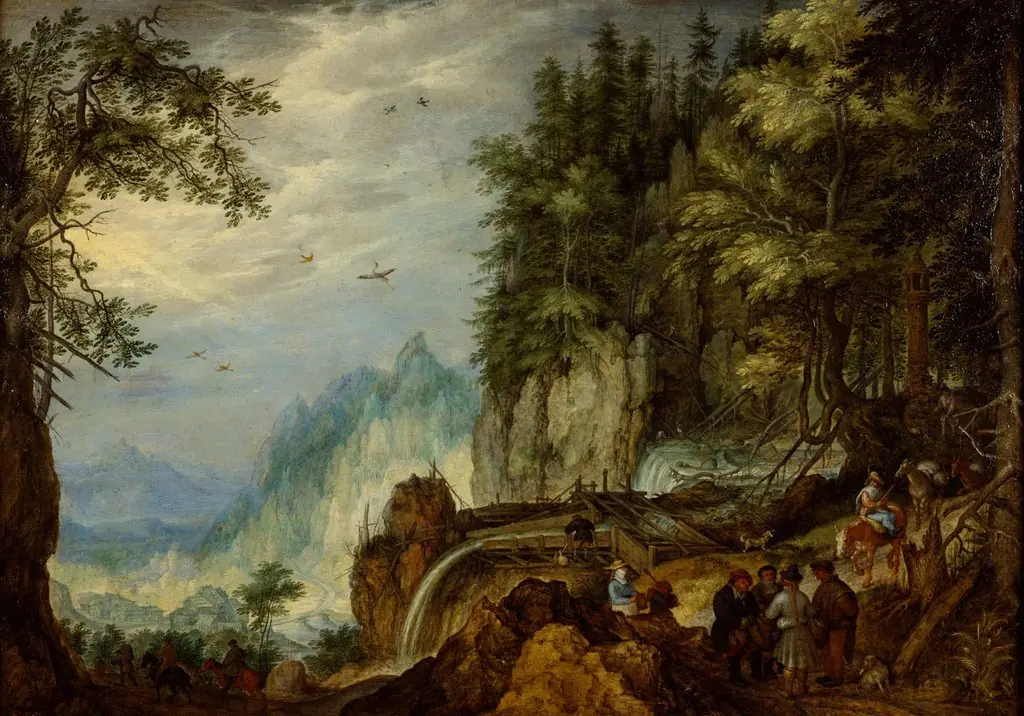 Gebirgslandschaft mit Reisenden
 Landscape with the Flight into Egypt
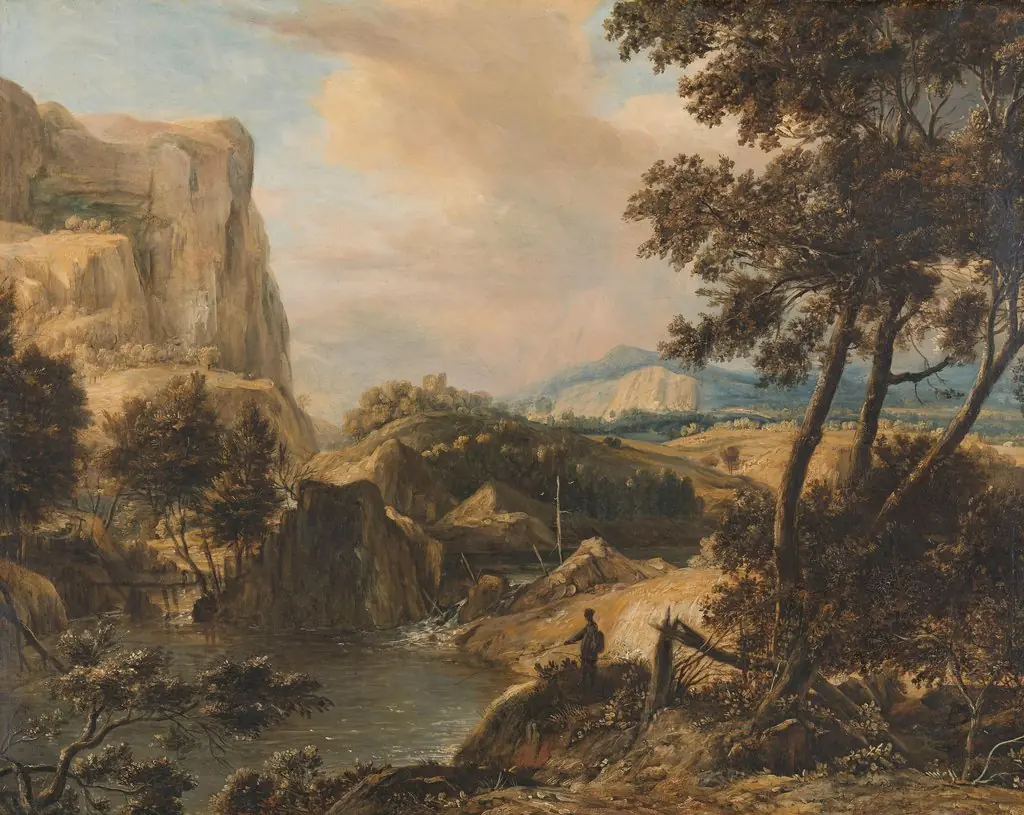 Mountainous landscape with fisherman
 Mountainous Landscape
 Flusslandschaft mit Fischern
 Mountainous Landscape with Figures and a Donkey