Artwork
Mountain Scenery with a River
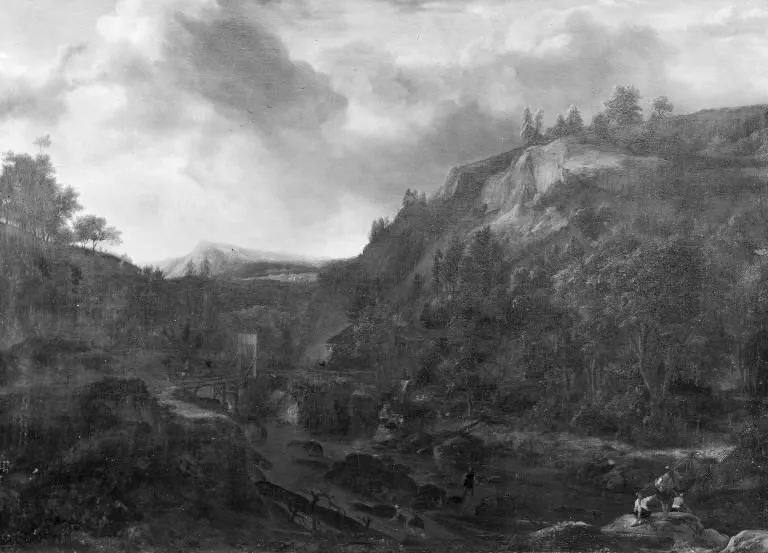
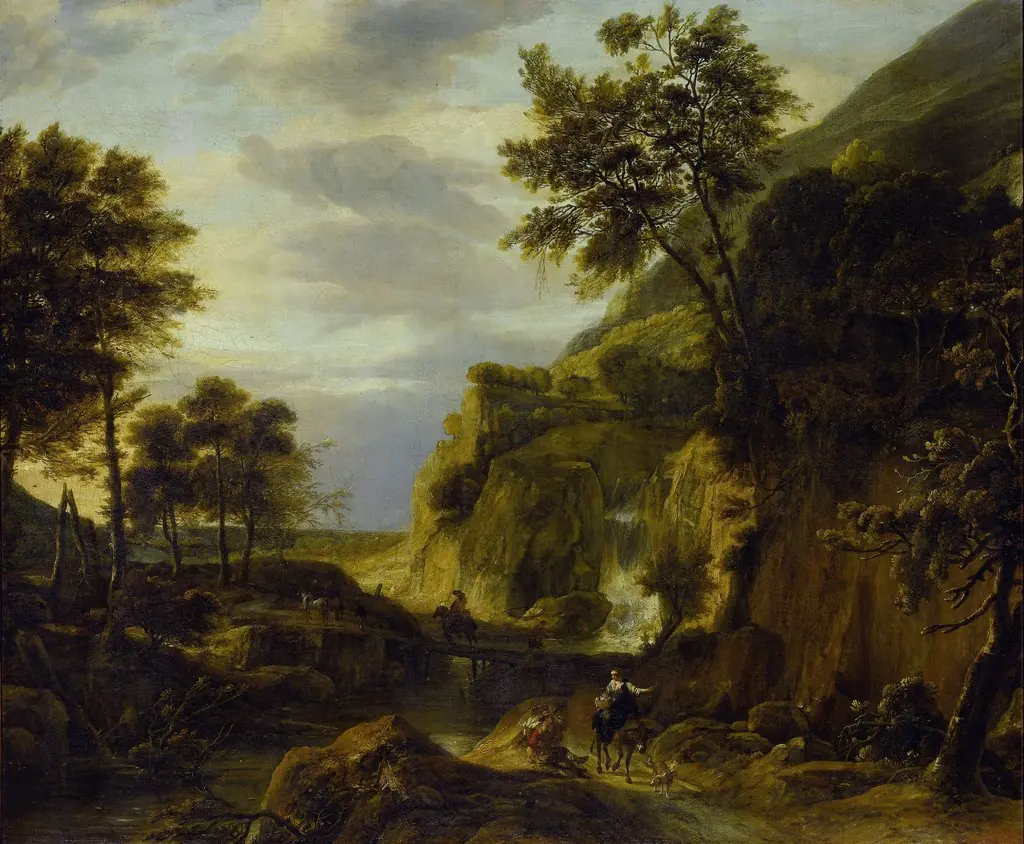
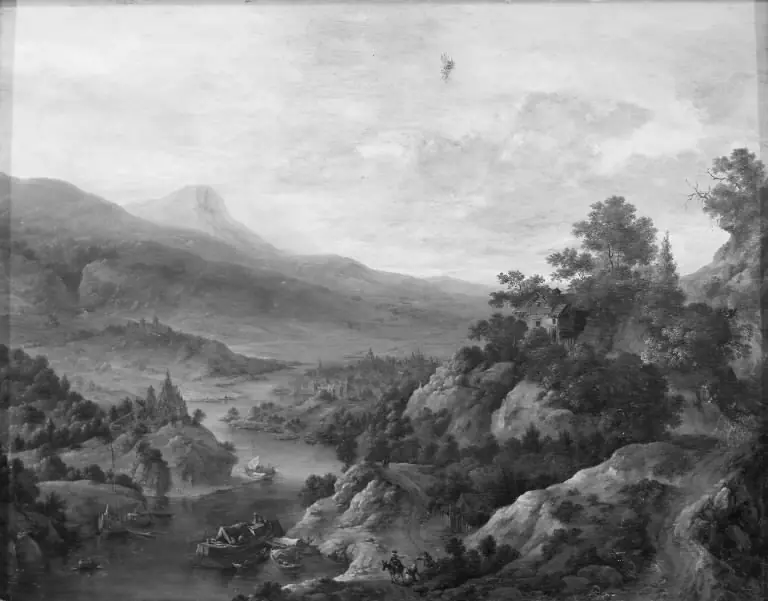
Mountain Scenery with a River is an oil painting by the Dutch Golden Age artist Roelant Roghman. It dates from 1669 and is held in the collection of the Statens Museum for Kunst.
About this work
Subject & Meaning
The composition focuses on these specific physical elements rather than conveying a complex allegorical narrative or specific symbolic program.
The work is a landscape painting that depicts a natural scene featuring a river, a bridge, and various trees set against a sky with clouds. Within this environment, a single man is shown, integrating a human element into the broader topography. The composition focuses on these specific physical elements rather than conveying a complex allegorical narrative or specific symbolic program.
As a landscape genre piece, the artwork primarily represents the observation of nature and the interplay between the riverine terrain and the built structure of the bridge.
Technique & Style
The painting is executed in oil on canvas, a technique typical of Dutch seventeenth-century landscape practice. According to the catalogue entry, the work measures approximately 127 × 175 cm and portrays a river flanked by a bridge, a solitary figure, a tree, and an expansive sky with clouds. The composition balances linear perspective with an atmospheric handling of light, emphasizing the linear elements of the bridge and the vertical thrust of the tree against the horizontal flow of the water. The canvas support provides a stable ground for the layered application of paint.
Overview
Roelant Roghman's 'Mountain Scenery with a River' (1669) is a landscape painting executed in oil on canvas, characteristic of the artist's mature period. The composition features a dramatic, rugged terrain dominated by steep, rocky hills that frame a winding river cutting through the center of the scene. A small bridge spans the waterway, connecting the banks and guiding the viewer's eye toward the background.
Tall, slender trees rise on the left, contrasting with the heavy, cloud-filled sky that casts a somber, atmospheric light over the entire vista. Tiny figures, likely travelers, are scattered along the path and near the rocks, providing a sense of scale and human presence within the vast natural setting. Created in 1669, this work reflects Roghman's interest in imaginative, almost theatrical landscapes that blend observed Dutch topography with fantastical mountainous elements, a style influenced by his study of earlier masters like Hercules Seghers.
The painting exemplifies the Dutch Golden Age's exploration of mood and atmosphere in landscape painting, moving beyond mere representation to evoke a specific emotional response through its dark tonality and dynamic composition.
Artist & collection


 Landscape
 Landscape with Waterfall and Figures
 Parti af Terkelskoven med kalkbrænderiet ved Farum
 Landscape by the Rhine
 Mountain Landscape
 Landscape by the Rhine
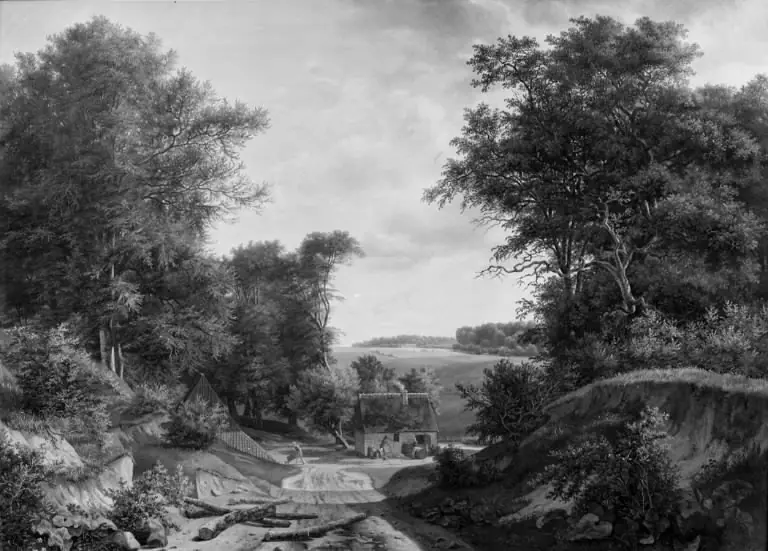 Parti af Terkelskoven med kalkbrænderiet ved Farum
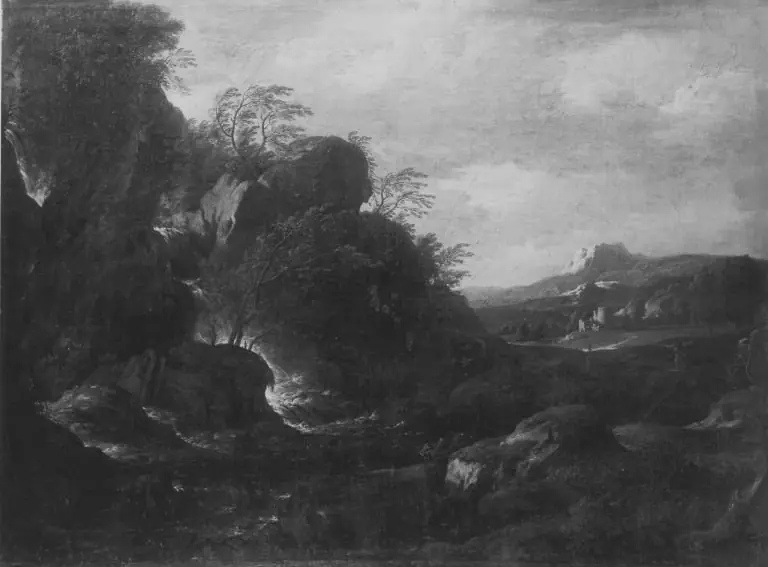 Gebirgslandschaft
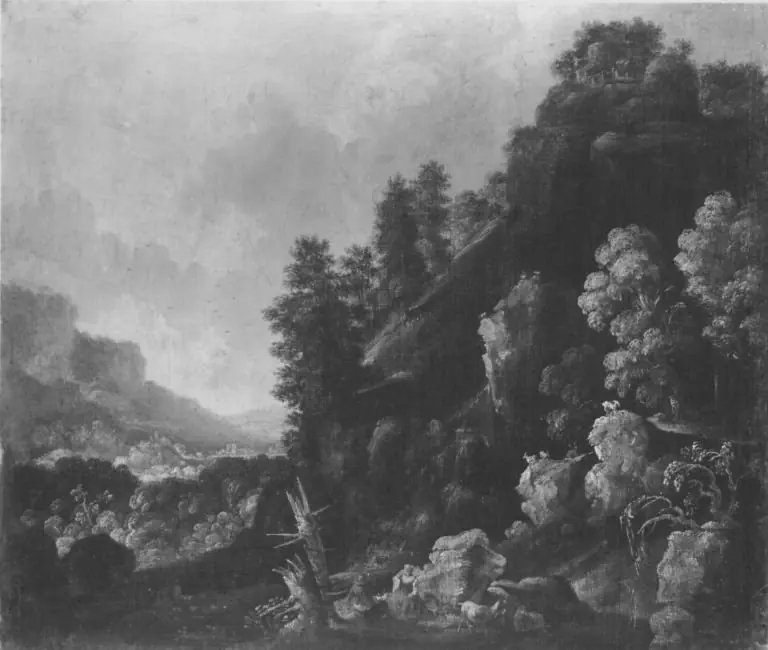 Wildnislandschaft mit Wasserfall
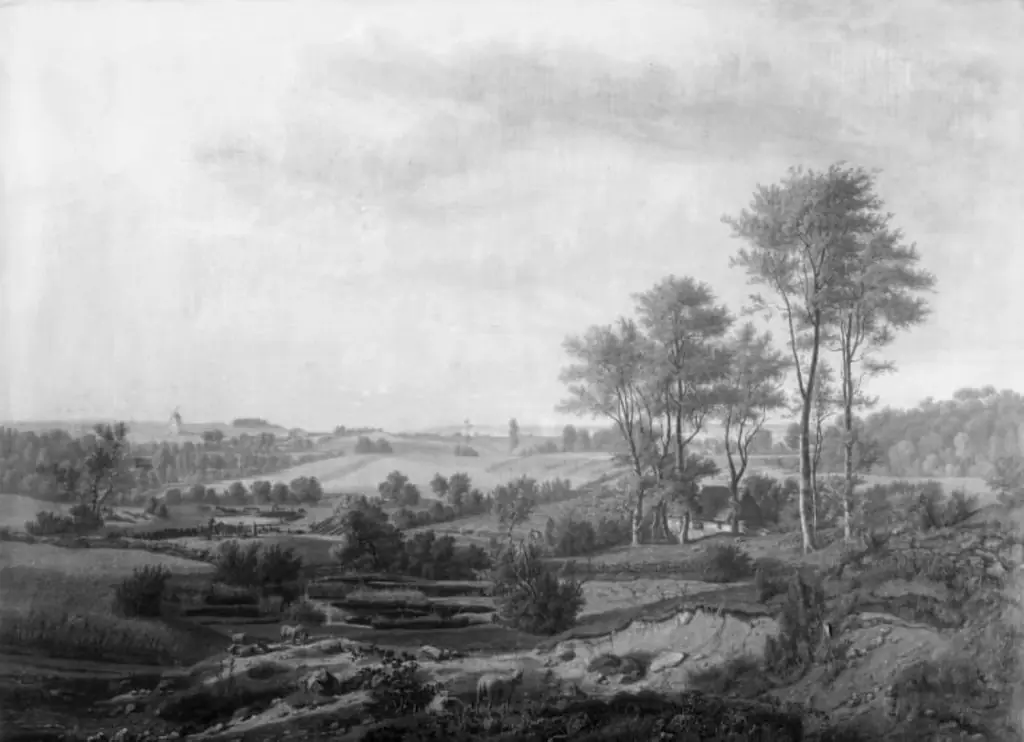 Nordsjællandsk landskab. I baggrunden den svenske kyst
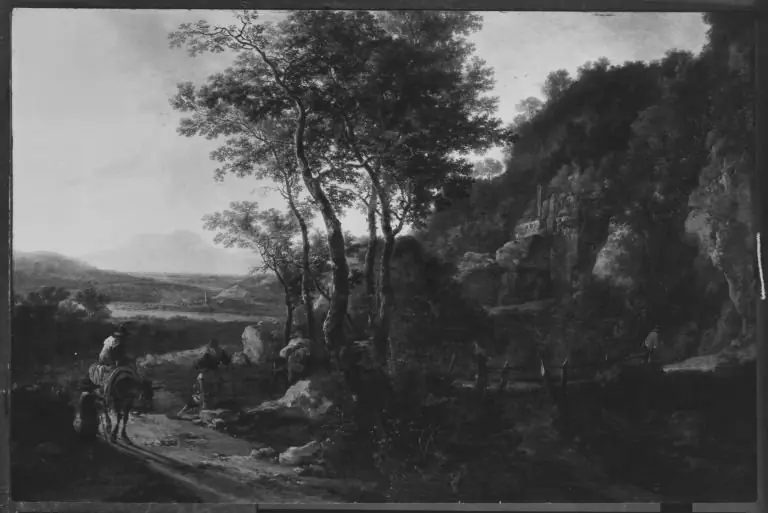 Italianate Landscape with Wooden Bridge
- Mountain Scenery with a River