Artwork
Study for the painting "The Windmill of Penmarch, Northern France"
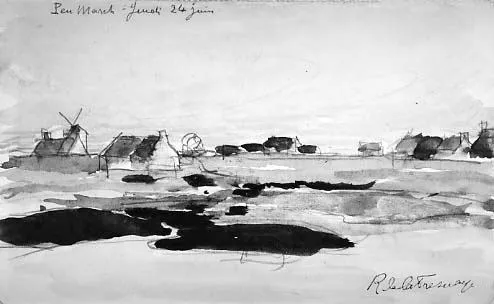
Study for the painting "The Windmill of Penmarch, Northern France" is an unspecified painting by the Post-Impressionist artist Roger de La Fresnaye. It dates from 1909 and is held in the collection of the Metropolitan Museum of Art.
About this work
Subject & Meaning
The depicted structure, a windmill, is the central iconographic element, anchoring the composition to a specific rural French locale.
The work is a preparatory study for Roger de La Fresnaye's painting "The Windmill of Penmarch, Northern France," and its subject is a windmill situated in northern France. The depicted structure, a windmill, is the central iconographic element, anchoring the composition to a specific rural French locale.
As a study, the work functions as an investigative exploration of the motif rather than a finished statement. It represents La Fresnaye's engagement with the Breton landscape of Penmarch, a region known for its traditional windmills, and served as a visual and conceptual foundation for the larger painting it precedes. The windmill itself carries associations with rural French heritage and the pastoral character of the northern French countryside, themes La Fresnaye revisited in his subsequent landscape work.
History & Provenance
The work, titled Study for the painting "The Windmill of Penmarch, Northern France," was created by Roger de La Fresnaye in 1909. This oil painting serves as a preparatory study depicting a windmill in Northern France. The piece is currently held in the collection of the Metropolitan Museum of Art.
No specific details regarding the original commission, the chain of ownership prior to the museum, or the specific circumstances of its creation are provided in the available records.
Context
Roger de La Fresnaye painted Study for the painting "The Windmill of Penmarch, Northern France" in 1909, a preparatory work for the larger composition depicting a windmill in northern France. The study demonstrates his engagement with rural subject matter and regional topography characteristic of early twentieth-century French painting. It is held in the collection of the Metropolitan Museum of Art, which provides scholarly context for the artist's role in bridging Post-Impressionist landscapes with emerging modernist approaches to form and light.
The work's subject reflects broader artistic interests in northern French vernacular architecture and atmospheric effects during the late Belle Époque.
Overview
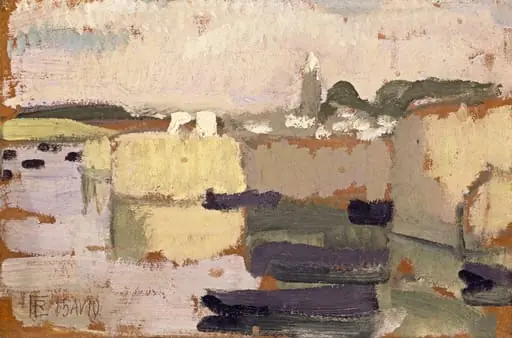
Roger de La Fresnaye’s 1909 preparatory work for his later piece, The Windmill of Penmarch, Northern France, presents a muted landscape dominated by a solitary windmill. Executed in a limited gray palette, the study captures the structure against a receding horizon, emphasizing tonal contrast between foreground and background.
Technique & Style
Employing assertive brushstrokes, de La Fresnaye builds texture that delineates planes of light and shadow, a practice reminiscent of chiaroscuro. The gradual shift from darker tones in the foreground to lighter values behind the mill creates a sense of atmospheric depth.
Artist & collection






- Village and Landscape
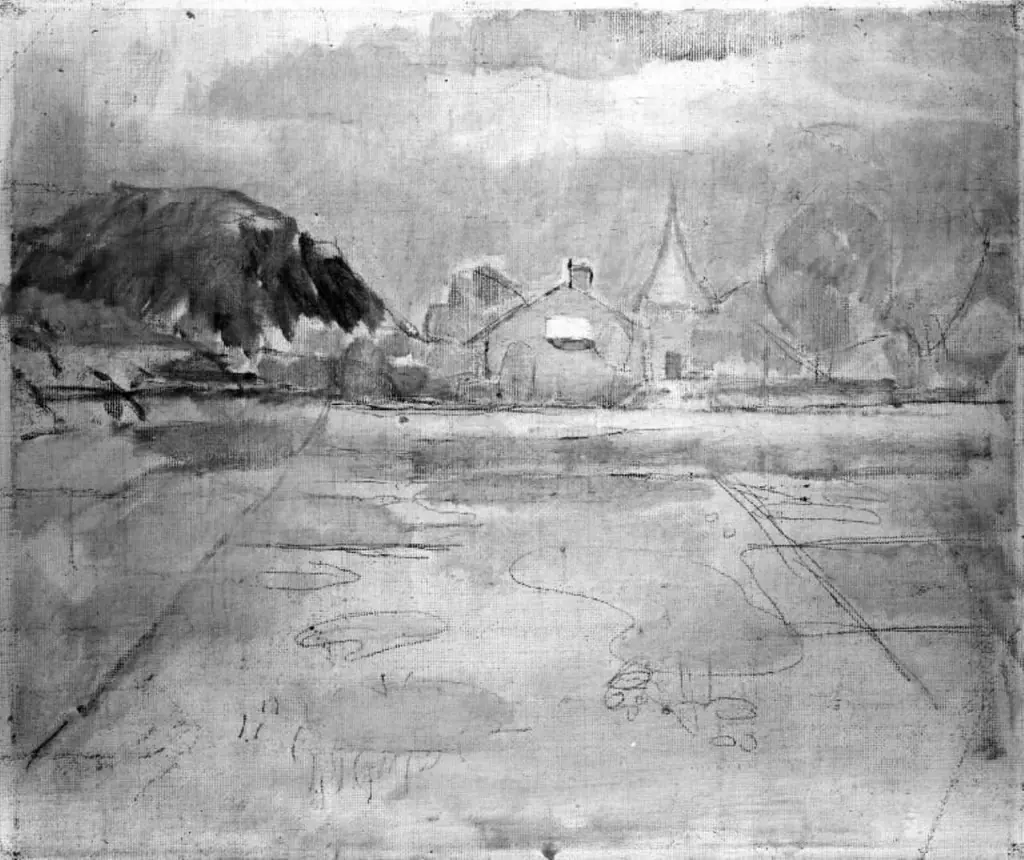 Villa near the Mountain
 Havn i en lille købstad
 A Farm in Lyngby, Zealand
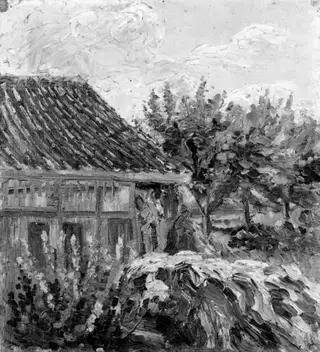 View of a House in Hørsholm
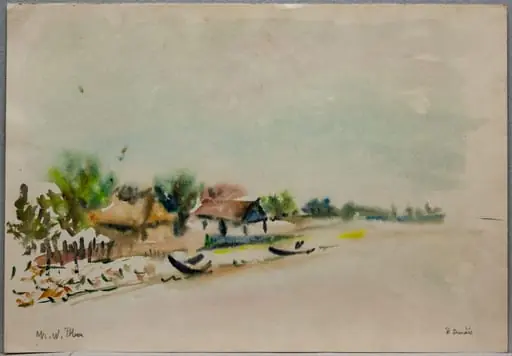 D 5 - Peisaj pe Dunăre (Mal de Dunăre cu case și bărci)
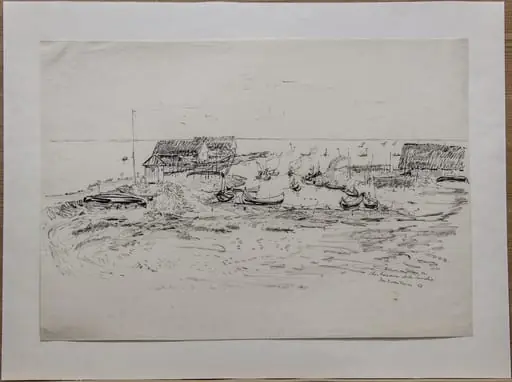 Bărci cu pânze la cherhanaua de la Sarichioi
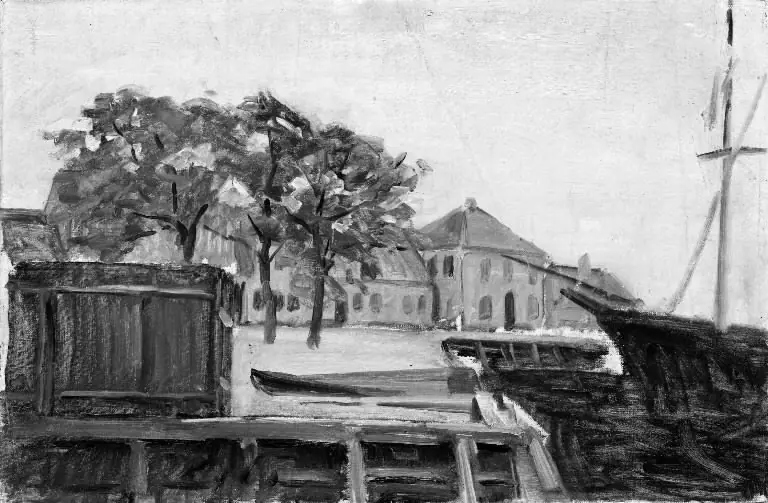 Havn i en lille købstad
 River Bank with Cattle
 A Farm in Lyngby, Zealand
 Landscape with Sand Dunes
 Newburyport