Artwork
Village at the Water's Edge
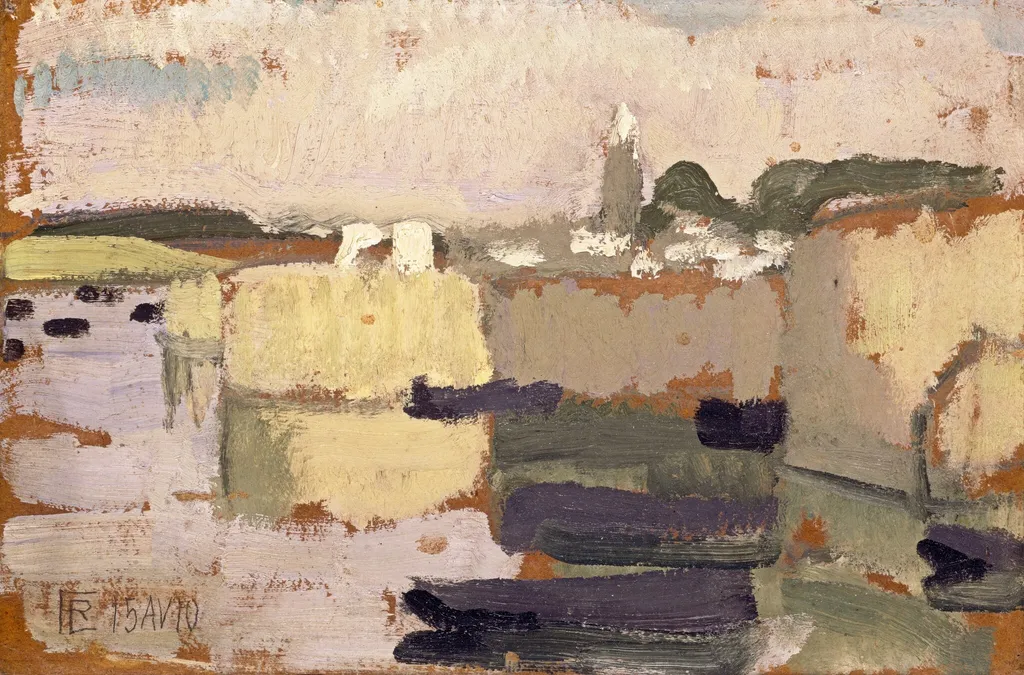
Village at the Water's Edge is an oil painting by the Post-Impressionist artist Roger de La Fresnaye. It dates from 1910 and is held in the collection of the National Gallery of Art.
- Inscription
- Inscribed:lower left: (artist's monogram) 15 AV 10
About this work
Technique & Style
The medium of oil on wood panel was a common choice for early 20th-century painters seeking durability and a smooth surface for detailed brushwork.
Roger de La Fresnaye executed Village at the Water's Edge in 1910 using oil paint applied to a wooden panel support. The work measures 17.8 cm in height and 24.9 cm in width, classifying it as a small-scale landscape painting. As a landscape genre piece, the composition focuses on a village setting situated near water, reflecting the artist's engagement with rural scenes during this period.
The medium of oil on wood panel was a common choice for early 20th-century painters seeking durability and a smooth surface for detailed brushwork.
History & Provenance
The painting Village at the Water's Edge was completed in 1910 by French artist Roger de La Fresnaye. Executed in oil on wood, the work measures 17.8 cm by 24.9 cm. Following its creation, the landscape entered the collection of Mr. and Mrs. Paul Mellon of Upperville, Virginia. In 1995 the couple gifted the piece to the National Gallery of Art in Washington, D.C., where it remains on view. The provenance chain therefore traces from the artist to the Mellon family and finally to the museum.
The work is held by the National Gallery of Art, Washington, D.C., where it entered the collection in 1995 as a gift from Mr. and Mrs. Paul Mellon.
Its inventory designation within the museum is not specified in the cited sources.
Overview
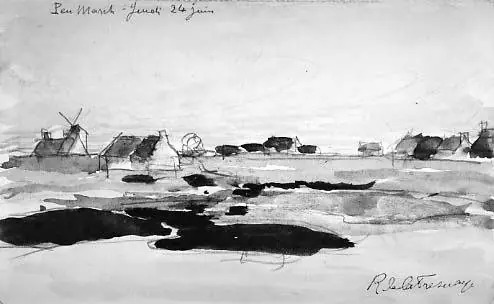
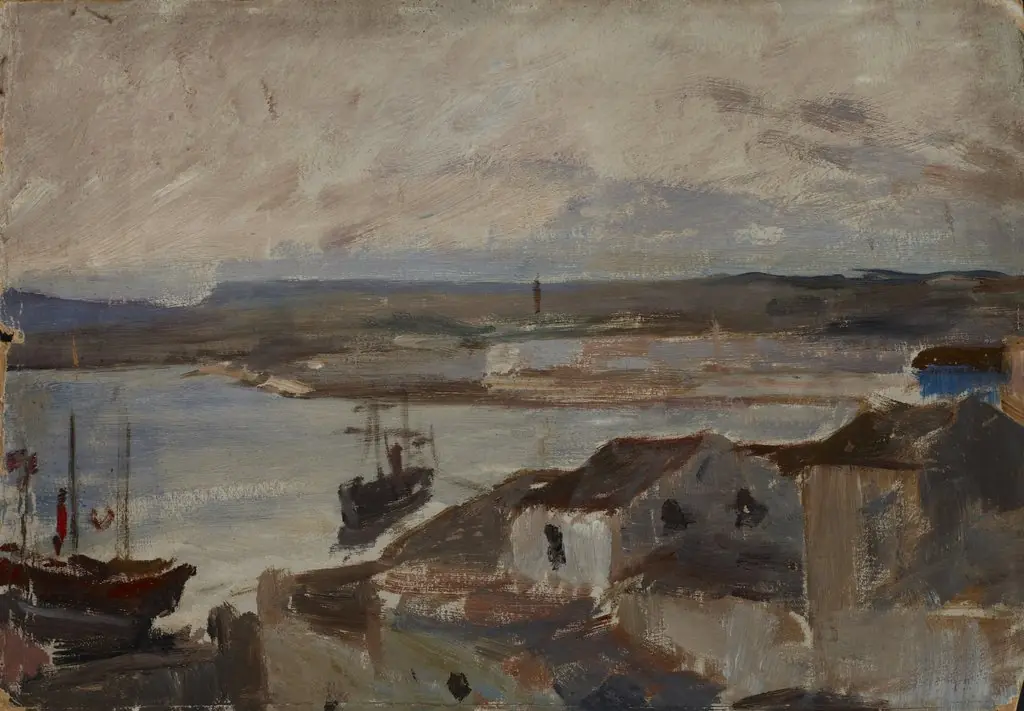
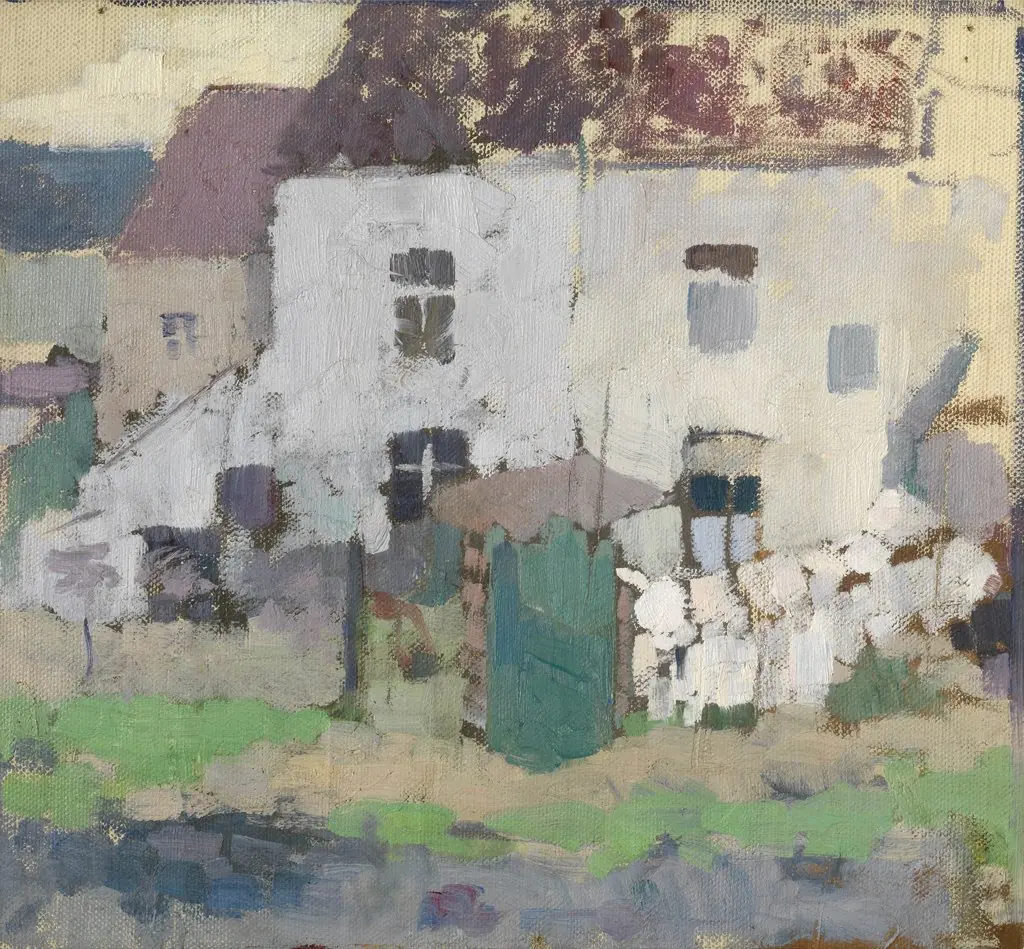
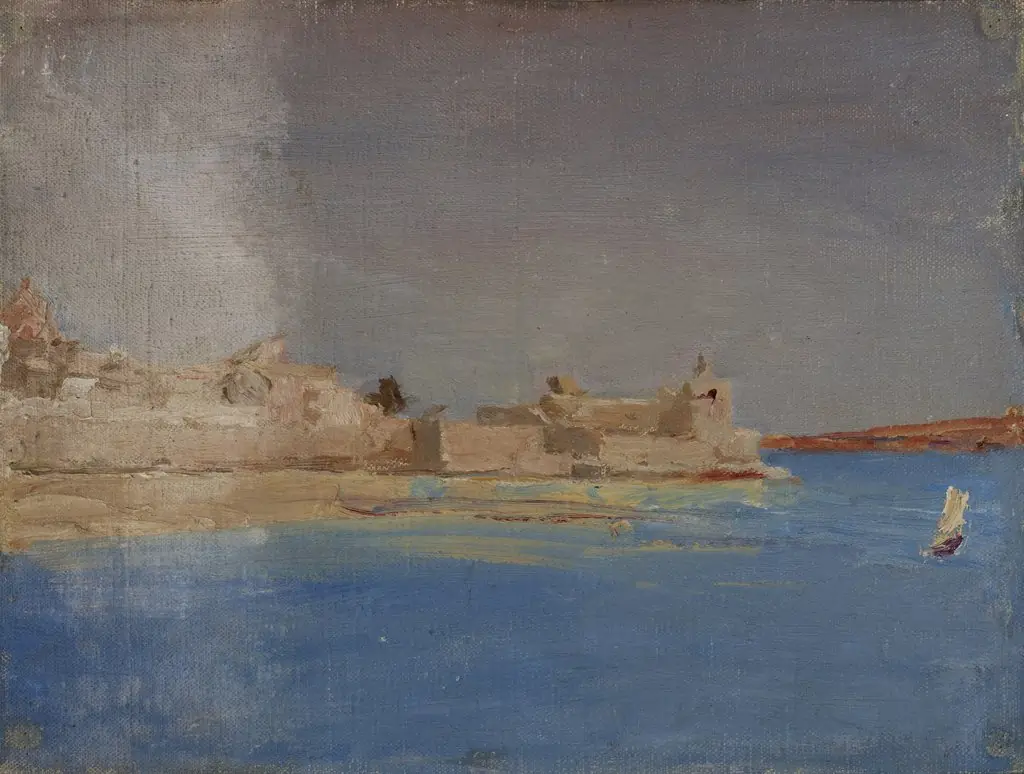
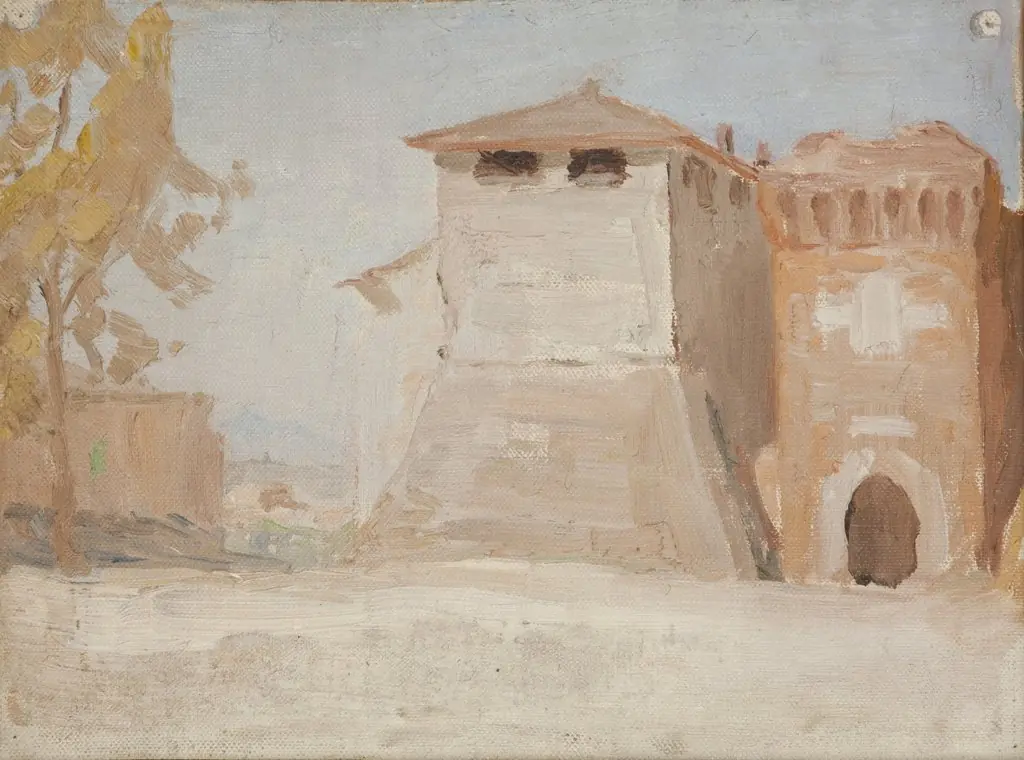
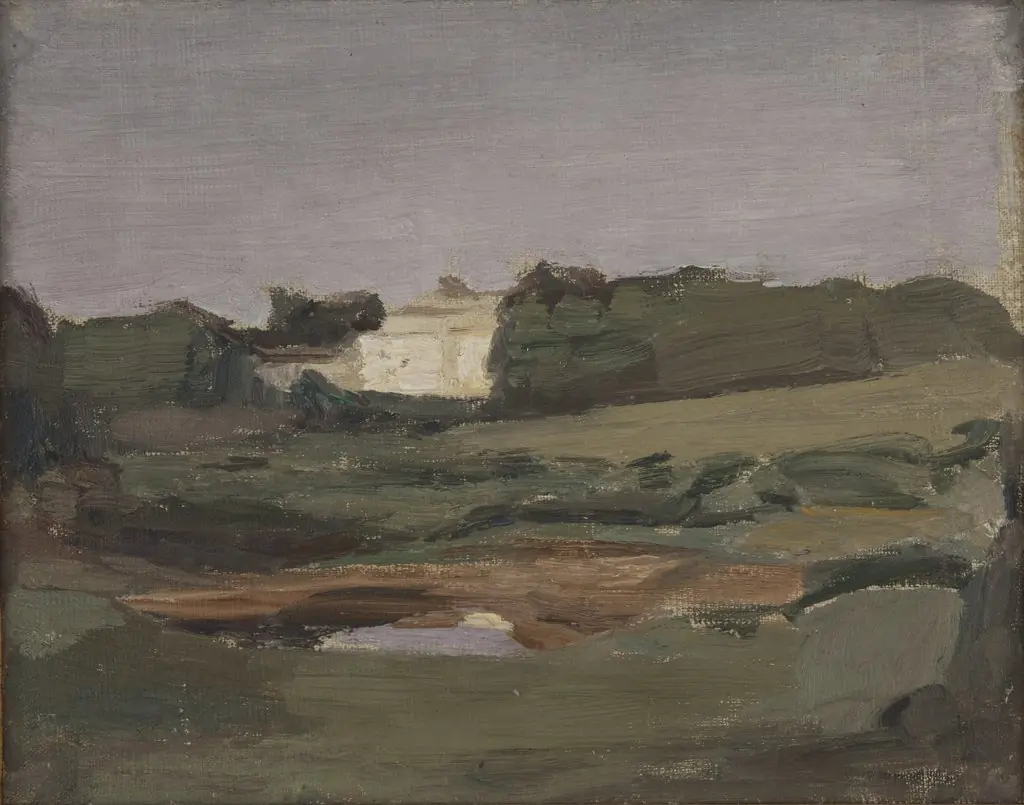
Roger de La Fresnaye's Village at the Water's Edge, painted in 1910, is an oil on wood landscape. This work portrays a settlement characterized by its simplified, geometric structures situated alongside a body of water. The artist employs a subdued color palette and distinctive, textured brushwork to render the scene, emphasizing the material quality of the paint itself. It reflects a modernist approach to landscape representation, focusing on form and surface.
Subject & Meaning
The painting depicts a village composed of elementary, block-like buildings positioned close to a body of water. The scene is rendered with a restricted palette of whites, browns, and soft blues, contributing to its understated atmosphere. A pale sky contrasts with the dark, almost black water, where subtle lines hint at the presence of waves.
The composition prioritizes the essential forms of the landscape rather than detailed naturalism, creating a sense of quiet solidity.
Own this work as a print
Artist & collection