Artwork
Ploughing in the Nivernais
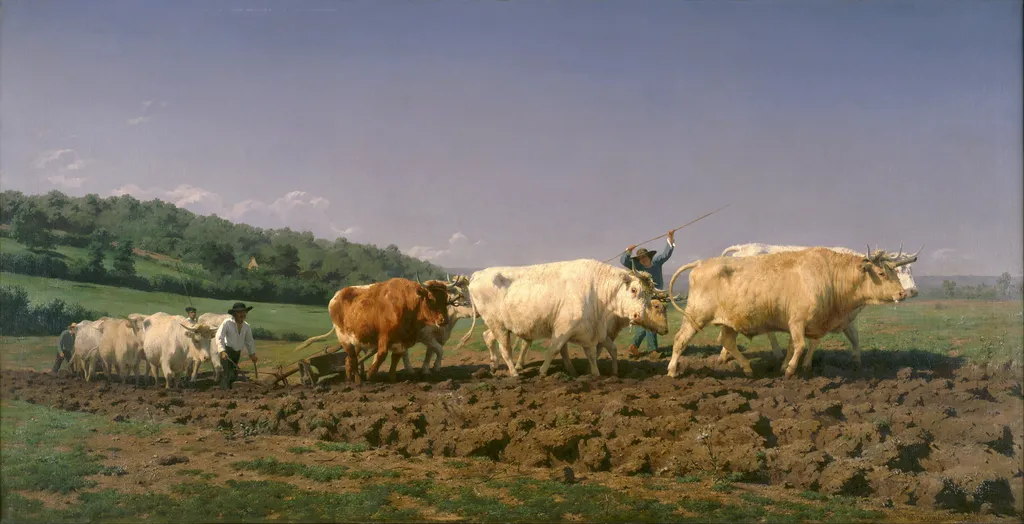
Ploughing in the Nivernais is an oil painting by the Realist artist Rosa Bonheur. It dates from 1849 and is held in the collection of the Musée d'Orsay.
About this work
This oil painting shows two teams of oxen at work in a field. It’s by Rosa Bonheur, a French artist who knew animals well.
The government asked her to make it. It won a top prize at the big art show in 1849.
The book “La Mare au Diable” might have given her the idea.
Check out Rosa Bonheur next.
Overview
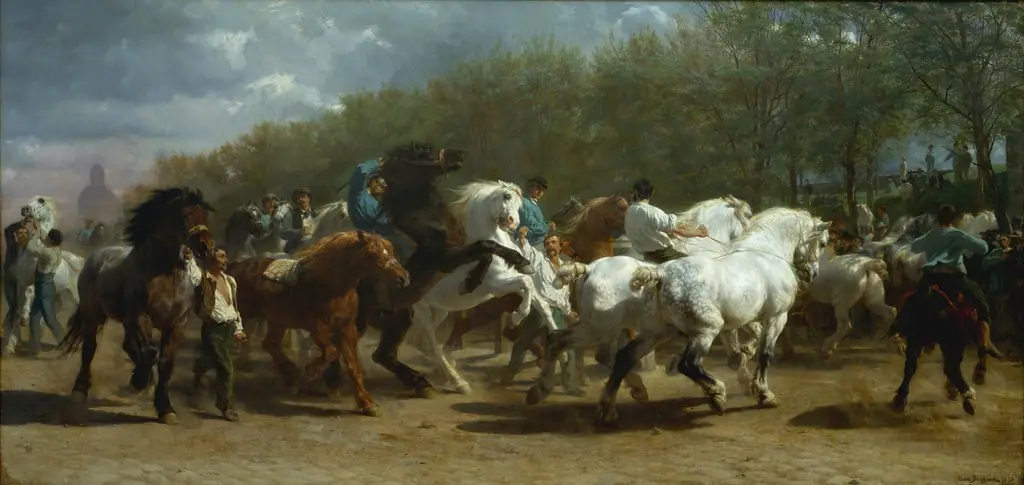
Along with The Horse Fair, it stands among Bonheur's best-known paintings and exemplifies her reputation as the preeminent French animal painter of her era.
Ploughing in the Nivernais (French: Labourage nivernais, also known as Le Sombrage) is an 1849 oil-on-canvas painting by French artist Rosa Bonheur, one of the most celebrated women painters of the nineteenth century. Measuring 133 by 260 centimetres, this large horizontal landscape depicts two teams of oxen engaged in autumn ploughing in the Nivernais region of central France. Commissioned by the French government and awarded a First Medal at the Salon of 1849, the work is now held in the Musée d'Orsay in Paris, where it has been since 1986. Along with The Horse Fair, it stands among Bonheur's best-known paintings and exemplifies her reputation as the preeminent French animal painter of her era.
Subject & Meaning
The painting depicts the sombrage, the first stage of autumn soil preparation that opens the earth to winter aeration. Two teams of six Charolais oxen each pull ploughs across dark brown earth, guided by male farmers in simple work clothes and wide-brimmed hats. The human figures are deliberately subordinate: one farmer is almost completely hidden behind his animals, and another raises a long goad above his head on the right. The freshly turned soil dominates the foreground, while rolling green hills and dense dark trees rise to the left beneath a pale blue-violet sky. The scene has been interpreted as a glorification of peasant life and ancient rural traditions. Albert Boime places it in the context of the revolutionary year 1848, reading it as an idealised vision of countryside order set against urban chaos and strife. A widely repeated tradition, first recorded by N. D'Anvers, holds that Bonheur was inspired by the opening scene of George Sand's 1846 novel La Mare au Diable, in which Sand describes oxen ploughing and calls it "a noble subject for a painter." The July 1899 issue of The Literary Digest amplified this connection, calling the painting a "pictorial translation of the novel."
Technique & Style
Bonheur executed the work in oil on canvas with a smooth, highly finished surface that shows careful attention to textural detail: the fur of the oxen, the clods of earth, and the dense foliage are all rendered with precision. The composition stretches horizontally in a broad frieze, the animals and workers occupying the middle ground against an expansive sky. Light falls evenly across the scene, casting shadows beneath the animals and figures. The palette is dominated by browns and ochres in the foreground soil, with patches of green, and the pale tones of the oxen, some cream-coloured and one reddish-brown, set against the dark green of the trees and the soft sky. The clarity and even light of the painting recall Dutch animal painting, particularly the work of Paulus Potter, which Bonheur had studied as part of her education. Léonce Bénédite, in Les Chefs-d'œuvre du Musée du Luxembourg, described the scene as unfolding "under the clear morning light, by a beautiful tender blue sky." The third ox in the first team is notably a "barré" roux, an old Morvan breed with a white-striped spine and pointed horns, now extinct.
History & Provenance
The French government commissioned the painting from Bonheur in 1848 for the sum of 3,000 francs, though the French Wikipedia source also records a figure of 20,000 francs. The intended destination was the museum in Lyon, but the state retained it in Paris instead. Sources differ on where it was painted: some indicate Beaumont-Sardolles in the Nièvre, while Bonheur herself in her Souvenirs gave her Paris studio on the rue de l'Ouest. It was first exhibited at the Salon of 1849 at the Palais des Tuileries, where it won a First Medal and helped establish Bonheur's reputation. From 1849 to 1920 it hung in the Musée du Luxembourg in Paris. It was a featured exhibit at the 1889 Exposition Universelle. After Bonheur's death, it entered the Louvre from 1920 to 1923, then was on long-term deposit at the Château de Fontainebleau from 1923 to 1986. It finally joined the collection of the Musée d'Orsay in 1986, where it remains today. Bonheur produced several copies of the composition; one is in the John and Mable Ringling Museum of Art in Sarasota, Florida.
Context
Rosa Bonheur (1822-1899) built her career on animal painting at a time when women artists faced significant professional barriers. Her technical accomplishment and choice of subjects, often large-scale rural and agricultural scenes, brought her international recognition. New York Times critic Mary Blume later called her "the most famous woman painter of her time, perhaps of all time." The painting's reception has been mixed over time. Early admirers included Anna Elizabeth Klumpke, who copied the work in the Luxembourg before beginning her long association with Bonheur. George du Maurier's 1894 novel Trilby mentions visitors copying Ploughing in the Nivernais among other works in the Luxembourg. Margaret Addison singled it out during her European tour of 1900. Yet critical opinion was not unanimous. Frédéric Paulhan, in L'Esthétique du paysage (1913), criticised the painting for failing to simplify, arguing that Bonheur spoiled it with excessive detail in the clods of earth and greenery; she reproduced rather than created, weakening nature through over-complete transcription. Paul Cézanne reportedly dismissed it with the remark that "it is horribly like the real thing." By 1978 one critic described the work as "entirely forgotten and rarely dragged out from oblivion," though that same year it was included in a French government exhibition of landscape and peasant painting sent to China. Mary Blume, writing in 1997, assessed it as "more careful than inspired, affectionate but not sentimental, a doughty celebration of working animals."
Legacy
Ploughing in the Nivernais occupies a significant place in the history of nineteenth-century French painting and in the broader narrative of women artists' achievements. Its government commission and Salon success demonstrated that a woman could secure the most prestigious official patronage available in France. The painting's long public visibility, first in the Luxembourg, then the Louvre, Fontainebleau, and finally Orsay, ensured its place in the canon of French national heritage. Its cultural afterlife extends beyond fine art into literature and popular memory: from George Sand's novel to du Maurier's fiction, from Klumpke's copies to Margaret Addison's travel diary, the image has circulated as an emblem of rural France. The term "France profonde" that appears in related literature captures the painting's ideological function as a celebration of deep, provincial France against the turbulence of modernity. Today it remains among the most frequently reproduced and discussed works in the Musée d'Orsay's collection of Realist painting, a testament to Bonheur's enduring status and to the nineteenth-century fascination with the land and its labourers.
Artist & collection

Artist
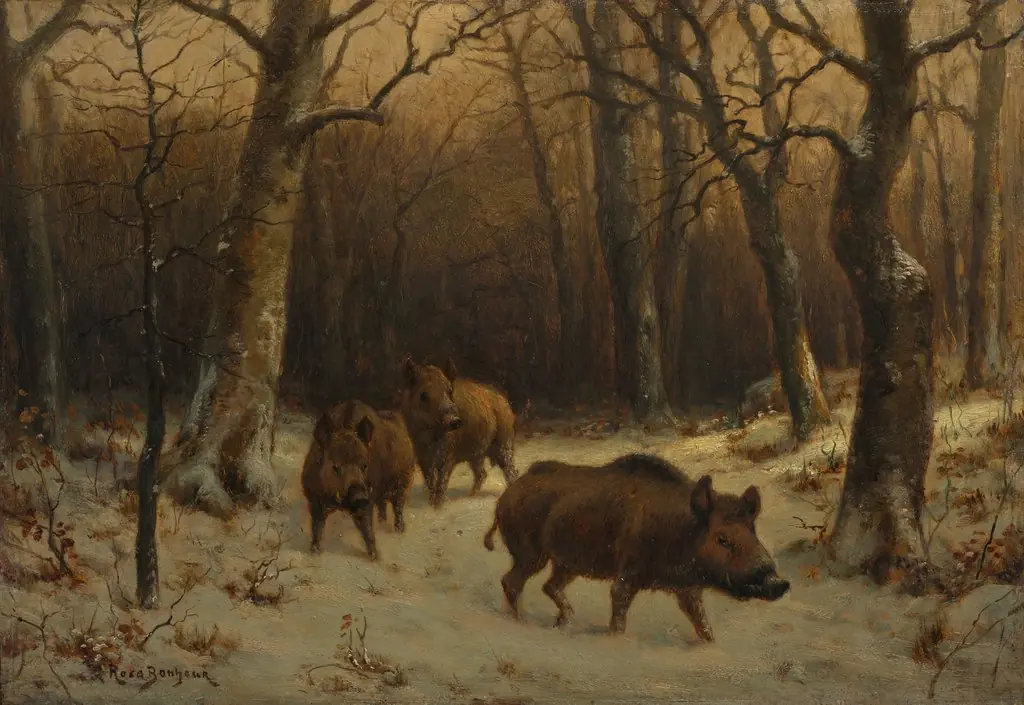
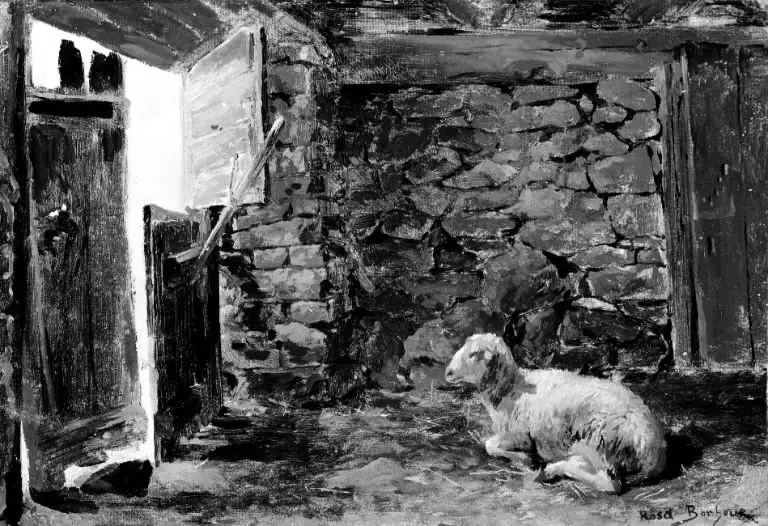
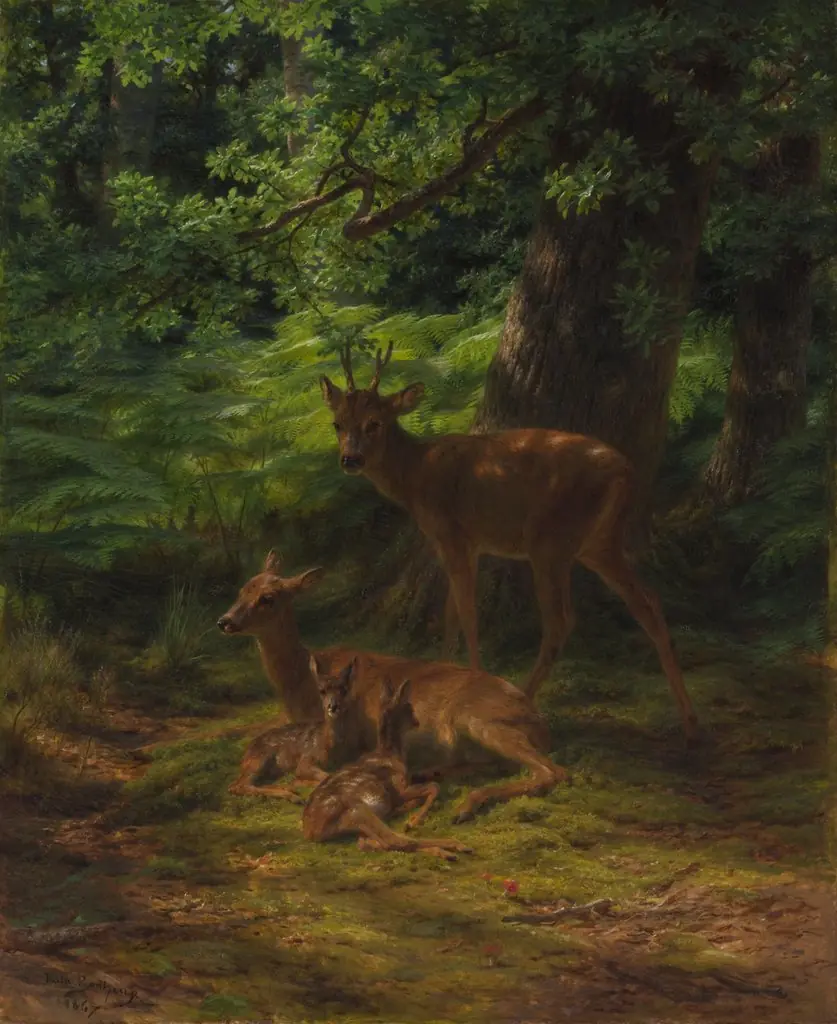
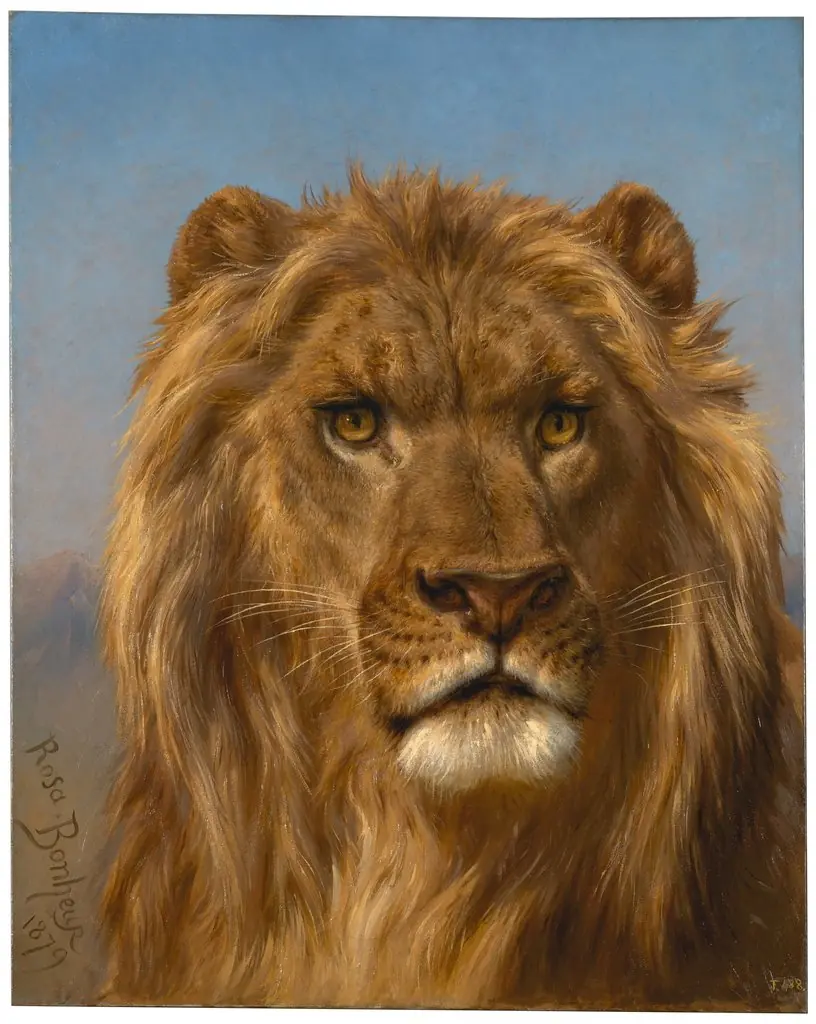
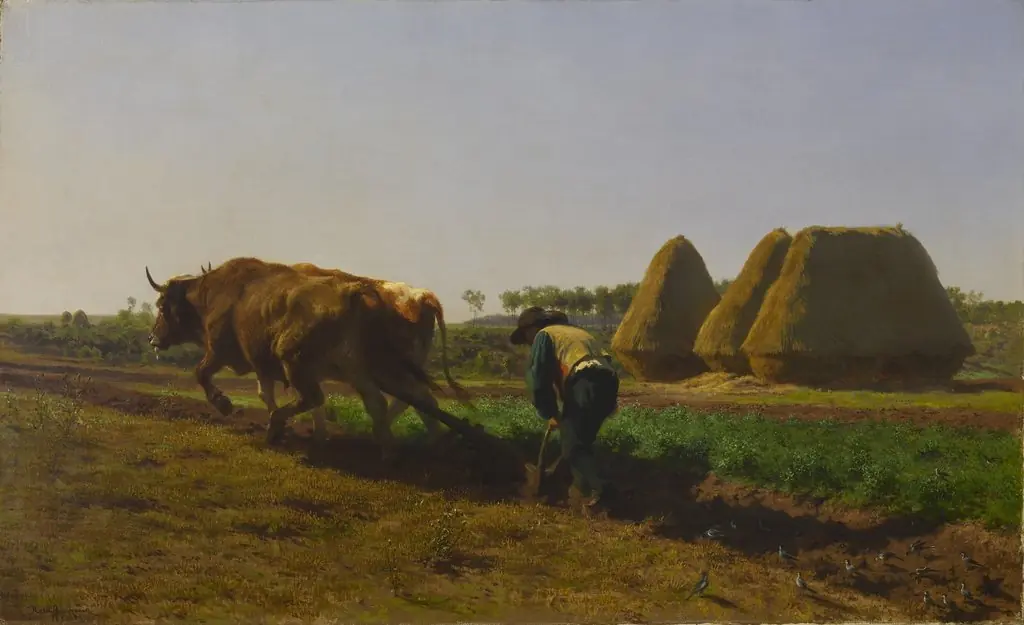
Rosa Bonheur was a French artist known best as a painter of animals (animalière).